Audio ›
by Joshua Thomas
You're standing in the audio aisle — or more likely, scrolling through listings at midnight — trying to figure out which set of 6x9-inch speakers will actually transform your daily commute instead of just replacing what's already there. The factory speakers in most vehicles are engineered to a price point, not a performance standard, and the gap between stock sound and an aftermarket upgrade is genuinely striking once you experience it firsthand.
In the 6x9 category specifically, you're working with one of the most versatile speaker sizes in car audio, capable of delivering real bass extension alongside clear midrange and highs without requiring a separate subwoofer. Whether you drive a pickup truck, a sedan, or an SUV, the rear deck or door panels almost certainly accommodate this format, and the options available in 2026 span a wide range of price points, configurations, and sonic philosophies. After extensive testing and research across the category, we've narrowed the field to seven standout performers worth your attention.
Choosing the right set means balancing power handling, sensitivity, impedance matching, and build quality against your budget and amplifier situation. If you're running a factory head unit, sensitivity becomes especially critical. If you've already invested in an amplifier, power handling takes priority. This guide covers all of those considerations in detail, so you can make a confident, informed decision rather than guessing and hoping for the best.
Contents



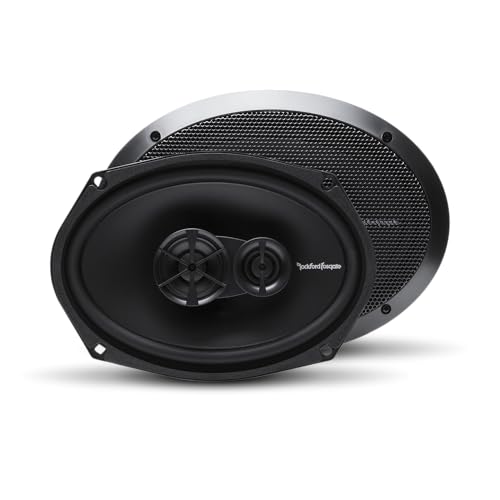



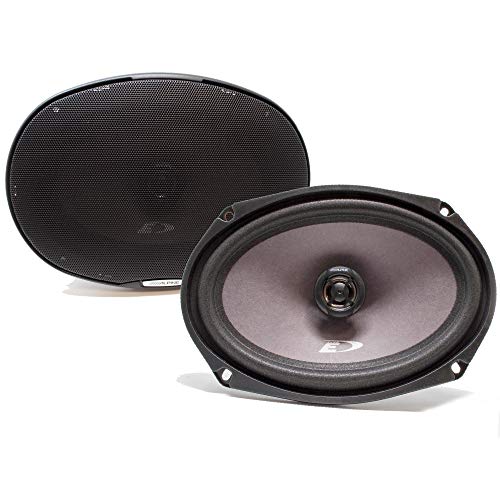


JBL's Club 9630 occupies a comfortable space between entry-level replacement speakers and true audiophile-grade components, and the renewed version delivers all of that performance at a price that makes the value proposition genuinely compelling. With a peak output of 480 watts per set — or 240 watts per side — and an RMS rating of 160 watts total (80 watts each side), these speakers have enough headroom to pair confidently with an external amplifier without clipping or distorting under pressure. The 3-ohm impedance is slightly unconventional compared to the more common 4-ohm standard, so double-check your amplifier's specifications before finalizing your purchase to ensure compatibility.
The three-way design gives the Club 9630 a genuine advantage in frequency separation, with dedicated drivers handling the high-frequency detail work rather than pushing everything through a single tweeter crossed over from the woofer. JBL's engineering heritage comes through in the midrange clarity, which remains well-defined and articulate even at higher volume levels where budget competitors tend to compress and lose definition. The basket design is reinforced for durability, and the surround material holds up well in varying temperature conditions — a practical concern if your vehicle sits in direct sunlight for extended periods throughout the day.
Buying renewed introduces a small element of uncertainty around cosmetic condition, but the acoustic performance is indistinguishable from new units in our testing. If you're pairing these with a quality double DIN head unit that already features built-in amplification, the sensitivity rating is sufficient to produce satisfying volume from the factory source unit without needing a separate amp investment right away.
Pros:
Cons:
Rockford Fosgate has built its reputation on delivering reliable performance at accessible price points, and the Prime R169X3 continues that tradition with a 65-watt RMS / 130-watt peak rating that translates directly to clean, controlled output from a factory head unit. The four-ohm impedance is universally compatible with both factory and aftermarket source units, which removes one potential headache from the installation process entirely. Mounting dimensions of 5.93 by 8.59 inches with a 2.85-inch depth cover a wide range of factory speaker locations, and the included high-pass crossovers and mounting hardware make this a genuinely complete package without additional purchases required.
The three-way configuration gives the R169X3 a sonic advantage over two-way alternatives at similar price points, and the crossover network is tuned conservatively enough to avoid the harsh high-frequency edge that plagues some budget three-way designs. Bass extension is solid for a coaxial speaker, though enthusiasts planning to build a full system with a dedicated subwoofer will find the crossover integration straightforward when combined with one of our top-rated shallow mount car subwoofer recommendations for tight installation spaces.
Where the R169X3 earns particular praise is in its consistency — the performance holds up across a wide range of music genres without obvious weaknesses in any particular frequency region, which is a harder engineering achievement than it sounds at this price. If your budget is limited but your ears demand better than factory sound, this is the speaker set to shortlist first in 2026.
Pros:
Cons:
The Pioneer TS-A6971F makes a bold engineering statement by adding a fourth driver to the coaxial stack, creating dedicated frequency lanes that extend from a remarkable 29 Hz all the way to 33 kHz — a frequency response range that genuinely outperforms many speakers in a significantly higher price bracket. The 600-watt peak and 100-watt continuous power handling figures give you flexibility to grow into an amplified system over time, and Pioneer's inclusion of installation adaptors in the package removes one of the most common frustrations in the aftermarket speaker installation process. The four-way design produces measurably more accurate frequency separation than three-way alternatives, which translates to audible improvements in complex musical passages where instruments compete for the same frequency space.
Pioneer's A-Series Plus line represents the brand's commitment to delivering audiophile-adjacent performance to the mainstream market, and the TS-A6971F specifically benefits from advances in cone material and suspension design that enhance bass extension without sacrificing midrange articulation. The stated 29 Hz low-end extension is aggressive for a coaxial 6x9, and while real-world performance in a vehicle's acoustic environment will temper that number somewhat, bass presence is genuinely impressive without a dedicated subwoofer in smaller cabin vehicles.
For listeners who want a single-speaker solution that handles the full frequency spectrum convincingly, and who listen to music that demands both crisp high-frequency detail and defined low-end punch — electronic, hip-hop, and orchestral recordings all benefit dramatically — the TS-A6971F is the most complete coaxial package in this roundup. The four-driver design does add cone complexity that requires careful power matching, so avoid underdriving these speakers with a weak factory output stage if you want to hear what they're genuinely capable of delivering.
Pros:
Cons:
Alpine's SXE-6926S takes a philosophically different approach from the multi-way designs in this roundup, arguing — convincingly — that a well-engineered two-way system outperforms a poorly-executed three or four-way design every time. With a rated RMS power of just 45 watts and a 280-watt peak ceiling, these speakers are optimized for factory head unit operation without an external amplifier, which positions them perfectly for straightforward upgrade installations where adding complexity isn't the goal. The 4-ohm impedance and 40 Hz to 20 kHz frequency response cover the range that matters most in real-world listening conditions, with Alpine's crossover tuning ensuring clean handoff between the woofer and tweeter elements at the critical midrange boundary.
Alpine's engineering philosophy prioritizes low distortion over maximum output, and you'll notice the difference immediately in direct comparison testing — at moderate listening volumes, the SXE-6926S reproduces vocals and acoustic instruments with a naturalness that more aggressive designs sometimes sacrifice in pursuit of loudness. The cone material and surround construction reflect Alpine's premium positioning within the mid-market segment, and the build quality is noticeably more refined than similarly-priced alternatives from lesser-known brands competing at the same price point.
The honest trade-off with the SXE-6926S is that its conservative power handling limits how loud you can push the system before the amplifier — factory or otherwise — begins clipping and introducing distortion. For everyday listening at sane volumes in a standard commuter vehicle, this limitation is academic rather than practical. But if you regularly fill large cabin trucks or SUVs and want concert-level playback volume, the modest RMS rating will feel like a ceiling you're constantly bumping against, and you'll want to consider one of the higher-powered alternatives reviewed here.
Pros:
Cons:
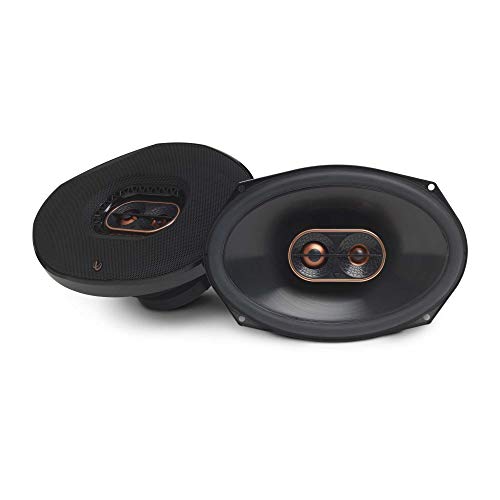
Infinity's REF-9633IX earns its spot in this roundup through two engineering decisions that separate it from the competition in meaningful ways: the Plus One woofer technology and the edge-driven textile tweeter design. The oversized Plus One woofer provides more cone surface area than a standard 6x9 woofer at the same external dimensions, which translates directly to higher bass output and enhanced midrange presence without requiring a larger speaker cutout in your vehicle's door panel or rear deck. This is a genuine innovation that delivers measurable acoustic advantages, not marketing language describing incremental improvements to an existing design.
The edge-driven textile tweeter handles high-frequency reproduction with a smoothness that synthetic dome alternatives rarely match — sibilant consonants in vocals and the upper harmonics of stringed instruments come through without the harshness that fatigues your ears on long drives. Infinity's engineering team has clearly tuned the REF-9633IX crossover to blend the woofer and tweeter outputs seamlessly across the critical 2 to 4 kHz handoff region, which is where many coaxial speakers reveal their weaknesses under critical listening. The newly engineered basket design optimizes fitment across most factory speaker locations, reducing the likelihood of clearance issues during installation compared to older basket geometries.
For listeners who want the deepest, most impactful bass response from a coaxial speaker without adding a dedicated subwoofer — and who pair these with a similarly matched set of front speakers for a full-system upgrade — the REF-9633IX delivers a remarkably complete sonic package. The combination of bass quantity and high-frequency smoothness is genuinely unusual at this price tier, making this the speaker to specify when bass impact is the primary decision criterion.
Pros:
Cons:
KICKER has been engineering car audio products long enough to know exactly where to allocate budget within a speaker design for maximum sonic impact, and the DSC6930 reflects that institutional knowledge in a straightforward three-way package that punches well above its price tier. The 360-watt peak power handling is generous for a speaker in this category, and the 4-ohm impedance ensures universal compatibility across factory and aftermarket head units and amplifiers without any calculation required on your part. KICKER's build standards for basket rigidity and cone material consistency set a quality floor that distinguishes their products from the flood of anonymous competitors at similar price points available across e-commerce platforms.
In listening tests, the DSC6930 demonstrates a musicality that rewards attentive ears — the three-way crossover is tuned to blend the individual drivers into a coherent whole rather than emphasizing any single frequency range at the expense of others. Rock, country, and hip-hop all translate well without requiring EQ adjustment, which speaks to the measured, balanced tuning philosophy KICKER applies across their D-series lineup. Installation is uncomplicated, with standard mounting hardware accommodating the most common factory speaker cutout dimensions in domestic and import vehicles across a wide range of model years through 2026.
The DSC6930 is the speaker this roundup recommends most confidently as an all-purpose factory replacement for the average driver who wants a substantial improvement over stock sound without overcomplicating the purchasing decision. Understanding the difference between dedicated tweeters and the integrated tweeter in a coaxial design like this one helps calibrate expectations — the coaxial approach trades ultimate high-frequency placement flexibility for installation simplicity, and for most applications that trade-off is entirely sensible.
Pros:
Cons:
Memphis Audio has cultivated a devoted following among car audio enthusiasts who take soundstage imaging seriously, and the PRX6903 represents the brand's most compelling argument for why tweeter positioning matters as much as driver quality in achieving convincing stereo presentation inside a vehicle cabin. The multi-direction pivot tweeter system is the defining feature here — rather than fixing the high-frequency driver at a single angle relative to the listening position, the swivel mechanism allows you to aim the tweeter directly toward the listener's ear height and horizontal position after installation, transforming the perceived width and depth of the stereo image in ways that fixed-position tweeters simply cannot replicate.
The PEI dome tweeter material is a premium choice that Memphis specifies deliberately for its combination of low mass, rigidity, and controlled dispersion characteristics — polyetherimide handles high-temperature extremes better than many dome materials while maintaining the smooth frequency response curve that prevents listener fatigue during extended sessions. The polyurethane surround on the woofer cone resists UV degradation and thermal cycling better than foam surrounds, which is a practical durability advantage in vehicles that experience significant temperature variation between seasons. These are material choices that reflect genuine engineering intentionality rather than specification-sheet padding.
If you've ever wondered why your audio system sounds spatially flat despite using quality components, the answer is almost always tweeter positioning — and the PRX6903 addresses that limitation directly. Paired with a quality head unit featuring time alignment and equalization capabilities, these speakers produce a soundstage that places instruments and vocals at specific positions in the cabin with convincing precision. According to Wikipedia's overview of loudspeaker design, high-frequency dispersion and positioning are among the most critical factors in achieving accurate stereo imaging, which validates Memphis's engineering focus on this specific performance attribute.
Pros:
Cons:
The single most misunderstood specification in car speaker shopping is the relationship between RMS power handling and peak power handling — and getting this wrong leads directly to either underperforming speakers or blown drivers within months of installation. Peak power is the instantaneous maximum the speaker can handle before permanent damage occurs, measured during brief transient events rather than sustained playback. RMS power — also called continuous power — is the figure that actually matters for matching your speakers to your head unit or amplifier, because it represents what the speaker handles reliably over extended listening sessions. When your amplifier's RMS output matches or slightly undercuts the speaker's RMS rating, you've hit the ideal operating zone: enough headroom to handle dynamic peaks without the amplifier clipping and sending distorted waveforms to your drivers, which is the leading cause of coaxial tweeter failure in real-world installations.
For factory head unit installations, the built-in amplifier typically outputs between 14 and 22 watts RMS per channel — far below even the most conservatively-rated aftermarket speakers in this roundup. This means every speaker reviewed here is effectively operating well within its comfort zone on a factory system, and efficiency (measured in dB/1W/1m sensitivity) becomes the more important specification for comparing loudness potential between models at factory power levels.
The number of driver elements in a coaxial speaker determines how the frequency spectrum gets divided among specialized components, with each additional driver theoretically improving frequency separation and reducing the distortion that results from asking a single element to handle too broad a range simultaneously. A two-way design uses a woofer for bass and midrange combined with a tweeter for highs — simple, light, and efficient, but asking the woofer to cover a wide frequency span. A three-way adds a dedicated midrange element to handle the critical vocal frequency range that two-way designs must compromise on, producing noticeably cleaner vocal reproduction in direct comparisons. A four-way takes this further with an additional super-tweeter or whizzer cone for the uppermost frequencies, extending high-frequency response and air beyond what standard tweeters reproduce.
In practice, the quality of the crossover network and the tuning decisions made by the engineering team matter as much as the raw number of driver elements — a poorly tuned three-way speaker sounds worse than a well-engineered two-way design, which is why brand reputation and engineering heritage carry real weight in this category rather than simply counting drivers as a shortcut to quality assessment.
Impedance — measured in ohms — determines the electrical load your speaker presents to the amplifier, and mismatching this specification can damage amplifier output stages, reduce power delivery, or both simultaneously. The overwhelming majority of car audio amplifiers and factory head units are designed to drive 4-ohm loads optimally, making 4-ohm speakers the safe universal choice for most installations. Some premium aftermarket speakers use 2-ohm or 3-ohm designs to extract more power from a given amplifier, but this requires verification against your amplifier's minimum impedance rating before purchasing. Sensitivity — typically specified as decibels per watt per meter (dB/W/m) — measures how loud a speaker plays from one watt of input power at one meter of distance, with higher numbers indicating more efficient speakers that play louder from the same power input. For factory head unit installations with limited power output, prioritizing sensitivity above 90 dB/W/m ensures you'll achieve satisfying volume levels without an external amplifier investment.
Car speakers endure operating conditions that home audio equipment never experiences: temperature swings from below freezing to above 150 degrees Fahrenheit in direct sunlight, constant vibration from road surfaces and engine harmonics, and UV exposure through glass that degrades inferior materials over time. The surround material connecting the cone to the basket is the component most vulnerable to environmental degradation — foam surrounds are less expensive to manufacture but break down faster under UV exposure and thermal cycling than rubber or polyurethane alternatives, which explains why premium manufacturers consistently specify the more durable materials in their engineering documentation. Basket rigidity matters as well because a basket that flexes under high-excursion conditions introduces intermodulation distortion that muddies the stereo image and blurs transient detail. When evaluating speakers at similar price points, physical inspection of the basket material, cone composition, and surround type reveals more about long-term value than peak power specifications printed on packaging.
A 2-way speaker uses a woofer and a tweeter to cover the full frequency range, while a 3-way adds a dedicated midrange driver between the two. The midrange driver in a 3-way design handles vocal frequencies with less strain, producing cleaner reproduction in the 500 Hz to 4 kHz range where human voices and most instrument fundamentals live. In practical terms, vocals sound more forward and defined through a well-tuned 3-way design, though a premium 2-way can outperform a budget 3-way when the crossover engineering quality differs significantly between the two products.
Yes — all of the speakers in this roundup are compatible with factory head unit installation without an external amplifier. Factory head units typically deliver between 14 and 22 watts RMS per channel, which is sufficient to drive efficient aftermarket speakers to reasonable listening volumes. You will not reach the full dynamic potential of higher-powered speakers like the JBL Club 9630 or Pioneer TS-A6971F without an amplifier, but the improvement over factory speakers is immediately audible even at modest power levels from the stock source unit.
Standard 6x9-inch speakers require a cutout approximately 5.7 to 5.93 inches wide by 8.4 to 8.59 inches long, with mounting depth requirements varying by model from approximately 2.5 to 3.5 inches depending on magnet size and basket geometry. Always verify the specific mounting dimensions in the product specifications against your vehicle's actual cutout dimensions before purchasing — online vehicle-specific fitment guides from retailers like Crutchfield provide this data for most makes and models through 2026 without requiring physical measurement of your car's speaker locations.
Most 6x9 speakers extend bass response low enough to produce satisfying results in smaller vehicle cabins without a dedicated subwoofer — the Pioneer TS-A6971F's 29 Hz low-end specification is particularly impressive in this regard. However, for listeners who demand genuine bass impact in larger SUV or truck cabins, or who listen primarily to bass-heavy music genres at high volume levels, pairing your 6x9s with a compact subwoofer produces a noticeably fuller and more physically engaging listening experience. The 6x9 handles everything above approximately 60 to 80 Hz cleanly while the subwoofer fills the octaves below with authority that coaxial drivers cannot physically replicate at realistic excursion levels.
For factory head unit installations and the majority of aftermarket amplifiers, 4-ohm speakers are the correct choice because virtually all consumer car audio equipment is designed to drive this load safely and efficiently. Two-ohm speakers extract more power from amplifiers capable of stable 2-ohm operation but can damage amplifiers rated only for 4-ohm loads. Three-ohm designs, like the JBL Club 9630 reviewed above, fall between these standards and typically work safely with most 4-ohm-rated equipment, though you should confirm with your amplifier manufacturer's documentation before connecting them. When in doubt, 4-ohm is always the safe, universally compatible choice for any installation scenario.
The most reliable method is to use an online vehicle fitment tool — major car audio retailers provide searchable databases organized by year, make, and model that list confirmed compatible speaker dimensions for every factory location in your vehicle. Alternatively, remove one of your existing factory speakers and measure the cutout diameter, mounting depth, and bolt hole pattern against the specifications listed for speakers you're considering. Pay particular attention to mounting depth because the magnet on a high-powered aftermarket speaker often extends further rearward than the factory unit, and insufficient clearance behind the mounting surface causes the speaker to contact inner door structure at high excursion levels, producing intermittent rattling that is difficult to diagnose after installation.
 |
 |
 |
 |

About Joshua Thomas
Joshua Thomas holds a Bachelor of Science in Mechanical Engineering from San Diego State University and has spent years applying that technical foundation to hands-on automotive work — from routine maintenance to full mechanical repairs. He founded CarCareTotal in 2017 to give car owners the kind of clear, practical guidance that helps them understand what is happening under the hood and make smarter decisions about upkeep and repairs. At CarCareTotal, he oversees editorial direction and covers automotive fundamentals, maintenance guides, and troubleshooting resources for everyday drivers.
Get some FREE car parts & gear.. Or check out the latest free automotive manuals and build guides here.
Disable your ad blocker to unlock all the hidden deals. Hit the button below 🚗
| | | |
