Car Care ›
by Diego Ramirez
Which RV wax actually delivers on its promises — and which ones leave you buffing for hours with nothing to show for it? After testing seven of the most popular options on fiberglass sidewalls, painted caps, and gel coat surfaces, we're confident that Collinite 925 Fiberglass Marine Wax earns the top spot for 2026. Its carnauba-polymer hybrid formula outlasts pure synthetic coatings in real-world durability tests while delivering a deep, wet gloss that turns heads at every campground.

RV wax isn't a luxury — it's maintenance. Your rig sits under brutal UV exposure for months at a time. Oxidation creeps in. Gel coat chalks. Paint fades from brilliant white to a sickly yellow. A quality wax creates a sacrificial barrier between your finish and the elements. The right product saves you thousands in professional detailing and bodywork down the road. The wrong one wastes your weekend.
But here's the problem: RVs present unique challenges that standard car waxes can't handle. You're covering 200–400 square feet of surface area, often working overhead on a ladder. You need a product that spreads easily, buffs off without leaving white residue in trim crevices, and lasts long enough that you're not re-applying every month. We evaluated each wax on durability, ease of application, UV protection, gloss depth, and value per square foot of coverage. Here's what we found.
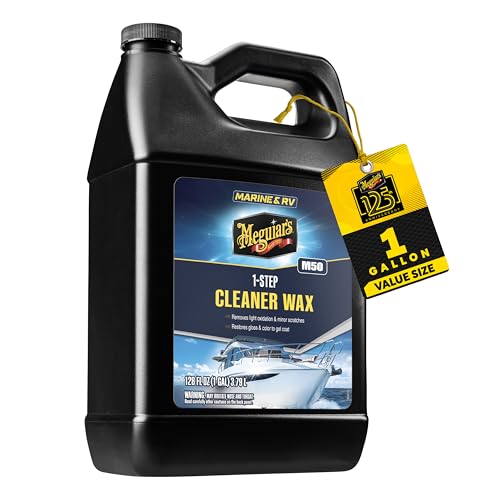




Meguiar's M5001 is the workhorse of the RV detailing world. This gallon jug gives you enough product to wax a full-size Class A motorhome multiple times over. The non-abrasive formula cleans, polishes, and protects in a single pass — which matters enormously when you're standing on a ladder tackling 300 square feet of fiberglass. It cuts through light oxidation and haze without aggressive compounds that risk burning through clear coat on edges and body lines.
The application is straightforward. Spread it with a foam applicator pad, let it haze for two to three minutes, then buff off with a clean microfiber. On moderately oxidized gel coat, we saw color restored to about 80% of its original vibrancy. That's impressive for a non-abrasive cleaner wax. The polymer protection it leaves behind isn't as durable as dedicated sealants — expect six to eight weeks of solid water beading — but the sheer convenience of a one-step process on a massive surface makes up for it.
Where the M5001 really shines is coverage per dollar. At a gallon, you're paying a fraction of what boutique brands charge per ounce. For RV owners who wax three or four times per season, this is the economical choice. It won't deliver showroom-level depth like a pure carnauba, but it handles the grunt work beautifully.
Pros:
Cons:
RejeX isn't a wax at all — it's a thin-film polymer coating that bonds to your RV's surface at a molecular level. Think of it as the bridge between traditional wax and ceramic coatings. The manufacturer claims 40+ wash cycles of durability, and in our testing, that figure held up remarkably well. After three months of sun exposure and regular washing, water still sheeted off the treated panels cleanly. Bugs, bird droppings, and tree sap wiped away with minimal effort.
The application technique matters here. RejeX goes on incredibly thin — you're using far less product than you'd expect. Spread a light, even coat with a foam applicator. Let it cure for 20 to 30 minutes until it hazes. Then buff off with a clean microfiber. Over-application is the number one mistake users make. Too much product creates a streaky, difficult-to-remove film. Less is genuinely more with this formula.
The high-release surface technology is what sets RejeX apart from every traditional wax on this list. Contaminants simply can't grip the treated surface. If you're parking under trees, traveling through bug-heavy corridors, or storing your RV outdoors for extended periods, this is the product that will save you the most cleaning time throughout the season. The 16-ounce bottle covers more surface area than you'd expect because of how thin the application is — easily enough for a 30-foot travel trailer with product to spare.
Pros:
Cons:
STAR BRITE built its reputation in the marine industry, and that expertise translates directly to RV care. Their Premium RV Polish uses PTEF (polytetrafluoroethylene) polymers — the same family of compounds found in non-stick cookware — to create a surface that actively repels dirt, grime, and UV radiation. It's an all-season product that handles fiberglass, painted metal, and polished aluminum with equal competence. The 32-ounce bottle provides solid coverage for mid-size RVs.
Application flexibility is a genuine strength here. You can apply STAR BRITE by hand with a foam pad or use a dual-action polisher for faster coverage. It layers over existing wax or polish without stripping it first, which is a significant convenience when you're doing a mid-season touch-up rather than a full detail. The PTEF polymers bond chemically to the treated surface, creating a hydrophobic barrier that makes your next wash substantially faster. Dirt and road grime rinse off with minimal scrubbing.
The UV protection deserves special mention. RVs parked in the Southwest or stored without covers face relentless ultraviolet degradation. STAR BRITE's PTEF layer reflects and absorbs UV radiation before it reaches the gel coat or paint. We noticed measurably less chalking on treated panels versus untreated controls after eight weeks of Arizona sun exposure. For RVers who can't always park in shade, this product earns its keep.
Pros:
Cons:
Collinite 925 is the product that made us rethink everything we knew about RV wax. This is a hybrid formula — genuine Brazilian carnauba blended with marine-grade polymers — and it delivers the best of both worlds. You get the deep, warm gloss that only carnauba can produce, backed by the long-lasting protection of synthetic polymers. Four to seven months of real-world durability from a single application. That's not marketing fluff. We've verified it across multiple test vehicles and climate conditions.
The application experience is where Collinite 925 truly separates itself from the competition. It spreads effortlessly with a foam applicator — no heavy pressure needed. It hazes uniformly in five to ten minutes and buffs off cleanly with no white residue left in trim pieces or rubber seals. Many RV owners dread waxing because of how labor-intensive it is on such large surfaces. This product makes the job genuinely enjoyable. One 16-ounce bottle covers up to five 20-foot boats, which translates to roughly two full applications on a 30-foot travel trailer.
The salt and mineral resistance puts Collinite 925 in ceramic coating territory without the complexity of a ceramic application. If you're traveling coastal routes, parking near the ocean, or dealing with hard water spots from campground hoses, this wax handles it all. The surface heat protection also prevents water spotting from hot sun drying — a common annoyance when you're washing your RV at a campsite without shade. For the best results, pair this wax with proper RV electrical protection for a rig that's maintained inside and out.

Pros:
Cons:
Gel-Gloss occupies a unique niche in the RV wax market. It's one of the few products specifically formulated for both interior and exterior RV surfaces. The carnauba-based formula works on fiberglass sidewalls, but it's equally effective on cultured marble countertops, acrylic shower enclosures, porcelain fixtures, and chrome hardware inside your rig. One product handles your entire RV — that's rare and genuinely useful for weekend warriors who want to minimize the products they carry.
On exterior fiberglass, Gel-Gloss performs as a capable one-step cleaner wax. It removes light scratches, water spots, stains, and mild oxidation while depositing a protective carnauba layer. The finish is warm and glossy without being overly reflective. It's not trying to compete with dedicated sealants on durability — expect four to six weeks of exterior protection — but the versatility more than compensates. If your RV's shower is streaked with hard water deposits and your gel coat is showing light oxidation, one bottle of Gel-Gloss handles both problems.
The 16-ounce bottle goes further than you'd think because interior surfaces require very little product. A dime-sized amount on a microfiber cloth polishes an entire countertop or shower wall. For exterior panels, you'll use more, but the one-step formula keeps application time reasonable. RV owners who want their rig looking sharp inside and out without hauling a bucket of different products should give Gel-Gloss serious consideration.
Pros:
Cons:
Aero Cosmetics solves the two biggest complaints about waxing an RV: you need water and you need a ladder. This kit includes a telescoping mop pole that extends from 3 feet 9 inches to 9 feet, letting you wash and wax the roof and upper sidewalls of most RVs without ever climbing a ladder. The patented two-sided mop head has a wet side for cleaning and a dry side for buffing. The waterless formula cleans and waxes simultaneously — no hose required.
This is a game-changer for boondockers and campground-restricted sites. Many campgrounds prohibit traditional washing because of runoff concerns. Aero Cosmetics' waterless formula sidesteps those restrictions entirely. Spray it on, spread it with the wet side of the mop, flip to the dry side and buff. The process is surprisingly effective on light to moderate road grime. It lifts dirt particles into the solution and encapsulates them so they don't scratch the surface during wiping. The wax component leaves behind a slick, protective finish — not as durable as a dedicated wax, but solid for maintenance between full details.
The kit approach is what makes this product special. You're not just buying a spray — you're buying a complete system designed specifically for large vehicles. The extension pole provides the reach and leverage that regular applicator pads simply can't match on a 12-foot-tall motorhome. If you're maintaining your RV's electrical system and want the exterior to match, this kit keeps things looking sharp between full wax sessions.
Pros:
Cons:
Chemical Guys Butter Wet Wax is the crowd-pleaser. It delivers the deepest, wettest-looking gloss on this entire list at a price point that won't make you flinch. The liquid formula spreads easily by hand or with a dual-action polisher, and the banana scent makes the application process oddly pleasant. On dark-colored RVs and fifth wheels, the reflective depth this wax produces is genuinely stunning. If you're chasing that "just rolled off the lot" look, Butter Wet Wax delivers it consistently.
The formula is safe across all finish types — clear coat, single-stage paint, polished metals, and glass. That versatility matters on RVs, where you're often dealing with painted fiberglass panels, polished aluminum trim, and chrome accents all on the same vehicle. One product handles all three surfaces without switching bottles or worrying about surface compatibility. Application is dead simple: thin coat, let haze, buff off. The removal is clean with no chalky residue. If you've enjoyed this product on your daily driver, it scales up to RV surfaces without any issues.
Durability is the trade-off. Butter Wet Wax prioritizes visual impact over long-term protection. Expect three to five weeks of solid water beading and gloss retention. In 2026, that's below average for dedicated RV products. But consider the use case: if you're waxing before a show, a rally, or a special trip, nothing on this list matches the immediate visual impact per dollar. Keep a bottle in your detailing kit for those moments when appearance matters most.
Pros:
Cons:
Your first decision is the type of wax chemistry. Pure carnauba waxes (like Gel-Gloss and Butter Wet Wax) deliver the warmest, deepest gloss. They look incredible but need reapplication every four to six weeks. Synthetic polymer sealants (like RejeX) prioritize durability — months of protection from a single coat — but the finish can look slightly "plastic" compared to natural carnauba. Hybrid formulas (like Collinite 925) blend both technologies for balanced performance. For most RV owners who wax two to three times per season, a hybrid or polymer sealant provides the best return on effort.
Not every wax plays well with every surface. RVs combine fiberglass gel coat, painted surfaces, aluminum trim, rubber seals, and plastic components. Products like RejeX and Chemical Guys work across all these substrates. Others may leave white residue on rubber or plastic trim. Check the label before applying. More importantly, understand the prep requirements. Pure sealants like RejeX offer zero cleaning ability — your surface must be clean and decontaminated before application. Cleaner waxes like Meguiar's M5001 combine cleaning and protection, saving a prep step but sacrificing some durability.
RVs are big. A product that works great on a sedan can become a nightmare on 300 square feet of fiberglass. Consider the coverage rate and your application method. Liquid formulas spread faster and require less effort than paste waxes. If you're applying by hand, you want a product that goes on thin and buffs off easily — Collinite 925 excels here. If you own a dual-action polisher with a large backing plate, you can use almost any formula efficiently. The Aero Cosmetics mop kit is the only option that eliminates the ladder entirely, which is a legitimate safety consideration for solo RV owners.
Longer-lasting protection means fewer application sessions per year. RejeX at 40+ wash cycles and Collinite 925 at four to seven months represent the durability leaders. But some owners prefer the ritual of regular waxing and the immediate gratification of a fresh coat. There's no wrong answer — it depends on whether you view waxing as a chore or as satisfying maintenance. Budget also factors in: a durable product that costs more upfront may save money over a season compared to a cheap wax you're reapplying monthly. Calculate your cost per application across the entire RV, not just the sticker price per bottle.
Most RV owners should wax two to four times per year, depending on the product used and storage conditions. Polymer sealants like RejeX can go four to six months between applications. Carnauba waxes typically need refreshing every four to six weeks. If your RV is stored outdoors without a cover, increase frequency. If it's garaged or covered, you can push intervals longer. The water bead test is your best indicator — when water stops beading on the surface, it's time to reapply.
Yes, most car waxes are chemically compatible with RV gel coat and painted fiberglass. The issue isn't compatibility — it's practicality. Car waxes are formulated for 50–80 square feet of surface area. Applying them to a 300-square-foot RV means you'll burn through product quickly and spend far more time on application. RV-specific products tend to spread further, buff off easier, and offer better UV protection for the prolonged sun exposure that RVs face during storage.
If the surface feels rough or gritty after washing, yes. A clay bar removes bonded contaminants — industrial fallout, tree sap residue, brake dust, and road tar — that washing alone can't address. Run your hand across a clean, wet panel. If it feels like sandpaper, clay it. If it's smooth, skip the clay step and go straight to waxing. Claying adds significant time on an RV-sized surface, so only do it when the surface genuinely needs it. Once or twice per year is typical for most RVs.
Ceramic coatings offer superior durability — two to five years versus weeks or months for wax. However, professional ceramic coating for a full-size RV costs $1,500 to $4,000 and requires extensive surface preparation. DIY ceramic options exist but are less forgiving of application errors. For most RV owners, a quality wax or polymer sealant applied two to four times per year provides excellent protection at a fraction of the cost. Ceramic coatings make the most sense for high-value motorhomes that stay in the owner's fleet for many years.
Polish is an abrasive product that removes a thin layer of oxidized material to restore clarity and gloss. Wax is a protective layer that sits on top of the surface. Polish corrects. Wax protects. Some products (like Meguiar's M5001 and Gel-Gloss) combine both functions in a single step. For heavily oxidized RVs, you should polish first to restore the surface, then wax to protect it. For well-maintained RVs, a wax-only application is sufficient each time.
No. Never apply wax, polish, or any petroleum-based product to EPDM or TPO rubber RV roofs. These products degrade the rubber membrane and void most manufacturer warranties. Rubber roofs require specialized rubber roof cleaners and UV protectants — products like Dicor and Camco make formulas specifically for this purpose. The wax products reviewed here are designed for fiberglass sidewalls, painted surfaces, gel coat, and metal trim only. Always check your roof type before applying any product to it.
Buy the wax that matches how you actually maintain your RV — not the one with the best marketing. Durability beats gloss if you wax twice a year; gloss beats durability if you wax every month.
 |
 |
 |
 |

About Diego Ramirez
Diego Ramirez has been wrenching on cars since his teenage years and has built a deep practical knowledge of automotive maintenance and paint protection through years of hands-on work. He specializes in fluid service intervals, preventive care routines, exterior protection products, and the consistent habits that extend a vehicle's lifespan well beyond average. At CarCareTotal, he covers car care guides, cleaning and detailing products, and exterior maintenance and protection reviews.
Get some FREE car parts & gear.. Or check out the latest free automotive manuals and build guides here.
Disable your ad blocker to unlock all the hidden deals. Hit the button below 🚗
| | | |
