by Sarah Whitfield
Nearly 50,000 backup collisions happen every year in the United States, according to the National Highway Traffic Safety Administration — and that number rises sharply when your camera fails without warning. A backup camera not working isn't a minor inconvenience. It's a broken safety system that needs an immediate fix. The good news is that most failures trace back to five specific causes, and the majority are fixable at home without a dealer visit. If you're staring at a black screen, a frozen frame, or a pixelated mess every time you shift into reverse, this guide tells you exactly what's wrong and what to do about it. For more electrical and sensor troubleshooting, browse our full troubleshooting section.
Before you panic or start ordering parts, know this: the fix is usually cheaper and simpler than it looks. A dirty lens, a blown fuse, or a single bad connector causes the overwhelming majority of backup camera failures. Start simple, work your way up, and you'll save yourself real money.
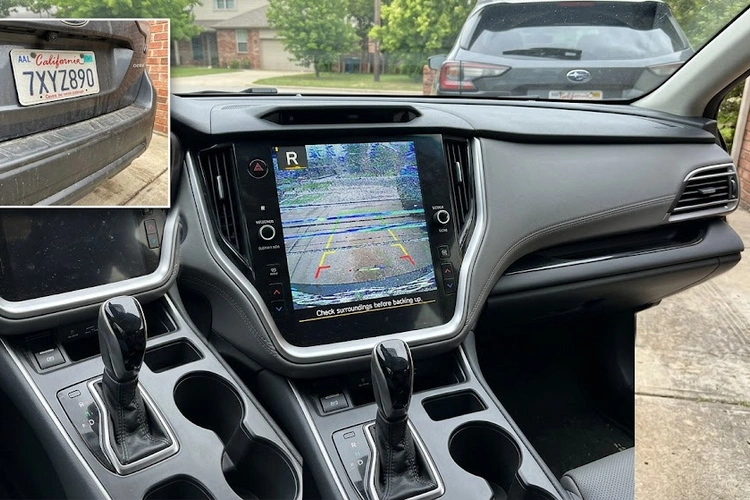
Contents
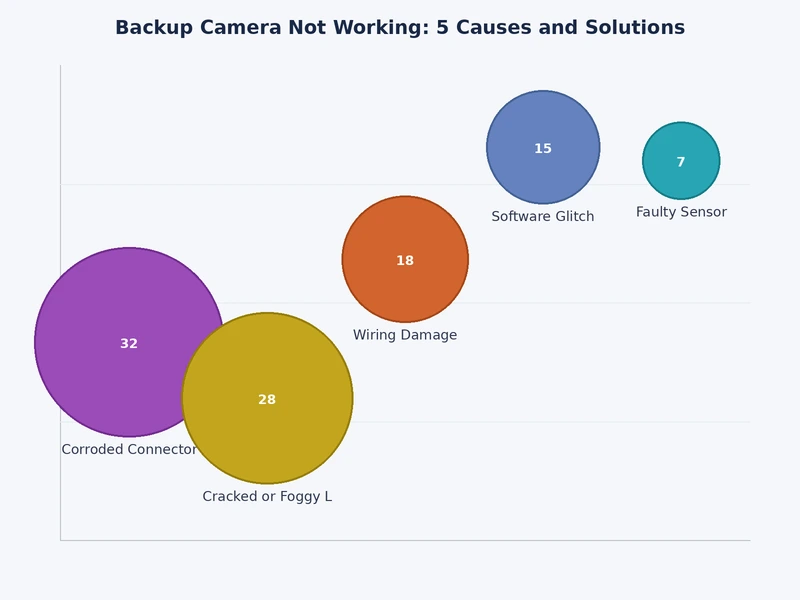
These five causes account for roughly 95% of all backup camera failures. Work through them in order — cheapest and simplest first, most complex last. Don't skip ahead.
This is the most underestimated cause on the list. Road grime, mud, ice, condensation, and even dried water spots coat the lens and produce a blurry, washed-out, or completely dark image. The camera hardware is perfectly fine. You just can't see through it. Clean the lens with a microfiber cloth and a gentle lens cleaner. Takes two minutes. If the image returns, you're done.
If the fogging is behind the glass — a hazy film that won't wipe off — the lens seal has failed and moisture is collecting inside the housing. The camera module is next if you don't act. Replace the housing. A new housing costs $15–$30 and protects a camera module worth ten times that.
A backup camera not working immediately after a jump-start, a power surge, or any event that stressed your electrical system almost always points to a blown fuse. The camera draws power from a dedicated fuse — commonly labeled "RVC," "CAM," or "BACKUP" in your fuse panel. Pull it, look at the wire bridge inside, and replace it if it's broken. Our guide on how to find and replace a car fuse covers the full process step by step. A replacement fuse costs under a dollar.
If the new fuse blows the moment you put the vehicle in reverse, stop. You have a wiring short. A repeatedly blown fuse means current is finding a path to ground that it shouldn't. Move to cause three before replacing anything else.
The camera mounts at the lowest, most exposed point on the rear of your vehicle and runs a long harness all the way to the head unit. That harness passes through the trunk hinge, under the bumper, and through multiple connectors — every one of them a high-wear location. Rodent damage, corrosion, and repeated flex through the trunk hinge are the top culprits. This is the cause behind most intermittent camera failures.
Unplug the connector at the camera end and at the head unit end. Look for bent pins, green corrosion, and cracked or brittle wire insulation. A damaged harness repair costs $100–$250 at a shop. If you're comfortable with automotive wiring, you can splice and repair it yourself for the price of connectors and heat-shrink tubing.
An intermittent backup camera is more dangerous than a dead one — it gives you false confidence. A camera that works randomly has a failing connector that will quit completely without warning, usually in the worst possible situation.
Physical cameras fail from water intrusion, direct impact, and simply aging out. If the lens is clean, the fuse is intact, and the wiring checks out, the camera module itself has likely failed. Confirm it by temporarily connecting a known-good aftermarket camera. If the image appears, the original module is dead.
Aftermarket replacement cameras run $30–$150 depending on resolution and vehicle fitment. OEM cameras from the dealer cost $150–$400. On most vehicles, installation is four bolts and two connectors — a realistic DIY job if you're already comfortable with basic automotive electrical work.
If the camera outputs a signal but the display stays black only when you shift into reverse, the head unit's video input circuit has failed. This is the most expensive cause on this list. Factory head unit replacements cost $400–$1,200 at a dealer. An aftermarket Android Auto or CarPlay unit with a built-in backup camera input runs $150–$400 and often delivers better features at lower cost.
Before replacing the head unit, confirm the camera is actually outputting a signal. Connect a portable monitor directly to the camera's video output wire. If you see an image on the monitor, the camera is fine and the head unit is the problem. If you see nothing, the camera is the failure point — not the display.
Repair costs vary dramatically depending on the cause and whether you go DIY or professional. Here's a clear breakdown of what you're looking at across all five failure points:
| Failure Cause | DIY Cost | Shop Cost | DIY Difficulty |
|---|---|---|---|
| Dirty or obstructed lens | $0–$10 | $20–$50 | Very easy |
| Blown fuse | $1–$5 | $50–$100 | Easy |
| Damaged wiring or connector | $15–$50 | $100–$250 | Moderate |
| Failed camera module | $30–$150 | $200–$500 | Moderate |
| Head unit or display failure | $150–$400 | $500–$1,500 | Advanced |
The DIY savings are substantial at every level. Even a moderate wiring repair saves $60–$200 in labor. Accurate diagnosis is everything here — buying the wrong part wastes more money than the labor would have cost. Before you chase camera-specific causes, rule out your battery. A battery delivering low or unstable voltage causes glitching and black-screen events that mimic hardware failure. Use our guide on how to test a car battery at home to eliminate that variable fast.
Most backup camera failures are preventable with basic attention. The camera sits at the lowest, dirtiest, most thermally exposed point on your vehicle. It deals with more grime, moisture, and vibration than almost any other electronic component. Treating it like an afterthought is how you end up with a failed camera at 80,000 miles instead of 200,000.
Clean the lens every wash cycle. Use a dedicated lens cleaner and a clean microfiber — not the same cloth you just used on the body panels. Inspect the connector at the trunk hinge at least once a year. That's the single highest-wear point in the entire system. In salt-belt climates, coat all exposed connectors with dielectric grease before winter. Salt-induced corrosion is the number one reason cameras fail prematurely in northern states.
Your electrical system health directly affects camera performance. A battery on its way out creates voltage instability that corrupts the camera signal. Long before the battery dies completely, you'll see camera glitches that look like hardware failure. Stay ahead of it. Our guide on extending car battery life covers the maintenance habits that keep your entire electrical system stable. A healthy battery means a stable camera — that connection is direct.
Keep an eye on the housing seal. Fogging inside the lens is your early warning. Catch it early and replace the $20 housing. Ignore it and you'll pay for a $150 camera module. The math is simple.
Backup cameras became federally mandated on all new U.S. passenger vehicles after May 2018 — not because regulators wanted to add complexity, but because the statistics demanded it. The blind zone behind a standard sedan extends 12–15 feet. Behind a full-size SUV or truck, it stretches 25–50 feet. Small children and low obstacles vanish completely in that zone. A camera doesn't eliminate the risk, but it cuts it dramatically.
A backup camera not working becomes especially critical in tight urban parking, reverse parallel parking, loading dock maneuvering, and any scenario involving a trailer or hitch. If you drive an EV or hybrid, the stakes are even higher. Electric drivetrains are nearly silent in reverse. Pedestrians get no audible warning. Our electric car maintenance guide covers what makes EVs fundamentally different to operate and maintain — backup camera reliability is high on that list. Don't file a dead camera under "I'll get to it." Fix it this week.
You park overnight in sub-freezing temperatures. The next morning, the camera shows nothing. This is almost always condensation or ice — either on the lens or inside a housing with a failed seal. Let the vehicle warm up fully before diagnosing. If the image returns after the cabin heats up, the seal is compromised and moisture is cycling in and out with temperature changes. Replace the housing before the next freeze. A housing swap in fall prevents a camera module replacement in spring. It's a $20 fix that buys you years.
Someone jump-starts your car with reversed polarity, or a shop charges the battery aggressively without disconnecting sensitive electronics. The camera goes dark immediately. Pull the fuse first — every time. A blown fuse from a voltage spike is the most common outcome of an improper jump-start, and it's a $1 fix. If the fuse is intact, check whether other electronics failed simultaneously. A power event that killed the camera and the radio together points to a voltage regulator or BCM issue, not an isolated camera failure.
The camera works in the morning, disappears in the afternoon, and comes back the next day. This pattern points directly to a connector making intermittent contact — usually the trunk hinge harness, occasionally the plug at the head unit. Wiggle the harness while you're in reverse and watch the display. If the image flickers in and out as you move the wire, you've found it. The same diagnostic logic applies to other vehicle electronics that fail randomly, like when a key fob stops working intermittently — the root cause is almost always a bad connection rather than a dead component. Identify the exact failure point before buying anything.
Lens cleaning, fuse replacement, connector inspection, and camera module swaps are all realistic DIY jobs requiring only basic tools. A multimeter helps you confirm power at the camera connector. A basic trim removal kit prevents broken clips when you're accessing the camera housing. If you've replaced a headlight bulb yourself, you can replace a backup camera — the job is similar in scope and difficulty. The diagnostic process is logical and sequential. There's no guesswork involved if you follow the five causes in order.
Factory-integrated head unit replacement on modern vehicles is professional territory. These systems communicate over CAN bus, and installing an incompatible replacement can trigger fault codes across multiple control modules. If your display is part of a factory integrated cluster — not a standalone aftermarket head unit — replacement may require dealer-level programming tools. Don't attempt that repair without the right scan tool. Similarly, if you've checked all five causes and still can't identify the failure, a shop with an oscilloscope can trace the signal path in an hour and tell you exactly what's dead.
This is wrong, and it's the most expensive assumption you can make. A black screen is equally likely to be a blown fuse, a bad connector, a failed head unit input, or a software glitch on some factory systems. The camera itself is often completely functional. Check the fuse and connector before you order a $150 replacement module. Most people who buy a new camera and still have a black screen afterward made this mistake.
Not true across the board. Several aftermarket options outperform OEM units in low-light sensitivity and viewing angle. The only thing that matters is correct fitment — the camera needs to match your bumper cutout geometry and connector pinout. A properly fitted aftermarket camera performs identically to the factory unit. Brands like Boyo, Peak, and Brandmotion have solid reputations for fitment accuracy and image quality.
Four out of five backup camera failures fall comfortably within DIY range. Only factory-integrated head unit replacement pushes into professional territory. If you can read a fuse diagram, use a multimeter, and work with basic hand tools, you can diagnose and repair most camera failures at home. The diagnostic process is systematic — no special skills required beyond patience and methodical thinking.
A black screen in reverse most commonly points to a blown fuse, a disconnected or corroded wiring connector, or a failed head unit video input. Check the dedicated backup camera fuse in your fuse panel before assuming the camera module itself is faulty — it's the quickest and cheapest thing to rule out.
Most backup camera failures are repairable without replacing the camera. A lens cleaning, fuse swap, or connector repair fixes the majority of cases. Only a physically destroyed camera module or a failed head unit requires full component replacement.
Costs range from zero dollars for a lens cleaning to $1,500 or more for a dealer head unit replacement. The most common fixes — a blown fuse and a corroded connector — cost under $50 even at a shop. Accurate diagnosis keeps costs low.
Intermittent operation almost always points to a wiring or connector issue. The trunk hinge harness is the most common failure location — the wire flexes every time you open the trunk and eventually loses contact. Wiggle the harness while in reverse to confirm, then repair or replace that section of wiring.
Yes, absolutely. A battery that can't hold stable voltage under load causes signal glitching, blank screens, and delayed camera activation. Always test your battery before diagnosing camera components — a cheap battery test eliminates a common and easily confused variable.
Factory backup cameras don't require routine calibration. If your image appears crooked or the parking guidelines are misaligned after a camera replacement, calibration is done through the head unit settings menu on most vehicles, or with a dealer scan tool on systems with factory sensor fusion integration.
Driving without a working backup camera is legal in most jurisdictions — the mandate applies to new vehicles at the point of sale, not ongoing operation. But it removes a critical safety system. The blind zone behind an SUV or truck can reach 50 feet. Fix it promptly, especially in households with children or pets.
 |
 |
 |
 |

About Sarah Whitfield
Sarah Whitfield is a diagnostics and troubleshooting specialist who spent ten years as an ASE-certified technician before joining the editorial team. She specializes in OBD-II analysis, electrical gremlins, and the kind of intermittent problems that make most owners give up.
Get some FREE car parts & gear.. Or check out the latest free automotive manuals and build guides here.
Disable your ad blocker to unlock all the hidden deals. Hit the button below 🚗
| | | |
