Bad Piston Ring Symptoms: Signs, Causes & Repair Cost
by Sarah Whitfield
Studies estimate that worn piston rings account for roughly 40 percent of abnormal engine oil consumption in vehicles with more than 100,000 miles — a figure that blindsides most drivers who assume their engine is aging gracefully. Piston rings form the gas seal between each piston and its cylinder wall, and when they degrade, combustion pressure escapes, oil burns where it should not, and the powertrain pays the price across every system it drives. Catching bad piston ring symptoms early is the difference between a targeted repair and a full engine rebuild. This guide covers the warning signs, root causes, how to confirm the diagnosis at home, and what professional repair realistically costs. Drivers already dealing with rough power delivery should also read the full breakdown on low compression engine problems, since ring failure is one of its most common triggers.
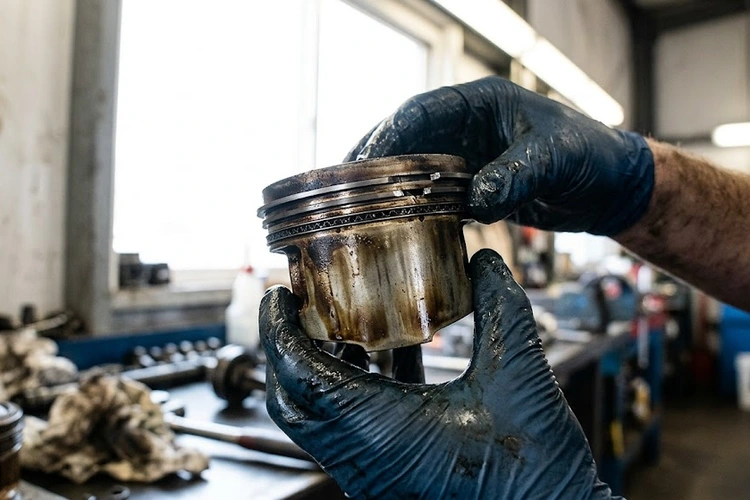
Figure 1 — Worn piston rings with visible scoring and excessive end gap — common findings during an engine teardown prompted by bad piston ring symptoms.
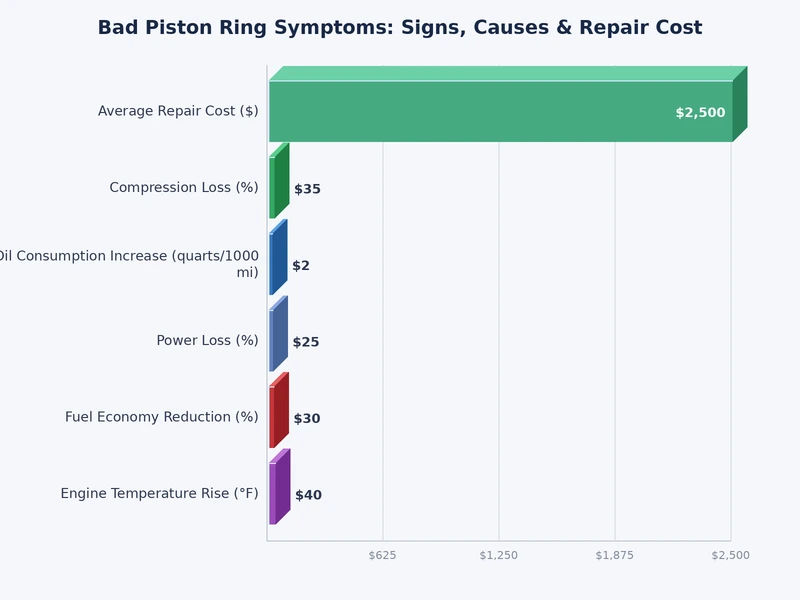
Figure 2 — Relative severity of common bad piston ring symptoms, ranked by how quickly each one causes measurable engine damage if left unaddressed.
Obvious vs. Subtle Bad Piston Ring Symptoms
Piston ring failure rarely announces itself all at once — some symptoms arrive like a fire alarm while others creep in so slowly that most drivers adapt to them without realizing anything is wrong. Knowing which category each sign falls into speeds up the diagnostic process and prevents misdiagnosis.
Clear Warning Signs Worth Acting On Right Away
These bad piston ring symptoms are hard to miss once they appear, and each one signals that compression integrity is already compromised:
Blue or gray exhaust smoke: Burning oil produces a distinctive blue-gray haze from the tailpipe, particularly during cold startup or hard acceleration, confirming that oil is crossing the ring seal and entering the combustion chamber.
Excessive oil consumption: Losing more than one quart per 1,000 miles without any visible external leak is a strong, consistent indicator of ring seal failure — not just aging seals or normal seepage.
Noticeable power loss: Weak cylinder compression robs the engine of its ability to generate full power, making acceleration feel labored and highway merging require far more throttle than it should — a problem also explored in this guide on why a car won't accelerate from a stop.
Poor fuel economy: Incomplete combustion caused by ring blow-by forces the engine to inject more fuel to maintain speed, and the efficiency penalty compounds quickly over time.
Subtler Symptoms That Build Over Time
These signs develop gradually and often get dismissed as quirks until the damage is already substantial:
Oil-fouled spark plugs: Oil slipping past worn rings into the combustion chamber coats plug electrodes with a dark, oily residue that disrupts ignition timing and reliability — a condition covered in depth in this article on spark plug fouling causes and fixes.
Rough idle or random misfires: Reduced cylinder pressure creates uneven combustion across the firing order, producing a rough, shaky idle that deteriorates noticeably as ring wear progresses.
Blowby pressure at the oil filler cap: Removing the oil filler cap while the engine runs and feeling strong puffing or smoke confirms that combustion gases are escaping past rings into the crankcase — the same crankcase pressure phenomenon described in this piece on an oil filler cap blowing off.
Accelerated PCV valve fouling: Ring blow-by floods the positive crankcase ventilation system with oil mist and unburned gases, leaving oily deposits in the intake and shortening PCV valve service life.
Blue exhaust smoke that appears only at cold startup and clears within a minute points more toward worn valve stem seals than piston rings — confirming which one is failing before authorizing teardown saves significant diagnostic time and money.
What Causes Piston Rings to Fail
Understanding what degrades piston rings makes it easier to assess whether a vehicle's history puts it at higher risk, and to narrow down the likely culprit when multiple factors are present.
Everyday Causes Within Any Driver's Control
High mileage and normal wear: Piston rings cycle against cylinder walls thousands of times per minute, and beyond 150,000 miles even well-maintained engines show measurable ring end-gap growth and tension loss.
Infrequent oil changes: Degraded oil loses its protective film strength, allowing increased metal-to-metal contact between rings and bore surfaces that compounds wear with every combustion cycle.
Sustained overheating: High cylinder temperatures cause rings to lose radial tension and can cause them to seize in their grooves — a condition called ring sticking — which prevents the proper sealing action entirely.
Extended idling: Prolonged low-load operation encourages carbon deposit formation in ring grooves, reducing ring mobility and allowing combustion gases to bypass the seal.
Less Obvious Mechanical Contributors
Engine detonation: Knock and pre-ignition subject piston rings to severe mechanical shock — a root cause examined thoroughly in this guide on engine pinging noise — and repeated detonation events crack or deform rings well before normal wear would.
Coolant contamination: A head gasket leak that allows coolant into the oil disrupts lubrication chemistry and leaves rings running against cylinder walls with minimal protection, as explained in the article on milky oil on the dipstick.
Wrong oil viscosity: Oil thinner than specified burns off ring contact surfaces too quickly under load, while excessively thick oil in cold climates resists pumping on startup and starves rings during the most vulnerable operating window.
Abrasive contamination: A cracked or poorly seated air filter allows fine dust and grit into cylinders, where it acts as a lapping compound against ring and bore surfaces and dramatically accelerates wear.
Cause
Typical Onset
Damage Severity
Prevention Difficulty
High mileage / normal wear
100,000–150,000 miles
Moderate
Low (expected)
Infrequent oil changes
Variable
High
Very easy
Overheating events
Any mileage
Severe
Easy (respond promptly)
Engine detonation / knock
Any mileage
Severe
Moderate
Coolant contamination
Any mileage
Severe
Moderate
Wrong oil viscosity
Variable
Moderate
Very easy
Abrasive air contamination
Variable
High
Easy (filter inspection)
How to Diagnose Bad Piston Rings at Home
Two tests stand above all others for confirming ring failure without engine teardown — the compression test and the leak-down test. Running both in sequence gives a complete picture of cylinder health and points clearly toward rings versus valves.
Running a Compression Test
A compression tester costs between $20 and $60 at any auto parts store, and the procedure is straightforward enough for any mechanically inclined driver to complete in under an hour according to Wikipedia's overview of engine compression testing.
Warm the engine to operating temperature, then shut it off — warm clearances give the most accurate baseline readings for each cylinder.
Remove all spark plugs and disable the fuel injectors or fuel pump to prevent the engine from firing during cranking.
Thread the compression gauge into the first cylinder's spark plug hole and crank the engine for five to seven full seconds while recording the peak reading.
Repeat for all cylinders and note any that read consistently below 100 psi or more than 10 percent lower than the highest cylinder — either condition signals a problem.
Perform the wet test: squirt two teaspoons of engine oil into any low-reading cylinder, reseat the gauge, and retest. A significant compression rise confirms ring failure; a flat result points toward valves as the culprit instead.
The Leak-Down Test: More Precise, More Informative
A leak-down tester feeds pressurized air into each cylinder and measures the percentage that escapes, making it the most precise non-invasive cylinder health tool available.
Position each piston at top dead center on the compression stroke using timing marks or a piston stop tool before connecting the tester.
Apply regulated shop air through the leak-down tester and read the percentage of leakage shown on the gauge — under 10 percent is healthy, 10–20 percent indicates moderate wear, and anything above 20 percent demands prompt attention.
Listen for the exit point: air escaping from the oil filler cap confirms ring blow-by; hissing at the exhaust points to exhaust valves; air rushing into the intake indicates intake valve trouble; and bubbling in the coolant reservoir signals a head gasket problem.
Document each cylinder individually, since uneven leakage across cylinders often reveals localized damage from detonation or overheating rather than uniform wear.
Piston Ring Repair Costs and Protecting Engine Longevity
Piston ring replacement requires full engine teardown and internal machining — this is not a job that shortcuts well, and understanding the real cost structure helps owners make smarter decisions about whether to repair, rebuild, or replace.
Understanding What Repair Actually Costs
Parts alone: A complete ring set for most four-cylinder engines runs $40–$120 for quality aftermarket sets, or $100–$300 for OEM parts — a relatively modest line item in an otherwise expensive job.
Labor: Engine removal, disassembly, ring replacement, cylinder bore honing, and reassembly typically requires 10–20 shop hours at $80–$150 per hour, putting labor alone at $800–$3,000 depending on the vehicle and shop location.
Total job cost: Most drivers pay between $1,500 and $4,000 for a complete professional piston ring replacement, with high-displacement, turbocharged, or luxury engines pushing toward the upper end of that range.
Rebuild vs. replacement: When a vehicle already has significant mileage and the total repair estimate approaches the value of the car, a remanufactured or quality used engine swap often delivers better long-term value than rebuilding worn internals.
Practical Steps to Extend Piston Ring Life
Change oil on a strict schedule: Fresh oil at the correct viscosity is the most impactful single maintenance action for ring longevity — most modern engines running full synthetic benefit from changes every 5,000–7,500 miles without exception.
Respond to overheating immediately: A single severe overheating event can stick rings in their grooves permanently — continuing to drive with the temperature gauge pegged is never a calculated risk worth taking.
Inspect the air filter regularly: Replace filters on schedule and seal any cracked or loose intake ducting, since abrasive contamination causes ring wear that accumulates invisibly across tens of thousands of miles.
Address engine knock without delay: Detonation is cumulative ring damage happening in real time — resolving the underlying cause, whether fuel quality, carbon buildup, or ignition timing, stops that damage clock immediately.
Allow a proper warm-up period: Aggressive driving before oil reaches operating temperature stresses rings during the brief window when clearances are tightest and the oil film is thinnest.
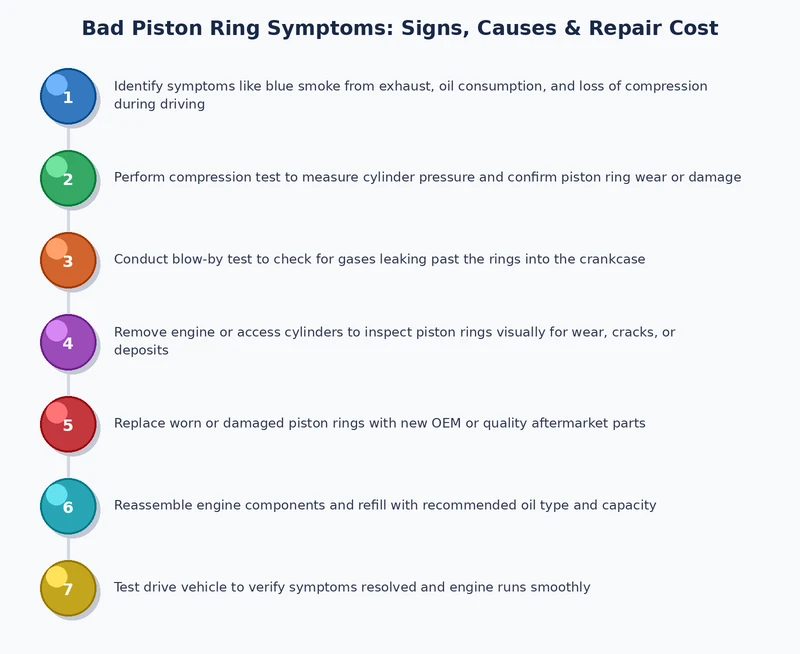
Figure 3 — Diagnostic flow for bad piston ring symptoms: compression test first, wet test to confirm rings vs. valves, then leak-down test to pinpoint the exit point and severity.
Frequently Asked Questions
Can an engine keep running with bad piston rings?
Yes — an engine can continue running with worn piston rings, but performance degrades progressively, oil consumption increases, and the damage compounds over time. Driving with confirmed ring failure for extended periods risks scoring cylinder walls, fouling the catalytic converter with burned oil, and eventually causing a more expensive failure elsewhere in the engine.
How do mechanics confirm bad piston rings without tearing the engine apart?
The wet compression test is the most reliable non-invasive method — if adding a small amount of oil to a low-compression cylinder temporarily raises the reading, the rings are confirmed as the sealing failure point. A leak-down test further confirms this by detecting air escaping specifically through the oil filler cap rather than through the valves or head gasket.
How long does a piston ring replacement typically take at a shop?
A full piston ring replacement job generally takes two to four days at a professional shop, since the engine must be removed, fully disassembled, internally cleaned, and reassembled with the cylinder bores honed to match the new rings. Rushing the process by skipping bore honing or thorough cleaning leads to premature failure of the new rings.
Is it worth replacing piston rings on a high-mileage engine?
On vehicles with more than 200,000 miles, a ring-only replacement often makes less financial sense than a full engine rebuild or a quality used engine swap, since other internal components — bearings, cam lobes, valve seats — will be at or near the end of their service life as well. A thorough cost-versus-value assessment based on the vehicle's overall condition and market value is the right starting point.
Do engine oil additives fix bad piston rings?
Seal conditioner and high-mileage oil additives can reduce oil consumption slightly in mildly worn engines by swelling elastomer seals and improving oil viscosity, but they do not restore ring tension, close excessive end gaps, or remove carbon deposits from ring grooves. For genuinely failed rings, additives are a temporary band-aid that delays — rather than eliminates — the need for mechanical repair.
Key Takeaways
The most reliable bad piston ring symptoms are blue exhaust smoke, oil consumption exceeding one quart per 1,000 miles, noticeable power loss, and oil-fouled spark plugs — all of which accelerate engine damage the longer they go unaddressed.
A wet compression test is the most accessible DIY confirmation method: a significant pressure rise after adding oil to a low-compression cylinder points directly at the rings rather than the valves.
Professional piston ring replacement costs $1,500–$4,000 in total, making early symptom detection critical to keeping repair costs from escalating into full rebuild territory.
Consistent oil changes, immediate overheating response, prompt treatment of engine knock, and clean air filtration are the highest-impact habits for extending piston ring service life well beyond average mileage.
Sarah Whitfield is a diagnostics and troubleshooting specialist who spent ten years as an ASE-certified technician before joining the editorial team. She specializes in OBD-II analysis, electrical gremlins, and the kind of intermittent problems that make most owners give up.