by Sarah Whitfield
You're heading out for a routine errand when you notice the brake pedal pushing back with less resistance than it should — you catch it, pump it once, and the feeling goes away. Three days later, a small wet patch appears on the inside of the rear wheel that wasn't there before. That combination of soft pedal and unexplained fluid loss is a textbook case of bad wheel cylinder symptoms, and it's worth understanding before the situation develops further.
Drum brakes — still fitted to the rear axle of many passenger cars and light trucks — depend on wheel cylinders to translate hydraulic pressure into mechanical force against the brake shoes. When a cylinder's internal seals start to fail, that force becomes inconsistent, and safe stopping distance becomes a gamble. If you're working through multiple possible causes, CarCareTotal's troubleshooting section covers a broad range of brake-related and mechanical issues worth reviewing alongside this guide.
Contents
Wheel cylinder failure rarely happens all at once — it develops gradually, with symptoms that are easy to dismiss until they compound into a genuine safety concern. Here are the three most reliable indicators to watch for.
A pedal that feels mushy underfoot or continues sinking under steady pressure points directly to a loss of hydraulic integrity somewhere in the circuit. If the master cylinder is functioning correctly and you've already ruled out brake booster failure with a quick vacuum hold test, a leaking wheel cylinder becomes the next logical suspect. Air entering the system as fluid escapes is what creates that compressible, spongy feel, and it only gets worse as more fluid bypasses the worn seals with each brake application.
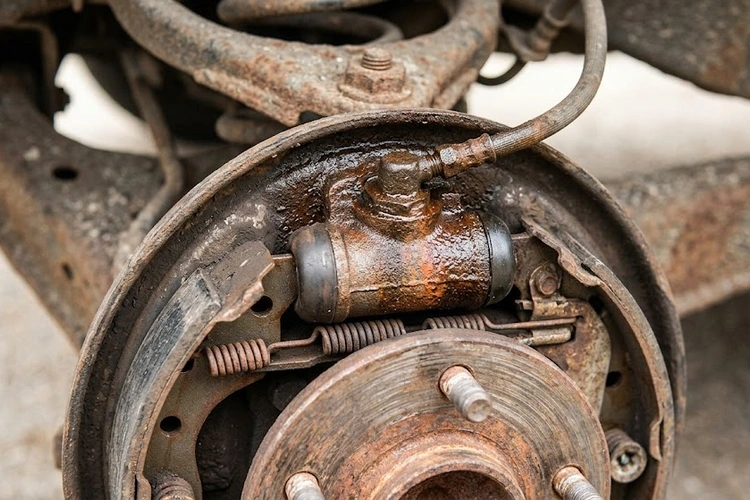
Clear-to-yellowish fluid weeping from behind the drum or coating the inner face of the wheel is physical confirmation of seal failure. Brake fluid has a slightly sweet, glycol-like smell that distinguishes it from the brownish engine oil you'd track down when diagnosing a rear main seal leak. Any contamination that reaches the brake shoes glazes the friction material and extends stopping distances measurably — which means a leaking cylinder often requires shoe replacement alongside the cylinder itself.
When hydraulic output varies between the two rear cylinders, the vehicle pulls toward the side generating more clamping force during a stop. You might also notice rear tire wear that doesn't match the fronts — a diagnostic overlap with the conditions you'd investigate when addressing uneven tire wear. Asymmetric braking force creates the same directional instability as a seized disc brake caliper, so it carries the same urgency level regardless of which system is generating it.
Before committing to parts and labor, a pair of hands-on checks takes about 20 minutes and gives you a high level of diagnostic confidence without any specialized equipment.
With the vehicle stationary and the engine running, apply steady firm pressure to the brake pedal and hold it for 30 full seconds. A healthy hydraulic system holds the pedal position without movement — if it gradually sinks toward the floor, fluid is bypassing seals somewhere in the circuit. A failing wheel cylinder on a rear drum axle frequently produces a slow pedal sink without any other obvious external leak, making this test especially valuable when the visual inspection is inconclusive or when the cylinder is only just beginning to weep.
Pro tip: Always replace wheel cylinders in axle pairs — both units share identical operating history and thermal cycling, so a cylinder that's survived alongside a failed one is rarely far behind it.
In any of these cases, driving to a shop rather than continuing normal operation is the right call. Brake hydraulic problems don't self-correct, and a short daily commute becomes a genuine liability when stopping performance is already degraded in an unpredictable way.
Trace moisture without active dripping, a firm pedal with no measurable sink over 30 seconds, and no reservoir level drop over several days could point to residual pressure from a recent brake bleed or thermal cycling rather than active seal failure. Even so, re-inspect within 48 to 72 hours — cylinder degradation almost never reverses, and surface seepage worsens as heat cycling continues to stress compromised rubber. Monitoring here means days, not weeks, and the car should stay close to home until you confirm the situation is stable.
Wheel cylinder replacement sits in the middle of the DIY difficulty range — it requires disconnecting a brake line, proper cylinder seating, and a thorough bleed, but it doesn't demand specialized equipment beyond a flare-nut wrench, a bleeder kit, and patience on the final step.
| Repair Scope | DIY (parts only) | Shop (parts + labor) |
|---|---|---|
| Single wheel cylinder | $15 – $40 | $80 – $150 |
| Axle pair (recommended) | $30 – $80 | $160 – $280 |
| Rear brake shoes (if contaminated) | $20 – $60 | $80 – $160 |
| Brake drum (if scored beyond spec) | $30 – $90 each | $100 – $240 each |
| Full rear drum service (all components) | $80 – $200 | $260 – $520 |
Labor rates in most U.S. markets range from $85 to $145 per hour, with dealerships at the top of that range and independent shops considerably more competitive. According to NHTSA's brake safety resources, hydraulic brake system integrity is a federally monitored safety standard — part of why shops are conservative about parts sourcing and thorough bleed procedure on any hydraulic brake repair.
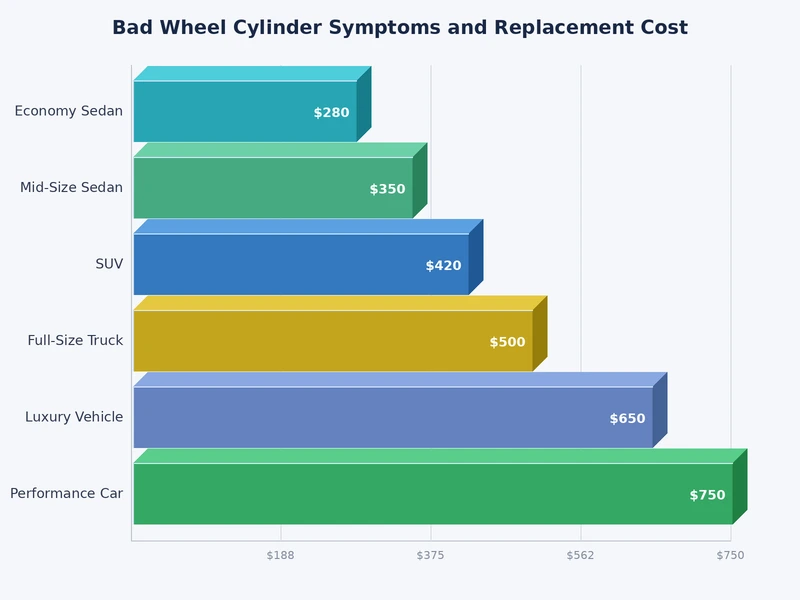
Gradual leak on a sedan: The owner notices the pedal needs slightly more travel than usual to achieve normal deceleration, and the reservoir needs topping off every few weeks with no obvious puddle on the driveway. Inspection reveals one rear cylinder weeping past the outer dust boot slowly enough to avoid pooling, but fast enough to have glazed the adjacent shoe. The repair involves both rear cylinders, a fresh set of shoes, and a complete system bleed — total shop cost lands around $330 to $380 depending on region.
Intermittent lockup on a pickup: The right rear wheel locks unpredictably on wet pavement during moderate braking, briefly stepping the rear end out. The cause is a cylinder piston partially seized from bore corrosion — it delivers inconsistent pressure, spiking clamping force on that corner rather than releasing it progressively. Once the cylinder is replaced and the system properly bled, the driver gets back the balanced, linear pedal feel that had degraded so gradually they hadn't noticed it was gone until it returned.
The most reliable indicators are a brake pedal that feels spongy or slowly sinks under steady pressure, visible brake fluid weeping from the rear wheel area or backing plate, and the vehicle pulling toward one side during braking. A firm pedal with no fluid loss and no pull generally rules out wheel cylinder failure as the primary cause.
You shouldn't, especially if there's active fluid loss or the pedal is soft. Even a partially failing cylinder can produce unpredictable stopping distances, and if fluid loss continues unchecked, hydraulic pressure can drop to the point where braking becomes seriously compromised. It's a safety-critical issue, not a monitor-and-drive situation.
Yes — replacing in axle pairs is standard practice. Both cylinders have endured identical operating conditions, heat cycles, and brake fluid exposure, so if one has failed, the other is typically close behind. Replacing only the failed side often brings you back to the shop within a few months for the other one.
Most wheel cylinders last between 70,000 and 100,000 miles under normal driving conditions. Vehicles operated in high-humidity climates or on roads treated with de-icing salts often see earlier failures because the cylinder bore and piston are vulnerable to corrosion that accelerates seal degradation over time.
A wheel cylinder is specific to drum brake systems — it contains two opposing pistons that push brake shoes outward against the inside of a rotating drum. A brake caliper is used in disc brake systems and squeezes brake pads against the faces of a rotor. Both components serve the same hydraulic function of converting fluid pressure into mechanical clamping force, but they're mechanically distinct and are not interchangeable.
Yes, indirectly. A leaking wheel cylinder displaces fluid out of the closed hydraulic circuit, which lowers the level in the master cylinder reservoir. Once the reservoir drops below the minimum threshold, the low-fluid sensor triggers the brake warning light on the dashboard. If your warning light appears alongside a reservoir that needs topping off, inspect all four corners for leaks before assuming the master cylinder is the source.
Rebuild kits — which supply new rubber cups and dust boots — are viable only when the cylinder bore is smooth and undamaged. A scored or corroded bore won't seal reliably with new cups regardless of how carefully the rebuild is done. Given that a new cylinder typically costs $15 to $40, most technicians recommend outright replacement in all but the cleanest bore conditions, where the labor of rebuilding isn't justified by the modest parts savings.
Wheel cylinder problems are among the more straightforward brake repairs once you've confirmed the root cause, but they demand prompt attention because the hydraulic system leaves very little margin for error once seal integrity starts to go. Whether you're planning a DIY repair or scheduling time at a trusted shop, get the inspection done now — pull the drum, check the bore condition, evaluate the shoes, and replace both rear cylinders together so you walk away with balanced, reliable braking performance rather than a half-fixed system that brings you back in two months.
 |
 |
 |
 |

About Sarah Whitfield
Sarah Whitfield is a diagnostics and troubleshooting specialist who spent ten years as an ASE-certified technician before joining the editorial team. She specializes in OBD-II analysis, electrical gremlins, and the kind of intermittent problems that make most owners give up.
Get some FREE car parts & gear.. Or check out the latest free automotive manuals and build guides here.
Disable your ad blocker to unlock all the hidden deals. Hit the button below 🚗
| | | |
