by Diego Ramirez
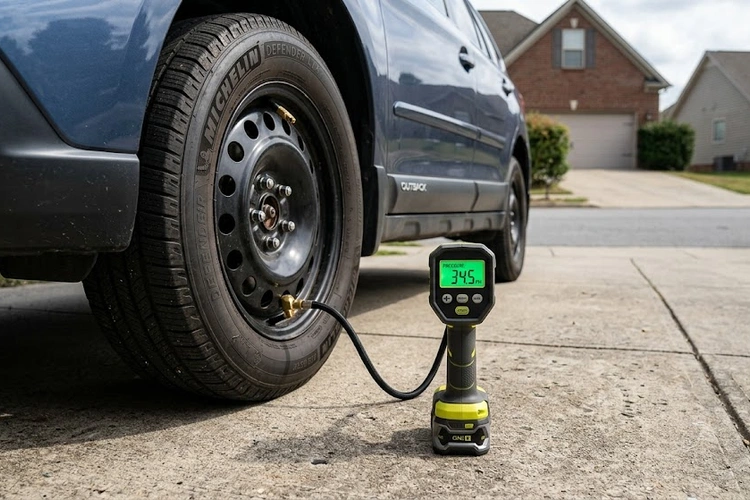
It was a Tuesday evening when I pulled into a rest stop on the highway and noticed one of my tires had gone noticeably soft — not flat enough to wobble, but low enough to worry about. The nearest gas station was twelve miles back, and the air pump there had been out of order for weeks. That's the moment you realize that owning the best portable tire inflator isn't a luxury accessory; it's practical insurance that pays for itself the first time you actually need it.
This guide covers six of the top portable inflators on the market right now, including a full specifications table, step-by-step instructions, buying advice, and answers to the questions drivers ask most often. Before you start inflating, it also helps to know your vehicle's recommended cold pressure, so check out our complete walkthrough on how to check tire pressure correctly if you haven't reviewed those numbers recently.
Contents
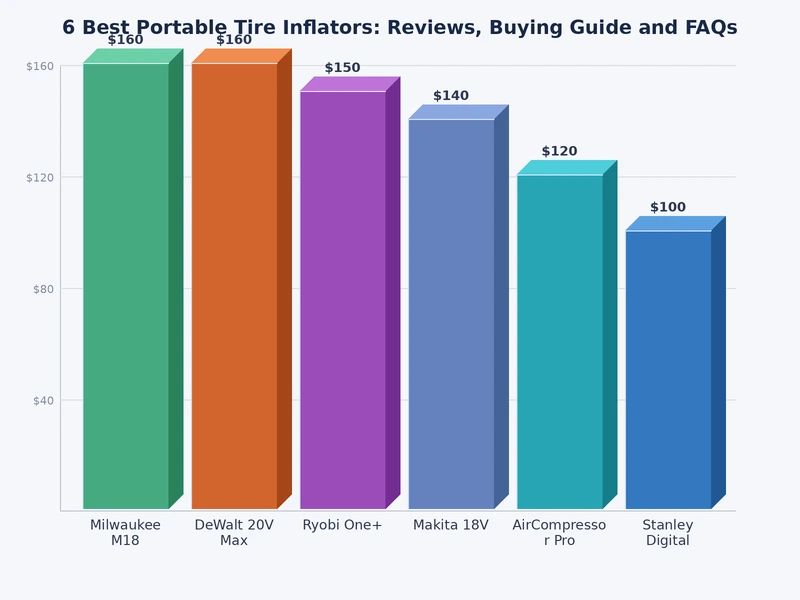
The market for portable inflators has expanded considerably in recent years, which is good news for shoppers but makes narrowing down the options more confusing than it should be. The six models below represent a range of price points, power sources, and use cases, so you can find the best portable tire inflator that actually fits your driving situation rather than just the one with the most reviews online.
1. AstroAI 150 PSI Tire Inflator — This 12V corded model plugs into your car's cigarette lighter socket and delivers a straightforward, no-frills inflation experience at a budget-friendly price. The backlit digital gauge reads clearly in low light, and the auto-shutoff feature stops inflation precisely at your preset target. Inflation time for a standard passenger tire from around 20 PSI runs approximately five minutes, which is competitive for a corded entry-level unit.
2. Fanttik X8 APEX Portable Inflator — The dual-cylinder brushless motor in the X8 APEX sets it apart from most competitors in its class by cutting inflation time noticeably compared to single-cylinder designs. It reaches 150 PSI, includes a well-organized carrying case, and charges via USB-C rather than relying on a car outlet, which makes it genuinely useful anywhere you happen to need it.
3. CRAFTSMAN V20 Cordless Tire Inflator — If you already own tools in CRAFTSMAN's V20 battery ecosystem, this inflator slides into that platform without requiring a separate charger or battery purchase. It handles up to 150 PSI and auto-shuts off cleanly at your target pressure, and sharing batteries across a full set of garage tools is a practical advantage that keeps your storage area simpler over time.
4. Ryobi ONE+ 18V Cordless Inflator — Ryobi's enormous ONE+ battery platform means millions of existing tool owners can add this inflator without any extra investment in batteries or charging hardware. The digital gauge includes a built-in light, the nozzle storage compartment keeps all the adapter fittings in one place, and it handles bicycle tires and sports equipment just as well as car tires.
5. Kensun Dual-Power Portable Air Compressor — The dual-power design — both 12V DC from your car and 110V AC from a standard outlet — makes this model uniquely versatile for drivers who want one inflator they can use in their garage and on the road. It runs at 30 L/min flow rate and includes a built-in flashlight that is genuinely useful rather than merely a marketing footnote.
6. EPAuto 12V DC Portable Air Compressor — A reliable budget pick with thermal protection that cuts off the motor before overheating can cause permanent damage, which is a feature some pricier models still omit. The gauge accuracy is solid out of the box, and the price point makes it a reasonable first inflator for new drivers who want dependable basic performance without overcommitting financially.
| Model | Power Source | Max PSI | Flow Rate | Auto Shutoff | Best For |
|---|---|---|---|---|---|
| AstroAI 150 PSI | 12V DC | 150 PSI | 28 L/min | Yes | Budget / everyday use |
| Fanttik X8 APEX | Built-in Li-ion | 150 PSI | 40 L/min | Yes | Speed & portability |
| CRAFTSMAN V20 | 20V battery | 150 PSI | 26 L/min | Yes | CRAFTSMAN tool owners |
| Ryobi ONE+ 18V | 18V battery | 150 PSI | 25 L/min | Yes | Ryobi tool owners |
| Kensun Dual Power | 12V DC / 110V AC | 120 PSI | 30 L/min | Yes | Home + road flexibility |
| EPAuto 12V DC | 12V DC | 100 PSI | 23 L/min | Yes | New drivers / value pick |
Even the best portable tire inflator is only useful if you know how to operate it correctly, and a few preparation steps make a real difference in both accuracy and safety. The National Highway Traffic Safety Administration notes that underinflated tires are a leading contributor to tire failure, which makes getting the pressure right more important than the process might suggest at first glance.
Set your target PSI on the unit if it supports auto-shutoff, then power on the inflator and let it run. If you're using a model without auto-shutoff, pause every thirty seconds or so to check the gauge manually rather than letting it run unattended. Most passenger car tires fall between 30 and 35 PSI, and overinflation shrinks the contact patch just as harmfully as running low.
If a puncture caused the pressure drop, inflate the tire fully and then consider a tire plug repair before driving on, since continuing to drive on a slow leak will damage the sidewall over time beyond any repair option. Once the tire reaches its target, disconnect the hose cleanly, reinstall the valve cap, and stow the inflator before you drive away.
Pro tip: Always check tire pressure when the tires are cold — meaning driven less than a mile — because a hot tire reads 4 to 6 PSI higher than its actual cold pressure, which can cause you to inadvertently underinflate when adjusting after a drive.
Owning a portable inflator is straightforward, but keeping it in reliable working condition when you actually need it takes a few consistent habits that are easy to overlook between uses. Tools that sit unused for months have a way of failing at the worst possible moment, and inflators are no exception to that pattern.
It's also worth pairing good inflation habits with attention to other tire-related components. If your vehicle has been handling differently or pulling to one side, it may be worth reading about signs your shocks and struts need replacing, since worn suspension components cause uneven tire wear that correctly inflated tires alone cannot address.
Budget inflators often read 2 to 4 PSI higher or lower than actual pressure, so cross-check your new unit against a quality standalone pencil or dial gauge during its first few uses. Once you know the offset, you can compensate at the target setting without needing to second-guess the readings every time. Digital gauges are generally more consistent than analog needles, particularly at the lower pressure ranges where most passenger cars operate.
A portable inflator handles a wide range of situations effectively, but it has genuine limitations that are worth understanding clearly before you depend on it in an emergency. Knowing when it's the right solution versus when you need something else entirely can save you meaningful time and frustration.
A portable inflator cannot help you with a blown-out tire carcass, a sidewall puncture, or a compromised bead seal — those require a tow and a tire replacement rather than inflation. If the valve stem itself is leaking, inflating will accomplish nothing since the air will escape as quickly as you put it in. In those situations, your spare tire becomes the relevant solution, and understanding loose lug nut symptoms and safe removal technique before you need to swap a tire is time better spent than researching faster inflators. Run-flat tires also generally should not be reinflated after a pressure loss until a technician has inspected them for internal structural damage that wouldn't be visible externally.
The quality gap between portable inflators is wider than the price gap suggests, and spending a small amount of time on the buying decision pays off in years of reliable service versus a unit that works twice and then develops an intermittent fault. Rather than chasing the lowest price or the highest peak PSI number, focus on the features that affect daily usability and long-term durability.
Corded 12V models are the most reliable option if you always inflate near your vehicle, since they draw directly from the car battery and never need separate charging. Cordless battery-powered inflators offer genuine freedom of movement and work with the engine off, but you're responsible for keeping that battery charged between uses — easy to forget for a tool you reach for only occasionally. If you already invest in a particular battery platform for other garage tools, choosing an inflator that shares those batteries is almost always the most practical and cost-effective long-term decision rather than introducing a second charging ecosystem to manage.
Rounding out your vehicle maintenance toolkit alongside a quality inflator is worth the additional investment. Protecting your paint and finish with one of the best car covers shields the exterior during storage, and knowing how to test your car battery at home ensures your electrical system is reliable enough to power a 12V inflator when you need it most.
Most passenger cars require between 30 and 35 PSI, but the correct number for your vehicle is printed on the sticker inside the driver's door jamb. Never use the maximum PSI number embossed on the tire sidewall as your target — that's the tire's upper pressure limit, not the manufacturer's recommended operating pressure for your specific vehicle and load.
A standard passenger car tire inflated from completely flat to around 32 PSI typically takes between four and eight minutes with a portable inflator, depending on the flow rate of the unit and the tire's volume. Larger SUV and truck tires take proportionally longer, often ten to fifteen minutes, so thermal protection on your inflator becomes more important when you're dealing with bigger tires regularly.
If your inflator has a reliable auto-shutoff feature and you've set the correct target PSI, brief unattended operation is generally fine for reaching a preset pressure. However, running any inflator beyond its rated continuous-use cycle time without a break risks overheating the motor, so consult the manual for your specific unit's duty cycle and always stay close enough to intervene if something sounds wrong.
Yes, but inflation time increases significantly compared to passenger car tires because the total air volume is much larger. Any inflator rated to 100 PSI or above will reach the typical 35 to 45 PSI range that trucks and SUVs require, though a higher flow rate — ideally 30 L/min or more — makes the process noticeably faster and reduces heat stress on the motor during the extended run time.
Apply a small amount of soapy water around the base of the valve stem while the tire is at full pressure and watch for bubbles, which indicate a leak at the stem. A leaking valve stem can often be fixed inexpensively with a new valve core, which you can replace with a simple valve core tool available at any auto parts store — though a severely corroded or damaged stem may require professional replacement.
Most tire manufacturers and vehicle OEMs advise against reinflating run-flat tires after they have operated in a low-pressure or zero-pressure condition, because the internal reinforced sidewall structure can sustain invisible damage that makes the tire unsafe to drive on further. If your run-flat has lost pressure, have it inspected by a professional before reinflating and continuing, since driving on a structurally compromised run-flat is a safety risk that no amount of correct inflation pressure can mitigate.
The terms are often used interchangeably in consumer marketing, but there's a practical distinction worth noting. Portable tire inflators are specifically designed for inflating tires and similar applications, typically operate at lower CFM with a higher maximum PSI, and are optimized for compact storage. Full portable air compressors generally offer higher airflow volume and can power pneumatic tools, but they're much bulkier and heavier — making them less practical to carry in a vehicle for roadside emergencies.
 |
 |
 |
 |

About Diego Ramirez
Diego Ramirez is a maintenance and care specialist who has been wrenching on cars since he was sixteen. He focuses on fluid changes, preventive care routines, paint protection, and the small habits that turn a five-year-old car into a fifteen-year-old car.
Get some FREE car parts & gear.. Or check out the latest free automotive manuals and build guides here.
Disable your ad blocker to unlock all the hidden deals. Hit the button below 🚗
| | | |
