by Sarah Whitfield
A failed blower motor resistor is the most straightforward explanation for a heater fan that works on high but refuses to respond on lower speeds — and the repair costs far less than most people expect. Blower motor resistor symptoms follow a consistent, recognizable pattern across virtually every make and model, which makes this one of the faster electrical diagnoses in automotive work. Our team has traced this failure on everything from compact sedans to full-size trucks, and the root cause is nearly identical every time. Anyone dealing with a car heater not working correctly should treat the resistor as the first suspect before replacing anything else.
The blower motor resistor sits directly in the HVAC airflow path, regulating voltage to the blower motor and controlling fan speed. Years of heat cycling accumulate fatigue in the resistor windings until one or more speed positions drop out entirely. Understanding how that failure unfolds accelerates the diagnosis considerably.
Contents
The resistor controls fan speed by introducing resistance into the circuit, stepping down voltage at lower settings. High speed in most factory designs bypasses the resistor entirely — the blower motor runs on full battery voltage. That bypass is exactly why "fan only works on high" is the signature blower motor resistor symptom. It's not coincidence; it's how the circuit is engineered, and that design makes the failure pattern immediately recognizable to anyone who understands it.
Our team breaks blower motor resistor symptoms into four distinct failure modes:
According to Wikipedia's article on blower motor resistors, the component's position directly in the airflow path is a deliberate cooling design — but that same location subjects it to relentless thermal cycling that accumulates structural fatigue over years of use.
Beyond speed irregularities, a failing resistor often signals trouble through secondary indicators. A sharp, acrid burning smell from the vents — distinctly different from mold or dust odors — indicates a resistor actively overheating. Our team's detailed breakdown of diagnosing strange car smells covers the full HVAC odor spectrum; the resistor burn is consistently described as electrical, plastic-like, and unmistakable once encountered.
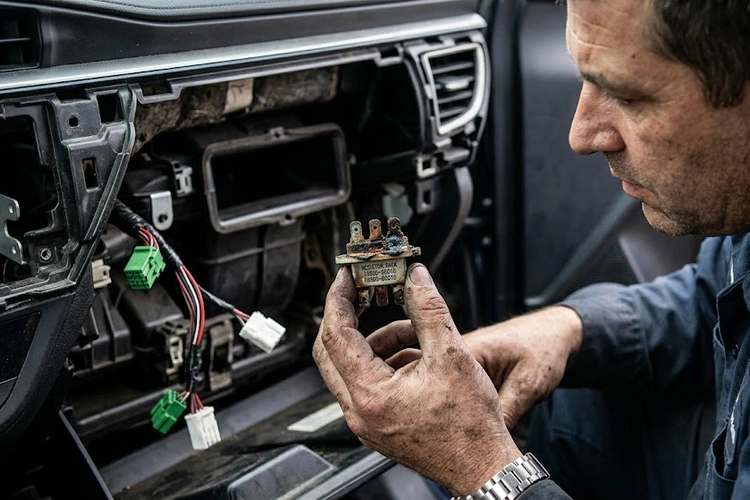
Physical inspection of the resistor and connector frequently reveals:
Warning: Installing a new resistor into a damaged connector guarantees premature failure — our team has seen replacement resistors burn out within weeks when this critical step is skipped.
The blower motor resistor ranks among the more affordable electrical repairs in automotive maintenance. The part itself is inexpensive, labor time is short, and total repair cost stays well below most HVAC work. Exact numbers vary by vehicle type and whether the job is done in-house or at a shop, but the spread is narrow compared to other climate control repairs.
| Vehicle Type | OEM Part Cost | Aftermarket Part Cost | DIY Total | Shop Total (Part + Labor) |
|---|---|---|---|---|
| Compact / Midsize Sedan | $25 – $55 | $10 – $30 | $10 – $55 | $80 – $150 |
| Full-Size Truck / SUV | $35 – $80 | $15 – $45 | $15 – $80 | $100 – $200 |
| Luxury / European Import | $60 – $150 | $25 – $75 | $25 – $150 | $150 – $350 |
| Minivan / Dual-Zone HVAC | $40 – $100 | $20 – $55 | $20 – $100 | $120 – $250 |
Most shops bill 0.5 to 1.0 hours of labor for this repair. At an average rate of $100 to $150 per hour, labor adds $50 to $150 on top of the part. Dealerships charge more — $120 to $200 in labor is common at a franchise dealer even for a 30-minute job. Our team's consistent recommendation is a well-reviewed independent shop; the quality of the repair is identical at a meaningfully lower price.
For most domestic vehicles and many imports, resistor replacement is a realistic DIY repair. The component is accessible, the connector is simple, and no specialized equipment is required. Our team places this in the same category as cabin air filter replacement — practical for anyone comfortable working under the dash.
Verifying the correct part number against the vehicle's VIN is essential before ordering. Resistor connectors vary significantly between trim levels on the same model year, and an incorrect part won't seat properly against the duct housing.
The blower motor resistor is one of the more straightforward electrical diagnoses available, but a few persistent errors lead technicians and owners to the wrong conclusion — or to the right conclusion via a far more expensive path than necessary.
The most costly mistake is replacing the blower motor when only the resistor has failed. A motor that operates perfectly on high speed is not a failed motor. Our team sees this error regularly — the blower motor gets replaced at $100 to $300 in parts alone, the symptom persists, and the resistor gets replaced anyway. The diagnostic rule is simple: if high speed works, the motor is fine. Start with the resistor.
Intermittent operation is the second commonly misread symptom. Most people attribute intermittency to a wiring fault or loose ground and begin tracing circuits before the resistor is even considered. Those checks have value, but statistically the resistor is the cause of heat-related intermittency in the blower circuit in the overwhelming majority of cases.
Installing a new resistor into a corroded or melted connector is a guaranteed repeat failure. The connector is frequently what caused the resistor to overheat in the first place — poor contact generates resistance, resistance generates heat, heat destroys the resistor. Pigtail connector repair kits are available for most common applications at $10 to $25. Skipping this inspection risks a second repair within months of the first.
Several durable misconceptions circulate in online forums and among less experienced technicians. Our team addresses the most damaging ones directly.
The blower motor gets blamed disproportionately because it's the most familiar component in the circuit. In practice, when a fan loses speed positions but retains high-speed function, the blower motor is almost never the culprit. The resistor fails at a dramatically higher rate — the motor is designed to outlast it under normal conditions. Our team's rule is firm: if high works, replace the resistor first, every time, without exception.
Resistor failure correlates more strongly with HVAC duty cycle and regional climate than with odometer reading. Vehicles in harsh winters or extreme summers — where the fan runs at near-maximum output for months at a time — experience resistor failure earlier regardless of mileage. Our team has documented blower motor resistor symptoms on vehicles under 60,000 miles in high-use climates. Years of service is often a better predictor of failure than miles driven.
Replacing the resistor resolves the immediate failure, but a handful of practices extend the life of the new component and protect the broader HVAC system. Anyone addressing heating system issues should also consider adjacent repairs at the same time — our team's walkthrough of fixing a rattling heat shield covers another commonly neglected HVAC-adjacent component worth inspecting during the same service visit.
A clogged cabin air filter forces the blower motor to work harder, increasing current draw and generating excess heat through the resistor circuit. Most manufacturers recommend replacing the cabin filter every 15,000 to 25,000 miles. Our team recommends the shorter interval in dusty or high-pollution environments. The filter change takes under five minutes and costs less than $20 — far less than a repeat resistor replacement caused by a motor running under strain.
Intermittent fan behavior is the clearest early warning of a resistor beginning to fail. Most people ignore intermittency until complete failure occurs — at which point the resistor has often damaged the connector as well. Our team's approach is straightforward: any unexplained change in fan behavior triggers a resistor inspection. Catching partial failure early keeps total repair cost at the low end of the range and protects the wiring harness from progressive heat damage.
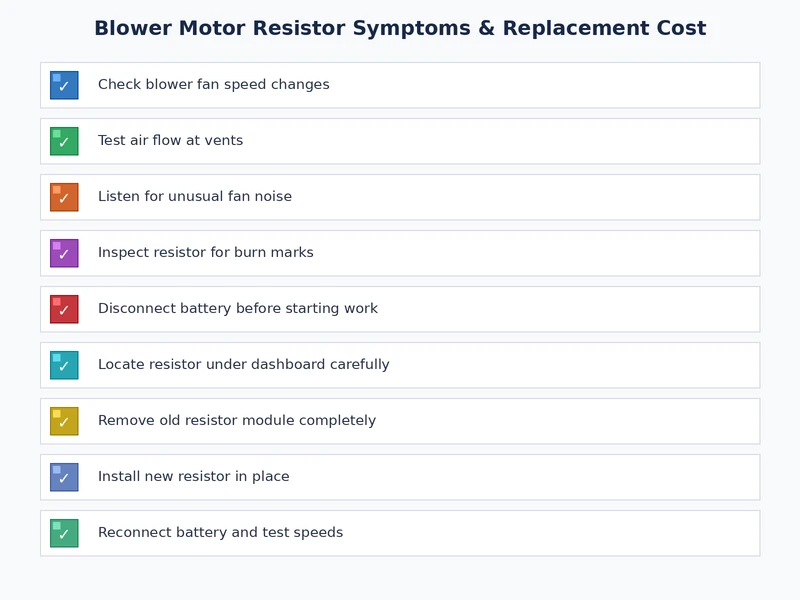
The clearest blower motor resistor symptom is a fan that operates on high speed but fails on lower settings. Our team also watches for intermittent operation, a sharp burning smell from the vents, and visible burn marks on the resistor body or its wiring connector. A multimeter test showing an open circuit across the resistor terminals confirms the diagnosis definitively before any parts are purchased.
A resistor drawing excessive current during failure can stress the blower motor over time, particularly when the motor is forced to run exclusively on high speed for extended periods. Our team recommends addressing blower motor resistor symptoms promptly — the resistor is a $10 to $80 part depending on the vehicle, while blower motor replacement runs substantially more and involves more disassembly.
On most vehicles, yes. The resistor is accessible without removing major components, the connector is simple, and the job requires only basic hand tools and a multimeter. Our team rates this among the more approachable electrical repairs for anyone comfortable working under the dash. Luxury vehicles with more complex HVAC packaging or dual-zone systems may warrant professional service.
Most resistors last 8 to 12 years or 80,000 to 120,000 miles under normal use, though HVAC duty cycle and regional climate affect longevity significantly. Vehicles in climates with extreme seasonal demands — where the fan runs continuously for months — experience earlier failure regardless of mileage. Our team has documented failure under 60,000 miles in high-use environments and well beyond 150,000 miles in mild ones.
This is the defining presentation of a failed blower motor resistor. The high-speed circuit on most vehicles bypasses the resistor entirely, connecting the blower motor directly to battery voltage. When the resistor burns out, only that high-speed circuit remains functional. Our team treats this symptom as near-confirmed resistor failure and proceeds directly to a multimeter check and replacement rather than investigating other components first.
Blower motor resistor symptoms are among the most diagnosable electrical failures in automotive HVAC — the pattern is consistent, the part is affordable, and the repair is within reach for most hands-on owners. Our team encourages anyone who has noticed fan speed irregularities to perform a multimeter check before scheduling shop time; in the majority of cases, a $10 to $80 part and an hour of focused work restores full HVAC function. Start with the resistor, inspect the connector carefully, test every speed position before reassembling, and this straightforward repair stays both quick and inexpensive.
 |
 |
 |
 |

About Sarah Whitfield
Sarah Whitfield is a diagnostics and troubleshooting specialist who spent ten years as an ASE-certified technician before joining the editorial team. She specializes in OBD-II analysis, electrical gremlins, and the kind of intermittent problems that make most owners give up.
Get some FREE car parts & gear.. Or check out the latest free automotive manuals and build guides here.
Disable your ad blocker to unlock all the hidden deals. Hit the button below 🚗
| | | |
