Car AC Smells Musty: 5 Causes & How to Fix

by Sarah Whitfield

Approximately 70 percent of vehicles develop musty HVAC odors at some point in their service life, making it one of the most frequently reported cabin air quality complaints across all vehicle classes and climates. When car AC smells musty, the underlying cause is almost always biological — mold, mildew, or bacteria colonizing the evaporator core, drain pan, or cabin air filter, then releasing volatile organic compounds into the passenger compartment every time the blower motor runs. The smell signals a microbial problem that deepens with every ignored drive cycle and does not self-resolve without direct intervention.

Musty AC odor shares surface-level characteristics with smoke contamination — drivers managing both issues should review the guide on how to get smoke smell out of a car for overlapping duct-cleaning strategies — but musty smells have distinct biological origins that require targeted remediation rather than generalized odor treatment.
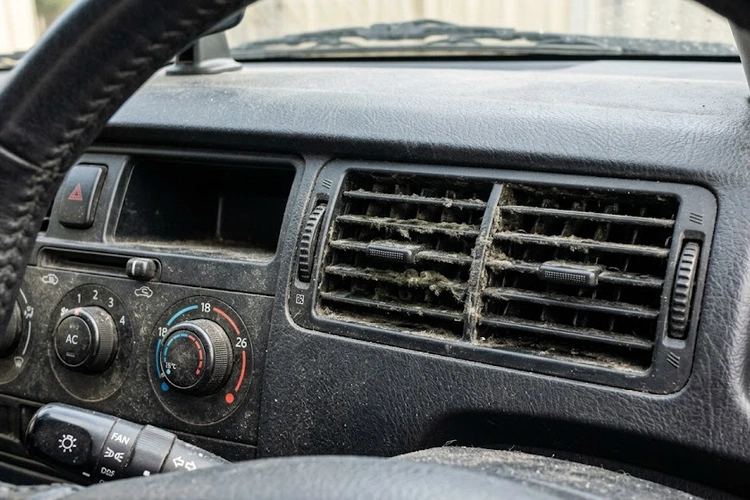
Car AC evaporator coil with mold buildup causing musty smell inside cabin
Figure 1 — Mold colonizing the evaporator coil is the leading reason car AC smells musty, and it requires direct chemical treatment to resolve.
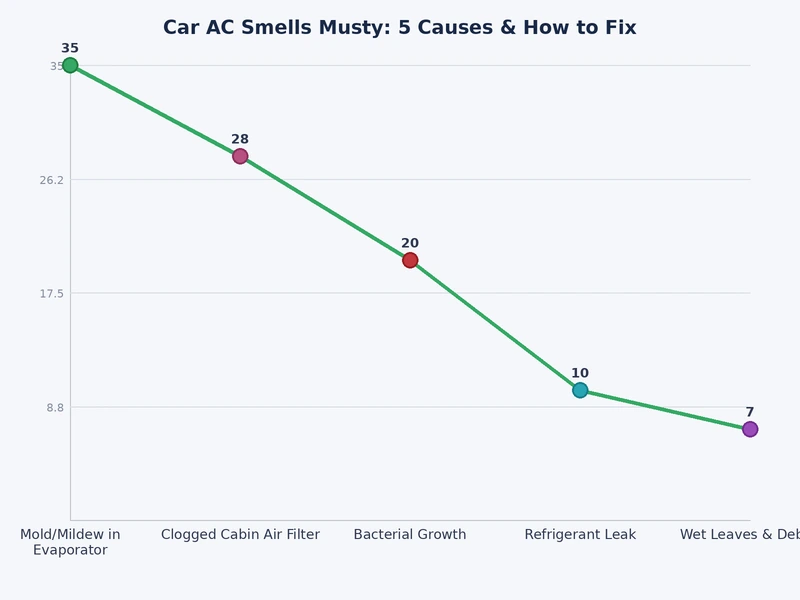
Bar chart showing relative frequency of car AC musty smell causes with evaporator mold ranking highest
Figure 2 — Frequency distribution of root causes when car AC smells musty, based on HVAC technician diagnostic data across vehicle age groups.

5 Root Causes of Musty Car AC Smell

1. Mold on the Evaporator Coil

The evaporator coil lives inside a sealed HVAC box, stays dark and consistently damp between drive cycles, and provides the warm, humid microclimate that mold genera like Cladosporium and Penicillium require to establish colonies. The CDC identifies these species as documented indoor air quality hazards capable of producing respiratory irritants even at moderate exposure concentrations. Spores and mycotoxins are then distributed through every cabin register whenever the blower runs at any speed setting.

  • Musty odor peaks immediately at AC startup, then diminishes slightly as the coil begins to dry during operation.
  • Visible black or gray residue on vent louvers indicates colonization has extended well beyond the evaporator fins themselves.
  • Vehicles parked in humid, shaded environments are disproportionately affected compared with those stored in covered garages or dry climates.

2. Saturated Cabin Air Filter

A cabin air filter loaded with pollen, leaf litter, and organic debris retains moisture from evaporator condensation and becomes a secondary mold colony in its own right, amplifying rather than preventing microbial contamination in the incoming airstream.

  • Most OEM filters carry a 12,000–15,000 mile service rating, but coastal and forested environments drive saturation far earlier than those intervals suggest.
  • A visibly discolored filter with a strong embedded odor warrants replacement regardless of current mileage or service interval.
  • Activated-carbon filter media adsorbs VOCs and provides modest antimicrobial benefit that standard cellulose paper does not offer.

3. Blocked Condensate Drain Line

The evaporator drain tube exits through the firewall or floor pan, routing condensate safely clear of the vehicle; when algae, road debris, or compacted grime blocks it, water backs up into the HVAC box and pools under the evaporator, sustaining continuous mold growth between every drive cycle.

  • A soaked passenger-side floor mat is the most reliable secondary symptom pointing directly to a backed-up condensate drain.
  • Drivers who have also noticed a coolant puddle under the car should verify that any floor-area fluid is clear and odorless rather than pink or orange before attributing it to the condensate drain.
  • Clearing the drain with compressed air or a flexible wire brush resolves standing water immediately and rarely takes more than five minutes to complete.

4. Contaminated Air Ducts and Vents

Duct walls accumulate a biofilm layer over years of operation — a combination of dust, skin cells, ambient humidity, and microbial growth — that neither cabin filter replacement nor evaporator spray can reach without direct application through the vent openings themselves.

  • Odor that persists after both filter and evaporator treatment points to duct contamination as the remaining primary source.
  • Flexible foam applicator wands designed for automotive HVAC ducts deliver cleaner to contact surfaces up to 18 inches into the duct run without disassembly.
  • Duct contamination is slow to establish but equally slow to eliminate; two or three treatment sessions spaced a week apart produce more consistent results than a single heavy application.

5. Stagnant Water in the HVAC Housing

HVAC housings develop low points where condensate puddles and stagnates between short drives that never allow the system to dry fully, particularly in vehicles used exclusively for brief urban commutes that run maximum-cold AC without sufficient runtime to complete a full evaporation cycle.

  • High-humidity climates produce housing moisture levels that standard operating cycles cannot clear without deliberate drying procedures.
  • Vehicles driven on short loops of under 15 minutes develop housing moisture accumulation significantly faster than highway-driven vehicles with longer AC runtime.

Pro tip: Running the blower on maximum fan speed with the AC compressor switched off for the final 5–10 minutes of every drive evaporates residual moisture from the evaporator fins and HVAC housing, cutting microbial growth rates measurably over time.

Diagnostic Tools and Cleaning Products

What the Job Requires

Addressing musty car AC smell properly demands both diagnostic access and the correct chemical formulations — penetrating foam cleaners designed for biological contamination, not surface sprays intended for upholstery or interior plastics.

  • Flexible flashlight or automotive borescope for visual inspection inside the evaporator box and drain pan area
  • Compressed air source or flexible wire brush for condensate drain line clearing
  • Self-rinsing evaporator foam cleaner in aerosol format — non-self-rinsing formulas leave residue that accelerates future contamination
  • HVAC duct cleaning wand with foam applicator tip rated for automotive duct access
  • Replacement cabin air filter — OEM specification minimum, activated-carbon HEPA preferable for high-humidity environments
  • Nitrile gloves and safety glasses for chemical handling during evaporator treatment

Product Comparison by Type

Product Type Target Area Application Method Effectiveness Rating
Self-rinsing evaporator foam cleaner Evaporator coil and drain pan Sprayed through cabin filter housing intake; rinses via condensate drain High — direct coil penetration
HVAC duct bomb / fogger Full duct network and cabin surfaces Canister placed in cabin with blower running on recirculate mode Moderate — broad coverage, limited coil contact
Activated-carbon cabin filter Incoming airstream filtration Drop-in replacement at OEM filter housing location High for prevention; zero remediation benefit
Cabin air freshener / odor bomb Cabin air only Passive release or aerosol spray into cabin None — masks odor without addressing the source

Quick Wins: Fast Fixes That Actually Work

Three targeted interventions deliver meaningful odor reduction within a single day and require no specialized labor beyond basic mechanical access to the cabin filter housing and blower system.

1. Swap the Cabin Air Filter

  1. Locate the cabin air filter housing — typically positioned behind the glove box panel, under the dash on the passenger side, or at the base of the windshield in the engine bay depending on the vehicle platform.
  2. Remove the existing filter and inspect it for visible mold growth, heavy gray or brown discoloration, or strong odor that confirms the filter itself is a contamination source.
  3. Install a new filter rated to OEM specification, or upgrade to an activated-carbon HEPA unit for improved VOC adsorption and odor suppression on every subsequent drive cycle.
  4. Spray a light application of evaporator cleaner into the filter housing intake before seating the new filter, treating upstream contamination that the new filter would otherwise immediately encounter.

2. Apply Evaporator Foam Cleaner

  1. Purchase a self-rinsing aerosol evaporator cleaner — established formulas from Wynn's, Chemical Guys HVAC, or Meguiar's Whole Car Air Re-Fresher are proven options with wide service history.
  2. Remove the cabin air filter to expose the evaporator box intake plenum, then insert the spray tube and dispense the full canister in a slow, sweeping motion across the opening.
  3. Allow the foam to dwell for the manufacturer-specified time — typically 5–10 minutes — giving the active chemistry time to penetrate and kill mold colonies on the coil fins and drain pan surfaces.
  4. Run the AC on maximum fan speed for 10 minutes afterward to flush loosened debris and residual cleaner through the condensate drain and out of the system.
  5. Repeat after 7–10 days if musty odor persists; severe colonization reliably requires two treatments rather than one, and skipping the second treatment allows surviving colonies to repopulate within weeks.

3. The Defrost Dry-Out Trick

Running the defroster at maximum heat and fan speed for 10 minutes raises evaporator housing temperatures high enough to kill surface mold colonies and evaporate standing moisture from housing low points, delivering immediate short-term relief at zero cost and meaningful long-term benefit when applied consistently at the end of every drive in humid conditions.

AC Odor Myths That Waste Time and Money

Several persistent misconceptions lead drivers to spend money on ineffective products while the biological source continues growing unchecked inside the HVAC system.

  • Myth: The smell goes away on its own. Without physical removal of mold colonies or elimination of moisture, musty car AC smell does not resolve — it intensifies as contamination depth increases through successive humid drive cycles.
  • Myth: Air fresheners fix the problem. Fragrance products mask VOC signatures temporarily without altering microbial populations, and the blended smell typically returns within days in a form most drivers find worse than the original odor.
  • Myth: Only old cars get musty AC. Vehicles as new as two years old develop evaporator mold in humid climates, particularly when maximum-cold AC is used on short trips that never allow the coil to dry between cycles.
  • Myth: Running AC on recirculate prevents the smell. Recirculate mode concentrates cabin humidity within the closed loop, accelerating evaporator colonization compared with fresh-air mode and making the mold problem worse over time, not better.
  • Myth: A professional detail solves it permanently. Interior detailing addresses cabin surfaces and upholstery but does not reach the evaporator box, drain pan, or duct walls where the biological source lives; odor returns within weeks without direct HVAC treatment.

Drivers dealing with persistent cabin odors alongside other system anomalies should also investigate adjacent causes: those who have noticed smoke coming from under the hood in combination with a musty smell should rule out a heater core leak or refrigerant contamination before attributing the entire odor problem to mold.

Long-Term Prevention and Maintenance

Eliminating an established mold colony solves the immediate problem, but preventing recurrence requires deliberate changes to how the AC system is operated and serviced throughout the vehicle's service life. Half-measures that treat symptoms without addressing moisture management guarantee that the musty smell returns within a season.

  • Switch from recirculate to fresh-air mode for the final 10 minutes of every drive in humid weather, flushing accumulated moisture out of the cabin loop before shutdown.
  • Run the blower without the AC compressor engaged for 5–10 minutes at drive's end to passively dry the evaporator fins and HVAC housing before the vehicle sits overnight.
  • Park with windows cracked by 1–2 inches when safe to do so, reducing the cabin humidity load that the AC system must process at the next cold startup.
  • Inspect and flush the condensate drain line annually — a 5-minute preventive task that eliminates the standing-water conditions responsible for the most aggressive mold growth rates.
  • Upgrade to an activated-carbon cabin filter at the next replacement interval and treat the switch as a permanent change rather than a one-time experiment.

Recommended Maintenance Schedule

  • Every 12,000–15,000 miles (or once per year): Replace cabin air filter; inspect filter housing for visible mold or moisture accumulation.
  • Every 2 years: Full self-rinsing evaporator foam treatment applied through the filter housing intake, followed by a 10-minute blower flush at maximum fan speed.
  • Each spring and fall: Inspect and clear the condensate drain line; check for wet floor mats that indicate early blockage.
  • At first odor onset: Execute the full diagnostic sequence — filter replacement, drain inspection, evaporator spray treatment — before escalating to professional HVAC box disassembly and direct coil access.

Frequently Asked Questions

Why does car AC smell musty only when first turned on?

The musty odor is strongest at startup because moisture trapped in the evaporator coil and HVAC housing overnight concentrates mold VOC output; once the system runs for a few minutes, airflow dilutes the odor even though the contamination source remains fully intact and active.

How long does evaporator cleaner take to work on musty car AC smell?

Most self-rinsing evaporator foam cleaners produce noticeable odor reduction within one to two drive cycles after application; severely contaminated systems require a second treatment after 7–10 days, and cases where duct contamination is also present benefit from a supplemental duct bomb between the two evaporator applications.

Can musty car AC smell be harmful to vehicle occupants?

Mold spores and mycotoxins circulated through the cabin HVAC system are documented respiratory irritants, particularly for occupants with asthma, allergies, or compromised immune function; even species classified as non-toxic produce irritation with repeated daily exposure, which means treating the source is a health priority and not merely a comfort issue.

Key Takeaways

  • When car AC smells musty, the cause is mold or mildew on the evaporator coil, cabin filter, or HVAC housing — a biological problem that worsens with every ignored drive cycle.
  • Replacing the cabin air filter and applying a self-rinsing evaporator foam cleaner resolves the majority of cases without professional disassembly or specialized labor.
  • Air fresheners and generalized odor bombs mask the smell without eliminating the microbial source, guaranteeing recurrence within days to weeks of application.
  • Running the blower without AC for the final minutes of every drive in humid conditions is the single most effective long-term prevention habit available at zero cost.

About Sarah Whitfield

Sarah Whitfield is a diagnostics and troubleshooting specialist who spent ten years as an ASE-certified technician before joining the editorial team. She specializes in OBD-II analysis, electrical gremlins, and the kind of intermittent problems that make most owners give up.

Get some FREE car parts & gear.. Or check out the latest free automotive manuals and build guides here.

Disable your ad blocker to unlock all the hidden deals. Hit the button below 🚗