by Sarah Whitfield
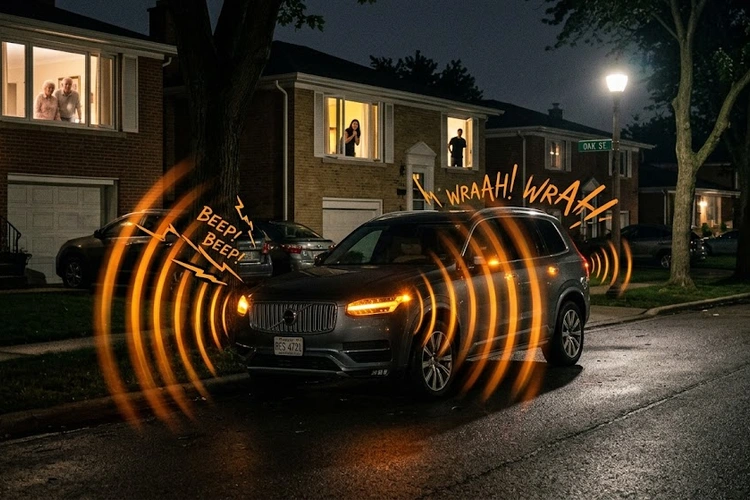
It's midnight. Your car alarm starts screaming in the driveway — for the third time this week. You hit the fob, it stops, and ten minutes later it starts again. You already know it's a false alarm. The question is why.
When your car alarm keeps going off without a real threat, the system isn't broken — it's misfiring. The fix almost always comes down to one specific component: a weak battery, a dirty sensor, or a bad connection. For a full overview of alarm-related problems and solutions, visit our car alarm troubleshooting resource. This guide covers all seven causes and gives you a concrete fix for each one. Before you start, check our detailed walkthrough on battery terminal corrosion — corroded posts are one of the most overlooked false alarm triggers on the road.
Contents
False alarms push people toward expensive decisions. Most of those decisions are wrong. Here's what the common assumptions get backwards.
When a car alarm keeps going off, the instinct is to assume the entire system is fried. That is almost never the case. A single failing component — a $12 hood pin switch or a corroded terminal — causes the vast majority of false alarms. Replace the part, not the system.
Modern alarms respond to voltage drops, vibration, and pressure changes. None of those require a human attacker. A passing diesel truck, a wind gust, or an overnight battery drain can all set one off. Eliminate the mechanical causes first before assuming criminal intent.
If your alarm fires every time a truck drives by, your shock sensor sensitivity is the problem — not your neighborhood's crime rate.
Cleaning terminals, pressing pin switches, and adjusting sensitivity dials does not void any factory warranty. The warranty concern only applies to modifying or replacing the alarm control module itself. Everything else is fair game for DIY diagnosis.
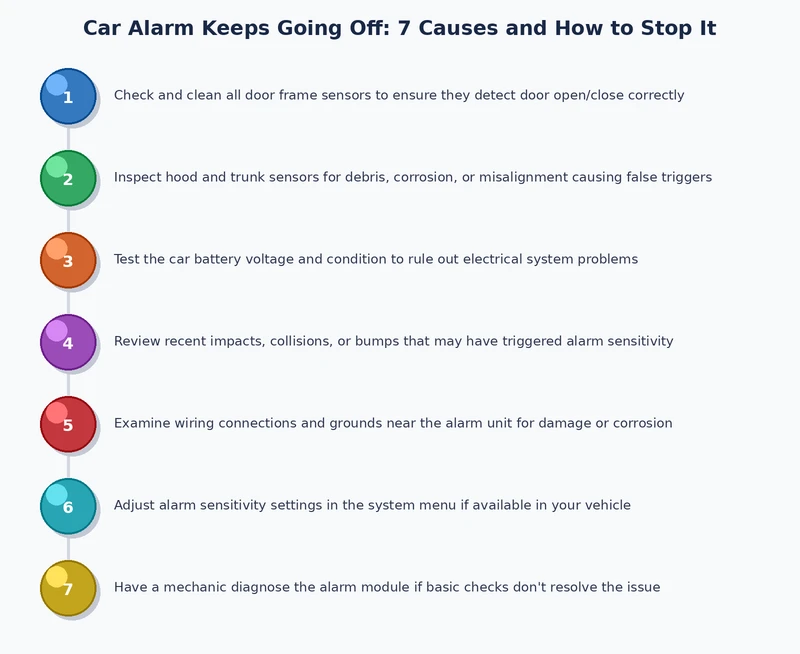
Work through this list in order. It runs from most common to least common. Most vehicles hit their answer within the first three causes.
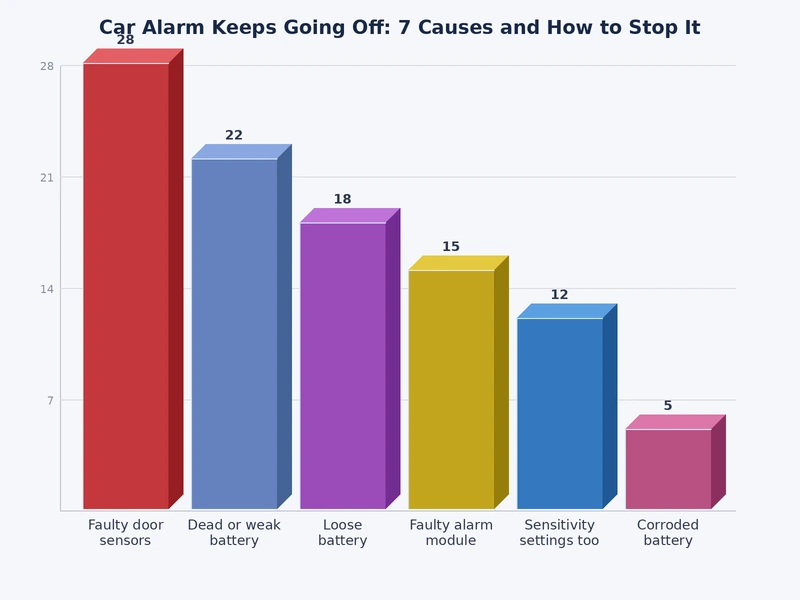
A low battery is the single most common false alarm trigger. When voltage drops below roughly 12 volts, the security system reads it as a power interruption — exactly what happens when someone cuts a wire to kill your alarm. It fires as a precaution.
A dying fob battery sends weak or partial signals. The alarm module misreads an incomplete signal as an unauthorized entry attempt. This is more common than most people realize — and it costs less than $5 to rule out.
Your car monitors the hood with a pin switch — a simple mechanism that signals "open" or "closed." When that switch gets dirty, corroded, or physically fails, the alarm thinks someone is prying the hood. Vehicles driven in harsh climates suffer this most.
Every door, trunk, and hatch has a jamb switch that tells the alarm whether it's open or closed. A failing switch reports "open" when the door is fully latched. The alarm responds to what it sees in the sensor data — not the physical reality of the door.
Shock sensors detect vibration. Aftermarket installs often leave them at maximum sensitivity. A passing truck, bass-heavy music, or a strong wind gust fires them at that setting. The sensor is doing its job — it's just calibrated wrong.
Corrosion on battery posts creates resistance in the electrical circuit. That resistance causes voltage fluctuations the alarm reads as a fault condition. Even a thin layer of white or blue buildup can trigger repeated false alarms.
For a full cleaning walkthrough, see our guide on battery terminal corrosion. The short version:
Sloppy aftermarket alarm installations are a significant source of mystery false alarms. Improper wire taps, loose butt connectors, and cheaply spliced wires degrade over months and years. Rodent damage causes the same problem — chewed insulation creates intermittent shorts that fire the alarm with no pattern you can predict.
Aftermarket alarm wiring is the hardest problem to diagnose without a vehicle-specific wiring diagram. Download yours before you start tracing wires — guessing costs hours.
Whether you're diagnosing an existing problem or deciding what to do long-term, understanding the differences between these two system types changes how you approach the repair.
Factory alarms are integrated directly with the body control module (BCM). They are factory-calibrated for the specific vehicle and communicate through the OBD-II network. That integration is a strength for reliability and a weakness for cost when things go wrong.
Aftermarket systems are standalone modules wired into the vehicle's electrical harness. They are entirely dependent on installation quality. A professional install from a reputable shop performs well for years. A budget install from a strip-mall audio shop creates problems indefinitely.
According to Wikipedia's overview of car alarm technology, most modern factory systems incorporate tilt sensors, glass-break sensors, and door monitoring — all of which can generate false triggers as sensors age or accumulate debris.
Most causes are cheap to fix yourself. Shop labor multiplies costs fast when you arrive without knowing the root cause. Diagnose first, then decide whether to DIY or bring it in.
| Cause | DIY Parts Cost | Shop Labor (est.) | DIY Difficulty |
|---|---|---|---|
| Weak or dead battery | $80–$200 (replacement battery) | $20–$40 install | Easy |
| Key fob battery | $3–$8 | N/A | Very easy |
| Hood latch sensor | $10–$25 | $50–$100 | Easy |
| Door jamb switch | $15–$40 | $60–$120 | Moderate |
| Shock sensor adjustment | $0 | $50–$80 | Easy |
| Battery terminal cleaning | $5–$10 (cleaner and brush) | $30–$60 | Very easy |
| Wiring repair (aftermarket) | $10–$35 (connectors, heat shrink) | $100–$350+ | Moderate–Hard |
| Alarm module replacement | $50–$250 (module) | $100–$300 | Hard |
Bring it to a shop when:
If your car is showing other unrelated electrical symptoms — like a check engine light with no drivability issues — request a full electrical diagnostic at the same visit. Overlapping faults frequently share a single root cause.
You do not need a full shop setup. A handful of inexpensive tools handles 90% of false alarm diagnoses at home.
A 30-minute annual maintenance routine stops most false alarm problems before they start. These steps cost almost nothing. Most of them piggyback on tasks you already do.
If your aftermarket alarm triggers false alarms more than three times in a single month, the system is no longer providing security — it's providing noise. At that point, consider these options:
Overnight false alarms are almost always caused by a battery voltage drop. As ambient temperature falls, battery output decreases — and the alarm interprets the drop as a fault condition. Test your battery with a multimeter. If it reads below 12.4V after sitting overnight, replace it before chasing any other cause.
Diagnose the root cause before replacing anything. For most vehicles, cleaning corroded battery terminals or replacing the key fob battery resolves the issue immediately. If the alarm keeps firing after those two fixes, check the hood and door sensors with a test light before assuming the alarm module itself is faulty.
Yes. Insert your physical key into the driver's door lock and turn it to the unlock position — this disarms most factory alarms. For aftermarket systems, locate the valet switch (typically under the driver's side dash or in the glove compartment) and press it once with the key in the ignition.
It will. A battery reading below 12V sends voltage fluctuations through the security circuit that the alarm module interprets as a tampering event. Replacing or fully recharging the battery resolves this cause immediately and completely. It is the first thing you should rule out.
Park your car and observe it in normal conditions. If loud music, a passing truck, or heavy rain sets it off, the sensitivity is too high. Locate the sensor under the dash and turn the adjustment dial counter-clockwise by one notch. Repeat the test and adjust again until only direct physical impact triggers the alarm.
For the most common causes — battery replacement, key fob battery, or terminal corrosion — the fix takes 30 minutes or less with basic tools. Sensor replacement runs one to two hours. Wiring diagnosis on an aftermarket system can take three to five hours depending on how well the original installation is documented.
A car alarm that cries wolf isn't protecting your vehicle — it's training every neighbor and passerby to tune it out entirely.
 |
 |
 |
 |

About Sarah Whitfield
Sarah Whitfield is a diagnostics and troubleshooting specialist who spent ten years as an ASE-certified technician before joining the editorial team. She specializes in OBD-II analysis, electrical gremlins, and the kind of intermittent problems that make most owners give up.
Get some FREE car parts & gear.. Or check out the latest free automotive manuals and build guides here.
Disable your ad blocker to unlock all the hidden deals. Hit the button below 🚗
| | | |
