by Joshua Thomas
Car detailing for beginners starts with one simple truth: it's not as hard as it looks. The hobby has a reputation for complexity, but once you understand the basics, anyone can achieve professional-level results at home with modest tools and a couple of free hours. This guide walks you through every step — products, process, and pro tips — so you can protect your vehicle and keep it looking its best.
Unlike a basic car wash, detailing is a thorough clean and light restoration of every surface, inside and out. It removes embedded dirt, protects paint from the elements, and rejuvenates the cabin. Before you buy a single product, read through this guide completely — pairing it with our tips on how to make your car interior look brand new will give you a strong head start.

Contents
Auto detailing is the systematic cleaning, correction, and protection of a vehicle, covering both the exterior paint and trim and the full interior. It goes far beyond rinsing off road grime — a proper detail removes bonded contaminants from paint, cleans every interior crevice, and applies protective coatings that extend the life of surfaces.
A standard car wash removes surface dirt. Detailing removes embedded contaminants, corrects minor scratches, conditions plastics, and seals paint. Think of a wash as brushing your teeth and detailing as a full dental cleaning. Both matter, but they serve different purposes.
There are three common service levels: a maintenance detail (wash, vacuum, quick wax), a full detail (deep clean inside and out plus paint protection), and a paint correction detail (machine polishing to remove swirl marks and scratches). As a beginner, focus on the full detail process described below.
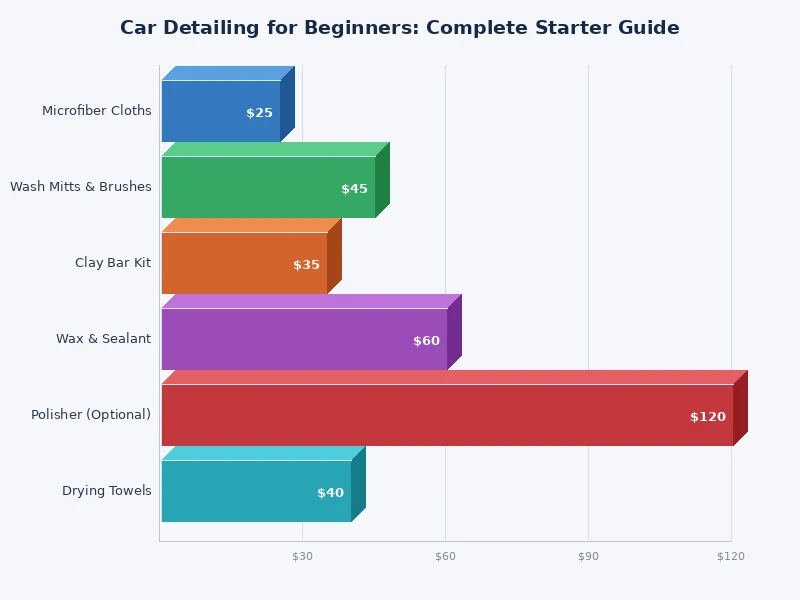
You don't need to buy everything at once. A solid beginner kit costs between $80 and $150 and covers most detailing jobs. Resist premium bundles until you understand what each product does.
Start with a pH-neutral car wash shampoo, two wash buckets with grit guards, quality microfiber wash mitts, and a drying towel. Add a clay bar kit for decontamination, a carnauba paste wax or spray sealant for protection, and a wheel cleaner safe for all finishes. A foam cannon is optional but speeds up the pre-wash stage significantly.
For inside the car you'll need an interior all-purpose cleaner (APC) diluted to 5:1, a trim dressing for plastics, a fabric or leather cleaner depending on your seats, glass cleaner, and several microfiber towels sorted by task. A soft-bristle detailing brush set handles vents, seams, and buttons efficiently. Keep interior towels strictly separate from exterior towels to avoid cross-contamination.
| Product | Use | Approx. Cost | Priority |
|---|---|---|---|
| pH-Neutral Car Shampoo | Safe paint wash | $10–$18 | Essential |
| Microfiber Wash Mitt (x2) | Scratch-free washing | $8–$14 | Essential |
| Clay Bar Kit | Decontaminate paint | $15–$25 | Essential |
| Paste Wax or Spray Sealant | Paint protection | $12–$30 | Essential |
| Wheel Cleaner | Remove brake dust | $10–$16 | Essential |
| Interior APC | Clean all interior surfaces | $10–$18 | Essential |
| Foam Cannon | Pre-wash snow foam | $25–$50 | Optional |
| Dual-Action Polisher | Light paint correction | $60–$120 | Advanced |
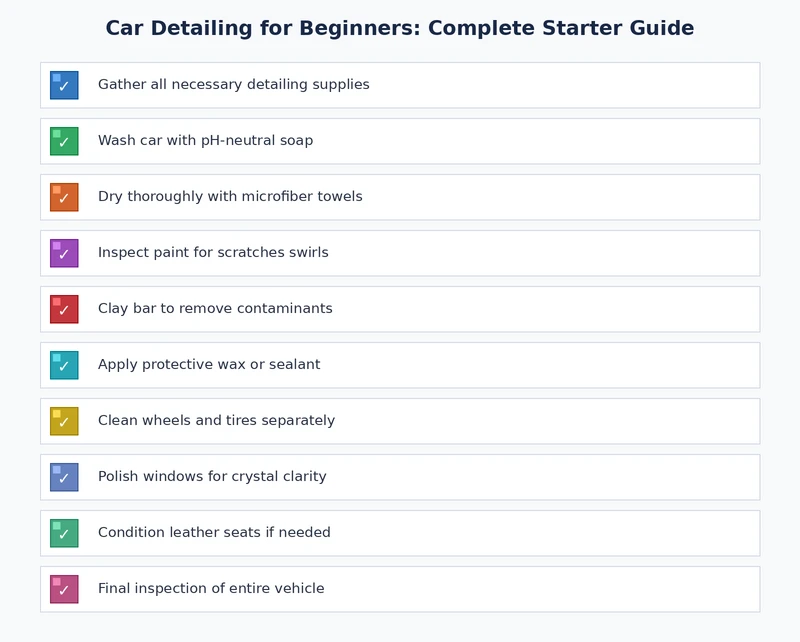
Always detail in the shade. Direct sunlight causes products to dry too fast, leaving streaks and water spots. Work from the top of the vehicle down to avoid dragging dirty water onto clean sections.
Begin with a pre-rinse to remove loose debris. Apply shampoo with a mitt using the two-bucket method: one bucket holds soapy water, the other holds clean rinse water. Rinse the mitt in the clean bucket before reloading with soap. This single habit prevents the swirl marks that ruin paint finishes.
After washing and drying, run a clay bar over the paint with lubrication spray. If the clay grabs and feels rough, contaminants are present. Work in 18-inch sections until the surface feels smooth, then fold the clay and move on. This step is often skipped by beginners but makes a significant difference to how wax bonds to the paint.
For beginners, hand polishing is the safest option before moving to a machine. Apply a light polish with a foam applicator pad in straight overlapping lines, then buff off with a clean microfiber. If you want to go further, our guide on how to buff a car by hand covers the hand polishing technique in full detail.
Finish with a wax or sealant. Apply a thin, even coat, let it haze (usually 5–10 minutes), then buff off. Two thin coats outperform one thick coat. Dress tires and exterior trim with appropriate products, and clean glass last using a dedicated glass cleaner on a lint-free microfiber.
Start by removing all personal items and floor mats. A clean, empty cabin lets you work efficiently without moving things around repeatedly.
Vacuum seats, carpets, and trunk thoroughly before applying any products. Use a detailing brush to agitate pet hair and debris from fabric before vacuuming. Blow compressed air into vents and seams first, then vacuum up the loosened dust. Wipe all hard surfaces — dashboard, door panels, center console — with a diluted APC on a microfiber. Follow with a satin-finish trim dressing for a clean, non-greasy appearance.
Fabric seats respond well to an APC or dedicated upholstery cleaner worked in with a soft brush, then extracted with a wet-dry vacuum. For stubborn stains, see our detailed walkthrough on how to remove food stains from car upholstery. Leather seats need a dedicated leather cleaner followed by a conditioner to prevent cracking. Clean interior glass last using two towels — one damp with cleaner, one dry for buffing — to eliminate haze and streaks.
Professional detailing ranges from $100 for a basic interior or exterior service to $400 or more for a combined full detail on a larger vehicle. DIY detailing slashes that cost to $15–$30 per session once you own the starter products. Over a year of regular washes and details, the savings add up fast. For a full breakdown of professional pricing and what each service level includes, visit our car detailing cost guide.
A detail only stays fresh if you maintain it. Wash your car every two weeks using the two-bucket method. Top up wax protection every three months, or use a quick detailer spray between sessions to add gloss and light protection. Keep a small interior kit in the trunk — a microfiber, a spray bottle of APC, and a glass cleaner — to spot-clean on the go. Avoid automatic car washes with rotating brushes, which introduce swirl marks into your freshly protected paint.
Consistency is more important than perfection. A 30-minute maintenance wash done regularly protects your investment far better than an occasional marathon session following months of neglect.
Start with a proper two-bucket hand wash, then work on one section at a time — exterior first, then interior. Build your product kit gradually rather than buying everything at once. Focus on technique before investing in advanced tools like a dual-action polisher.
A full beginner detail typically takes 4 to 6 hours for a standard sedan. This includes washing, claying, waxing, and a complete interior clean. With practice, you can complete the same job in 2 to 3 hours.
No. A standard garden hose with a nozzle works fine for beginners. A pressure washer speeds up rinsing but is not required. If you use one, keep pressure below 1,200 PSI and maintain at least 12 inches of distance from the paint.
A full detail two to four times per year is sufficient for most vehicles. Supplement this with a wash every one to two weeks and a quick detailer spray between sessions to maintain the protective layer and gloss.
Carnauba wax provides a warm, deep gloss and typically lasts 4 to 8 weeks. A synthetic paint sealant bonds more strongly to the surface and lasts 3 to 6 months. Sealants are generally better for beginners due to their longer durability and easier application.
Light surface scratches and swirl marks can be reduced or removed through polishing. Deep scratches that penetrate the primer or bare metal require touch-up paint or professional repair and are beyond the scope of standard detailing.
 |
 |
 |
 |

About Joshua Thomas
Joshua Thomas just simply loves cars and willing to work on them whenever there's chance... sometimes for free.
He started CarCareTotal back in 2017 from the advices of total strangers who witnessed his amazing skills in car repairs here and there.
His goal with this creation is to help car owners better learn how to maintain and repair their cars; as such, the site would cover alot of areas: troubleshooting, product recommendations, tips & tricks.
Joshua received Bachelor of Science in Mechanical Engineering at San Diego State University.


Get some FREE car parts & gear.. Or check out the latest free automotive manuals and build guides here.
Disable your ad blocker to unlock all the hidden deals. Hit the button below 🚗
| | | |
