by Sarah Whitfield
Have you ever walked up to your car, pressed the lock button, and got absolutely nothing? A car door lock not working can feel like a minor annoyance right up until you realize you can't secure your vehicle, or worse — you're locked out entirely. The cause could be as simple as a dead battery or as involved as a failing body control module, but either way, the fix follows a clear diagnostic path.
This guide covers every major cause, walks you through practical fixes in order of complexity, and lays out realistic cost expectations so you know what you're getting into before you open a door panel. For a full index of related resources, visit our car door lock not working overview page.
Contents
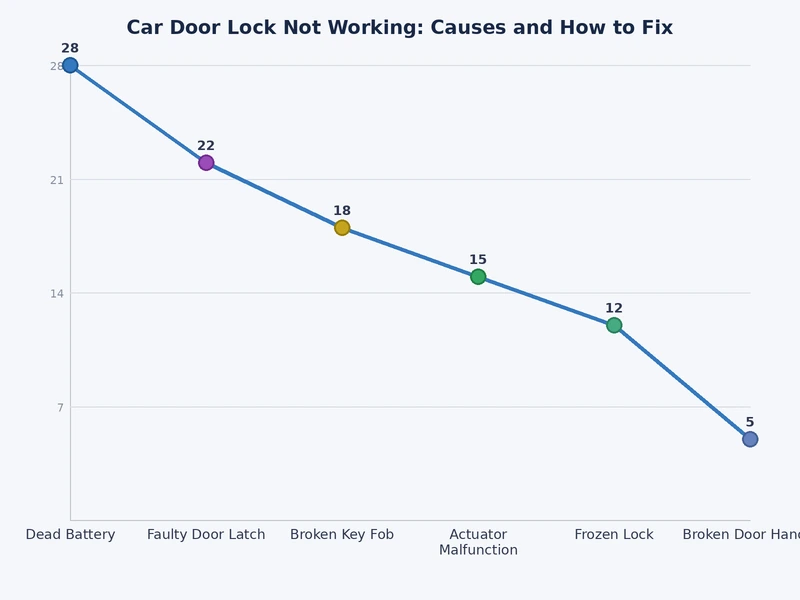
The fastest way to narrow down the cause is to map your specific symptom to a category. Not all door lock failures behave the same way, and the differences are meaningful.
If the lock responds to the physical key but not the fob, the problem is almost certainly in the fob itself or the car's receiver module — not the lock mechanism. A weak fob battery is the most common culprit. Swap the battery first before assuming anything more serious.
The reverse scenario — fob works but the physical key doesn't turn smoothly — usually points to a dry or corroded lock cylinder. The tumblers inside stiffen over time without lubrication, especially in climates with temperature extremes.
When neither the interior button nor the exterior key produces any result, you're dealing with one of these:
A blown fuse is the best-case scenario. Pull your owner's manual, find the fuse box diagram, and look for a fuse labeled "door locks" or "central locking." If it's blown, replace it. If it blows again right away, you have a short circuit that needs further diagnosis.
If the door also has trouble closing fully, that's a separate but related issue. Our guide on car door won't latch covers the latch and striker assembly in detail — a failing latch and a failing actuator sometimes come as a package deal on high-mileage vehicles.
This distinction is one of the most useful diagnostic clues you have:
A failing door lock system can also interact with your car's alarm. If your alarm has been triggering unexpectedly at the same time, the two problems often share a root cause. Our guide on car alarm keeps going off walks through that overlap in detail.
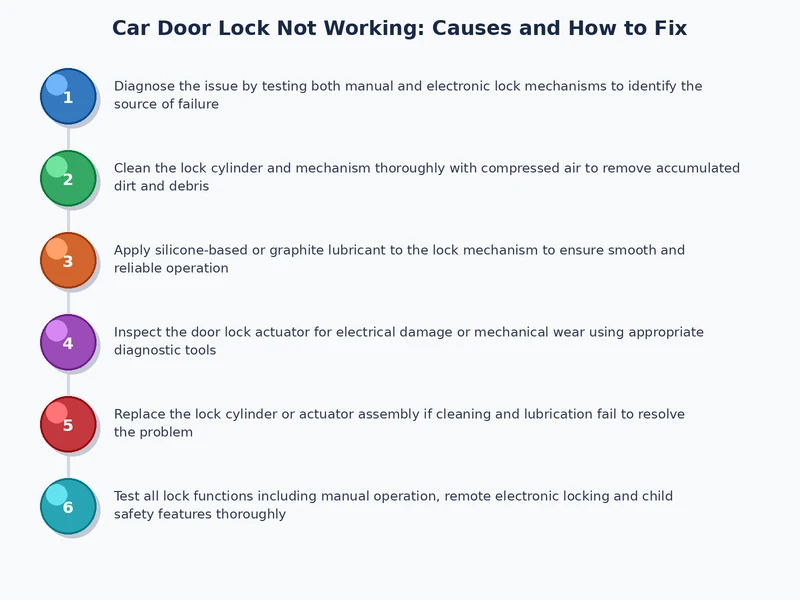
Work through these fixes in order — cheapest and simplest first, more involved repairs only if the basics don't solve it.
Before pulling a door panel, run through this checklist:
Pro tip: After applying lubricant to the lock cylinder, insert the key and cycle it back and forth a dozen times. This distributes the lubricant through all the tumblers and makes a noticeable difference in how smoothly the cylinder turns.
The actuator is a small electric motor connected to a set of rods and levers inside the door. When it fails, pressing the lock button produces no movement — sometimes you'll hear a faint click or grinding noise, sometimes nothing at all.
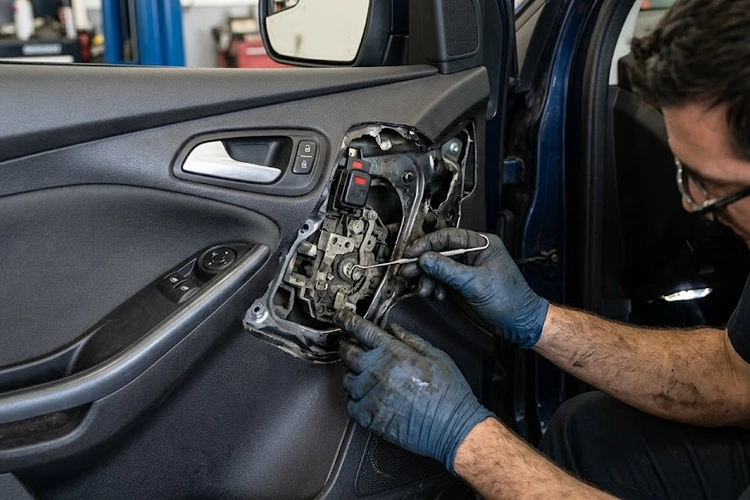
Replacing it means removing the interior door panel, which is held in place by a combination of screws and plastic snap clips. Use a plastic panel removal tool to avoid cracking the trim. Once the panel is off, disconnect the wiring harness and unscrew the actuator from the latch assembly.
According to Wikipedia's overview of power door lock systems, on most modern vehicles the actuator is integrated directly into the latch assembly. This means you may need to replace the entire latch unit rather than just the motor, which increases parts cost but simplifies installation since it arrives as a single pre-assembled unit.
Some repairs genuinely require specialized tools:
What you'll pay depends on which component has failed and whether you're doing the work yourself. The range is wide — from a $4 fob battery to a $500 BCM replacement — so it pays to diagnose accurately before authorizing any repair.
The simple fixes cost almost nothing. A replacement key fob battery runs $3–$8 at any auto parts store. A fuse is under $5. Even a full actuator replacement only requires a $20–$80 part if you supply the labor yourself. The real investment is time — typically one to three hours for an actuator swap on a vehicle you're not familiar with.
Labor is where the bill grows. Most shops charge one to two hours of labor per door, and shop rates vary widely by region. If you're already scheduling time with a mechanic, it's worth bundling any other deferred mechanical work — such as a parking brake that isn't holding — to make the most of the visit.
| Repair Type | DIY Cost | Professional Cost | Difficulty |
|---|---|---|---|
| Key fob battery | $3–$8 | $15–$35 | Easy |
| Fuse replacement | $1–$5 | $50–$90 | Easy |
| Lock cylinder | $15–$60 | $75–$200 | Moderate |
| Door lock actuator | $20–$80 | $100–$300 | Moderate |
| Wiring harness repair | $10–$40 | $100–$350 | Difficult |
| BCM reprogramming | Not recommended | $150–$500 | Professional only |
Warning: If your door locks fail alongside dimming headlights or other unexplained electrical behavior, treat the entire situation as a potential BCM or charging system issue — not just a door lock problem.
Door lock failures are common enough that most people attempt some kind of fix on their own. That's often the right call — but a few very predictable mistakes turn a simple repair into a costly one.
When a lock feels stiff or unresponsive, it's natural to apply more force. Resist that instinct. Forcing a key into a dry or corroded cylinder can snap the key off inside the lock, or damage the tumblers permanently. Manually pushing on the lock rod through the door panel can bend the linkage and disconnect components that were otherwise fine.
The same logic applies to the interior power lock button. Pressing harder won't revive a dead actuator — it only adds stress to the switch contacts. If those contacts fail, you now have two problems to fix instead of one.
Door locks share electrical infrastructure with several other vehicle systems. When the BCM begins to fail, you typically see multiple symptoms appear at the same time rather than just one. If a check gauges warning or an airbag light shows up around the same time your locks stop responding, those warning lights are telling you something important about the health of your vehicle's control modules.
Fixing only the visible symptom in this scenario almost always leads to recurring failures. A full diagnostic scan before authorizing any specific repair gives you the complete picture and usually saves money in the long run.
Water infiltration is another commonly missed electrical cause. Degraded door seals allow moisture to travel down into the lower portion of the door where wiring connectors sit. Corrosion at those connector pins is difficult to see and frequently misdiagnosed as a failed actuator. If your vehicle has had any seal issues in the past, pull the connectors during your inspection and look for the green or white oxidation that signals corrosion.
When a single door fails, the problem is almost always local to that door — a dead actuator, broken lock rod, or damaged wiring connector inside the door panel. If all doors fail at the same time, the issue is upstream: typically a blown fuse, BCM fault, or a wiring problem that affects the central locking system as a whole.
Yes, and it's one of the first things worth checking. Most vehicles have a dedicated fuse for the door lock circuit. A blown fuse cuts power to all locks simultaneously and takes under five minutes to diagnose. If a replacement fuse blows immediately, that points to a short circuit further down the line that needs professional attention.
The clearest sign is pressing the lock button and hearing a clicking or grinding sound from inside the door with no actual movement. A fully failed actuator typically produces no sound and no movement at all. You may also notice the lock moving very slowly or stopping partway before the actuator gives out completely.
You can drive, but there are real risks. A door that won't lock is a security vulnerability, and in some cases a faulty lock mechanism can affect the latch's ability to keep the door fully closed while moving. If your door also has latching problems, read our guide on car door won't latch before taking it on the road.
Cold temperatures cause lubricants to thicken and metal components to contract slightly, which can push a borderline actuator or stiff cylinder over the edge into full failure. Any moisture that seeped into the lock cylinder can also freeze solid, physically blocking the mechanism from turning. Applying a graphite-based lubricant before winter sets in is the most effective preventive step you can take.
In some cases, yes — older vehicles often allow DIY key fob programming through a sequence of steps documented in the owner's manual. On most modern vehicles with rolling security codes, however, pairing a replacement fob requires dealer-level diagnostic software. BCM reprogramming is never a DIY job and should always be handled by a qualified technician with the proper tools.
A car door lock not working almost always has a clear cause once you know where to look — start with the fob battery and fuse before spending anything on parts, and only escalate to actuator replacement or professional diagnosis when those quick checks come up empty. If you're seeing other electrical oddities alongside the lock failure, book a full diagnostic scan rather than chasing individual symptoms. The sooner you address the root cause, the less likely a manageable repair turns into an expensive one.
 |
 |
 |
 |

About Sarah Whitfield
Sarah Whitfield is a diagnostics and troubleshooting specialist who spent ten years as an ASE-certified technician before joining the editorial team. She specializes in OBD-II analysis, electrical gremlins, and the kind of intermittent problems that make most owners give up.
Get some FREE car parts & gear.. Or check out the latest free automotive manuals and build guides here.
Disable your ad blocker to unlock all the hidden deals. Hit the button below 🚗
| | | |
