by Sarah Whitfield
If your car is leaking clear water underneath, it is almost always normal. The most common source is condensation draining from the air conditioning system — a routine byproduct of how modern AC works. But not every clear puddle is harmless, and knowing the difference protects your car and your wallet.
You walk back to your parked car and spot a wet patch on the pavement. The liquid is transparent, odorless, and leaves no stain. Before you call your mechanic in a panic, take a breath — and take 60 seconds to check a few things. The source almost always falls into one of a handful of predictable categories, and most of them require zero action on your part.
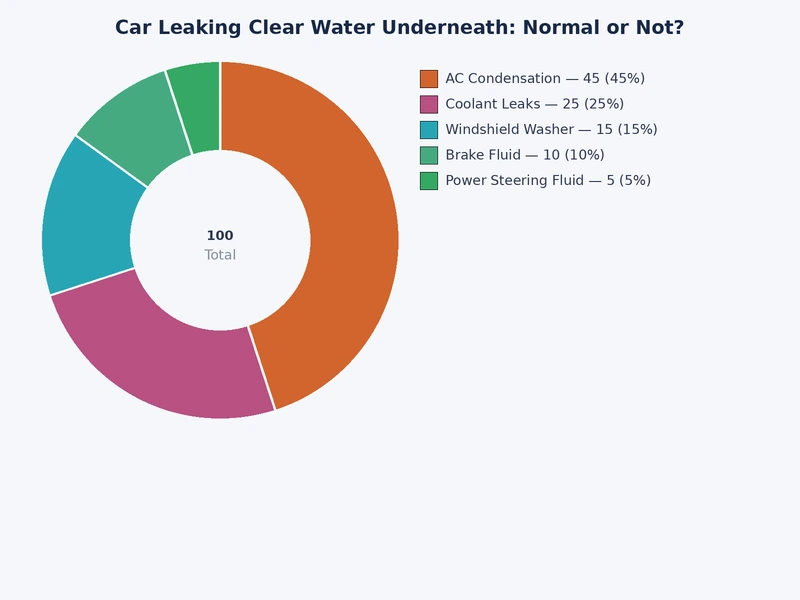
Clear water under a car typically originates from the AC evaporator drain, the exhaust tailpipe, or — less commonly — a leaking windshield washer line. Coolant in its early stages can also appear clear, which is exactly why a quick identification check is always worth doing. For a closer look at related fluid puddles and what they indicate, the coolant puddle under car guide covers the full spectrum of what you might find beneath your vehicle.
Contents
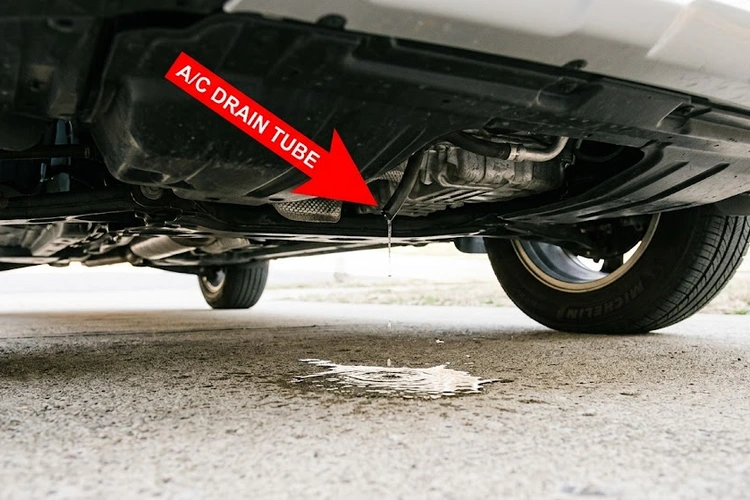
Where the puddle sits relative to your car tells you a great deal before you touch anything. AC condensation drips from the front passenger-side area, near the firewall (the metal barrier separating the engine bay from the cabin). Exhaust condensation pools directly beneath the tailpipe at the rear. A puddle forming under the center or driver-side of the engine bay — particularly one that appears regardless of whether the AC is running — deserves closer attention.
Timing is equally informative. A puddle that only forms after running the AC on a humid day points squarely at the evaporator drain. One that appears on cold mornings and disappears once the car warms up is almost certainly exhaust condensation. A puddle that shows up consistently regardless of temperature, season, or AC use is the one you should investigate further.
Crouch down and look at the puddle before you touch it. Pure water is completely transparent and leaves no residue on pavement. Dip a finger in and rub the fluid between your thumb and forefinger. Water feels exactly like water — thin, neutral, unremarkable. Coolant, even when heavily diluted, feels faintly slippery and carries a sweet, almost syrupy scent. Oil leaves a greasy film. Brake fluid has a distinct chemical or slightly fishy odor and a slick, oily texture.
Pro tip: Place a white paper towel under the drip point and leave the car running for 10 minutes. The color and texture of the collected fluid will identify it faster and more reliably than any visual inspection from a distance.
If the car has been parked long enough for the puddle to dry, look for a residue ring on the pavement. Plain water leaves none. Coolant leaves a faint crystalline or sticky outline. This two-second check can save you an unnecessary diagnostic appointment.
Your car's air conditioning system works by pulling warm, humid cabin air across a cold evaporator coil. Moisture in that air condenses on the coil's surface — the same physics that make a cold glass sweat on a hot day. That water collects in a drain pan beneath the coil and exits through a rubber drain tube routed through the firewall to the outside of the vehicle.
On a hot, sticky day this process generates a surprising amount of water. Half a liter or more over a 30-minute drive is not unusual. According to Wikipedia's overview of air conditioning systems, dehumidification — removing moisture from air — is one of the core functions of any AC unit, automotive systems included. The puddle you see on the pavement is proof the system is doing its job.
If your AC drain tube gets clogged with debris or mold, that condensation has nowhere to go and backs up into the cabin. You would notice wet carpet on the passenger floor before you see any change in the outside puddle. If you are already dealing with a car AC that keeps freezing up, a partially blocked drain tube may be contributing to both issues at the same time.
Cold engines produce water vapor as a byproduct of combustion. When the exhaust system is cool during the first few minutes of a cold-weather startup, that vapor condenses inside the pipes and drips out the tailpipe as liquid water. You might see a small puddle form directly beneath the rear of the car, and it disappears once the system heats up enough to vaporize the moisture before it exits.
Every gasoline and diesel engine does this. The concern arises only if white steam continues pouring from the tailpipe long after the engine reaches normal operating temperature. Persistent white exhaust smoke can indicate coolant entering the combustion chamber — a symptom associated with a blown head gasket, which is an entirely different situation from routine moisture.
Distinguishing harmless condensation from a genuine leak comes down to a few observable properties. The table below covers the most common fluids you might find under a car, organized by the characteristics most useful during a quick curbside inspection.
| Fluid | Color | Smell | Texture | Typical Location | Concern Level |
|---|---|---|---|---|---|
| AC condensation | Clear | None | Thin, watery | Front passenger side | None — completely normal |
| Exhaust condensation | Clear | Faint exhaust | Thin, watery | Directly under tailpipe | None — normal on cold starts |
| Engine coolant | Green, orange, pink, or clear (new) | Sweet, syrupy | Slightly slippery | Under engine or radiator | High — fix promptly |
| Engine oil | Brown to black | Burnt oil | Greasy, thick | Under engine center | High — fix soon |
| Brake fluid | Clear to pale yellow | Chemical, slightly fishy | Slick, oily | Near wheels or under dash | Critical — do not drive |
| Windshield washer fluid | Blue, green, or clear | Soapy or alcohol | Thin, watery | Front center | Low — fix when convenient |
| Power steering fluid | Clear to reddish | Burnt or mildly sweet | Slick, oily | Front driver side | High — fix soon |
Notice that brake fluid and fresh coolant can both appear nearly clear. This is where smell and texture become the deciding factors. Coolant carries a distinctly sweet, almost candy-like scent. Brake fluid smells chemical and slightly off. Neither has the neutral, completely odorless quality of plain condensation water.
Fresh coolant deserves special attention. Some newer formulations are nearly colorless when first mixed and may pass a casual visual check. If your coolant reservoir is bubbling and you also notice a clear puddle forming under the engine bay — not under the passenger footwell — do not assume it is AC water. That combination of symptoms points toward a cooling system problem that needs prompt diagnosis.
Warning: A clear, slick, chemical-smelling puddle near any wheel or beneath the dashboard is a brake fluid leak until proven otherwise. Do not drive the vehicle until a mechanic has inspected the brake system.
Two opposite errors are equally common, and both carry real costs. The first is dismissing every clear puddle as AC water without checking location, smell, or texture. The second is rushing to the dealership convinced the car is dying when the puddle is entirely benign. One leads to ignored leaks that escalate into engine damage or brake failure. The other costs you a diagnostic fee for a non-issue.
The paper towel test and a 60-second visual inspection eliminate both mistakes at no cost. Pairing fluid identification with an understanding of how to diagnose strange car smells gives you a practical two-step system that covers the vast majority of under-car concerns without specialized tools or training.
The heater core is a small radiator-like component inside the dashboard that warms the cabin by circulating hot coolant through its fins. When it fails, coolant can drip into the passenger footwell — or, in some vehicle configurations, drain out through the AC drain path and appear as a perfectly innocent-looking puddle outside. The giveaway is a sweet smell inside the cabin, fogging on the inside of the windshield, or carpeting that feels damp without any recent rain.
If any of those symptoms are present alongside a clear puddle, read through the detailed breakdown of heater core failure symptoms before concluding everything is fine. Catching heater core failure early saves you from a full dashboard removal — a repair that easily runs into the thousands of dollars at most shops. Similarly, understanding EVAP leak symptoms helps rule out evaporative emissions issues that occasionally get misread as moisture-related problems.
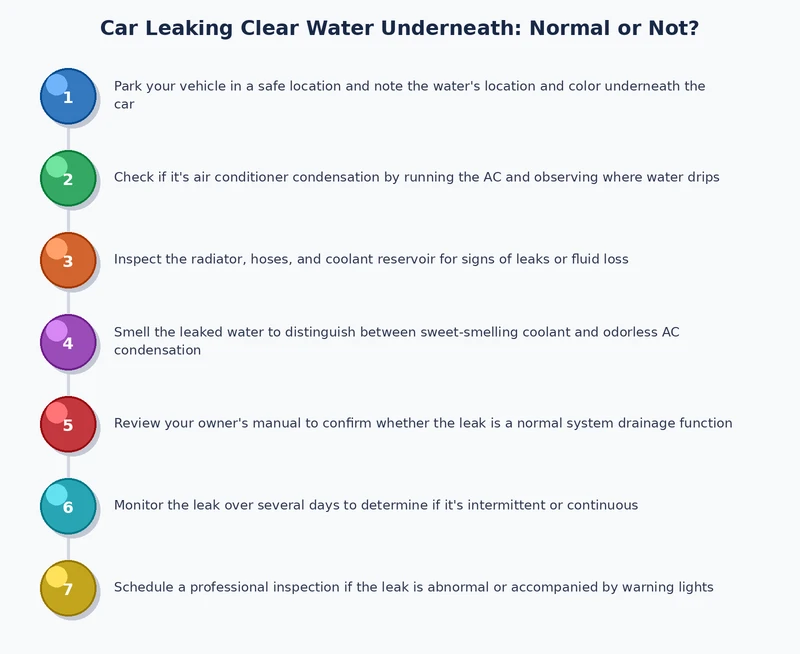
Start by noting where the puddle sits relative to the car and photographing it with your phone. Capture the position, approximate size, and any color. Then perform the paper towel test. After that, open the hood and check three reservoirs: coolant, brake fluid, and windshield washer fluid. Each check takes about 30 seconds. If every reservoir is at the correct level and the collected fluid is odorless and watery, you almost certainly have normal condensation.
If any reservoir reads low — particularly coolant or brake fluid — treat that as a separate concern from whatever is on the pavement. Top off the reservoir, note the current level, and check it again after a few days of driving. A reservoir that drops again without any visible external source points to an internal consumption issue that a mechanic needs to evaluate.
Three situations make a professional inspection necessary. First, if the puddle grows larger with repeated use rather than staying consistent in size. AC condensation output is relatively stable — it scales with humidity and how long you run the AC, not with the age of your car. A puddle that expands day by day is a signal worth taking seriously. Second, if you cannot confidently identify the fluid using the tests above. Third, if any dashboard warning light — coolant temperature, oil pressure, or brake system — activates around the same time the leak appears.
Those warning lights exist for exactly this scenario. They are not suggestions. A clear puddle paired with a lit warning light is a combination that should end your drive, not your attention to the issue.
Yes, completely normal. Your AC system removes humidity from cabin air, and that moisture condenses on the evaporator coil and drains outside through a rubber tube. On hot, humid days you may see a steady drip or a sizable puddle — that is the system working exactly as designed.
Check exhaust condensation first — this is normal on cold starts and disappears as the car warms up. If the car is fully warm and the AC is off, check your fluid reservoirs. Coolant and brake fluid can both appear nearly clear. A low reservoir alongside a clear puddle means the fluid needs professional identification.
Pure condensation from the AC or exhaust causes no damage whatsoever. The risk is misidentifying a real fluid leak as harmless water. A slow coolant leak leads to overheating. A brake fluid leak is a direct safety hazard. The smell and texture test takes 30 seconds and eliminates most of the guesswork.
The AC evaporator drain tube is most likely clogged. When the tube cannot drain, condensation backs up into the cabin and soaks the carpet. A mechanic can flush or clear the tube in a short service visit. Left untreated, the trapped moisture can cause mold growth inside the ventilation system.
 |
 |
 |
 |

About Sarah Whitfield
Sarah Whitfield is a diagnostics and troubleshooting specialist who spent ten years as an ASE-certified technician before joining the editorial team. She specializes in OBD-II analysis, electrical gremlins, and the kind of intermittent problems that make most owners give up.
Get some FREE car parts & gear.. Or check out the latest free automotive manuals and build guides here.
Disable your ad blocker to unlock all the hidden deals. Hit the button below 🚗
| | | |
