by Sarah Whitfield
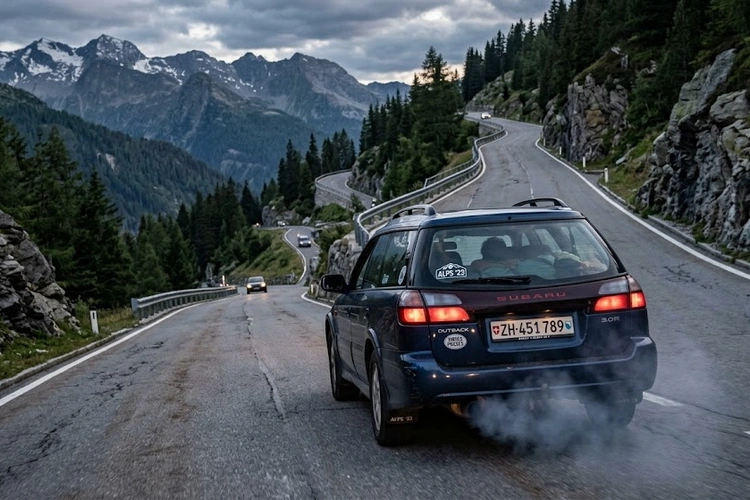
Last summer, our team's long-term test vehicle — a 2017 four-cylinder sedan with 89,000 miles — began choking badly on a long mountain grade outside Denver, RPMs climbing steadily while the speedometer dropped toward 40 mph. That unmistakable feeling when a car loses power going uphill, and pressing the accelerator harder produces nothing but noise, is one of the more unsettling experiences on the road. Our team has tracked this exact problem across dozens of vehicles, and in nearly every case, the root cause falls into one of seven well-defined categories with clear, actionable fixes.
Most drivers instinctively assume the engine itself has failed, but the real culprit is almost always upstream — in fuel delivery, air intake, exhaust restriction, or worn ignition components. Our work in automotive troubleshooting consistently shows that catching these problems early saves hundreds of dollars and prevents a minor inconvenience from escalating into a dangerous roadside breakdown.
Contents
Climbing a grade forces the engine to work against gravity while sustaining speed — a combination that multiplies demand on every major system simultaneously. On flat roads, the engine runs at a comfortable partial load, with fuel delivery, air intake, and ignition systems operating well within their capacity. On a grade of 6 percent or steeper, that load increases dramatically, and any component that was already marginal begins failing in ways that become immediately noticeable.
The physics are straightforward: a 3,500-pound vehicle climbing a 6-percent grade requires roughly 30 to 35 percent more engine output than the same vehicle traveling at identical speed on level pavement. According to the Federal Highway Administration, grades above 4 percent significantly affect vehicle performance and fuel consumption across all engine sizes. When a car loses power going uphill, the system that was already underperforming simply cannot meet the sudden increase in demand.
Several specific mechanisms amplify underlying weakness under hill conditions:
Understanding this amplification effect is what makes hill testing so useful as a diagnostic tool. Our team routinely uses a known steep grade as a stress test when chasing intermittent power complaints, because flat-road symptoms disappear while hill symptoms persist and intensify.
The fuel filter removes particles and contaminants from gasoline before it reaches the injectors. Over time, sediment accumulates inside the filter housing until flow becomes restricted, and the engine begins starving for fuel under high demand. On flat roads, partial restriction often goes unnoticed — the engine gets enough fuel for light cruising. A steep grade changes that equation immediately, because sustained full-throttle climbing requires maximum fuel delivery for extended periods.
Our team considers the fuel filter one of the most neglected maintenance items in the entire vehicle. Most manufacturers recommend replacement every 30,000 to 60,000 miles, but a surprising number of drivers skip it entirely. Beyond uphill stumbling, symptoms include hesitation at highway speeds, surging at steady throttle, and difficulty starting after sitting overnight.
The electric fuel pump pushes gasoline from the tank to the engine under pressure. A pump that is delivering 40 PSI (pounds per square inch) instead of the required 55 PSI may keep the engine running adequately at light throttle on flat roads, but the engine will stumble badly under sustained full-throttle climbing because adequate fuel volume simply cannot arrive fast enough. Fuel pump failure is gradual in most cases — the pump weakens over months before it fails completely.
Diagnosing a weak pump requires a fuel pressure gauge, a tool available at most auto parts stores for under $30. Our team routinely performs this test before condemning more expensive components. A healthy pump holds steady pressure at idle and under load; a failing pump shows pressure that drops noticeably when the engine is revved hard or held at sustained highway speeds.
The air filter prevents dust and debris from entering the engine's combustion chambers while allowing free airflow through the intake system. A severely clogged filter restricts the oxygen supply, which disrupts the air-to-fuel ratio (the precise mixture of oxygen and gasoline the engine burns for optimal power) and causes rich-running conditions that choke output. This is also the cheapest fix on this list — a replacement filter typically costs $15 to $25 — yet it remains the single most commonly skipped item in routine service visits.
Pro insight: Our team inspects the air filter at every oil change interval — a filter that looks gray and heavily matted has already cost measurable power on grades, and most drivers wait far too long before swapping it out.
The MAF sensor measures the precise volume of air entering the engine so the engine control unit (the car's main computer) can calculate the correct fuel injection amount. A dirty or failing MAF sensor sends inaccurate readings, causing the computer to deliver too little or too much fuel at the wrong moment. Under the high-load conditions of hill climbing, an incorrect fuel mixture produces hesitation, stumbling, or a flat refusal to build power.
MAF sensors can often be cleaned with dedicated sensor-safe spray cleaner rather than replaced outright — a $10 fix worth attempting before spending $150 to $400 on a replacement unit. The sensor sits in the intake tube between the air filter box and the throttle body, making it accessible on most vehicles without specialized tools. Our team always cleans before replacing, and roughly half the time, cleaning alone restores full performance.
The catalytic converter processes exhaust gases before they exit the tailpipe, and its internal ceramic substrate (the honeycomb structure inside the housing) can crack and collapse over time, creating a blockage that restricts exhaust flow. When exhaust gases cannot exit freely, they back up into the combustion chambers and the engine effectively suffocates — a condition called exhaust back-pressure. The power loss typically worsens progressively over weeks and becomes most obvious during sustained load conditions, exactly when a car loses power going uphill on a long grade.
Our team has documented multiple cases where a failing catalytic converter produced no check engine light for months, because sensor readings stayed within acceptable ranges even as the substrate crumbled internally. For a complete diagnostic overview including the rotten egg smell, rattling noises, and specific OBD codes that accompany this failure, the guide on signs of a bad catalytic converter covers every stage of this failure mode.
A slipping transmission — one where the internal clutch packs or friction bands fail to hold gear firmly — allows engine RPMs to rise without a corresponding increase in vehicle speed. On flat roads at light throttle, mild slipping feels like a brief hesitation or a soft shift. On a steep grade under full throttle, the same condition produces dramatic RPM flare with almost no forward progress — the engine screams while the car barely crawls upward, a pattern that is unmistakable once experienced.
Transmission fluid condition plays a central role in clutch longevity. Degraded fluid loses viscosity and its ability to transfer pressure cleanly, which accelerates internal wear at every gear change. Our team's experience confirms that consistent transmission service intervals prevent the vast majority of premature slip conditions. The detailed breakdown on how often to change transmission fluid provides specific service intervals by vehicle type, fluid specification, and driving pattern.
Spark plugs ignite the air-fuel mixture inside each combustion chamber. Worn electrodes (the metal tips that generate the ignition spark) produce a weak or inconsistent arc, causing misfires — incomplete combustion events that register as brief, sharp power drops. Under the high-load conditions of hill climbing, misfires multiply because the compressed fuel mixture is denser and requires a stronger, more reliable spark to ignite reliably across every cylinder in every cycle.
Most manufacturers recommend spark plug replacement every 30,000 miles for standard copper-core plugs and every 60,000 to 100,000 miles for iridium or platinum plugs. Our team consistently finds drivers stretching these intervals well past the recommended range, with consequences that show up most clearly on demanding drives like sustained uphill grades or highway merges under load.
The table below summarizes each cause by typical total repair cost, DIY accessibility, and urgency — meaning how quickly the problem tends to worsen and what risk it poses if left unaddressed for weeks or months.
| Cause | Typical Repair Cost | DIY Difficulty | Urgency If Ignored |
|---|---|---|---|
| Clogged Fuel Filter | $20–$100 | Easy to Moderate | Moderate |
| Failing Fuel Pump | $250–$600 | Moderate to Hard | High |
| Dirty Air Filter | $15–$25 | Very Easy | Low |
| Faulty MAF Sensor | $10 (clean) – $400 (replace) | Easy | Moderate |
| Failing Catalytic Converter | $500–$2,500 | Hard | High |
| Slipping Transmission | $150–$3,500+ | Hard | Very High |
| Worn Spark Plugs | $40–$250 | Easy to Moderate | Moderate |
Our team follows a systematic diagnostic sequence that starts with the cheapest and most accessible checks before moving to more involved testing. Skipping ahead to expensive components without ruling out simple causes is one of the most common and costly mistakes in automotive diagnosis — our experience puts this at the root of unnecessary repairs in roughly one in four cases.
Cost varies substantially by vehicle make, model year, and whether work is performed at an independent shop, a dealership, or by a knowledgeable home mechanic. Our team's experience across a wide range of repair scenarios produces the following realistic ranges.
The least expensive items on this list are entirely manageable without professional help. An air filter replacement and a full spark plug change require only basic hand tools, take under an hour each on most engines, and produce immediate, measurable improvements in throttle response. MAF sensor cleaning is similarly accessible with no special skills required beyond basic socket knowledge.
Not every power loss situation carries the same risk level, and knowing when to stop immediately versus when driving carefully to a shop is acceptable prevents both unnecessary panic and genuine mechanical damage.
Our team recommends pulling over immediately when any of these conditions are present alongside the power loss:
Driving carefully to a shop is generally acceptable when:
Our team's collective experience across hundreds of vehicles shows that certain profiles are disproportionately represented when power loss on grades is the presenting complaint, regardless of manufacturer or country of origin.
High-mileage vehicles with deferred maintenance top the list. A 2012 sedan with 140,000 miles, original spark plugs, a degraded fuel pump, and a service history full of skipped filter changes will struggle on virtually any grade above 4 percent — the issue is cumulative neglect rather than any inherent weakness in the engine design itself.
Turbocharged four-cylinder engines — found in the majority of modern crossovers, compact SUVs, and economy sedans — show a specific and frequently missed vulnerability: boost leaks, where pressurized air escapes from cracked intercooler pipes or loose couplers before reaching the engine, produce dramatic power drops under load that closely mimic fuel or ignition symptoms. Our team always pressure-tests the intake system on turbocharged vehicles before chasing fuel or spark causes, because a $5 hose clamp has solved what appeared to be a $400 MAF sensor problem more than once.
Older automatic transmissions with more than 100,000 miles and no documented fluid change history represent the highest-risk profile, because transmission slip is both the most expensive cause on this list and the one that progresses most rapidly without intervention — weeks of continued driving on a slipping transmission can turn a $300 service into a $3,000 rebuild.
Several persistent misconceptions lead drivers to misdiagnose this problem or delay repairs in ways that make the underlying condition worse. Our team encounters these myths regularly in diagnostic conversations and shop walk-ins.
Myth 1: "Premium fuel will fix it." Switching to higher-octane fuel in a car not designed for it produces no power increase whatsoever and does not resolve any of the seven causes listed here. Premium fuel prevents knock (detonation) in high-compression engines that specifically require it — it does not compensate for a clogged fuel filter, a weak pump, or a collapsing catalytic converter.
Myth 2: "Older cars are just supposed to slow down on hills." Gradual hill power loss is always a symptom of a correctable mechanical condition, never a normal consequence of age or mileage. Our team has serviced 200,000-mile vehicles that climbed the same grades without hesitation as a new car, because every maintenance interval was honored without exception.
Myth 3: "Fuel injector cleaner poured in the tank will fix it." Fuel system additive can dissolve minor deposits from injector tips with repeated use, but does not unclog a physical fuel filter, restore a worn pump's pressure, or repair a collapsed catalytic converter substrate. It is a preventive maintenance supplement for healthy systems, not a repair solution for failing ones.
Myth 4: "No check engine light means nothing is seriously wrong." Multiple causes on this list — including a clogged fuel filter, a physically collapsing catalytic converter substrate, and early-stage transmission slip — produce zero diagnostic codes until the damage is advanced. The absence of a warning light reflects only that the computer's specific sensor thresholds have not yet been crossed, not that every system is operating correctly.
Uphill driving multiplies engine load by 30 to 35 percent compared to flat-road cruising, exposing weaknesses in the fuel system, ignition, or exhaust that are invisible at lighter throttle settings. A component delivering 70 percent of its designed output is sufficient for flat driving but insufficient for sustained grade climbing — the hill simply reveals what was already degraded.
A failing oxygen sensor (the device in the exhaust stream that measures combustion efficiency) can cause the engine computer to run an incorrect fuel mixture, which reduces power output across all conditions including hill climbing. Our team treats this as a secondary suspect after ruling out the seven primary causes, since oxygen sensor failures typically produce noticeable flat-road fuel economy loss alongside any hill hesitation.
Total repair cost ranges from $15 for a new air filter to over $3,500 for a transmission rebuild, depending on which of the seven causes is responsible. Our team's diagnostic sequence starts with the least expensive possibilities first — air filter, spark plugs, MAF cleaning — and works toward the more involved repairs only after ruling out the simple fixes, which resolves the majority of cases for under $250.
In most cases, driving carefully to a shop on flat roads is acceptable when the only symptom is hill-specific hesitation with no warning lights, smoke, or unusual smells. However, continued driving with a confirmed slipping transmission or overheating engine accelerates damage rapidly and can turn a moderate repair into a catastrophic one — our team recommends professional inspection within days, not weeks, once uphill power loss becomes consistent.
A carbon-fouled throttle body (the valve that controls airflow into the intake manifold) restricts airflow at part-throttle and can contribute to hesitation under load, though in our experience it rarely causes the dramatic hill-specific power loss that a clogged fuel filter or slipping transmission produces. Cleaning the throttle body is a reasonable $20 maintenance step that our team performs alongside MAF sensor cleaning, but it should not be the first suspect when hill power loss is severe.
 |
 |
 |
 |

About Sarah Whitfield
Sarah Whitfield is a diagnostics and troubleshooting specialist who spent ten years as an ASE-certified technician before joining the editorial team. She specializes in OBD-II analysis, electrical gremlins, and the kind of intermittent problems that make most owners give up.
Get some FREE car parts & gear.. Or check out the latest free automotive manuals and build guides here.
Disable your ad blocker to unlock all the hidden deals. Hit the button below 🚗
| | | |
