by Joshua Thomas
A solid car maintenance schedule keeps your vehicle running safely and helps you avoid costly repairs down the road. Whether you drive a daily commuter or a weekend pickup, following a consistent checklist by mileage removes the guesswork from upkeep. For a solid foundation, start with our guide on great pointers for maintaining your vehicle — it covers the fundamentals every driver should know.
Most manufacturers publish recommended service intervals in the owner's manual, but many drivers still miss key milestones. This guide breaks down every major interval — from routine oil changes to major tune-ups — so you always know what's due and when.

Contents
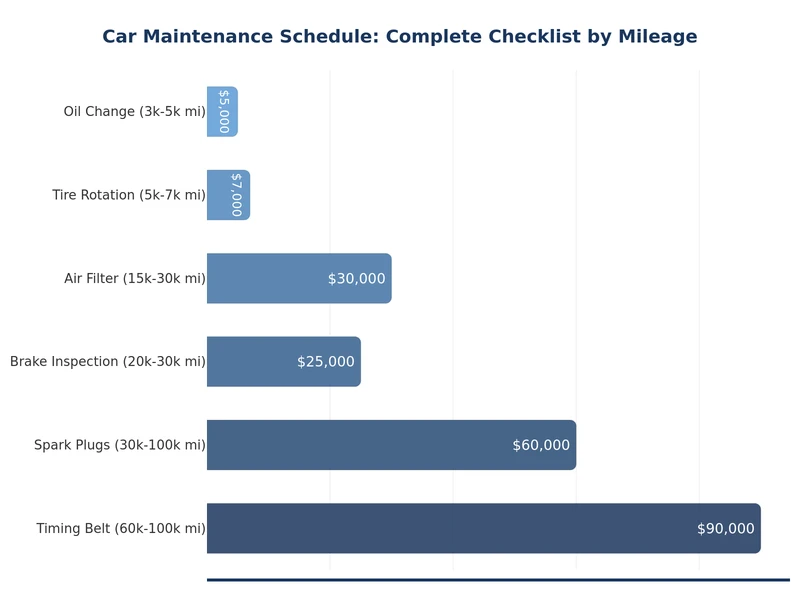
Regular maintenance is the single most effective thing you can do to extend your vehicle's lifespan and preserve its resale value. According to the National Highway Traffic Safety Administration (NHTSA), many roadside breakdowns and traffic incidents are linked to preventable mechanical failures — the kind a consistent service schedule catches early.
Skipping oil changes leads to engine sludge. Neglecting brake inspections risks pad failure and rotor damage. Missing coolant flushes can cause overheating. Each skipped service compounds the risk. A structured car maintenance schedule turns reactive repairs into proactive upkeep, saving significant money over the life of your vehicle.
The table below outlines recommended service tasks at each major mileage milestone. Always cross-reference with your owner's manual, as intervals vary by make, model, and driving conditions — city stop-and-go driving is harder on a vehicle than steady highway miles.
| Mileage Interval | Service Tasks |
|---|---|
| 3,000–5,000 mi | Oil & filter change, tire pressure check, inspect all fluid levels visually |
| 7,500–10,000 mi | Tire rotation, battery terminal inspection, check wiper blades and lights |
| 15,000–20,000 mi | Cabin air filter replacement, brake pad inspection, check belts and hoses |
| 30,000 mi | Engine air filter, transmission fluid check, fuel filter, coolant level and condition |
| 60,000 mi | Spark plugs (iridium), brake fluid flush, timing belt inspection, tire replacement if worn |
| 90,000–100,000 mi | Timing belt or chain replacement, water pump, full brake system overhaul, PCV valve |
This range covers the most frequent and essential tasks. Oil changes are the cornerstone of any car maintenance schedule — fresh oil lubricates engine components and carries heat away from critical parts. Modern full-synthetic oils can often stretch to 7,500 or even 10,000 miles between changes, but always verify with your manual.
Tire pressure should be checked monthly or every time you fill up. Properly inflated tires improve fuel economy, braking distance, and tread life. A quick visual inspection of all fluid levels — coolant, brake fluid, power steering fluid, and windshield washer — takes under five minutes and can catch leaks before they become serious.
At these intervals, deeper inspection work begins. Cabin air filters trap pollen, dust, and road debris — a clogged filter reduces HVAC efficiency and degrades interior air quality. Brake pads wear down gradually; catching them at 3–4mm remaining prevents expensive rotor damage. If you want to tackle this yourself, our step-by-step guide on how to inspect and replace brake pads walks through the entire process.
The 30,000-mile mark is also when transmission fluid should be assessed. Dark, burnt-smelling fluid signals it's time for a change. Our guide on how to check and change transmission fluid explains exactly what to look for and how to do it safely at home.
These are the high-stakes service intervals. Spark plugs on most modern vehicles use iridium tips that last 60,000–100,000 miles, but worn plugs cause misfires, rough idling, and reduced fuel efficiency. If you're comfortable with basic tools, our guide on how to replace spark plugs yourself can save you a significant shop bill.
The timing belt — found on interference engines — is one of the most critical replacements in a car's lifetime. If it snaps, it can cause catastrophic engine damage. Most mechanics recommend replacing the water pump simultaneously since it's already accessible, adding minimal labor cost for a component that often fails around the same mileage.
Your braking system is your most important safety feature. Brake pads typically last 30,000–70,000 miles depending on driving style, terrain, and pad compound. Warning signs include squealing or grinding noises, a pulsating pedal, longer stopping distances, or a pulling sensation when braking. Addressing these symptoms early keeps repair costs manageable and keeps you safe.
Brake fluid is hygroscopic — it absorbs moisture over time, which lowers its boiling point and reduces braking effectiveness. Flush it every two years or 45,000 miles regardless of how the fluid looks.
Tires affect handling, braking, and fuel economy more than most drivers realize. Rotate them every 5,000–7,500 miles to promote even wear across all four corners. Use the penny test to check tread depth: insert a penny with Lincoln's head pointing down — if you can see the top of his head, the tires are worn and need replacing.
Uneven wear patterns often signal alignment or suspension problems worth investigating promptly. Misaligned wheels accelerate tire wear and compromise handling.
Your vehicle depends on multiple fluids operating within normal parameters. Here's a quick reference for each:
Low or contaminated fluids accelerate wear and can lead to sudden component failure. Incorporate fluid checks into your monthly routine — it takes only a few minutes.
Spark plugs ignite the air-fuel mixture in each cylinder. Worn or fouled plugs reduce combustion efficiency, causing rough idling, hesitation on acceleration, and higher fuel consumption. Iridium plugs typically last 60,000–100,000 miles; copper plugs wear faster, needing replacement around 30,000 miles.
Engine air filters keep debris out of your intake. A clogged filter restricts airflow, reducing power and fuel economy. Replace them every 15,000–30,000 miles — sooner if you regularly drive in dusty or rural conditions.
The best car maintenance schedule is one you'll actually follow. Start with your current mileage and identify every upcoming interval from the table above. Set mileage reminders in your phone or use a dedicated app like Carfax Car Care or AUTOsist to track what's due.
Keep a small notebook or digital log in your glove box recording the date, mileage, and what was serviced at each visit. This history is valuable when selling the vehicle and helps mechanics spot developing patterns. Wherever possible, group tasks at the same interval — for example, pairing a tire rotation with an oil change at 5,000-mile visits cuts down on shop trips.
Always use your owner's manual as the primary authority for your specific vehicle. Factory recommendations account for your engine design, transmission type, and intended driving conditions. Third-party guides like this one are useful frameworks, but your manual has the final word on what your car actually needs.
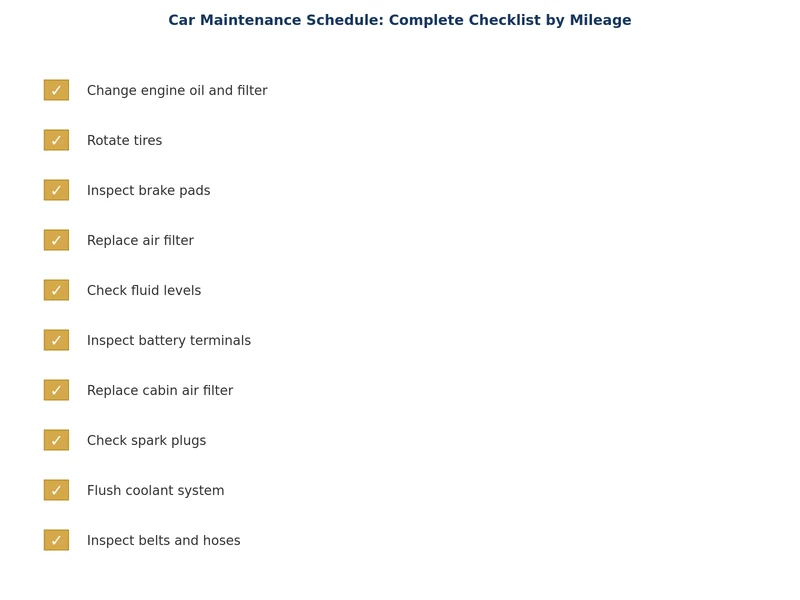
Most modern vehicles using full-synthetic oil need an oil change every 7,500–10,000 miles. Vehicles using conventional oil typically require changes every 3,000–5,000 miles. Always check your owner's manual for the exact interval recommended for your engine and oil type.
Tires should be rotated every 5,000–7,500 miles. Many drivers conveniently do this at every other oil change. Regular rotation promotes even tread wear across all four tires, extending their overall lifespan and maintaining consistent handling and braking performance.
Common warning signs include a high-pitched squealing sound when braking, a grinding or metal-on-metal noise, a pulsating or spongy brake pedal, or the vehicle pulling to one side when you apply the brakes. Most brake pads include a wear indicator that squeals when pads reach a minimum safe thickness.
Regular oil changes are widely considered the single most important maintenance task. Fresh oil reduces friction, carries heat away from the engine, and prevents sludge buildup. Neglecting oil changes causes accelerated engine wear and is one of the most common causes of early engine failure.
Iridium and platinum spark plugs in most modern vehicles last 60,000–100,000 miles. Older copper-tipped plugs wear faster and need replacement around every 30,000 miles. Signs of worn plugs include rough idling, misfires, reduced fuel economy, and difficulty starting the engine.
Many routine tasks — including oil changes, air filter replacements, wiper blade swaps, tire pressure checks, and spark plug replacements — are straightforward DIY jobs with basic tools. More complex services like timing belt replacement or brake system overhauls are best left to a qualified mechanic unless you have significant mechanical experience.
 |
 |
 |
 |

About Joshua Thomas
Joshua Thomas just simply loves cars and willing to work on them whenever there's chance... sometimes for free.
He started CarCareTotal back in 2017 from the advices of total strangers who witnessed his amazing skills in car repairs here and there.
His goal with this creation is to help car owners better learn how to maintain and repair their cars; as such, the site would cover alot of areas: troubleshooting, product recommendations, tips & tricks.
Joshua received Bachelor of Science in Mechanical Engineering at San Diego State University.


Get some FREE car parts & gear.. Or check out the latest free automotive manuals and build guides here.
Disable your ad blocker to unlock all the hidden deals. Hit the button below 🚗
| | | |
