by Sarah Whitfield
Ever stepped out of a running car and caught a sweet, syrupy smell that seemed completely out of place in a parking lot? That oddly familiar scent is one of the more distinctive warning signs our team encounters, and when a car smells like maple syrup, the cause almost always traces back to coolant escaping from the cooling system. The good news is that the smell itself is specific enough to narrow down the source quickly, and acting early makes a real difference in what the repair ends up costing.
Most people assume a sweet smell must mean something catastrophic, but our team has found that is not always the case — though ignoring it is rarely wise either. A slow coolant leak can quietly push an engine toward overheating over days or weeks, and overheating is one of the most expensive problems any vehicle can develop. This guide walks through every major cause, a clear step-by-step diagnostic process, and realistic cost expectations. For more breakdowns like this one, the troubleshooting section covers a wide range of similar symptoms.
Contents
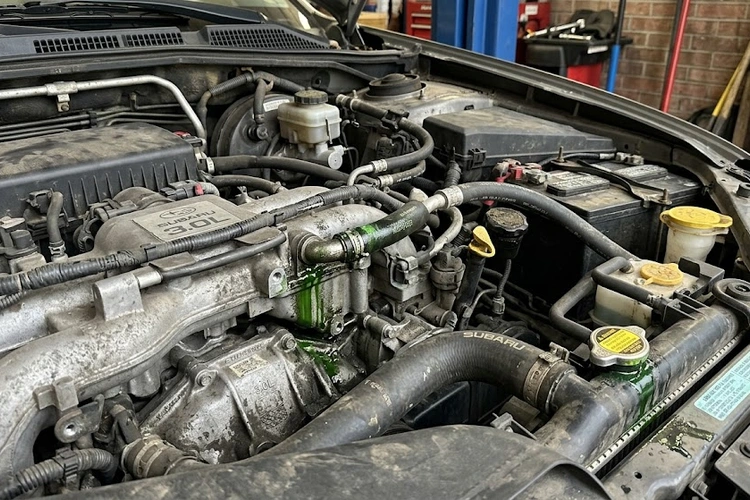
Coolant, also called antifreeze, is a specially formulated liquid that flows through the engine block and radiator to regulate temperature and prevent both freezing and boiling. The base ingredient in most modern coolants is ethylene glycol, a compound known for carrying a distinctly sweet, almost candy-like odor. When this liquid escapes the cooling system and contacts a hot engine surface, the heat vaporizes it and sends that familiar scent straight into the cabin through the ventilation system.
The most common leak points our team identifies are:
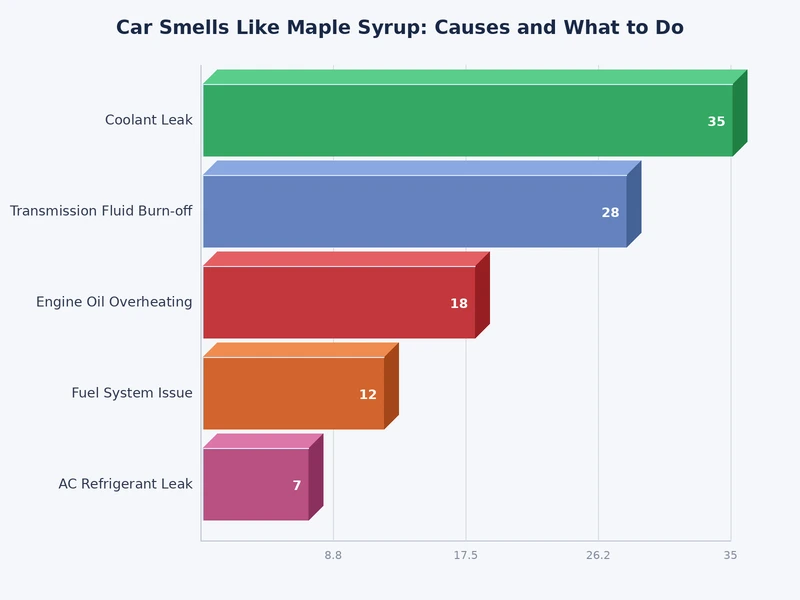
While coolant accounts for the vast majority of maple syrup smells in cars, our team occasionally traces the scent to something else. Automatic transmission fluid (ATF) has a faintly sweet odor in some formulations, and a leak near a hot exhaust component can produce a burnt-syrup smell that is easy to confuse with coolant. Power steering fluid is another occasional culprit on older vehicles with a traditional hydraulic rack. If the smell seems to come more from the exhaust than the engine bay, it may be worth reviewing our article on signs of a bad catalytic converter, since a failing converter can produce unusual sweet or sulfurous exhaust odors in certain failure modes.
Some combinations of symptoms mean a car should stop immediately rather than continuing to the destination. Our team treats the following as stop-right-now situations whenever they appear alongside a sweet maple syrup smell:
Driving with an overheating engine even a short distance can warp the cylinder head or destroy the head gasket — repairs that typically run five to ten times the cost of fixing the original leak source.
Not every sweet smell demands an emergency stop. Our team has encountered several low-urgency scenarios where a brief monitoring period is reasonable:
Even in these lower-urgency cases, our team recommends checking the coolant level every day for the following week and noting whether the level is dropping between checks.
The coolant reservoir is a translucent plastic tank located near the radiator, with MIN and MAX markings on the side. Most people can check it safely with the engine completely cold — opening a radiator cap on a warm engine is dangerous, as pressurized coolant can spray and cause serious burns. A level that sits noticeably below MIN without any visible puddle under the car often means coolant is disappearing internally, which can point to a head gasket failure or a crack inside the engine block rather than an external hose leak.
Once the engine is fully cold, a careful look around the engine bay reveals quite a bit. Our team typically checks these areas in order:
A UV leak detection kit (a small bottle of fluorescent dye added to the cooling system, then traced with a UV flashlight) is an inexpensive tool that pinpoints even very small leaks that are invisible in normal light. Most auto parts stores carry these kits for under twenty dollars.
Heater core leaks are harder to find visually because the component sits behind the dashboard. The most reliable indicators our team looks for are a sweet smell that grows stronger when the heater is running, a foggy film forming on the inside of the windshield without any outside moisture, and damp or wet carpet on the front passenger floor. A heater core leak caught early — before the core fails completely — can sometimes be temporarily managed with a stop-leak additive while arranging a proper repair, though our team views that as a short-term bridge rather than a lasting solution.
Repair costs vary based on which component is leaking, the vehicle make and model, and local labor rates. The table below reflects typical ranges most people encounter at independent shops across most regions.
| Cause | Typical Repair Cost | Urgency Level |
|---|---|---|
| Coolant hose replacement | $50 – $150 | Moderate |
| Radiator replacement | $300 – $900 | High |
| Water pump replacement | $250 – $700 | High |
| Intake manifold gasket | $300 – $700 | High |
| Heater core replacement | $500 – $1,200 | High |
| Head gasket replacement | $1,200 – $2,800 | Critical |
| Coolant flush (preventive) | $80 – $150 | Routine |
Hose replacements and coolant flushes are well within reach for most people who are comfortable with basic hand tools and have a couple of hours available. Radiator swaps are more involved but still manageable with a repair manual and some patience. Heater core replacements typically require removing large portions of the dashboard, which most shops classify as a multi-hour labor job. Head gasket work is the most demanding repair on the list, and our team generally recommends professional service for anything beyond hoses and flushes. Getting two or three written quotes before authorizing any major cooling system work is always a reasonable approach.
Coolant does not stay effective indefinitely. Over time, the protective additives break down, the fluid becomes mildly acidic, and it begins corroding the metal components it was designed to protect. Most manufacturers recommend a full coolant flush and refill every two to five years or every 30,000 to 50,000 miles — the owner's manual gives the specific interval for each vehicle. Pairing a coolant flush with other routine visits makes the schedule simple to track, and our team has consistently found that vehicles maintained on a regular flush schedule develop far fewer cooling system leaks over time. Keeping up with both coolant health and how long engine oil lasts simultaneously is a habit that tends to extend overall engine life noticeably.
A quick look under the hood every few weeks catches problems before they escalate into expensive repairs. Our team recommends running through a simple mental checklist on a regular basis:
Anyone who notices a loss of engine power alongside cooling system symptoms may also find our post on car losing power going uphill worth reading — engine overheating is one of the root causes covered there, and the two problems often appear together as a cooling system gradually deteriorates.
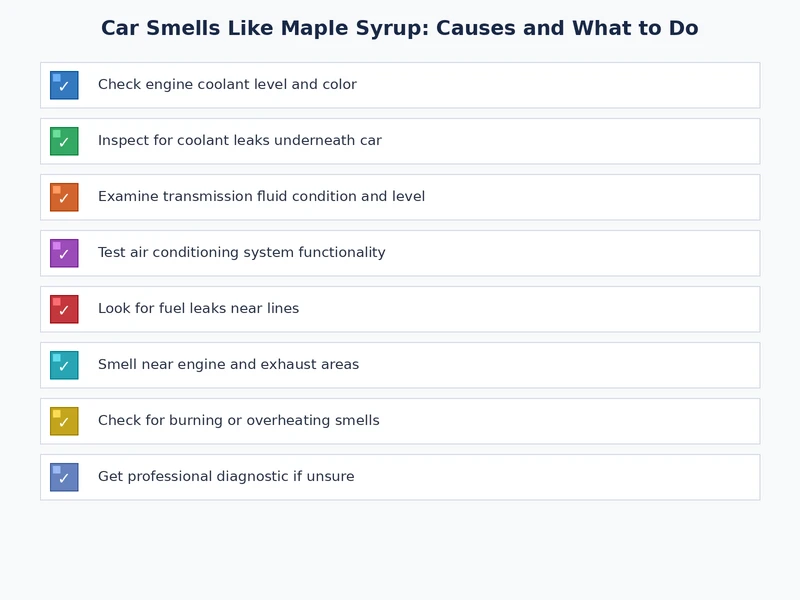
A car that smells like maple syrup is sending a clear signal worth taking seriously, and the most productive first step is checking the coolant level, scanning the engine bay visually, and paying attention to whether the temperature gauge shows any unusual movement — those three checks take under ten minutes and often reveal exactly where the problem is hiding. If the level is dropping between checks, the smell is persistent across multiple drives, or any of the urgent warning signs covered in this guide are present, our team consistently recommends scheduling a shop visit sooner rather than later to avoid a much costlier repair down the road.
 |
 |
 |
 |

About Sarah Whitfield
Sarah Whitfield is a diagnostics and troubleshooting specialist who spent ten years as an ASE-certified technician before joining the editorial team. She specializes in OBD-II analysis, electrical gremlins, and the kind of intermittent problems that make most owners give up.
Get some FREE car parts & gear.. Or check out the latest free automotive manuals and build guides here.
Disable your ad blocker to unlock all the hidden deals. Hit the button below 🚗
| | | |
