When your car starts then dies immediately, the cause is almost always one of seven things: a fuel delivery failure, a bad sensor, or an ignition problem. You can diagnose most of these yourself with basic tools before paying a shop to do it for you.
A car that fires up for a second and shuts right back off is giving you a specific clue. The engine got just enough to start but couldn't sustain combustion. That narrows the field considerably. This guide covers every common cause, what to look for, and how to fix it — based on real shop diagnostic procedures and manufacturer specifications.
For a broader look at what engine symptoms mean, browse the car troubleshooting guides at CarCareTotal to find related problems covered in the same depth.
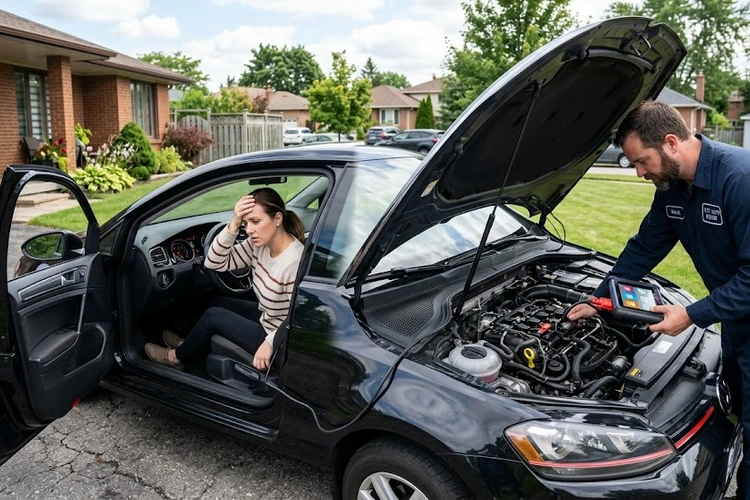
Figure 1 — A car that starts then stalls right away almost always points to a fuel delivery, ignition, or sensor failure — all diagnosable with basic tools.
Before you buy a single part, gather the right tools. Guessing costs money. Diagnosing saves it. Here's what experienced mechanics reach for first when a car starts and immediately stalls:
Essential Diagnostic Tools
OBD-II scanner — plugs into the port under your dashboard and reads fault codes stored in the engine control unit (ECU). Even a basic $30 model will tell you if the crankshaft sensor, MAF sensor, or fuel system triggered a code. Start here, always.
Fuel pressure gauge — connects to the Schrader valve (a small valve stem) on the fuel rail. It tells you instantly whether the pump is delivering correct pressure — typically 40–60 psi on fuel-injected engines.
Digital multimeter — tests voltage at sensors, relays, and the battery. A $20 multimeter handles most electrical checks you'll encounter in this diagnosis.
Vacuum gauge or smoke machine — locates vacuum leaks. A smoke machine pumps white smoke through the intake and makes leaks visible instantly. A vacuum gauge works but takes more patience to interpret.
MAF sensor cleaner spray — a $10 can of CRC Mass Air Flow Sensor Cleaner resolves dirty MAF issues in about 10 minutes. Keep one in your garage.
Spark plug socket set — a 5/8" or 13/16" spark plug socket is required to remove plugs without damaging them. Standard sockets crack plug insulators.
Safety Equipment
Safety glasses and nitrile gloves — fuel contact is a skin and eye irritant
A dry-chemical fire extinguisher nearby when working around fuel lines
Jack stands rated for your vehicle's weight if you need to get underneath
Wheel chocks — never rely on the parking brake alone when working under a car
If your engine is also making unusual noises when it briefly fires up, read our guide on engine ticking at startup — oil starvation or low oil pressure can compound stalling problems and needs to be ruled out early.
7 Causes: Why Your Car Starts Then Dies Immediately
These seven causes account for the vast majority of cases where a car starts then dies immediately. Each one has a distinct fingerprint. Pay close attention to the conditions — cold or warm engine, how quickly it dies, any sounds or smells — because that context guides the diagnosis.
1. Failing Fuel Pump
The fuel pump pushes pressurized gasoline from the tank to the injectors. When it's failing, it may produce just enough pressure to crank the engine to life — but not enough to sustain it under load.
Listen for the fuel pump priming when you turn the key to "on" before cranking. A healthy pump makes a brief whirring sound for 1–2 seconds. Silence or a weak hum is a red flag.
Fuel pressure drops immediately below spec on the gauge.
The car may start normally when the engine is cold but die repeatedly when warm — heat accelerates electrical failure inside the pump motor.
A failing pump often gives weeks of intermittent warning before full failure. Don't ignore it.
2. Clogged Fuel Injectors
Dirty injectors spray an inconsistent, unatomized stream of fuel instead of a fine mist. The engine starts on whatever is in the combustion chamber, then dies when the resulting lean condition (too little fuel) prevents sustained combustion.
Common on high-mileage vehicles, especially those that've run lower-quality gasoline consistently.
Often accompanied by rough idling or stumbling hesitation before the stalling gets worse.
Watch for a sudden drop in fuel economy in the weeks leading up to stalling — our breakdown of sudden fuel economy drops explains exactly what to look for.
A quality fuel system cleaner added to the tank sometimes restores partial function temporarily, which itself confirms the diagnosis.
3. Dirty or Faulty MAF Sensor
The Mass Air Flow (MAF) sensor measures incoming air volume so the ECU can calculate the correct fuel ratio. A dirty or failed MAF sends wrong readings. The ECU injects the wrong amount of fuel. The air-fuel mixture falls outside the combustible range. The engine stalls.
Unplug the MAF sensor and try starting the car. Some vehicles fall back to a default fuel map without MAF input — if the car runs better with the sensor unplugged, you've confirmed the diagnosis.
OBD-II codes P0100 through P0103 point directly at the MAF circuit.
Cleaning costs $10 in cleaner spray. Replacement sensors range from $50 to $300 depending on the vehicle. Always clean first.
4. Bad Crankshaft Position Sensor
The crankshaft position sensor (CKP) tracks the exact position and rotational speed of the crankshaft. Without accurate data, the ECU can't time fuel injection and spark correctly. The engine starts briefly on the residual charge in the cylinders — then dies. This is one of the sneakier causes because the car cranks normally and there are no obvious external signs.
Common OBD-II codes: P0335, P0336, P0337, P0338.
The failure often worsens as the engine warms up. If your car starts fine cold but reliably stalls hot, the CKP is your prime suspect.
Replacement is straightforward on most vehicles — typically a 30-minute job with simple hand tools.
5. Vacuum Leak
Modern engines rely on a sealed vacuum system — a network of hoses that carry negative pressure — to control idle speed, brake boost, emissions components, and more. A cracked hose or loose fitting lets unmetered air into the intake. The ECU can't compensate fast enough at idle speeds. The engine stalls.
Listen for a hissing sound near the intake manifold or throttle body with the engine briefly running.
Carefully spray carburetor cleaner along vacuum hose joints — a sudden RPM change signals a leak at that location. Keep spray away from hot exhaust components.
A smoke machine is the fastest and safest method. Your local shop can do a smoke test for $50–$80 if you don't own one.
Cracked hoses cost $5–$30 to replace and take minutes to swap out.
6. Worn or Fouled Spark Plugs
Spark plugs ignite the compressed air-fuel mixture in each cylinder. Worn plugs produce a weak, inconsistent spark. Fouled plugs — coated with oil or carbon deposits — may fire once at startup and then fail entirely, leaving cylinders misfiring or dead. If you haven't replaced plugs recently, they're a strong suspect on any engine over 60,000 miles.
Pull one plug and inspect it. Black, sooty deposits indicate a rich mixture or oil fouling. White or blistered electrodes signal lean running or overheating.
Our guide on bad spark plug symptoms walks through every visual indicator and what each one means for your engine.
Plugs cost $4–$25 each. Replace the full set when one is bad — the others are the same age and equally worn.
7. Faulty Idle Air Control Valve
The Idle Air Control (IAC) valve regulates how much air bypasses the throttle plate at idle. When the IAC is stuck closed or coated in carbon buildup, the engine can't pull in enough air to maintain idle speed. RPMs plummet. The engine stalls seconds after starting.
Watch the tachometer (RPM gauge) during startup — if the needle drops sharply toward zero right before the stall, the IAC is the likely culprit.
Cleaning the IAC port and valve body with throttle body cleaner sometimes restores full function without a replacement part.
OBD-II codes P0505 through P0511 indicate IAC circuit faults. Replacement parts typically run $30–$150.
Note: if your engine surges at idle rather than dying completely — RPMs rising and falling on their own — that's a related but distinct condition covered in our engine surging at idle guide.
When to Fix It Yourself — and When to Call a Mechanic
Not every cause needs a shop. But some do. Use this breakdown to make an honest assessment before you commit time or money to a repair.
Fix It Yourself If:
An OBD-II code points to the MAF sensor, IAC valve, or spark plugs — all are accessible, affordable, and well-documented repairs.
A visual inspection reveals a cracked or disconnected vacuum hose — replacing a $5 hose is a beginner-level fix.
The MAF sensor cleans up and the car returns to normal operation after.
Spark plugs are visibly fouled or past their replacement mileage interval per the owner's manual.
A fuel pressure test shows normal results — that eliminates the pump and lets you focus upstream on sensors and ignition.
Go to a Shop When:
Fuel pressure tests show low or zero pressure — replacing the fuel pump means dropping the gas tank on most vehicles. That's a 3–5 hour job that requires a lift and specialty tools.
The crankshaft position sensor is buried inside the engine block or bell housing on your specific vehicle — some models require partial engine disassembly to reach it.
You've replaced the likely components and the problem persists. Intermittent faults often require a shop's live data streaming over multiple drive cycles to catch.
The car starts then dies immediately only in very cold temperatures — that pattern points to the cold start injector or engine coolant temperature sensor, which requires specialized testing equipment.
You smell fuel strongly during cranking — a flooded engine or fuel leak near ignition components is a fire risk. Don't keep cranking.
Cost Comparison by Cause
Cause
DIY Part Cost
Shop Labor Estimate
DIY Difficulty
Spark plugs
$20–$100
$50–$150
Easy
MAF sensor cleaning
$10 (cleaner spray)
$80–$120
Easy
Vacuum hose replacement
$5–$30
$80–$200
Easy
IAC valve (cleaning)
$8 (throttle body cleaner)
$100–$180
Easy–Moderate
Crankshaft position sensor
$20–$120
$100–$250
Moderate
Fuel injector cleaning service
$10–$20 (additive)
$50–$150
Easy
MAF sensor replacement
$50–$300
$100–$200
Easy–Moderate
Fuel pump replacement
$150–$600
$400–$900
Hard
How to Fix Each Cause: Step-by-Step
Work through these in order of cost and accessibility. Start cheap and easy. Only move to expensive repairs after eliminating the simpler ones. This sequence saves most people significant money.
Step 1: Pull OBD-II Codes First
Plug your OBD-II scanner into the diagnostic port under the dashboard on the driver's side, near the steering column.
Turn the key to "on" — engine off.
Read all stored and pending fault codes. Write every one down.
Research each code before buying anything. P0335 = crankshaft sensor. P0102 = MAF sensor. P0505 = IAC. Follow the code, not a guess.
Clear codes after repairs, then drive to confirm the fix held.
Step 2: Clean the MAF Sensor (10 Minutes, Free Diagnosis)
Locate the MAF sensor in the air intake tube between the air filter box and the throttle body.
Disconnect the electrical connector. Remove the sensor — usually two Torx screws.
Spray 10–12 short bursts of MAF sensor cleaner directly on the sensing wire or hot film element. Never touch the element — it's extremely fragile.
Let it dry completely (minimum 10–15 minutes), reinstall, and test start.
Step 3: Inspect and Replace Spark Plugs
Remove plug wires or coil-on-plug (COP) coil packs one at a time to avoid mixing up firing order.
Use a spark plug socket with rubber insert to remove each plug — standard sockets will crack the ceramic insulator.
Inspect the electrode tip. Measure gap with a feeler gauge.
Gap new plugs to the specification listed on the underhood sticker or in the owner's manual. Install hand-tight, then torque to spec — overtightening strips the threads.
Step 4: Test Fuel Pressure
Connect the fuel pressure gauge to the Schrader valve on the fuel rail — it looks like a tire valve stem.
Turn the key to "on" without cranking. Pressure should build to spec within 2–3 seconds.
Crank the engine and watch pressure during cranking. Low or zero pressure = pump or fuel pressure regulator.
After shutdown, watch how quickly pressure bleeds off. Fast pressure drop (under 5 psi in 30 minutes) suggests a leaking fuel pressure regulator or failed pump check valve.
Step 5: Locate and Repair Vacuum Leaks
With the engine off, visually trace every vacuum hose from the intake manifold outward. Look for cracks, hardened rubber, missing caps, or loose clamps.
With the engine running briefly, carefully spray small bursts of carburetor cleaner along hose joints — an RPM rise pinpoints the leak location. Stay well away from hot exhaust manifolds and any ignition sources.
Replace damaged hoses. Match inner diameter exactly. Hose clamps must seat fully on both fittings.
Cars that also struggle to rev normally often share the same fuel and sensor root causes described here. Our guide on cars that won't rev past a certain RPM covers the diagnostic overlap in detail and can help confirm your findings.
Prevention: Keeping Your Car Running Strong
A car that starts then dies immediately rarely fails without warning. There are almost always early signals — you just have to recognize them. These habits catch problems before they strand you on the side of the road.
Scheduled Maintenance That Directly Prevents Stalling
Replace spark plugs on schedule. Copper plugs: every 30,000 miles. Platinum: every 60,000. Iridium: up to 100,000. Don't wait for symptoms — worn plugs degrade gradually and the stall comes without warning.
Replace the fuel filter at manufacturer intervals. Most vehicles specify 30,000 miles. A clogged filter starves the pump and injectors, accelerating wear on both.
Use quality fuel consistently. Top Tier certified gasoline includes detergent additives that actively clean injectors with every fill-up. The Top Tier gas program lists every certified brand and station chain.
Add fuel system cleaner every 10,000–15,000 miles. A single bottle of quality injector cleaner added to a full tank helps prevent the carbon buildup that clogs injectors over time.
Replace the air filter annually or every 15,000 miles. A clogged air filter restricts incoming airflow and creates the same lean condition a dirty MAF produces — and it costs $15 to prevent.
Early Warning Signs You Should Never Dismiss
Rough idle or stumbling hesitation at stop signs — the engine is already struggling to maintain stable combustion at low load
Hesitation on cold starts, especially in the first 30–60 seconds of driving
Check engine light active, even with no drivability symptoms — stored codes reveal developing faults before they become failures
Fuel economy declining over several consecutive fill-ups — a measurable early warning sign detailed in our sudden fuel economy drop guide
Engine surging — RPMs rising and falling at idle without any input — signals the same IAC, vacuum, or sensor issues that cause stalling
Situational Checks That Catch Problems Early
Before any long road trip on a vehicle with more than 80,000 miles, run a basic OBD-II scan and pull any stored codes — pending faults that haven't triggered the check engine light yet often show up here
After extended vehicle storage (30 days or more), fuel degrades and can varnish injectors and leave water in the tank — drain old fuel or use a fuel stabilizer before storage
Any time a check engine light appears, scan within 48 hours — don't let codes accumulate or self-clear without knowing what they were
Frequently Asked Questions
Why does my car start then die after just a few seconds?
The most common reasons are a failing fuel pump, a bad crankshaft position sensor, or a dirty MAF sensor. The engine fires on whatever fuel or ignition charge is available at startup, then loses the ability to sustain combustion when that initial charge runs out. Pull OBD-II codes first — that alone narrows the cause significantly before you spend money on parts.
Can a weak battery cause a car to start and immediately die?
Yes. A weak battery may provide just enough voltage to engage the starter and turn the engine over, but then drops too low to simultaneously power the fuel pump and ECU. The engine starts and dies within seconds as system voltage collapses. Test battery voltage with a multimeter — a healthy battery reads 12.6V or higher at rest and 13.7–14.7V with the engine running.
Why does my car start fine when cold but die repeatedly when the engine warms up?
Heat-related intermittent failures point most often to the crankshaft position sensor, the fuel pump, or an ignition coil. These components expand thermally as the engine heats up, and a hairline crack or marginal electrical connection that holds up cold becomes a full failure at operating temperature. The crankshaft position sensor is the single most common culprit in this specific warm-stall pattern.
Is it safe to keep cranking a car that immediately dies?
Two or three attempts are fine for diagnosis. Beyond that, repeatedly cranking an engine that won't sustain combustion floods the cylinders with unburned fuel. That raw fuel washes oil off the cylinder walls and dilutes the engine oil in the crankcase, accelerating wear. If the car dies immediately three to four times in a row, stop cranking and diagnose before trying again.
How do I know if it's the fuel pump or the crankshaft sensor causing the stall?
A fuel pressure test separates them definitively. Connect a fuel pressure gauge to the Schrader valve on the fuel rail and observe pressure when you turn the key to "on." If pressure builds to spec, the pump is working and you're looking at a sensor or ignition issue. If pressure is low or absent, the pump is the problem. OBD-II codes P0335–P0338 also directly confirm crankshaft sensor failure.
Final Thoughts
A car that starts then dies immediately is a solvable problem — start with an OBD-II scan, run a fuel pressure test, and clean the MAF sensor before replacing anything. Work through the seven causes in order from cheapest to most complex, and you'll identify the culprit without guessing. If you've ruled out the DIY fixes and the stall persists, bring your diagnostic data to a trusted shop — you'll save them hours of work and yourself money on the labor bill.
Sarah Whitfield is a diagnostics and troubleshooting specialist who spent ten years as an ASE-certified technician before joining the editorial team. She specializes in OBD-II analysis, electrical gremlins, and the kind of intermittent problems that make most owners give up.