Car Won't Go Into Neutral: Causes and Solutions

by Sarah Whitfield

If you're also dealing with an engine stalling during acceleration alongside the neutral problem, check fluid quality and clutch condition together — those symptoms share a root cause on high-mileage manual platforms more often than not.
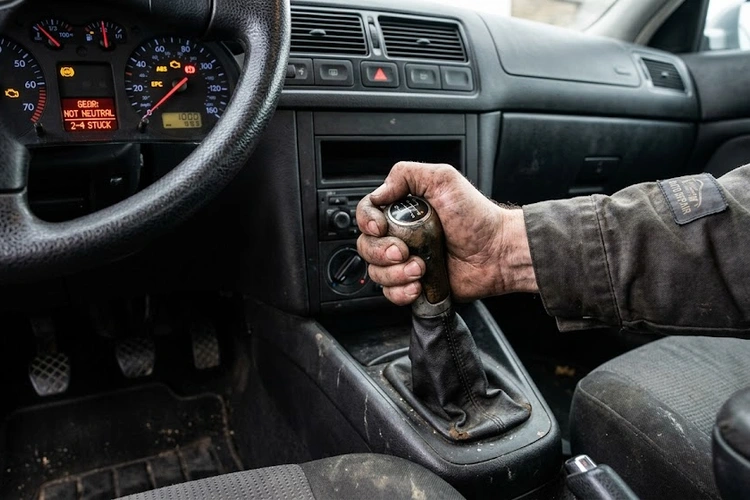
Car Won't Go Into Neutral: Causes and Solutions
Figure 1 — Car Won't Go Into Neutral: Causes and Solutions

Repairs That Require a Professional

  • Valve body replacement or rebuild: This requires removing the transmission pan, working inside a pressurized hydraulic system, and in most cases reprogramming the TCM after installation to match the new component.
  • Synchronizer ring replacement: Internal manual transmission work requires a complete teardown, specialized bearing pullers, and precise reassembly torque specs that only experienced transmission technicians can reliably execute.
  • Internal range sensor replacement: On certain platforms, the TRS mounts inside the transmission housing and requires specialized tooling and post-replacement calibration that shop equipment provides.
  • Solenoid pack replacement on late-model transmissions: Modern solenoid packs often require partial transmission removal and TCM reprogramming after installation, placing them firmly in professional territory regardless of mechanical skill level.
Warning: If your car won't go into neutral and needs to be moved, request a flatbed only — dragging any vehicle with locked transmission components causes permanent damage to the output shaft and drivetrain.

Repair Cost Comparison by Component

Transmission repair costs span an enormous range, which makes understanding exactly what failed before approving any estimate the most financially protective action you can take.

Cost Breakdown Table

Component Part Cost Labor Cost Total Estimate DIY Difficulty
Shift linkage bushing $5–$25 $60–$120 $65–$145 Easy
Shift cable $30–$120 $80–$180 $110–$300 Easy
Shift interlock solenoid $25–$80 $60–$150 $85–$230 Moderate
Transmission range sensor $40–$150 $100–$250 $140–$400 Moderate
Shift solenoid $15–$100 $150–$400 $165–$500 Moderate–Hard
Valve body $200–$900 $400–$800 $600–$1,700 Not recommended
Synchronizer rings $50–$200 $500–$1,200 $550–$1,400 Not recommended

DIY vs. Shop Repair

The labor markup on simple linkage repairs is significant — shops charge $80–$180 for a 45-minute job. DIY is the obvious choice when you have a floor jack and jack stands available. Internal transmission repairs require specialized tools that shops amortize across dozens of annual jobs, and renting those tools for a single repair rarely makes financial sense.

According to Wikipedia's overview of transmission mechanics, a modern automatic transmission contains over 800 individual components, which explains why internal rebuilds carry the labor rates they do and why professional diagnosis is worth the cost before any internal work begins.

Proven Fixes That Actually Work

With your diagnosis pointing to a specific component, the repair becomes a defined procedure rather than exploratory guesswork. Most common neutral-engagement fixes follow a reliable, repeatable sequence that produces consistent results across vehicle platforms.

Manual Transmission Fixes

  1. Replace the shift cable. Disconnect the cable at the shifter base and at the transmission selector arm, then route the new cable along the factory path. Secure it with the original brackets and clips, then adjust the cable end to align the detents correctly before tightening the locking nut.
  2. Swap worn shift linkage bushings. Remove the linkage rod to expose the bushing, press the old one out with a matching socket, and press the new bushing in squarely. Reinstall the rod and test gate movement through all positions including neutral.
  3. Adjust clutch pedal free play. Locate the clutch adjuster, loosen the lock nut, and turn it until pedal free play matches your vehicle's service specification. The typical spec is 3/4 to 1 inch of free travel measured at the pedal pad.
  4. Change transmission gear oil. Drain through the plug and refill to level using the manufacturer-specified viscosity, commonly 75W-90 or 75W-140 GL-4. Recheck the level after a short test drive and top off as needed.

If your key gets stuck in the ignition alongside the neutral problem, check the park lock actuator and its shared fuse circuits — that component and the shift interlock run on the same circuit in many vehicle platforms.

Automatic Transmission Fixes

  1. Replace the shift interlock solenoid. Remove the center console trim to access the shift assembly and unplug the old solenoid. Install the new unit and verify that the brake-to-shift function releases cleanly before reassembling the trim panels.
  2. Replace the transmission range sensor. Locate the sensor on the transmission housing at the selector shaft, disconnect the harness, remove the mounting bolts, and seat the new sensor squarely. Confirm with a scanner that all gear positions read correctly through the full range.
  3. Perform a transmission fluid flush. Use the drain-and-fill method with manufacturer-approved fluid, cycling two or three times if the fluid is heavily contaminated. Never substitute generic universal fluid on transmissions that specify proprietary formulations like Honda ATF-DW1 or ZF LifeguardFluid 8.
  4. Replace individual shift solenoids. Drop the transmission pan and identify the faulty solenoid using codes in the P0750–P0770 range. Release the retaining clip, swap the solenoid, install a fresh pan gasket, and refill with the correct fluid specification.

Drivers who notice their car stalling at a traffic light alongside the neutral problem should inspect the torque converter lockup solenoid. That single component affects both idle stability and gear-range behavior across many automatic transmission platforms simultaneously.

Common Misconceptions About Neutral Problems

The transmission repair space generates more oversimplified advice than almost any other category in automotive maintenance. Acting on these misconceptions leads directly to wasted parts, missed root causes, and repair bills that compound unnecessarily.

Myth: Fresh Fluid Always Fixes It

Fresh fluid is a legitimate first step when the existing fluid is dark or burnt, but it cannot rebuild worn solenoids or replace cracked cables. Clean fluid flows through a broken mechanical system just as ineffectively as contaminated fluid does.

  • Fluid changes address: contamination, viscosity breakdown, and minor solenoid stiction caused by light varnish deposits inside the valve body.
  • Fluid changes do not address: physical cable breaks, failed range sensors, worn synchronizer rings, dead interlock solenoids, or any mechanical disconnect in the linkage.
  • Best practice: scan for active codes before any fluid service, so you don't mask an electronic fault behind a fresh-fluid result that changes nothing structurally.

Myth: Neutral Refusal Is Always a Minor Inconvenience

Many drivers treat a stiff neutral as something to manage rather than diagnose, especially when the vehicle still moves in drive or reverse. That tolerance carries real and compounding consequences:

  • A transmission stuck in gear at shutdown stresses the starter motor and flywheel ring gear on every subsequent start attempt, accelerating wear on components that cost far more than the original repair.
  • Inability to engage neutral eliminates push-starting, flat towing, and any emergency maneuver that requires drivetrain disengagement from the engine.
  • A failed shift interlock on a grade creates an unattended rollaway risk with no warning and no grace period before damage or injury occurs.
  • Delaying a valve body repair converts a $600–$700 fix into a $3,000 full rebuild as internal clutch packs absorb the cascading hydraulic failure over time.

If you're also seeing symptoms of a failing wheel cylinder making the car difficult to roll when neutral should be engaged, resolve the brake drag first — a dragging wheel cylinder generates enough resistance to make a functioning transmission appear stuck in gear.
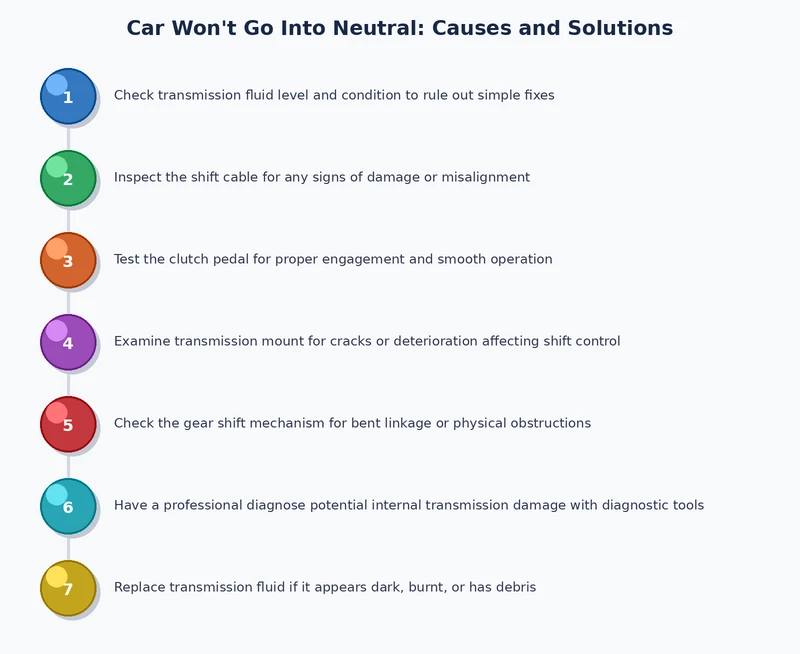
step-by-step diagnostic process for a car that won't go into neutral
Figure 2 — Diagnostic flow for identifying why a car won't go into neutral, from fluid inspection through electronic fault code retrieval and component testing.
Your car won't go into neutral because one specific component failed — find it, fix it, and stop paying for guesswork.

About Sarah Whitfield

Sarah Whitfield is a diagnostics and troubleshooting specialist who spent ten years as an ASE-certified technician before joining the editorial team. She specializes in OBD-II analysis, electrical gremlins, and the kind of intermittent problems that make most owners give up.

Get some FREE car parts & gear.. Or check out the latest free automotive manuals and build guides here.

Disable your ad blocker to unlock all the hidden deals. Hit the button below 🚗