by Sarah Whitfield
Clutch chatter is that shuddering, vibrating sensation felt when releasing the clutch pedal during engagement. It means the clutch disc isn't gripping the flywheel (the large rotating disc bolted to the engine) smoothly — and it almost always signals something that needs attention.
Most drivers first notice it as a rapid, jerky vibration passing through the pedal, floor, and sometimes the whole seat. It typically shows up at low speeds, especially when pulling away from a stop. Understanding the root cause makes the fix far more manageable. For a fuller picture of clutch health over time, the guide on how long a clutch lasts is a solid companion read.
Contents
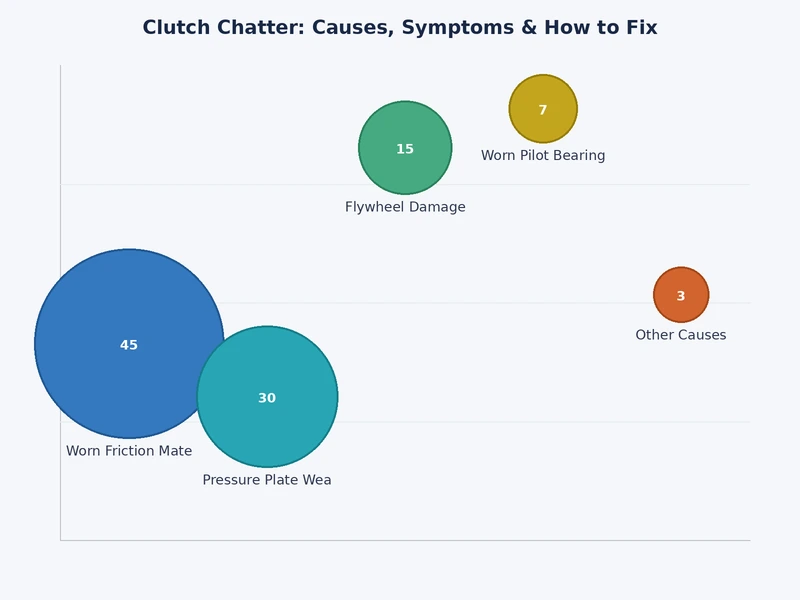
Clutch chatter doesn't happen randomly. It has a root cause — and most come down to the friction surfaces failing to make clean, consistent contact during engagement.
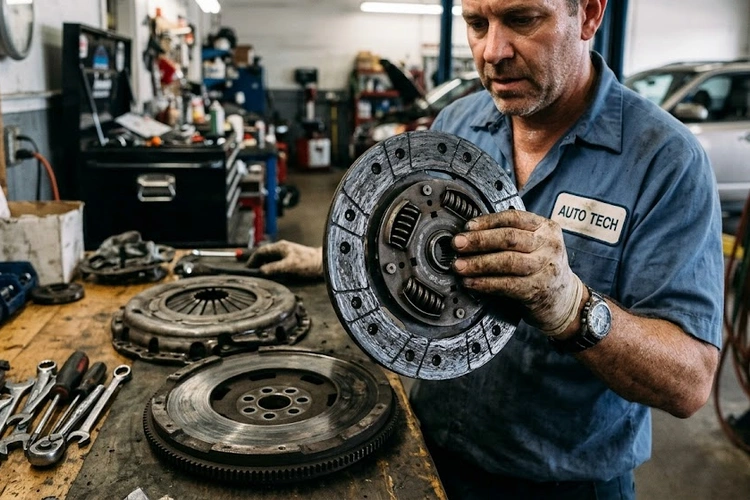
The clutch disc is the friction component sandwiched between the flywheel and the pressure plate. Over miles of use, it gradually wears down. It can also become glazed — developing a hardened, smooth surface from excessive heat. Glazing typically comes from riding the clutch or slipping it repeatedly in stop-and-go traffic. A glazed disc loses its even grip, causing it to catch and release in rapid bursts instead of engaging smoothly. That's the chatter drivers feel through the whole cabin.
Even a small amount of oil on the clutch disc can completely ruin smooth engagement. Leaks from the rear main seal or the transmission input shaft seal are common culprits. The oil soaks into the friction material and causes wildly inconsistent grip. This type of chatter often feels erratic — unpredictable from one takeoff to the next, rather than consistent every time.
If clutch chatter appears suddenly rather than gradually, check for oil leaks around the bell housing before assuming the disc itself has simply worn out from use.
The flywheel is the large, heavy disc the clutch presses against. It can develop hot spots (hardened surface patches from heat cycles), warping, or scoring (deep grooves from metal-on-metal contact). These surface irregularities create uneven contact during engagement — which translates directly into chatter. Flywheels that aren't inspected and resurfaced when the clutch is replaced are among the leading causes of chatter returning quickly after a fresh repair job.
Inside the clutch disc are small torsional springs — coil springs built into the disc hub — that dampen vibration the moment the clutch engages. When these break or wear out, smooth engagement disappears and chatter takes over. A worn pressure plate (the component that clamps the disc against the flywheel) can cause the same outcome. These hardware failures typically accompany high mileage and compound the damage if ignored.
Clutch chatter has a fairly distinct set of symptoms once drivers know what to look — and listen — for. Catching them early prevents more expensive downstream damage.
The defining symptom is a rapid shuddering vibration during that brief window of clutch engagement when letting the pedal out from a full stop. It radiates through the pedal, floor, and sometimes the seat. Drivers often describe the car as bucking or jolting forward rather than rolling away cleanly. The sensation is similar to what's covered in car shaking when put in drive or shaking at low speeds — though with clutch chatter, the shudder is specifically tied to that engagement moment, not continuous driving.
Some cases of clutch chatter produce an audible rattling or chattering sound right as the clutch catches. It's a brief, rapid "brrp" or "brrt" — different from the constant grinding of a worn-out throwout bearing. The noise appears during engagement and typically disappears once the clutch is fully out. Drivers who also notice a popping noise while braking should check whether both symptoms share a root cause in worn drivetrain components.
Severe clutch chatter makes smooth takeoffs nearly impossible. The car lurches, stumbles, and fights the driver forward. In bad cases, the engine stalls — symptoms that overlap with what's described in engine stalling on acceleration and stalling at traffic lights. When chatter has progressed to this stage, the clutch needs repair soon. Continued driving risks damage to both the flywheel and the transmission input shaft.
Not every case of clutch chatter demands an immediate shop visit. How severe it is and whether it's getting worse are the two most important factors to evaluate.
Some situations call for quick action. A burning smell after driving is a clear red flag — it means the clutch is slipping severely and destroying itself fast. Sudden-onset chatter appearing right after a recent clutch job usually points to a flywheel that wasn't resurfaced, or an installation error. Suspected oil contamination also demands prompt attention, because the underlying leak will keep ruining new parts regardless of how many are installed.
Oil-contaminated clutch discs do not recover on their own. Until the leak source is identified and repaired, any replacement disc will fail just as quickly as the last one.
Mild, stable chatter that isn't getting worse — no burning smell, no stalling, no sudden onset — can sometimes be monitored briefly, especially if a full clutch replacement is already being planned in the near future. That said, clutch chatter almost never resolves on its own. The longer it runs, the more likely it is to cause flywheel damage that raises the total repair cost considerably. Here's a quick reference for gauging urgency:
| Symptom / Condition | Urgency Level | Most Likely Cause |
|---|---|---|
| Sudden chatter after a recent clutch replacement | Immediate | Warped flywheel, installation error |
| Burning smell alongside chatter | Immediate | Slipping disc, severe wear |
| Oil or fluid contamination suspected | Immediate | Rear main seal or input shaft seal leak |
| Gradual onset, consistently worsening | Soon (within weeks) | Glazed disc, worn pressure plate |
| Mild and stable, no smell or stalling | Monitor and plan ahead | Early disc wear, minor flywheel surface issues |
Fixing clutch chatter properly means addressing the root cause — not just swapping the most obvious worn part and hoping for the best.
Before ordering any parts, inspect the bell housing area carefully for signs of oil leaks. A rear main seal failure or transmission input shaft seal leak will saturate a new disc just as fast as the old one — turning a $600 repair into a repeat expense. Fixing the leak source first is not optional. It's the step that makes every other repair actually stick.
Whenever the clutch disc is replaced, the flywheel should be inspected without exception. A qualified machine shop can resurface (re-grind) a flywheel for a fraction of replacement cost — often under $60. Skipping this step is the single most common reason clutch chatter returns after a repair. If the flywheel is too thin after surfacing, or has deep hot spots that can't be machined out, a new flywheel is the right call. The cost difference between resurfacing and replacing is far less than doing the job twice.
Most experienced mechanics recommend replacing the disc, pressure plate, and release bearing as a complete matched kit rather than swapping individual components. The parts wear together, and a new disc paired with a tired pressure plate is a recipe for a quick comeback. According to Wikipedia's overview of clutch mechanics, the pressure plate and disc function as a paired friction system — their wear patterns are linked, and replacing one without the other rarely yields lasting results.
Clutch replacement requires dropping the transmission — a significant job on most vehicles, and considerably more involved on front-wheel-drive cars where the engine and transmission are packed tightly together. Experienced home mechanics with a lift, transmission jack, and the right tools can handle it. For most drivers, a trusted shop is the practical and safer choice. Labor runs several hours even for experienced technicians. Parts for a standard clutch kit commonly range from $150 to $400, with total repair costs typically falling between $500 and $1,200 depending on the vehicle make and local labor rates.
Clutch chatter feels like a rapid shuddering or vibrating sensation during clutch engagement — specifically when letting the pedal out from a full stop. It typically radiates through the pedal, floor, and seat, making the car feel like it's bucking or jolting instead of rolling away smoothly.
Clutch chatter almost never resolves on its own. Minor surface glazing can occasionally improve if the disc burns clean under hard use, but oil contamination and mechanical wear always require actual repair. In most cases, chatter gets progressively worse the longer it's left unaddressed.
A full clutch kit typically costs $150–$400 in parts depending on the vehicle. Shop labor adds $300–$800 or more. Flywheel resurfacing adds roughly $40–$100. Total repair costs commonly fall in the $500–$1,200 range for most passenger cars and light trucks.
Chatter in a freshly installed clutch almost always points to a flywheel that wasn't resurfaced during the job, incorrect torque on the pressure plate bolts, or oil contamination from a leak that wasn't fixed before the new parts went in. A properly installed clutch should engage without any chatter.
Mild chatter is drivable for a short period, but it shouldn't be ignored for long. Severe chatter makes the vehicle difficult to control smoothly at low speeds and places extra stress on the flywheel and transmission. Driving with oil contamination accelerates disc destruction significantly.
Yes. Worn motor mounts — the rubber cushions that hold the engine in position — can produce a shudder during clutch engagement that closely mimics clutch chatter. If the clutch disc, pressure plate, and flywheel all check out in good condition, inspecting the motor and transmission mounts is a logical next step in the diagnosis.
Most clutch replacements take 3–6 hours of labor, depending on the vehicle. Rear-wheel-drive cars are generally quicker because the transmission is more accessible. Front-wheel-drive vehicles with transversely mounted engines often take longer due to the tight packaging around the drivetrain components.
Clutch chatter is the drivetrain's way of asking for help — the sooner it gets answered, the cheaper the conversation turns out to be.
 |
 |
 |
 |

About Sarah Whitfield
Sarah Whitfield is a diagnostics and troubleshooting specialist who spent ten years as an ASE-certified technician before joining the editorial team. She specializes in OBD-II analysis, electrical gremlins, and the kind of intermittent problems that make most owners give up.
Get some FREE car parts & gear.. Or check out the latest free automotive manuals and build guides here.
Disable your ad blocker to unlock all the hidden deals. Hit the button below 🚗
| | | |
