by Sarah Whitfield
According to the American Automobile Association, engine-related failures account for nearly one in three roadside breakdowns across the United States, and a surprising number of those failures trace directly back to neglected oil — oil that was showing warning signs in its color long before the engine gave out. Understanding engine oil color meaning is one of the fastest, cheapest diagnostic checks you can perform on your vehicle, and it costs you nothing but thirty seconds and a clean rag. If your oil currently looks unusual, or if you notice your engine oil smells like gas, those two signals together point toward a problem you should not postpone addressing.
Contents
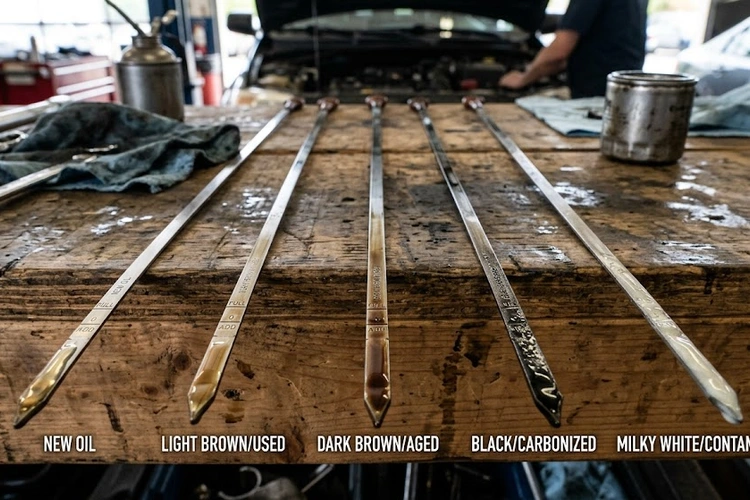
Fresh motor oil starts as a translucent amber color, close to honey or light caramel, and it gradually darkens as it circulates through your engine picking up combustion byproducts, metallic particles, and heat-degraded additives. The engine oil color meaning at any given moment reflects both the age of the oil and the internal condition of your engine, which makes it a remarkably informative indicator for such a simple visual check. A dark color alone does not automatically mean trouble — some synthetic formulations darken faster than conventional oil — but color combined with texture, smell, and mileage context tells a complete story.
Pull the dipstick (the looped metal rod near the front or side of your engine) with the engine cold or at least fifteen minutes after shutdown, wipe it clean with a white cloth or paper towel, reinsert it fully, then withdraw it again for a clean reading. Holding the dipstick up to natural light — not a dim garage — gives you the most accurate color assessment and lets you spot any particles or cloudiness that artificial light tends to hide. Check your oil level at the same time, noting whether the oil sits between the two indicator marks, because low oil that looks fine in color is still a problem worth investigating.
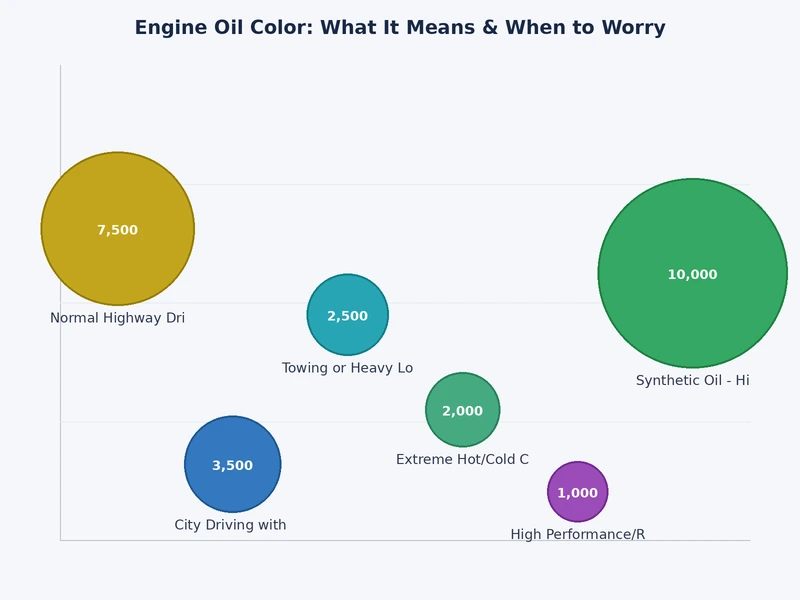
Amber or golden-yellow oil is what you want to see on a fresh change, and it typically stays that way for roughly the first one thousand miles of use before oxidation and combustion soot begin shifting it toward a darker brown. Dark brown oil that remains translucent — meaning you can still faintly see the dipstick markings through it — is completely normal and simply indicates that the oil is doing its job of collecting contaminants. You do not need to change dark brown translucent oil on color alone; check the odometer against your manufacturer's recommended interval instead, which for most modern vehicles with full synthetic oil lands between seven thousand and ten thousand miles.
Opaque black oil that you cannot see through at all, especially when it also feels thick or gritty between your fingers, is telling you the oil is past its useful life and the additive package (the chemical blend that neutralizes acids and reduces friction) has been fully depleted. Running an engine on spent black oil accelerates wear on bearings, camshafts, and cylinder walls at a rate that is measurably higher than running on fresh oil, according to motor oil research documented by Wikipedia's engineering sources. Change this oil immediately and do not rationalize postponing it because the car "seems to be running fine" — internal engine wear is silent until it is catastrophic.
Milky, creamy, or foamy oil is the most alarming color result you can get, because it almost always means coolant (the green or orange liquid in your radiator) has entered the oil system through a failed head gasket (the seal between the engine block and the cylinder head) or a cracked engine block. Coolant contamination destroys oil's lubricating properties almost instantly and creates a corrosive sludge that attacks engine bearings, so if you see this, stop driving and have the vehicle towed rather than attempting to drive it to a shop. Check whether your coolant reservoir is bubbling at the same time, because that symptom frequently accompanies a head gasket failure and confirms the diagnosis.
Milky oil is a stop-driving emergency, not a "monitor it" situation — continuing to drive risks seizing the engine within miles.
Oil that feels gritty between your fingers, or that shows silver or coppery metallic flecks when you examine the dipstick, indicates that metal components inside your engine are wearing at an accelerated rate and shedding particles into the oil supply. This is the early warning stage before serious mechanical failure, and it warrants an immediate oil change followed by a fresh check after one hundred miles to see whether the new oil also picks up metallic debris. If the grit returns quickly, have a mechanic perform an oil analysis (a laboratory test that identifies exactly which metals are present and in what concentrations) to pinpoint which component is failing.
Checking the oil immediately after driving produces an artificially low reading on the dipstick because the oil is still circulating through the engine rather than draining back into the pan, and the heat causes it to thin slightly, making color distinctions harder to see accurately. Most vehicle manufacturers recommend waiting at least five minutes after shutdown on level ground, though fifteen minutes gives you the most reliable reading because it allows all the oil to settle back into the oil pan (the reservoir at the bottom of the engine) and return to a resting state.
Judging oil color without knowing the mileage since the last change, the type of oil used, or the current engine health leads to misdiagnosis more often than not, because a high-mileage engine running conventional oil will darken its oil dramatically faster than a newer engine running full synthetic. If your engine has been experiencing rough idling or cold-start hesitation, those symptoms add critical context to what the oil color tells you — and if your car stalls in cold weather, oil viscosity (thickness) and condition are among the first variables worth examining.
Check your oil color and level once a month or every five hundred miles, whichever comes first, and always check it before any long road trip where engine problems would strand you far from home. High-mileage vehicles (over one hundred thousand miles) and turbocharged engines, which run hotter and consume oil faster, benefit from weekly checks because even a quart of oil loss can dramatically concentrate contaminants in the remaining oil and accelerate degradation. If your oil pressure gauge is fluctuating, treat that as a signal to check both the oil level and the color without delay, because low oil and degraded oil are two of the most common causes of unstable oil pressure.
Always wipe the dipstick onto a white or light-colored cloth rather than a dark rag, because the contrast reveals the true color and lets you spot metallic particles, water droplets (which appear as tiny clear or whitish beads mixed into the oil smear), and soot concentration in a way that a dark surface completely obscures. Keep a dedicated set of lint-free white rags near your oil fill cap so the habit stays easy and consistent, and compare consecutive checks side by side — placing a new cloth strip next to the previous one — to track how fast the oil is darkening between checks.
Pull the dipstick right now, wipe it on a white cloth, and photograph the result alongside your current odometer reading so you have a baseline to compare future checks against. If the oil is translucent brown and you are within your change interval, you are fine — put a reminder in your phone for your next check. If the oil is opaque black, schedule an oil change today, not this weekend. If you see any milky discoloration, do not start the engine again until you have spoken with a mechanic, because even a short drive can compound the damage significantly.
While you are under the hood, look at the underside of the oil filler cap (the cap you remove to add oil at the top of the engine) — a creamy brown sludge on the inside of that cap is another strong indicator of coolant contamination or chronic short-trip driving that never fully warms the engine. Issues like these often accompany other engine symptoms, so if your engine runs rough after rain or under damp conditions, a combination of moisture-contaminated oil and a misfiring cylinder could be working together to create that symptom.
A conventional oil change at a quick-lube shop runs between thirty and seventy dollars depending on your location and oil type, while a full synthetic oil change at a dealership ranges from eighty to one hundred fifty dollars — numbers that look enormous until you compare them against the repair bills that result from ignoring degraded oil. A spun bearing (a bearing that has lost its oil film and welded itself to the crankshaft) costs between fifteen hundred and four thousand dollars to repair, a seized engine requiring full replacement runs from four thousand to ten thousand dollars, and a failed head gasket from coolant-contaminated oil averages between one thousand and two thousand dollars in labor alone.
| Oil Condition | Recommended Action | Average Cost (Preventive) | Average Cost (If Ignored) |
|---|---|---|---|
| Amber / light brown (translucent) | Continue monitoring | $0 | $0 |
| Dark brown (translucent) | Change at next interval | $30–$150 | $300–$800 (accelerated wear) |
| Opaque black | Change immediately | $30–$150 | $1,500–$4,000 (bearing damage) |
| Milky / foamy | Stop driving, tow to shop | $1,000–$2,000 (head gasket) | $4,000–$10,000 (engine replacement) |
| Metallic / gritty | Change oil, run oil analysis | $150–$400 (analysis + change) | $2,000–$6,000 (bearing or cam failure) |
Fresh oil and severely degraded oil are performing almost entirely different functions inside your engine, which makes the comparison between them more dramatic than most drivers expect. Fresh oil flows easily at startup to coat metal surfaces before they build friction, neutralizes acids produced by combustion, suspends contaminants so they reach the filter rather than settling on engine parts, and maintains a consistent film thickness across a wide range of operating temperatures. Degraded oil, by contrast, has lost its additive package, carries a load of suspended contaminants close to saturation, and flows sluggishly at cold startup — the exact moment when the engine is most vulnerable to metal-on-metal contact.
If you have noticed symptoms that point toward a broader engine management concern, such as a valve cover gasket that has been seeping for some time, read more about valve cover gasket leak symptoms to understand how external oil leaks can mask internal contamination problems and complicate your color-check readings. The two issues interact directly — a weeping valve cover gasket introduces air into the oil system and accelerates oxidation, which darkens the oil faster than normal mileage alone would suggest.
Not automatically. Dark brown oil that remains translucent — meaning you can still faintly see through it — is normal and simply means the oil has been collecting combustion byproducts as designed. Check your odometer against the manufacturer's recommended change interval rather than relying on color alone, because modern full synthetic oils can remain effective well past the point where they appear visually dark.
Milky or creamy engine oil almost always indicates that coolant has entered the oil system, typically through a blown head gasket or a cracked engine block. This is a stop-driving emergency — the contaminated oil loses its lubricating properties rapidly and can seize the engine within a short distance. Have the vehicle towed to a mechanic rather than driven.
For standard dark or black oil, an oil change is something many drivers do themselves with basic tools and a drain pan. However, milky oil or metallic-contaminated oil points toward a mechanical problem that requires professional diagnosis — changing the oil alone does not fix a blown head gasket or a failing bearing. Address the underlying cause first or the new oil will degrade just as fast.
Check once a month or every five hundred miles as a baseline habit, and always check before a long trip. High-mileage engines, turbocharged vehicles, and cars that have been running hot or idling frequently benefit from weekly checks because they consume and degrade oil faster than a typical highway-driven sedan.
Yes, in one important way: full synthetic oil tends to darken faster than conventional oil because its superior cleaning properties pull more contaminants into suspension more effectively, so black synthetic oil at five thousand miles does not carry the same alarm as black conventional oil at two thousand miles. The color cues for contamination — milky, metallic, foamy — remain the same regardless of oil type.
Pull your dipstick today, wipe it on a white cloth, and commit to making that thirty-second check a monthly habit — because the difference between catching a problem early and paying for an engine rebuild is almost always that simple. If the oil looks abnormal, act on what you see rather than waiting to see whether the symptoms get worse, and use the cost comparison table above to remind yourself that an oil change is always the cheaper side of that equation. Share this guide with anyone who has been putting off an oil check, because the engine oil color meaning is one of the most actionable pieces of diagnostic information available to any driver at zero cost.
 |
 |
 |
 |

About Sarah Whitfield
Sarah Whitfield is a diagnostics and troubleshooting specialist who spent ten years as an ASE-certified technician before joining the editorial team. She specializes in OBD-II analysis, electrical gremlins, and the kind of intermittent problems that make most owners give up.
Get some FREE car parts & gear.. Or check out the latest free automotive manuals and build guides here.
Disable your ad blocker to unlock all the hidden deals. Hit the button below 🚗
| | | |
