Engine Pinging Noise: Causes, Symptoms, and Solutions
by Sarah Whitfield
Does your engine produce a sharp metallic ping during acceleration or when climbing a hill? That sound is not a harmless quirk — it is your engine signaling a combustion failure that, if sustained, destroys pistons, rod bearings, and head gaskets from the inside out.
Engine pinging noise, also known as engine knock or detonation, occurs when the compressed air-fuel mixture inside one or more cylinders ignites outside of normal spark timing. Instead of a single controlled flame front, two ignition events collide and generate a destructive pressure spike. That spike is the ping. Pre-ignition — where combustion starts before the spark plug fires at all, often from a carbon hot spot — produces the same audible symptom through a slightly different mechanism.
The root causes span a wide range: wrong fuel octane, carbon buildup on piston crowns, a failed knock sensor, a lean air-fuel mixture, overheating, or degraded engine oil. Most are diagnosable with tools you may already own. According to the Wikipedia entry on engine knocking, sustained detonation raises in-cylinder pressure to levels that erode piston crowns and cause bearing failure — making early diagnosis essential.
This guide walks you through a systematic diagnostic procedure, the tools you actually need, long-term prevention habits, and a direct comparison with other engine noises so you can act with confidence. For a broader library of engine and drivetrain problems, visit the CarCareTotal troubleshooting resource section.
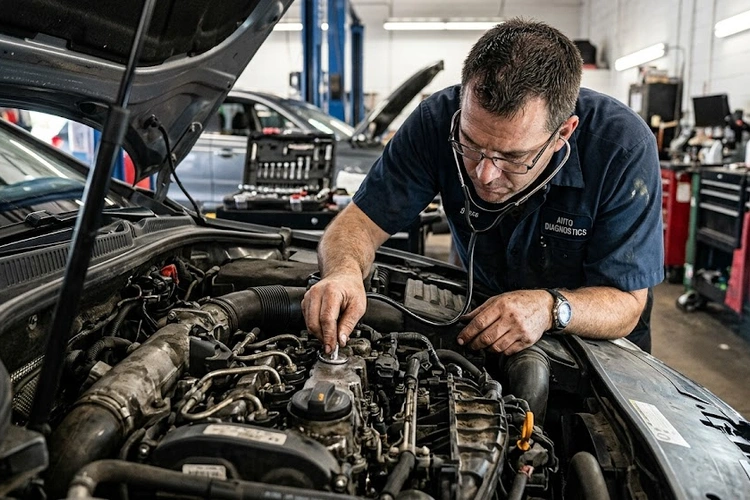
Figure 1 — Detonation begins inside the combustion chamber when a second, uncontrolled ignition event collides with the spark-initiated flame front.
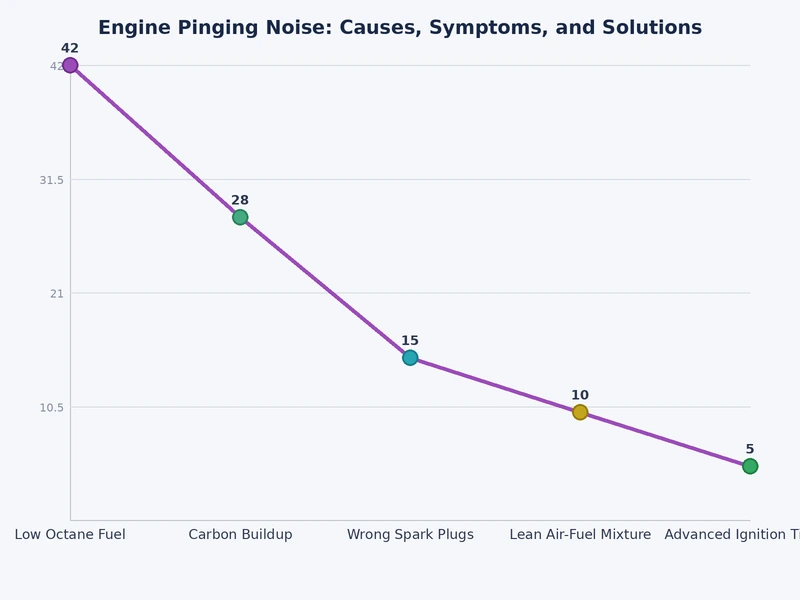
Figure 2 — Fuel octane mismatches and carbon deposits account for the majority of engine pinging cases, making them the logical first items to eliminate in any diagnosis.
Diagnosing Engine Pinging: A Step-by-Step Approach
Recognize the Symptoms First
Before you open the hood, confirm that what you are hearing is detonation and not a different mechanical problem:
Metallic pinging or rattling sound — most prominent during hard acceleration from low RPM or when climbing a grade under load
Knock that worsens with throttle input — detonation is load-dependent; the harder you press the accelerator, the louder the ping
Reduced power under load — the ECU retards ignition timing to protect the engine, which directly reduces output; this is closely related to why a car loses power going uphill
Increased fuel consumption — retarded timing is less thermally efficient; expect a noticeable drop in fuel economy
Check engine light with knock sensor codes — OBD-II codes P0325 through P0332 indicate a knock sensor or circuit failure
Intermittent rough running after high-load events — severe, repeated detonation can partially damage ring lands or valve seats, causing sporadic roughness at idle
Gather the Facts Before Touching Anything
Answer these questions before spending a dollar on parts. Skipping this step is the most expensive diagnostic mistake you can make:
What fuel grade are you using? Check your owner's manual. If it specifies premium (91+ octane) and you are running regular (87), that is almost certainly your cause — and the cheapest fix available.
Is the check engine light on? Connect an OBD-II scanner before anything else. Stored and pending codes narrow the field immediately.
When does the pinging occur? Load-dependent pinging under acceleration points to detonation. Pinging at idle or cold start suggests pre-ignition from a hot carbon deposit or a stuck thermostat.
When were the spark plugs last replaced? Worn plugs with excessive electrode gap fire weakly, increasing incomplete combustion and detonation risk.
Has the engine overheated recently? Overheating accelerates carbon formation and can damage knock sensor wiring — two compounding factors in the same event.
The Diagnostic Sequence
Work through this list in order. Stop the moment you identify the cause. Do not continue through every step unnecessarily.
Switch to the correct fuel grade. Fill with premium-grade fuel if your vehicle requires it. Drive at least 50 miles and evaluate. If pinging stops, fuel octane was the entire problem.
Scan for OBD-II fault codes. Check for knock sensor codes (P0325–P0332) and lean condition codes (P0171, P0174). A lean mixture burns hotter and detonates more readily — the P0171 lean code diagnostic guide covers that fault in full.
Inspect and replace spark plugs. Pull all plugs and examine the electrodes. White, blistered, or eroded tips indicate prior detonation damage. Replace with the OEM-specified heat range — not the closest equivalent on the shelf.
Check coolant level and engine temperature. Verify the coolant reservoir level, thermostat operation, and radiator condition. An overheating engine will ping under load regardless of fuel grade or sensor status.
Inspect and clean the EGR valve. A clogged EGR valve eliminates exhaust gas recirculation, raising combustion temperatures directly. Remove it, check for carbon buildup, and clean or replace.
Test the knock sensor. Use a multimeter to measure resistance at the sensor connector. Compare against the manufacturer specification. A failed knock sensor removes the ECU's only active detonation protection.
Add a PEA-based fuel system cleaner. Polyetheramine formulations dissolve combustion chamber deposits over one to two tanks of fuel. This addresses hot-spot pre-ignition without disassembly on port-injected engines.
Verify ignition timing. On older vehicles with a distributor, use a timing light. On modern electronically controlled engines, use a scanner to monitor timing advance under load and compare against factory specifications.
Pro Tip: Before committing to any carbon cleaning procedure, insert a borescope through the spark plug holes — visual confirmation of significant piston crown deposits eliminates guesswork and justifies the cost of the job.
Tools for Diagnosing and Fixing Engine Knock
Essential Diagnostic Tools
A code reader is not enough. These tools provide the data you actually need:
OBD-II scanner with live data capability — a mid-range unit ($80–$200) that displays real-time knock sensor activity, ignition timing advance, short-term and long-term fuel trim values, and coolant temperature; basic code readers cannot show live sensor data
Borescope / inspection camera — inspects piston crowns and combustion chamber surfaces through spark plug holes without disassembly; budget models are adequate for this purpose
Digital multimeter — tests knock sensor resistance and continuity; also checks oxygen sensor circuit integrity when a lean code accompanies the pinging
Vacuum gauge — a low or unsteady manifold vacuum reading indicates a vacuum leak, which creates a lean condition and promotes detonation; the test takes under five minutes
Repair and Inspection Tools
These tools are needed once you have identified the cause and are ready to act:
Spark plug socket and torque wrench — a deep 5/8" or 13/16" plug socket with a universal joint adaptor for awkward access angles; a torque wrench prevents insulator cracking from over-tightening
Compression tester and leak-down tester — reserved for cases where pinging has been sustained for an extended period; these tests reveal whether piston ring or cylinder wall damage has already occurred before you invest in surface repairs
Timing light — only relevant on older vehicles with an adjustable distributor; modern electronically controlled ignition systems require scanner-based timing verification, not a timing light
Keeping Engine Pinging Away for Good
Fuel and Oil Habits
These two inputs have the largest influence on whether your engine pings:
Use the correct fuel grade on every fill-up. If your engine specifies premium, use it consistently. The additional cost per gallon is negligible compared to knock sensor replacements or piston repairs. Do not compromise on this.
Change engine oil at the manufacturer-specified interval. Degraded oil loses viscosity and thermal stability, raising combustion chamber temperatures. Use the exact viscosity grade listed in your owner's manual. If your vehicle has high mileage, the choice of oil formulation matters more than most drivers assume — a detailed comparison of synthetic blend vs. full synthetic oil will help you select the right product for your engine's condition.
Add a PEA fuel system cleaner every 15,000 miles. Direct-injection engines accumulate intake valve deposits that fuel additives cannot reach in service, but port-injected engines benefit substantially from periodic cleaning that prevents the carbon buildup responsible for pre-ignition.
Preventive Maintenance Schedule
These service items directly reduce the conditions that allow detonation to develop:
Replace spark plugs on schedule. Worn plugs fire imprecisely and leave combustion incomplete. Use the OEM-specified plug and replace at the interval in your service manual, regardless of how the current plugs look.
Service the cooling system at manufacturer-specified intervals. Flush and replace coolant on schedule. Replace the thermostat at any sign of sticking. An engine running at proper temperature removes a major detonation trigger entirely.
Inspect vacuum hoses annually. Hoses harden and crack over time. A quick inspection and vacuum gauge test once per year catches developing leaks before they create a lean condition severe enough to produce pinging.
Carry a basic OBD-II scanner. Checking for pending codes monthly takes two minutes. Catching a lean code or knock sensor code early — before it produces an audible symptom — is the most cost-effective maintenance practice available.
Engine Pinging vs. Other Engine Noises
Engine pinging noise is frequently misidentified as rod knock, valve train tick, or even a loose heat shield. Misidentifying the noise leads to wasted diagnostic time and unnecessary parts. Use this comparison table to isolate exactly what you are hearing.
Noise Type
Sound Character
When It Occurs
Primary Cause
Urgency
Engine Pinging / Knock
Sharp metallic ping or rattle
Acceleration and load; hill climbing
Detonation or pre-ignition
High — diagnose immediately
Rod Knock
Deep, rhythmic thud
Present at idle; worsens through all RPM
Worn connecting rod bearing
Critical — stop driving
Valve Train Tick
Rapid, light ticking
Idle; often quiets at higher RPM
Low oil pressure or worn lifters
Medium — check oil level immediately
Piston Slap
Hollow, slapping sound
Cold start; fades as engine warms
Excessive piston-to-wall clearance
Medium — monitor and assess wear
Heat Shield Rattle
Tinny buzz or rattle
Idle and low-RPM vibration
Loose exhaust heat shield
Low — cosmetic fix, not urgent
Intake Whistle
High-pitched whistle
Acceleration; speed-dependent
Vacuum leak or air intake restriction
Medium — can create lean condition that causes secondary pinging
The critical distinction is load dependence. Engine pinging intensifies when the engine is under stress — pressing the accelerator, climbing a hill, towing. Rod knock is audible at idle and does not require load to manifest. Valve train tick is RPM-dependent, not load-dependent. If the sound you hear increases specifically when the engine works harder, detonation is the correct working diagnosis.
Engine Pinging Myths You Need to Ignore
Myths About Fuel and Octane
Myth: "Higher-octane fuel always improves performance."
Octane number measures resistance to detonation, not energy content. Running premium in an engine designed for regular delivers no power gain, no fuel economy benefit, and no additional protection. Use the grade your vehicle requires — nothing more, nothing less.
Myth: "Fuel system additives permanently cure engine knock."
PEA-based cleaners genuinely dissolve combustion chamber carbon deposits and can eliminate carbon-induced pre-ignition. They cannot repair a failed knock sensor, seal a vacuum leak, correct a malfunctioning EGR valve, or fix incorrect ignition timing. Identify the specific cause before adding anything to the fuel tank.
Myth: "Engine pinging only happens to high-mileage or neglected vehicles."
A brand-new engine pings immediately if filled with the wrong fuel grade or if the knock sensor fails from the factory. Mileage contributes to carbon accumulation over time, but it is not a prerequisite for detonation. The mechanism is independent of age.
Myths About the ECU and Engine Management
Myth: "A little pinging under hard acceleration is normal."
Brief pinging during extreme wide-open-throttle events from very low RPM can occur on well-maintained engines operating at the edge of timing tolerance. Pinging that occurs at normal throttle inputs — partial load, highway cruising, moderate grades — is never acceptable. Duration and frequency are what matter. If it happens regularly, treat it as a fault.
Myth: "The ECU always compensates for knock, so you do not need to worry about it."
The ECU retards ignition timing in response to knock sensor signals. This is a damage-limiting response, not a solution — it reduces power and efficiency as a side effect. More critically, if the knock sensor itself has failed, the ECU receives no signal and cannot retard timing at all. The engine is fully unprotected from detonation damage in that state.
DIY Fixes vs. Professional Repair
Repairs You Can Do Yourself
These repairs require basic mechanical competency, standard hand tools, and a service manual for your specific vehicle:
Switch fuel grade — immediate; consult the owner's manual fuel specification, not the filler cap label alone
Add PEA fuel system cleaner — pour into a full fuel tank at the manufacturer's recommended dosage; effective for mild to moderate carbon deposits on port-injected engines
Replace spark plugs — straightforward on most four- and six-cylinder engines; always use the OEM part number for the correct heat range; torque to specification
Replace the knock sensor — typically a bolt-on replacement accessible with basic socket sets; on some engines a section of the intake manifold must be moved, which remains within DIY scope with patience and a service manual
Clean the EGR valve — remove, inspect for carbon buildup, soak in carburetor cleaner, scrub with a wire brush; replace the gasket on reassembly
Check and correct engine oil level and grade — low or degraded oil elevates combustion temperatures; verify the level is within normal range and the oil is not overdue for a change
Inspect and replace vacuum hoses — visual inspection for cracking or collapse; carb cleaner spray around intake manifold joints while idling reveals the location of any air leak causing a lean condition
When to Call a Mechanic
Do not attempt these without professional tools or experience:
Combustion chamber walnut blasting — direct-injection engines accumulate intake valve deposits that fuel additives cannot reach; this procedure requires compressed air equipment, specialized blasting media, and full intake manifold removal
ECU ignition timing recalibration — modifying base timing maps requires professional scan tools and calibration software; an incorrect adjustment causes immediate, severe damage
Head gasket inspection and replacement — sustained detonation can erode head gasket sealing surfaces; this repair requires surface preparation tools, specific torque sequences, and cylinder head inspection before reassembly
Piston and cylinder wall damage assessment — if pinging has been ongoing for weeks or months, a professional leak-down test combined with borescope imaging determines whether internal damage requires machining or full engine disassembly to repair properly
Mistakes That Accelerate Engine Damage
Mistakes During Diagnosis
Replacing parts before scanning for codes. Installing new spark plugs when the actual cause is a failed knock sensor wastes money and leaves the root problem active. Always scan for fault codes before purchasing any parts.
Installing the wrong spark plug heat range. A plug that is too hot for your engine creates a persistent new pre-ignition source that is worse than the worn plugs you removed. Cross-reference the OEM part number — do not substitute based on thread size alone.
Assuming silence means the problem resolved itself. The ECU retards timing to suppress audible pinging. The engine is running in a protection mode with reduced performance and efficiency. Silence does not mean the cause has gone away — it means the ECU is compensating for a fault that is still present.
Mistakes That Compound the Problem
Continuing to drive normally after hearing pinging. Every detonation event physically stresses piston crowns, ring lands, and rod bearings. Cumulative damage is not linear — it accelerates with each mile. Act on the noise the day you hear it.
Neglecting the cooling system. An engine that runs at the high end of its normal temperature range detonates far more readily under load. If your temperature gauge sits higher than usual — even within the normal band — investigate the cooling system before assuming a fuel or sensor cause.
Using incorrect or degraded engine oil. Oil past its service life or the wrong viscosity grade contributes to elevated combustion temperatures and accelerated wear on every moving surface in the engine. This variable is easily controlled and frequently overlooked during engine pinging diagnosis.
Key Takeaways
Engine pinging noise is caused by uncontrolled detonation or pre-ignition in the combustion chamber — the most common triggers are wrong fuel octane, carbon deposits, a failed knock sensor, or a lean air-fuel mixture from a vacuum leak or faulty sensor.
Diagnose before replacing: always scan for OBD-II codes and identify the symptom pattern first, since engine pinging shares audible characteristics with several distinct mechanical faults that require entirely different repairs.
ECU timing retard can silence the audible ping without resolving the underlying cause — do not mistake a quieter engine for a fixed one, as the damage mechanism continues until the root cause is addressed.
Prevention through consistent correct fuel grade, timely oil changes, cooling system maintenance, and periodic PEA fuel system cleaning costs a fraction of what sustained detonation damage costs to repair.
Sarah Whitfield is a diagnostics and troubleshooting specialist who spent ten years as an ASE-certified technician before joining the editorial team. She specializes in OBD-II analysis, electrical gremlins, and the kind of intermittent problems that make most owners give up.