Frozen Car Door Lock: Causes and How to Fix in Winter
by Joshua Thomas
You step outside on a bitter morning, key in hand, and the lock cylinder won't turn. Not stiff — frozen solid. A frozen car door lock strands drivers across cold-weather regions every winter. Most cases clear up in under five minutes with the right product. Others reveal damaged weatherstripping, corroded cylinders, or failed door seals that require real repairs. This guide covers every cause, every fix, and every prevention method — from the driveway-side solutions to the repairs best left to a shop. For a broader look at related cold-weather issues, the troubleshooting section covers door, lock, and window failures in detail.
Understanding why ice forms inside a lock mechanism makes it easier to choose the right fix fast. Reaching for the wrong tool — or pouring boiling water on a frozen cylinder — causes damage that outlasts the freeze. Work through this systematically and you'll be inside your vehicle in minutes.
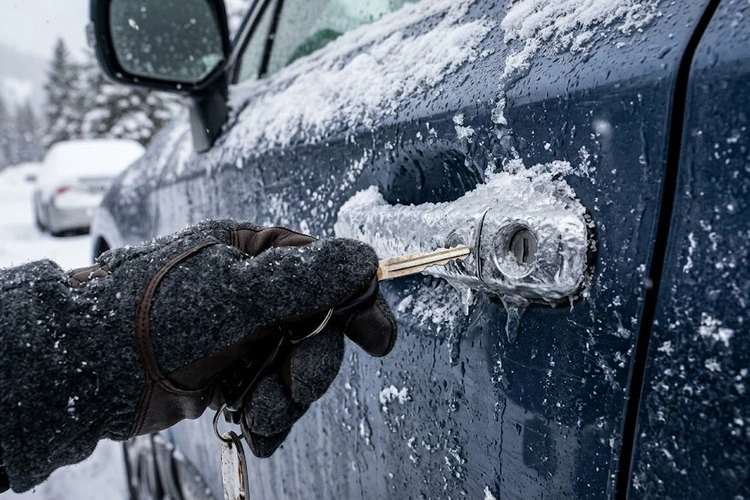
Figure 1 — A frozen car door lock with ice buildup around the keyhole and exterior handle mechanism
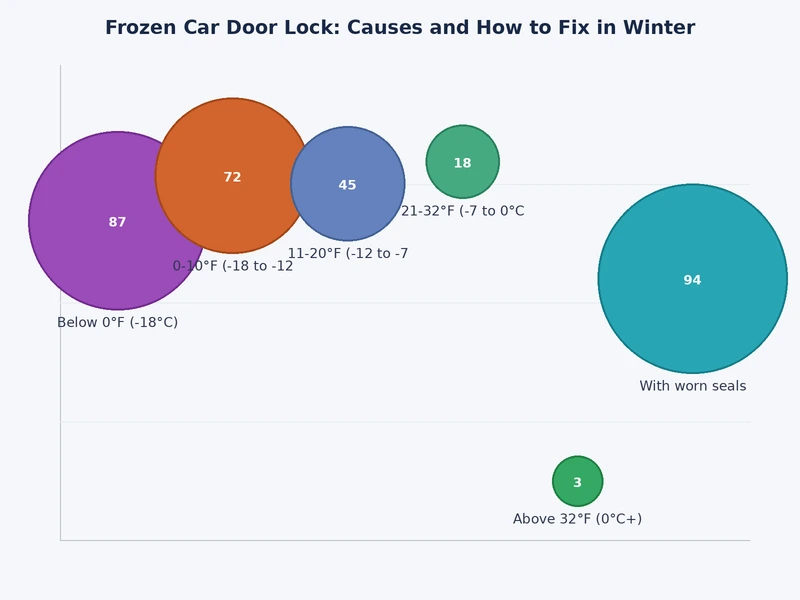
Figure 2 — De-icing method comparison by speed, cost, and risk level for a frozen car door lock
Why Car Door Locks Freeze: The Root Causes
A frozen car door lock forms when liquid water enters the lock cylinder, keyhole, or latch mechanism and drops below 32°F (0°C). The resulting ice blocks the cylinder pins, prevents the latch from retracting, or seals the keyhole flap shut. The process is fast. Overnight temperatures can freeze a damp cylinder in a matter of hours.
How Moisture Enters the Lock Cylinder
Water reaches lock internals through several pathways:
Rain and snowmelt — Water drips from the roof edge, door frame, or window trim directly into the keyhole opening
Condensation — Temperature swings cause humid air inside the door cavity to condense on cold metal cylinder surfaces
Car wash runoff — High-pressure spray forces water into the gaps around the cylinder housing and keyhole flap
Damaged weatherstripping — Cracked or compressed seals allow water intrusion into the door cavity and latch area continuously. A car door seal leaking is one of the most common root causes of repeated lock freezing in the same vehicle
Blocked door drain plugs — Door cavities have drain holes at the bottom. Plugged drains trap standing water that migrates upward to the latch and cylinder
Keyhole flap failure — The small spring-loaded cover over the keyhole wears out and stays partially open, leaving the cylinder directly exposed to precipitation
Temperature and Humidity Conditions That Trigger Freezing
Not every cold night produces a frozen lock. Several conditions must combine:
Temperatures cycling above and below freezing — moisture collects during warmer periods, then freezes overnight
Relative humidity above 70% before the temperature drop
Freezing rain or sleet — coats exterior surfaces uniformly, including the keyhole
Vehicles parked outdoors without cover or garage access
Older vehicles with worn cylinder seals and loose-fitting keyhole covers
According to the National Weather Service, rapid temperature drops below 20°F (−7°C) produce the most severe lock freezing conditions because water inside the cylinder solidifies before any natural drainage can occur.
Diagnosing a Frozen Car Door Lock
Before applying any fix, confirm the lock is actually frozen — not mechanically broken. A seized cylinder and a frozen one feel nearly identical from the outside. Misdiagnosing costs time and risks additional damage.
Frozen Lock vs. Broken Mechanism
Use these distinguishing characteristics:
Frozen lock — Key inserts partially or not at all. Resistance is uniform and solid. Lock may partially turn then stop cold. Other doors may show similar symptoms. Problem clears on its own as ambient temperature rises
Broken cylinder — Key inserts fully but turns without engaging. Cylinder rotates freely with no resistance. Problem persists in warm weather. Usually preceded by a hard key insertion or a previous forced-entry attempt
Frozen latch — Key and cylinder function normally, but the door won't swing open. The latch rod or striker plate is iced over. You can hear the mechanism actuate, but the door stays shut
Failed actuator — Remote lock works from the key fob, but the iced actuator linkage can't translate that signal into mechanical movement. Confirm that the key fob is working on other doors to isolate whether the problem is the fob, the actuator, or the cylinder itself
Checking the Door Seal Connection
If the lock freezes repeatedly on the same door, the door seal is the likely culprit. Inspect it before treating the symptom again.
Run your finger along the rubber weatherstrip around the entire door frame. Look for:
Visible cracks, splits, or cuts in the rubber profile
Sections where the seal separates from the door frame at the adhesive bond
Areas that show compression set — the rubber no longer springs back after you press it
Water stains or rust streaks below the door drain holes at the bottom of the door
A compromised seal delivers a steady supply of water into the door cavity. De-icing is a temporary fix if water re-enters freely each precipitation event. Address the seal first.
Immediate Fixes When You're Locked Out Right Now
You have a frozen car door lock and a schedule to keep. These methods work within minutes. Each carries a different risk profile — choose based on what's available to you right now.
Commercial De-Icer Spray
This is the fastest and safest option. Products formulated specifically for lock cylinders — WD-40 Specialist Dry Lube, Prestone Lock De-Icer, or CRC Lock De-Icer — contain isopropyl alcohol or methanol that melts ice on contact without harming cylinder internals.
Insert the straw nozzle directly into the keyhole opening
Apply a 1–2 second burst — don't saturate the cylinder
Wait 30–60 seconds, then insert the key and turn with slow, steady pressure
Repeat once if the first application doesn't fully clear the cylinder
Store a can somewhere accessible outside the locked vehicle. A can in the glovebox is useless when the door is the problem.
Isopropyl Alcohol
70% or 91% isopropyl alcohol performs identically to commercial de-icer at a fraction of the cost.
Apply a few drops directly into the keyhole using an eyedropper, thin straw, or a cotton swab soaked in alcohol
Coat the key itself with alcohol before inserting — the heat transfer from the coated metal speeds the thaw
Do not use hand sanitizer gel — the thickened formulation doesn't penetrate the cylinder pins effectively
91% concentration works faster than 70% in extreme cold because the water content is lower
Body Heat Method
Your hands generate enough localized heat to thaw a mildly frozen keyhole when no product is available.
Cup both hands around the lock cylinder and hold position for 60–90 seconds
Direct warm breath into the keyhole opening in steady, controlled exhales
Insert the key while the metal is still warm and apply slow rotational pressure
This method works on light surface ice only — it is not effective for deeply frozen latch mechanisms or actuator linkages
Step-by-Step: How to Thaw a Frozen Car Door Lock Safely
When quick fixes haven't resolved the problem, work through this systematic process. It covers both keyhole freezing and latch-level ice, which require different approaches.
Plastic ice scraper — not metal, which scratches the cylinder housing and keyhole surround
Warm water in an insulated thermos or bottle (100–120°F — not boiling)
Compressed air can or dry microfiber towel
The Safe Thawing Process
Clear surface ice first. Use a plastic scraper to remove visible ice buildup around the door handle recess and over the keyhole cover. Don't force the keyhole flap if it's frozen — apply de-icer around its edges and wait 20–30 seconds
Apply de-icer to the keyhole. Insert the nozzle and deliver a controlled 1–2 second burst. Let it work for 30–60 seconds before attempting the key
Insert the key gently. Do not force it. Resistance means the ice hasn't fully cleared. Wait another 30 seconds and try again. Forcing the key under torque is how keys snap inside frozen cylinders
Turn slowly and steadily. Apply light rotational pressure. You'll feel the ice yield incrementally. If the cylinder turns but the door still doesn't open, the latch mechanism is the problem — proceed to the next step
Address a frozen latch. Use a heat gun on the lowest setting held 6–8 inches from the door edge near the latch striker, moving it constantly. Alternatively, pour lukewarm water along the door gap near the latch plate
Pull the handle while turning the key simultaneously. Combined action breaks ice-bonded latches more effectively than either motion alone
Dry the cylinder immediately after entry. Use compressed air or a dry cloth to displace residual moisture before temperatures drop again and it re-freezes
Apply silicone lubricant. A post-thaw coating on the cylinder and latch reduces re-freeze risk by displacing water from metal contact surfaces
What to avoid:
Boiling water — Thermal shock cracks cylinder housings, warps paint, and damages rubber door seals. Never use it
Metal tools to pry the keyhole open — Scratches the cylinder bore and damages tumbler pins permanently
Standard WD-40 (blue can) — Displaces water short-term but attracts dust and degrades lock internals over repeated applications. Use WD-40 Specialist formulas only
Heating the key with a lighter or open flame — Open flames near a vehicle are a fire hazard. The key cools before reaching the cylinder pins and accomplishes nothing
DIY Solutions vs. When to Call a Pro
Most frozen car door lock repairs fall within DIY range. But some scenarios require a mechanic or locksmith. Recognizing the boundary prevents a temporary fix from becoming a permanent failure.
What You Can Handle at Home
Method
Cost
Speed
Risk Level
Best For
Commercial de-icer spray
$5–$10
30–60 sec
Low
Keyhole and flap-level freeze
Isopropyl alcohol (91%)
$2–$4
1–2 min
Low
Mild to moderate cylinder freeze
Lukewarm water pour
$0
2–5 min
Medium (re-freeze risk)
Door gap and latch ice
Hair dryer or heat gun
$0 (owned)
3–8 min
Medium
Latch mechanism and handle freeze
Silicone lubricant (prevention)
$6–$12
N/A
None
Pre-winter treatment of all locks
Weatherstrip replacement
$20–$60 DIY
1–2 hours
Low–Medium
Repeated freeze from water intrusion
Door drain clearing
$0
15–30 min
Low
Persistent moisture in door cavity
Shop-Level Repairs
Take the vehicle to a shop when:
The lock cylinder spins freely without engaging — the wafers or tumblers are mechanically damaged, not frozen
A key broke off inside the cylinder — extraction requires a locksmith or cylinder replacement
The power lock actuator motor failed — actuators fail in cold weather; the motor and linkage assembly may need full replacement
Freezing recurs in the same door despite lubricant and weatherstrip repair — a blocked drain channel inside the door cavity requires door panel removal to access
The latch assembly is damaged from repeated forced-entry attempts or ice stress
If your vehicle's remote start stopped working around the same time as the lock issue, that points to a broader electrical problem with the door module or body control module — worth investigating in the same service visit rather than treating each symptom separately.
Actuator replacement typically runs $150–$300 parts and labor. Cylinder replacement ranges $100–$250 depending on make and model. Latch assembly replacement — the highest-cost outcome — runs $200–$500 at a dealership.
How to Stop a Frozen Car Door Lock Before It Happens
Prevention costs under $15 and takes 20 minutes. Apply it before the first hard freeze of the season and you'll avoid most cold-weather lock failures entirely.
Lock Lubricants That Work in Cold Weather
Lubrication is the primary mechanical defense against a frozen lock. Not all lubricants perform equally at low temperatures:
Teflon (PTFE) dry lubricant — Best overall choice. Leaves no wet film to trap grit. Lasts through multiple freeze cycles. Doesn't wash out in precipitation
Silicone spray — Water-displacing, cold-stable, and safe for rubber seal contact. Apply to the keyhole, latch striker, and cylinder housing
Graphite powder — Traditional lock lubricant with strong anti-freeze properties. Do not apply if the cylinder already contains oil-based product — graphite and oil combine into a paste that jams cylinder pins
Avoid: petroleum jelly (Vaseline) — Works as a short-term keyhole barrier coating but attracts road grit and gums up the cylinder over time
Avoid: standard WD-40 — Water displacement only, no long-term lubrication. Degrades internal components with repeated use
Apply lubricant to every exterior door cylinder, the trunk latch, and the tailgate lock if applicable. Work the key in and out after application to distribute the product through the cylinder pin stack.
Parking and Storage Strategies
Garage parking — The single most effective prevention available. Even an unheated garage holds temperatures 10–20°F above ambient outdoor readings
Car cover — Blocks freezing rain and reduces surface ice on door handles and keyholes. Use a breathable cover to prevent moisture trapping underneath the fabric
Park facing east — Morning sun reaches the driver's side first. Natural solar warming thaws door mechanisms before you need the vehicle
Magnetic keyhole covers — Small magnetic flaps for $5–$10 per pair sit directly over the keyhole and block water entry. Remove before inserting the key
Painter's tape over keyholes in severe weather — Inelegant but highly effective. Apply the night before a freezing rain event, peel off in the morning
If cold-weather electrical failures are stacking up — lock actuators, seat heaters, powered accessories — a broader diagnostic is warranted. A heated seat not working alongside lock problems often points to a shared power circuit or a corroded body ground that affects multiple systems simultaneously.
Frozen Lock Scenarios and What Each One Means
The specific type of freeze points to a specific cause. Identifying your scenario before applying a fix saves time and prevents collateral damage.
Keyhole Frozen Shut
The most common presentation. The keyhole opening — or its protective flap — is sealed by ice. The latch and actuator behind it may be fully functional.
Cause: Freezing rain or overnight condensation deposited water directly on the keyhole surface. The flap either failed to close fully or is missing
Fix: De-icer spray or isopropyl alcohol applied to the keyhole. Surface ice at the opening melts within 30–60 seconds. The cylinder unfreezes quickly once the blockage clears
Recurrence trigger: A damaged or missing keyhole cover flap. Replace the flap from a dealer parts counter ($5–$15 for most vehicles) or apply magnetic covers as a seasonal workaround
If you notice ignition resistance alongside the door lock issue — stiffness inserting or turning the key — that may indicate related tumbler wear. Review the causes of a key stuck in the ignition to determine whether lock cylinder wear is affecting both entry points.
Door Handle Frozen
The handle itself is iced into the door recess, or it moves but the external linkage rod to the latch is frozen at a pivot point.
Cause: Freezing rain pools in the handle recess and freezes solid. Water can also enter the door cavity and freeze the rod-to-latch connection from inside
Fix: Apply lukewarm water to the handle recess or direct heat gun airflow at the handle from 6 inches. Do not pull the handle forcefully — external linkage rods are thin steel and snap cleanly when frozen and stressed
Prevention: Silicone spray on the handle pivot points before freeze season. Handle recesses accumulate water from the door surface and need deliberate sealing
Entire Door Bonded Shut
The lock actuates, the handle moves, but the door won't open. The rubber weatherstrip has bonded directly to the door frame with ice.
Cause: Freezing rain or snowmelt saturated the door seal and froze it against the painted frame. Common after overnight freezing rain events. Most frequent on doors that weren't opened the previous day
Fix: Do not yank the door — that tears the weatherstrip from its channel. Apply de-icer or lukewarm water along the entire door perimeter. If a passenger can access the vehicle from another door, push outward from inside while you pull the handle. Rock the door gently while maintaining steady outward handle pressure
Long-term fix: Condition weatherstrips with silicone spray or a dedicated rubber protectant before freeze season. A well-conditioned seal releases cleanly even after freezing. A cracked or hardened seal bonds aggressively to painted frames and will repeat the problem every precipitation event. Replace seals showing compression set or cracking — the repair is straightforward and the parts are inexpensive
Frequently Asked Questions
Can you use boiling water to thaw a frozen car door lock?
No. Boiling water causes rapid thermal expansion that cracks cylinder housings, warps painted surfaces around the keyhole, and damages rubber door seals. Use lukewarm water between 100–120°F at most. Commercial de-icer or isopropyl alcohol is faster, safer, and more effective in every scenario.
Why does my car door lock freeze on only one door consistently?
Single-door repeat freezing points to a localized moisture source — typically a failed door seal, a blocked door cavity drain hole, or a damaged keyhole cover flap on that specific door. The driver's side lock is most exposed due to driver-side approach angle during precipitation. Inspect the seal and drain hole on the affected door rather than treating the entire vehicle.
How often should I lubricate car door locks for winter?
Apply lock lubricant once before the first hard freeze of the season, and once more at the mid-season point in regions with prolonged cold weather. High-use locks — driver's side and trunk — benefit from a third application if you notice increasing key insertion resistance. Teflon dry lubricant lasts longer between applications than silicone spray in harsh conditions.
Can a frozen car door lock damage the lock cylinder permanently?
Freezing alone does not damage the cylinder. The damage comes from forcing the key under torque against frozen pins. Repeated forced insertions stress the wafer springs and wear the cylinder bore, eventually causing the cylinder to fail mechanically. Always apply de-icer and wait for the ice to clear before applying any rotational pressure to the key.
Next Steps
Buy a can of commercial lock de-icer this week and store it somewhere accessible outside the vehicle — a coat pocket, a bag you carry to the car, or a shelf just inside the garage door. Not in the glovebox.
Inspect all four door weatherstrips and the trunk seal for cracking, compression set, or separation from the frame. Replace any section showing visible deterioration before the next freeze event.
Apply Teflon dry lubricant or silicone spray to every exterior door cylinder, the trunk latch, and the tailgate lock. Work the key in and out after application to distribute the product through the pin stack.
Clear all four door drain holes at the bottom of each door cavity using a thin wire or a short blast of compressed air. Blocked drains are the hidden root cause of repeat freezing and take under five minutes to address.
If your lock freezes again after lubricant treatment and weatherstrip repair, schedule a diagnostic appointment to check for a blocked door cavity drain channel or a failing power lock actuator — both require door panel removal and are best handled at a shop.
Joshua Thomas just simply loves cars and willing to work on them whenever there's chance... sometimes for free.
He started CarCareTotal back in 2017 from the advices of total strangers who witnessed his amazing skills in car repairs here and there.
His goal with this creation is to help car owners better learn how to maintain and repair their cars; as such, the site would cover alot of areas: troubleshooting, product recommendations, tips & tricks.
Joshua received Bachelor of Science in Mechanical Engineering at San Diego State University.