by Sarah Whitfield
A driver pulls away from a gas station after a routine fill-up, merges onto the highway, and spots a small amber symbol glowing on the dashboard that definitely wasn't there five minutes ago. That unsettling moment is something millions of vehicle owners have experienced, and the answer almost always traces back to one small but critical component: the fuel cap. The gas cap light on is one of the most commonly misunderstood dashboard warnings, yet in most cases the fix takes less than a minute to complete. Understanding why it triggers — and when it signals something more serious — is essential knowledge for any driver who wants to avoid costly repairs. This warning frequently appears alongside a check engine light after a gas fill-up, since both relate to the same underlying emission system.
Contents
The evaporative emission control (EVAP) system is a sealed network designed to capture fuel vapors and route them back into the engine for combustion rather than releasing them into the atmosphere. Modern vehicles continuously monitor this system for pressure changes, and even a minor leak — roughly equivalent to a small pinhole — causes the onboard diagnostic module to register a fault and trigger a warning. Because the gas cap seals the most accessible entry point of the entire EVAP circuit, it is the first component the system suspects when a pressure drop is detected.
The warning light can appear as a dedicated fuel cap icon on some vehicles or activate the general check engine light on others, depending entirely on the make and model. Both presentations deserve prompt attention rather than dismissal, since an unsealed EVAP system directly affects fuel efficiency and emissions compliance.
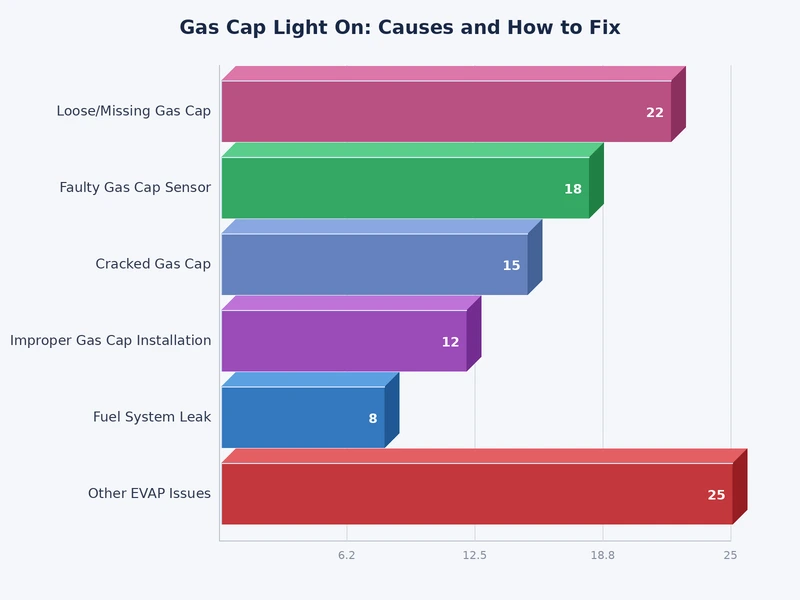
Several specific conditions reliably produce the gas cap light on warning, and most are straightforward to identify during a quick visual inspection:
The vast majority of gas cap light on incidents trace back to the first three categories, making a thorough physical inspection the most logical first step before reaching for any diagnostic tools.
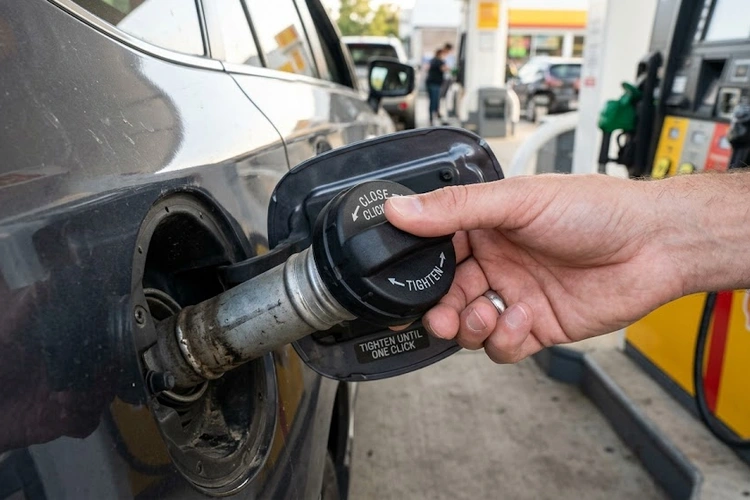
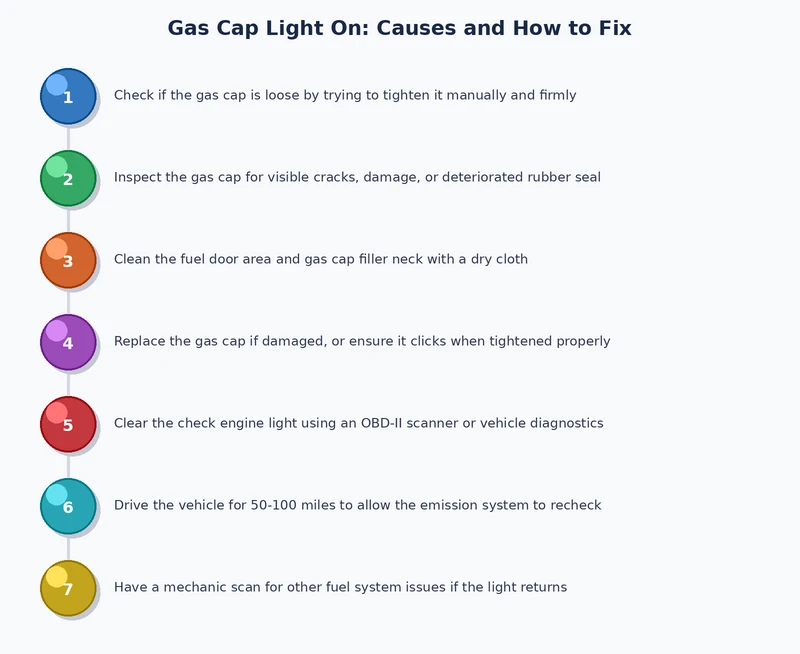
A loose cap is the single most common cause of the gas cap light on, and the fix is entirely straightforward: remove the cap, inspect it briefly for debris, and reinstall it with enough rotation to produce one to three audible clicks. Most vehicles clear the warning automatically within one to two complete drive cycles after the cap is properly seated, though some older models take up to 24 hours or require a manual code reset using an OBD-II scanner.
Pro tip: Drivers who notice the gas cap light on immediately after leaving a gas station should stop safely and retighten the cap until it clicks — the warning clears on its own within a short drive in most cases, with no additional steps required.
A cap that fails to seal properly after retightening requires replacement rather than another attempt at adjustment. The following indicators point to a cap that has reached the end of its service life:
| Symptom | Likely Cause | Recommended Action | Estimated Cost |
|---|---|---|---|
| Light appears immediately after fueling | Loose or improperly tightened cap | Retighten until cap clicks audibly | Free |
| Light returns within days of retightening | Worn gasket or cracked cap body | Replace the gas cap entirely | $10–$35 |
| Light persists after installing a new cap | EVAP system leak beyond the cap | Smoke test and professional diagnosis | $75–$150 |
| Light accompanied by fuel smell in cabin | Serious EVAP or fuel line leak | Stop driving and inspect immediately | $150–$600+ |
An OBD-II scanner is the most reliable tool for confirming whether the gas cap is genuinely responsible for a persistent warning light. Code P0457 specifically identifies an EVAP leak detected at the fuel cap, while P0440, P0441, and P0442 indicate broader EVAP faults that may originate in the purge valve, vent solenoid, or charcoal canister instead. Entry-level scanners capable of reading and clearing these codes are available for $20 to $80, and most national auto parts retailers offer free code reading as a walk-in service at the counter.
When the check engine light is present alongside the gas cap warning but the vehicle appears to run without any obvious performance issues, the comprehensive guide on check engine light on but car runs fine covers the full range of common scenarios and their urgency levels in detail.
When a noticeable fuel odor accompanies the warning light, a more serious problem is likely at work — the guide on fuel smell inside the car outlines the full range of causes and explains which scenarios require immediate attention versus a routine repair appointment.
A new gas cap ranks among the least expensive automotive repairs available, making prompt replacement the most sensible response once a worn or cracked cap is confirmed. OEM replacement caps from the dealership typically range from $15 to $40, while quality aftermarket options from established brands like Stant and Motorad run between $8 and $25 at most auto parts stores. Universal-fit caps carry a higher risk of imperfect sealing on specific vehicles, so matching the replacement cap to the exact make, model, and engine specification remains the standard recommendation from most mechanics. The entire swap takes roughly two minutes to complete in the driveway.
When a new gas cap fails to clear the warning, professional EVAP system diagnostics become the necessary next step. A smoke test — where the system is pressurized with inert smoke to reveal leak points visually — typically costs $75 to $150 at an independent shop. Individual EVAP component repairs vary considerably based on the part involved:
Addressing the gas cap light on at its earliest stage — before a small seal failure progresses to canister or valve damage — consistently represents the most cost-effective approach available to vehicle owners.
The majority of gas cap light on warnings stem directly from improper cap installation after filling the tank — a problem that is entirely preventable with consistent habits at the pump. Tightening the cap until an audible click is felt, rather than stopping at the first hint of resistance, eliminates the single most common trigger across all vehicle types. Drivers should also avoid setting the cap on the vehicle's painted surface during fueling, since grit and surface contaminants transfer easily onto the rubber gasket and gradually compromise the seal over time.
Overfilling the tank past the pump's automatic shutoff point is another habit that accelerates EVAP system wear, because excess liquid fuel can saturate the charcoal canister and reduce its long-term vapor-trapping capacity. Stopping at the first automatic shutoff click rather than topping off is the stated recommendation from most major automakers for exactly this reason.
Gas caps do not last indefinitely, and the rubber gasket that creates the EVAP seal degrades naturally with heat cycles, age, and prolonged fuel vapor exposure. Most manufacturers recommend inspecting the cap's gasket during every annual service interval and replacing the cap outright every five to seven years as a straightforward preventive measure. Drivers looking for a complete overview of gas cap maintenance and related EVAP system care will find further guidance in the gas cap light on causes category, which covers the full diagnostic and prevention landscape across multiple vehicle types and model years.
The gas cap light on is one of the few dashboard warnings that most drivers can diagnose and resolve without professional help, and addressing it quickly prevents a minor nuisance from growing into a costly EVAP system repair. The most practical next step is to inspect the gas cap now — check the gasket condition, confirm a proper seal with audible clicks at the pump, and pick up a vehicle-specific replacement cap if any wear or cracking is visible. A replacement cap costing under $20 and five minutes of attention is all it takes to protect a system that directly affects fuel efficiency, emissions compliance, and long-term drivetrain health.
 |
 |
 |
 |

About Sarah Whitfield
Sarah Whitfield is a diagnostics and troubleshooting specialist who spent ten years as an ASE-certified technician before joining the editorial team. She specializes in OBD-II analysis, electrical gremlins, and the kind of intermittent problems that make most owners give up.
Get some FREE car parts & gear.. Or check out the latest free automotive manuals and build guides here.
Disable your ad blocker to unlock all the hidden deals. Hit the button below 🚗
| | | |
