Unintended acceleration events linked to sticky accelerator pedals prompted the National Highway Traffic Safety Administration (NHTSA) to log more than 50,000 consumer complaints over a single decade, establishing gas pedal sticking as one of the most consequential mechanical failures a driver can encounter on public roads. The condition spans a wide range of severity — from a pedal that snaps back sluggishly after a highway pass to a throttle that holds wide open and drives a vehicle forward without any deliberate driver input.
Gas pedal sticking is not a single-cause problem, and identifying the source determines the entire repair strategy. Dirt buildup, worn return springs, frayed cables, electronic sensor malfunctions, and even misaligned floor mats appear with regularity in shop repair orders. Drivers who notice hesitation during acceleration alongside a sticky pedal response should review the broader patterns documented at why a car hesitates when accelerating, since both conditions frequently trace back to shared throttle-system origins.
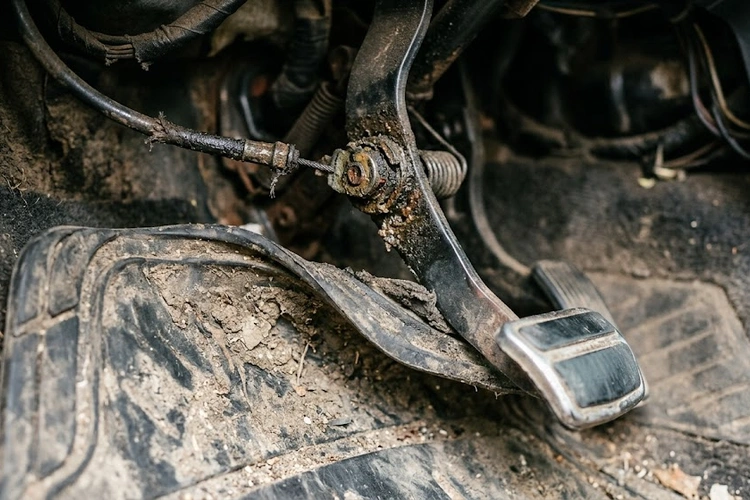
Figure 1 — Gas pedal sticking can originate from mechanical wear, electronic sensor faults, or simple carbon buildup in the throttle body bore.
Modern throttle systems — whether cable-actuated or fully electronic — share a fundamental vulnerability: any interruption in smooth mechanical or electrical signal travel produces the same sticky pedal symptom. Pinpointing which system is involved is the mandatory first step, because mechanical and electronic root causes demand entirely different repairs, tools, and skill sets from the technician or home mechanic addressing them.
Mechanical Sources
Mechanical causes account for the majority of gas pedal sticking complaints, particularly on vehicles with high mileage or more than a decade of service life accumulated under harsh driving conditions.
Dirty or corroded throttle body: Carbon deposits and oil film from blow-by gases accumulate on the throttle plate and bore walls, creating enough friction against the butterfly valve to prevent smooth, complete travel through the full range of motion.
Worn or broken throttle return spring: The return spring is responsible for pulling the throttle plate closed the instant a driver lifts off the pedal; a weakened or fractured spring produces a characteristically slow or incomplete return that drivers feel as resistance.
Frayed or kinked accelerator cable: Cable-drive vehicles develop fraying, corrosion, and kinking along the cable run after years of thermal cycling, and each deformation point introduces binding that compounds over time as the damage worsens.
Floor mat interference: A poorly anchored or aftermarket floor mat that slides forward and contacts the pedal is one of the most dangerous and most easily overlooked causes, capable of physically trapping the pedal in a depressed position.
Pedal pivot corrosion: Salt, moisture, and road debris infiltrate the pedal assembly pivot point over time, causing the hinge to bind progressively during pedal travel rather than moving freely.
Electronic and Sensor Failures
Drive-by-wire systems replaced mechanical cables in the majority of vehicles produced after 2000, substituting cable tension for electronic signals and introducing a distinct category of failure modes that require diagnostic scan tools rather than simple visual inspection to identify accurately.
Faulty throttle position sensor (TPS): A TPS transmitting erratic or out-of-range voltage signals causes the ECU to miscalculate throttle plate position, producing hesitation, surging, or a held-open response that mimics physical sticking.
Electronic throttle control (ETC) module fault: The ETC module governing the electric throttle actuator can develop internal faults that command the plate to hold at a fixed position regardless of the driver's pedal input.
Stuck or dirty electronic throttle actuator: The small electric motor that physically moves the throttle plate can accumulate debris or seize internally, particularly in vehicles operated in dusty, sandy, or high-humidity environments.
ECU calibration drift: In rare cases, software calibration errors cause the ECU to issue abnormal throttle position commands; this sometimes manifests alongside unrelated fault codes, including the P0300 random misfire code, when inconsistent throttle delivery disrupts combustion timing.
Cause
System Type
Urgency Level
Estimated Repair Cost
Dirty or carboned throttle body
Mechanical / Electronic
Moderate
$100–$200 (shop cleaning)
Worn or broken return spring
Mechanical
High
$50–$150
Frayed or kinked accelerator cable
Mechanical
High
$100–$300
Floor mat interference
Physical
Immediate
$0 (repositioning or replacement)
Faulty throttle position sensor
Electronic
High
$150–$350
ETC module fault
Electronic
High
$300–$700
Pedal pivot corrosion or binding
Mechanical
Moderate
$80–$200
Recognizing the Warning Signs Early
Gas pedal sticking rarely appears without advance notice, and early detection converts what could become a roadside emergency into a straightforward, low-cost shop visit. Most drivers observe subtle but consistent changes in throttle behavior across multiple drive cycles before the problem becomes acute or dangerous.
Early Indicators to Watch For
The pedal feels unusually firm or resistant during the initial press from a complete stop, requiring more foot force than the engine response would suggest is necessary.
A slight but repeatable delay exists between pedal depression and engine response, noticeable during light-throttle acceleration in stop-and-go traffic conditions.
RPMs remain briefly elevated after lifting the foot from the pedal, particularly after sustained highway cruising at speeds above 60 mph.
The check engine light illuminates alongside throttle-related codes, including P0120 through P0124 for TPS range or rationality errors, P2101, or P2119 for ETC performance faults.
The vehicle surges slightly during light throttle operation or transitions in and out of cruise control engagement at steady highway speeds.
Pedal travel feels uneven across its full range — smooth through the first half of depression, then noticeably sticky or gritty when approaching full throttle position near wide-open travel.
Pro tip: A check engine light paired with any throttle hesitation warrants an immediate OBD-II scan, since TPS and ETC codes are among the most actionable early warnings a driver receives before gas pedal sticking escalates into a genuine safety event at speed.
When Symptoms Become an Emergency
Certain symptom combinations signal that gas pedal sticking has progressed beyond routine maintenance territory and represents an active safety hazard requiring immediate vehicle shutdown and towing, not a cautious drive to the nearest shop.
The pedal physically does not return to its rest position after the driver's foot is completely removed, remaining depressed or partially engaged under its own inertia.
The vehicle accelerates without any driver input at low parking-lot speeds or during coasting, indicating that the throttle plate is holding open independently of pedal position.
Applying the brakes requires substantially greater force than normal to slow the vehicle, a condition consistent with simultaneous throttle-open and brake engagement that loads both systems against each other.
A burning smell or visible smoke originates from the engine bay, suggesting that excessive throttle plate friction, overloaded components, or overheated electronics have passed the point of simple cleaning or adjustment.
The idle refuses to settle below 1,500 RPM after a full engine warm-up cycle, with the vehicle creeping forward in drive without any pedal input and brake pressure required to hold position at a stop.
Step-by-Step Diagnosis and Repair
A disciplined, sequential diagnosis prevents the unnecessary parts replacement that inflates repair costs when dealing with gas pedal sticking — a pattern that is especially common when technicians replace electronic sensors before ruling out simple mechanical causes that cost a fraction of the price to address correctly.
Basic Inspection Procedure
Verify floor mat positioning first: Confirm that the driver's floor mat is properly secured to its retention clips and that the leading edge cannot contact the accelerator pedal at any point across the full range of pedal travel, including at full depression.
Trace the accelerator cable on cable-drive vehicles: Follow the cable path from the pedal assembly through the firewall and along the engine bay to the throttle body, looking carefully for kinks, fraying, corrosion, missing grommets, or contact with hot exhaust components.
Inspect the throttle body bore visually: Remove the intake air duct leading into the throttle body and examine the throttle plate and bore walls directly with a flashlight, noting any heavy black carbon deposits, oily film, or debris accumulation that restricts plate movement.
Test throttle return spring action: With the engine off and the intake duct removed, manually open the throttle plate by pressing it with a finger and release it immediately — a healthy spring returns the plate to the fully closed position in under one second with a crisp, audible snap.
Connect an OBD-II scanner and log all codes: Record every pending and active fault code before clearing anything, paying particular attention to TPS, APP (accelerator pedal position), and ETC codes that establish whether electronic components require attention beyond a basic cleaning.
Inspect the pedal assembly hardware: Examine the pedal mounting bracket, pivot pin, and surrounding firewall area for signs of corrosion, bent metal, or contact with carpet material that could bind the pivot during normal pedal travel.
Cleaning the Throttle Body
Throttle body cleaning resolves a significant portion of gas pedal sticking complaints and remains accessible to most mechanically inclined home mechanics with basic hand tools and the correct cleaning product. The full symptom profile that indicates cleaning is overdue — including rough idle, hesitation, and surging — is covered in detail at dirty throttle body symptoms and the complete cleaning procedure.
Disconnect the negative battery terminal and allow the vehicle to rest for 15 minutes before beginning work, giving capacitors and sensor circuits time to discharge safely.
Remove the air intake duct or snorkel connecting the air filter housing to the throttle body inlet, loosening all clamps and disconnecting any associated vacuum or breather hoses as needed.
Apply dedicated throttle body cleaner — not carburetor cleaner, which can damage the protective coatings on electronic throttle actuator components — to a clean, lint-free shop rag rather than spraying directly into the bore.
Hold the throttle plate open manually and wipe the inner bore walls thoroughly, paying particular attention to the carbon ridge that typically forms at the plate's edge where it contacts the bore at idle.
Clean both the front and rear faces of the throttle plate itself, rotating the plate through its full range of motion several times during cleaning to expose all surfaces to the solvent.
Reinstall the intake duct securely, reconnect the battery terminal, and perform any manufacturer-specified throttle body relearn procedure — many Toyota, BMW, and Audi platforms require a specific key-cycle idle relearn sequence to recalibrate idle control after cleaning.
Conduct a road test that includes several full deceleration cycles from highway speed, confirming that the pedal returns immediately and completely to the rest position each time foot pressure is released.
DIY Repairs vs. Professional Service
The division between repairs that home mechanics can address confidently and those that require professional equipment is reasonably clear when dealing with gas pedal sticking: mechanical root causes are generally accessible and inexpensive, while electronic throttle system repairs almost universally require calibration tools that fall outside the reach of standard consumer OBD-II scanners.
Fixes Most Drivers Can Handle
Floor mat repositioning or replacement: The simplest fix available — zero cost, no tools required, and eliminates one of the most frequently cited causes in under five minutes of effort at the driver's seat.
Throttle body cleaning: Requires only a can of throttle body cleaner, basic hand tools for the intake duct, and approximately 30 minutes of work time; resolves the majority of mild-to-moderate mechanical sticking complaints.
Accelerator cable lubrication: Applying a dry PTFE or graphite lubricant into the cable sheath addresses early-stage binding without requiring full cable replacement, extending cable service life by months on vehicles with otherwise serviceable hardware.
Accelerator cable replacement: Accessible on most cable-drive platforms with basic socket sets and screwdrivers; generic replacement cables for common models typically cost under $50 and require two to three hours of patient routing work.
Throttle return spring replacement: A direct hardware swap requiring only basic sockets and a small pick tool; replacement springs range from $10 to $40 and the procedure takes under an hour on most naturally aspirated engines.
Warning: A vehicle that exhibited gas pedal sticking while in motion should be towed to a repair facility rather than driven cautiously — a throttle that held open once under engine load is statistically likely to repeat the failure under similar conditions at higher speed.
When to Involve a Technician
Several repair scenarios exceed the realistic capabilities of home mechanics and carry a real risk of making the condition worse or introducing new fault codes when attempted without professional-grade diagnostic equipment.
Throttle position sensor replacement: Precise voltage testing under live engine conditions and, on many platforms, a mandatory ECU recalibration after installation are required to prevent idle surge, code reoccurrence, or fail-safe limp mode activation.
Electronic throttle control module replacement: The ETC module on most modern vehicles requires dealer-level scan tool programming to match the vehicle's VIN data and idle control parameters before the replacement unit will function correctly.
Post-cleaning throttle relearn on complex platforms: BMW, Audi, late-model Toyota, and certain GM platforms require advanced scan tool command sequences to complete the electronic relearn that restores proper idle after throttle body cleaning — sequences that basic consumer tools cannot execute.
Integrated accelerator pedal position sensor replacement: Vehicles where the APP sensor is a sealed unit within the pedal assembly require both hardware replacement and sensor calibration that fall outside standard DIY capability.
Any case involving active, in-motion sticking: A qualified technician should verify root cause and perform a complete throttle system functional test before the vehicle returns to normal driving use, regardless of how straightforward the apparent repair appears during initial inspection.
Proven Strategies for Preventing Gas Pedal Problems
Gas pedal sticking is substantially more preventable than most drivetrain failures because the primary contributing factors — carbon accumulation, moisture infiltration, cable wear, and mat displacement — are visible, measurable, and directly responsive to consistent maintenance attention during routine service intervals.
Routine Maintenance That Matters
Clean the throttle body at every 30,000-mile interval: This cadence holds for most naturally aspirated engines under normal driving conditions; turbocharged engines that route oily blow-by vapor through the intake may require cleaning every 15,000 miles to prevent accelerated deposit buildup.
Inspect and lubricate the accelerator cable annually on cable-drive vehicles: Annual inspection of cable sheath integrity and a light application of dry lubricant into the sheath opening prevents the corrosion-induced binding that progresses quietly between service visits over multiple years.
Replace deteriorated intake boot and throttle body gaskets during tune-up intervals: Cracked rubber components allow unmetered air into the intake stream, disrupting idle quality and creating the lean combustion conditions that drive elevated carbon deposits inside the throttle body bore.
Verify floor mat retention hardware during every seasonal mat change: The installation of winter mats over summer mats, or the addition of aftermarket mats that lack OEM retention clips, is the most common point at which floor mat interference is accidentally introduced into an otherwise well-maintained vehicle.
Address valve cover gasket leaks promptly: An oil-leaking valve cover gasket allows oil vapors to recirculate through the PCV system into the intake, coating the throttle body bore with an adhesive film that dramatically accelerates carbon deposit formation and directly contributes to gas pedal sticking over time.
Driving Habits That Protect the Throttle System
Hard, sustained wide-open throttle operation during cold engine warm-up drives dense oil vapors through the intake and accelerates deposit formation on a throttle plate that has not yet reached the operating temperature needed to burn contaminants cleanly.
Allowing the engine to reach normal operating temperature before aggressive driving significantly reduces the rate of carbon accumulation inside the throttle body bore, since the plate and bore walls remain too cool to self-clean below approximately 180°F coolant temperature.
Monitoring for any of the early warning indicators listed above and scheduling a diagnostic inspection within one or two drive cycles prevents progressive mechanical failure that would otherwise compound into a higher-cost repair or a safety event.
After any under-hood work involving the throttle body, intake components, or pedal assembly, manually test throttle plate travel by hand before the first drive to confirm smooth full-range motion and complete spring return before the engine is started.
Frequently Asked Questions
Is gas pedal sticking dangerous?
Gas pedal sticking is a serious safety condition, particularly when the throttle holds open during active driving and prevents normal engine braking and deceleration. NHTSA categorizes unintended acceleration events as priority safety investigations, and any vehicle exhibiting a pedal that fails to return while in motion should be towed — not driven — to a repair facility for professional diagnosis.
What does a sticking gas pedal feel like?
Early-stage gas pedal sticking typically presents as unusual pedal resistance, a sluggish return after releasing foot pressure, or briefly elevated RPMs during deceleration. In more advanced cases, the pedal physically fails to return to the rest position, or the engine continues to hold at elevated RPMs without any driver input after the foot is completely lifted off the accelerator.
How much does it cost to fix a sticking gas pedal?
Repair costs range widely depending on the root cause. Floor mat interference costs nothing beyond a few minutes of repositioning. Professional throttle body cleaning runs $100–$200 at most independent shops. Cable replacement typically falls between $100 and $300. Electronic throttle control module replacement, including the required programming, ranges from $300 to $700 or higher depending on make, model, and whether dealer-level programming is required.
Key Takeaways
Gas pedal sticking stems from either mechanical causes — dirty throttle bodies, worn return springs, frayed cables, or floor mat interference — or electronic failures in TPS and ETC systems, with each category requiring a fundamentally different diagnostic approach and repair strategy.
Early warning signs including slow pedal return, briefly elevated post-deceleration RPMs, and throttle-related check engine codes provide actionable lead time before the condition escalates into an active safety emergency at highway speeds.
Most mechanical causes are DIY-accessible and inexpensive, while electronic throttle control repairs require professional calibration equipment and should not be attempted with standard consumer scan tools that lack manufacturer-level programming capability.
Throttle body cleaning at every 30,000 miles, annual accelerator cable inspection on cable-drive vehicles, and consistent floor mat retention verification remain the most cost-effective preventive measures against gas pedal sticking across all vehicle types.
Sarah Whitfield is a diagnostics and troubleshooting specialist who spent ten years as an ASE-certified technician before joining the editorial team. She specializes in OBD-II analysis, electrical gremlins, and the kind of intermittent problems that make most owners give up.