by Sarah Whitfield
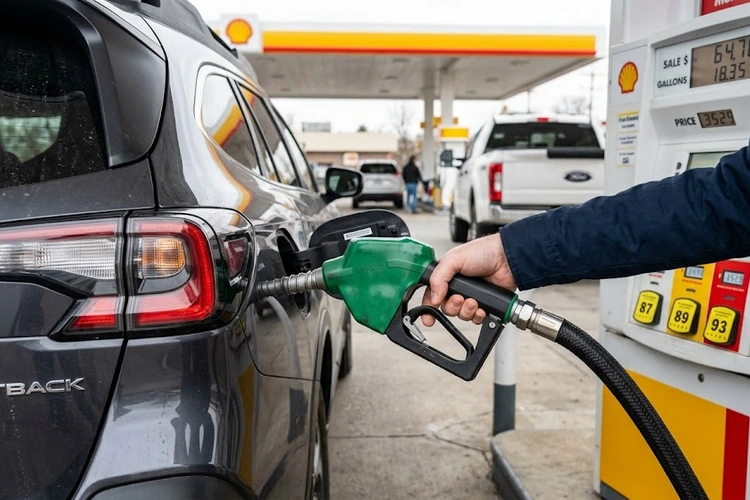
Our team watched a driver at a local station spend almost fifteen minutes fighting the pump — clicking off every few seconds, barely a quarter tank in. It happens constantly, and most people assume the station equipment is broken. When the gas pump keeps clicking off before the tank is full, there is almost always a specific, fixable cause behind it. This guide covers all seven reasons — and exactly what to do about each one — based on what our team has seen repeatedly in fuel system diagnostics.
Contents
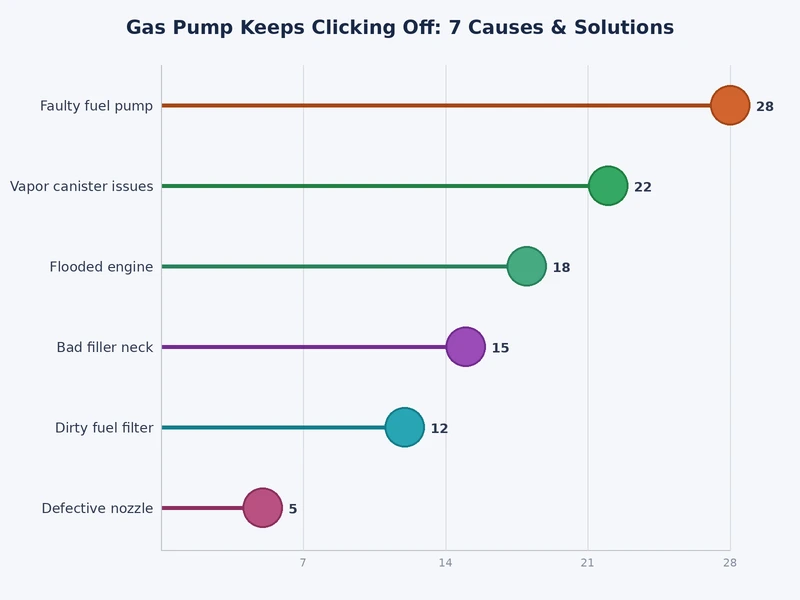
There are seven established reasons a gas pump clicks off before the tank is full. Some are free to fix in under a minute. Others require a shop visit. Our team has laid out a quick reference below before diving into each cause in detail.
| # | Cause | Severity | Typical Fix Cost | DIY Possible? |
|---|---|---|---|---|
| 1 | Blocked EVAP canister | Moderate | $150–$400 | No |
| 2 | Vapor buildup in tank | Low | Free (slow down) | Yes |
| 3 | Wrong nozzle angle | Low | Free (reposition) | Yes |
| 4 | Topping off habit | Low–Moderate | Free (stop the habit) | Yes |
| 5 | Faulty station nozzle | Low | Free (change pumps) | Yes |
| 6 | Damaged fuel filler neck | Moderate | $200–$600 | No |
| 7 | Stuck rollover valve | Moderate–High | $150–$400 | No |
The EVAP (evaporative emission control) system captures fuel vapors before they escape into the atmosphere. At the center of it is a canister packed with activated charcoal. During fueling, air and vapor push out through this canister. When the canister is saturated or clogged, pressure backs up inside the tank. The pump's auto-shutoff sensor reads that pressure as a full tank and trips the mechanism — even when the tank is mostly empty.
This is the single most common cause our team diagnoses. A blocked canister often triggers a check engine light alongside the shutoff problem, usually with a P0440, P0446, or similar code. There may also be a noticeable fuel smell near the rear of the vehicle — similar to what our team describes in cases covered by our article on car smells like mildew, where EVAP leaks contribute to persistent odors inside and outside the cabin. Replacing the canister is a shop-level job in most cases.
On hot days — or right after a long drive — fuel inside the tank has had time to warm up and vaporize. The vapor space above the fuel fills quickly. When fueling starts, fresh gas pushes vapor back up the filler neck fast. The nozzle's shutoff sensor (a small hole near the nozzle tip) detects rising fuel or vapor and cuts flow.
This is not a defect. It is a physics problem. Parking in shade before fueling, or pumping at a slower rate for the first gallon, is usually enough to prevent it. Our team finds this cause is more common in vehicles with smaller tanks and in summer climates.
The auto-shutoff mechanism on every pump nozzle relies on a small venturi (suction-based) sensor near the tip. That sensor needs to breathe. When the nozzle is inserted too far or pressed against the filler neck wall, it blocks the sensor. The sensor interprets this as fuel reaching the tip and shuts the pump off.
A slight repositioning — pulling the nozzle back half an inch or rotating it to a different clock position — clears the blockage. Our team sees this fix work in roughly a third of hot-day shutoff complaints.
Many drivers squeeze extra fuel after the first click. This is called topping off. The problem is that liquid fuel goes where only vapor is supposed to go — into the EVAP canister. Over time, this saturates the charcoal medium inside the canister and destroys its ability to function. Once damaged, the canister causes the gas pump to keep clicking off on every fill-up going forward.
The damage compounds. Raw fuel entering the EVAP system can travel toward the engine and cause combustion problems. Our article on spark plug fouling covers how fuel contamination leads to misfires and hard starts — and topping off is one of the contributing causes our team flags regularly.
The pump nozzle at the station has its own auto-shutoff diaphragm and spring mechanism. These wear out over time. A worn spring, cracked housing, or dirty vent hole triggers false shutoffs — unrelated to anything on the vehicle. High-traffic stations with aging equipment are more prone to this.
The test is simple: move to a different pump at the same station. If the clicking stops, the nozzle was the problem. If it continues at two or three different stations, the vehicle is the source.
Pro tip: If the gas pump keeps clicking off on every vehicle at the same pump, the station nozzle is the culprit — not the car. Our team always confirms this by testing at a second station before pursuing vehicle-side diagnostics.
The filler neck is the pipe connecting the fuel cap opening to the main tank. It can develop dents, corrosion, or deformation over time — especially on older vehicles in states where roads are salted in winter. A bent or rusted neck restricts airflow and interferes with how the nozzle seats. This blocks the vent path and trips the shutoff early.
A damaged filler neck often makes itself known in other ways first. The gas cap may become difficult to remove or seat properly. The fuel door area may show rust staining. Our guide on fuel door won't open covers related filler-area problems that share the same root causes. Filler neck replacement is typically a shop job running $200–$600 depending on the vehicle.
The rollover valve — also called the FLVV (fill limit vent valve) — sits inside the fuel tank. Its job is to seal the tank if the car tips over, preventing fuel spillage. It also controls how far the tank can fill by blocking the vent path once fuel reaches a set level. When this valve sticks in the closed position, it blocks venting during a normal fill-up. The pump clicks off far too early.
A stuck rollover valve is less common than EVAP issues but harder to fix. Accessing it almost always means dropping the fuel tank — a $200–$500 repair at most shops. Our team typically sees this on vehicles with over 150,000 miles or those that have been in minor undercarriage impacts.
Before scheduling a shop visit, our team recommends working through a few free fixes. These take under five minutes and resolve the issue more often than most people expect.
This small change clears the sensor hole and allows normal airflow. Our team finds it effective on about one in three hot-day shutoff complaints — especially when the car has been sitting in direct sun.
Try a different pump at the same station. If the clicking stops, the original nozzle was faulty. If the problem continues at multiple stations, the issue is with the vehicle itself.
Pumping more slowly also helps with vapor-related shutoffs. Using the middle flow setting — not the fastest — gives the EVAP vent time to keep up with incoming fuel. This is not a permanent fix, but it confirms whether vapor pressure is the cause.
Not every premature pump click signals danger. Our team sees both ends of the spectrum — drivers who ignore serious warning signs and those who panic over normal behavior. Knowing the difference matters.
These signs point to a compromised EVAP system or a failed vent valve. Continuing to force fuel in damages components further. Our article on bad piston ring symptoms discusses how raw fuel reaching the combustion chamber — one downstream effect of EVAP failure — causes accelerated engine wear over time.
In these cases, vapor pressure or a worn station nozzle triggered the shutoff. Fueling slowly and carefully is fine.
Warning: Never hold the nozzle trigger open after it clicks off. The EPA identifies topping off as a leading cause of EVAP canister saturation, and repeated overfilling is the fastest way to turn a minor issue into a $300 repair.
Most premature pump shutoffs are preventable with basic annual maintenance. Our team's checklist focuses on the components that fail most often.
A standard emissions inspection at most shops includes a basic EVAP leak check. Our team recommends requesting a dedicated EVAP inspection every two years — or immediately if a P044x code appears. Key things to check:
EVAP solenoid failures can also affect other vehicle systems. Our article on car fuse keeps blowing covers how solenoid-related electrical faults — including those in the EVAP circuit — sometimes appear as recurring fuse failures before the underlying component fails completely.
The filler neck and gas cap are the first line of defense against venting problems. Our team recommends checking both every time the car goes in for service — especially in rust-prone regions.
Pressure and venting failures in caps and necks follow a predictable pattern across different systems. Our article on oil filler cap blowing off explains how similar pressurization issues in other parts of the vehicle trace back to failed seals and blocked vents — the same root mechanics involved in fuel system shutoffs.
There is a surprising amount of bad advice surrounding this problem. Our team has heard most of these myths repeated as fact at service counters.
Slow pumping helps with vapor pressure shutoffs on hot days. It does nothing for a blocked EVAP canister or a stuck rollover valve. If slow fueling works every time, vapor buildup is the issue. If the pump still clicks even at low flow, the vehicle needs a diagnosis.
The auto-shutoff is designed to detect a full tank — but only when everything is working. A blocked vent causes the pump to click off with several gallons still to go. Our team has documented tanks that accepted four or five more gallons after an initial premature shutoff once the underlying cause was repaired.
Occasional topping off carries low immediate risk. The problem is that most drivers who do it once do it every fill-up. The canister does not recover between fill-ups — it accumulates damage. Many states have added language to pump handles discouraging the practice specifically because of EVAP damage. Our team sees this as an avoidable repair in the vast majority of cases.
Station nozzles do fail. But if the gas pump keeps clicking off across multiple stations and multiple nozzles, the car is the source. Testing at two separate stations before assuming equipment failure is always the right first step.
Consistent fueling habits prevent most of the issues covered in this guide. Our team follows the same simple practices on every fill-up.
Our team also recommends paying attention to how the vehicle behaves in the minutes after fueling. Hesitation, stumbling, or sluggish acceleration after a fill-up can indicate fuel delivery or vapor issues that deserve attention. Our article on car won't accelerate from stop covers several overlapping causes that can trace back to a fuel system that is not venting or delivering properly.
The most common reason is a blocked EVAP canister that cannot vent tank pressure during fueling. The pump's sensor interprets that back-pressure as a full tank and shuts off early. Other causes include a stuck rollover valve, a damaged filler neck, or vapor buildup on hot days.
If the pump clicked once on a hot day and repositioning the nozzle stops it, continuing at a slow rate is generally safe. If the pump repeatedly clicks off, there is a fuel smell afterward, or the check engine light comes on, our team recommends stopping and having the EVAP system inspected before the next fill-up.
Yes. Forcing fuel past the auto-shutoff floods the EVAP canister with liquid fuel. The canister is designed to handle only vapor. Repeated topping off saturates the charcoal inside and causes the canister to fail, which then causes premature pump shutoffs on every subsequent fill-up. Canister replacement typically runs $150–$400.
The simplest test is to try two or three different pumps — ideally at different stations. If the clicking stops at a different nozzle, the original nozzle was faulty. If the gas pump keeps clicking off at every station, the vehicle's EVAP or venting system needs diagnosis.
P0446 indicates a fault in the EVAP vent control circuit — specifically that the vent valve is not opening or closing as commanded. This directly causes premature pump shutoffs by blocking the venting path during fueling. A smoke test at a shop can confirm whether the vent valve or canister is the root cause.
Costs vary by cause. Repositioning the nozzle or stopping the topping-off habit costs nothing. A new EVAP canister runs $150–$400. A damaged filler neck replacement typically costs $200–$600. A stuck rollover valve requiring tank removal is usually $200–$500 in labor and parts combined.
 |
 |
 |
 |

About Sarah Whitfield
Sarah Whitfield is a diagnostics and troubleshooting specialist who spent ten years as an ASE-certified technician before joining the editorial team. She specializes in OBD-II analysis, electrical gremlins, and the kind of intermittent problems that make most owners give up.
Get some FREE car parts & gear.. Or check out the latest free automotive manuals and build guides here.
Disable your ad blocker to unlock all the hidden deals. Hit the button below 🚗
| | | |
