by Sarah Whitfield
A driver pulls into a parking lot after a routine commute and notices a persistent metallic clattering sound that had grown louder over the previous week. The noise appears and disappears seemingly at random — audible at certain engine speeds, absent during highway cruise. After a mechanic hoists the vehicle, the diagnosis takes less than two minutes: a heat shield rattle caused by a single corroded mounting bolt. The repair takes fifteen.
Heat shield rattle is among the most frequently reported underhood noises, yet many vehicle owners delay addressing it, uncertain whether the sound indicates a minor annoyance or a serious mechanical failure. This guide examines what heat shields do, how to identify when one has loosened, and what repair options are available — from inexpensive DIY fixes to professional replacement. Drivers who notice exhaust-related changes alongside the rattle should also consult the symptoms outlined in the exhaust leak symptoms guide for a more complete picture of what may be occurring in the exhaust system.
Contents
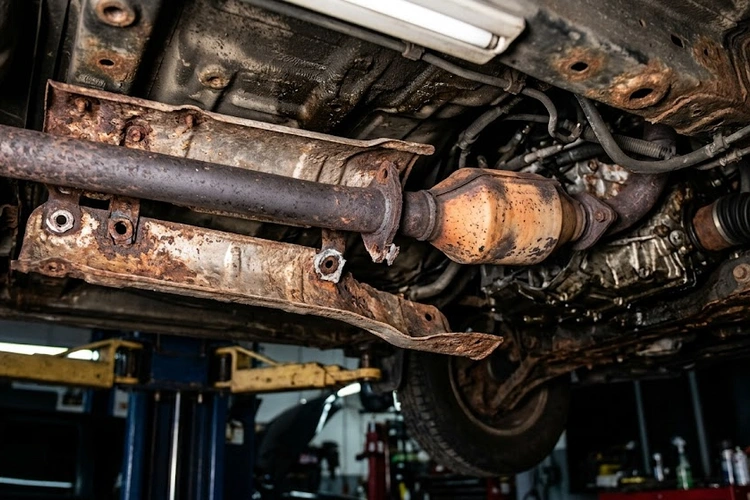
Heat shields — also referred to as heat deflectors or thermal barriers — are stamped panels of aluminum or galvanized steel mounted near high-temperature exhaust components. Their purpose is to redirect radiated heat away from flammable materials, fuel lines, floor insulation, and passenger areas. According to the National Highway Traffic Safety Administration (NHTSA), heat from exhaust systems is a contributing factor in vehicle fires, making properly secured heat shields a genuine safety concern rather than a cosmetic issue.
Common heat shield locations include:
Heat shields are thin by design — typically 0.5–1.5mm thick — which makes them lightweight but vulnerable to the forces that act on them over time. Fastening methods include small bolts, spring clips, and spot welds, all of which degrade through:
Vehicles that spend long periods stationary are particularly vulnerable. As detailed in the guide on maintaining a car that sits unused for months, corrosion progresses more aggressively when heat cycling stops — meaning heat shields may be in worse condition on a low-use vehicle than on one driven regularly.
The most recognizable symptom is the sound itself. Heat shield rattle has a distinctive character that separates it from other underhood noises:
Pro Insight: Heat shield rattle is a dry, tinny metallic clatter — not a knock, thud, or grind. If the sound varies with steering input or suspension movement over bumps, another component is more likely involved.
Beyond the auditory signature, several secondary clues may accompany a loose heat shield:
When the rattle originates near a brake rotor shield, the sound can be mistaken for brake-related noise. The brake pad break-in guide provides useful context on what brake noise actually sounds like, which helps distinguish it from heat shield rattle originating in the same area.
Undercarriage work near exhaust components requires strict safety practice. Before beginning:
Tools typically needed:
Warning: Never work beneath a vehicle supported only by a hydraulic floor jack. Always transfer weight to rated jack stands before crawling under the car — a jack can fail without warning.
For a component-level repair walkthrough after locating the problem, the how to fix a rattling heat shield guide provides detailed instructions for the most common repair scenarios.
The correct repair depends on what failed. The four main approaches are:
DIY repair is appropriate when the damage is localized — typically one or two failed fastener points on a shield that is otherwise structurally sound. The band clamp method, in particular, requires no special tools and takes under 20 minutes. Stainless steel hardware costs more than standard zinc-plated fasteners but resists corrosion significantly longer, reducing the chance of a repeat failure.
| Repair Method | DIY Feasible | Approx. Cost | Expected Durability | Best For |
|---|---|---|---|---|
| Stainless bolt replacement | Yes | $3–$8 | 5–8 years | Single corroded fastener |
| Band clamp | Yes | $8–$20 | 4–7 years | Missing tab or broken weld |
| High-temp repair tape | Yes | $12–$25 | 6–18 months | Cracked shield, temporary fix |
| Weld tab repair (shop) | No (requires welder) | $50–$100 labor | 8–12 years | Broken tab, sound structure |
| OEM shield replacement | Moderate | $30–$120 parts + labor | 10–15 years | Severely corroded shield |
| Aftermarket universal shield | Moderate | $15–$40 parts + labor | 6–10 years | Budget replacement option |
Tip: Stainless steel band clamps cost slightly more than standard hardware but resist the salt and heat that destroy zinc-plated fasteners within a season or two — making the premium worthwhile.
Full shield replacement is the more appropriate path when:
Labor at an independent muffler shop typically runs $60–$150. Dealership labor rates are higher. Vehicles with complex underbody shielding — some European and Japanese models use layered multi-piece shields — may require more disassembly and push labor costs toward the upper range.
If a heat shield has been addressed and the rattle continues, the cause likely lies elsewhere. Common misidentified noise sources include:
A systematic approach — isolating one component at a time and replicating the noise after each repair — yields a faster diagnosis than replacing parts speculatively.
Several practices reduce the likelihood of heat shield rattle developing in the first place:
Vehicles operated in coastal environments face an accelerated corrosion timeline from salt air — a concern also documented in the guide to protecting car paint in coastal salt air, which offers broader context on how marine environments affect metal components throughout a vehicle.
A rattling heat shield is not immediately dangerous in most cases, but it should not be ignored. A shield that has partially detached can contact hot exhaust components or flammable materials beneath the vehicle. If the shield falls completely, it can scrape the road surface and potentially cause damage to fuel lines or other undercarriage components. Prompt repair is advisable.
DIY repair using a band clamp or replacement bolt typically costs $3–$25 in parts. Professional repair — including welding a broken tab or replacing a severely corroded shield — generally runs $60–$250 depending on labor rates and whether the shield itself requires replacement. In most cases, heat shield rattle is among the least expensive exhaust-related repairs a vehicle will require.
Permanent removal is not recommended. Heat shields protect fuel lines, brake components, and vehicle insulation from radiated exhaust heat. Removing them — particularly the catalytic converter shields — increases the risk of heat-related damage to surrounding components and, in dry conditions, raises the fire risk when the vehicle is parked over dry grass or leaves. Repair or replacement is the correct solution.
Heat shield rattle produces a dry, tinny metallic clattering that changes with engine RPM rather than vehicle speed. It is typically louder during cold starts and at mid-range revs. This distinguishes it from wheel bearing hum (which tracks road speed), brake grinding (which occurs under braking), and belt noise (which is a squealing or chirping sound). A rattle that changes with steering input or over bumps typically points to a suspension component instead.
Heat shield rattle is a manageable repair that most vehicle owners can resolve with basic tools and under an hour of work. Locating the loose shield, selecting the appropriate repair method, and using corrosion-resistant hardware are the three steps that determine whether the fix lasts one season or a decade. Inspect the undercarriage at the next scheduled oil change, address any movement in the shielding, and the rattle — along with the risk it carries — can be put behind you for years.
 |
 |
 |
 |

About Sarah Whitfield
Sarah Whitfield is a diagnostics and troubleshooting specialist who spent ten years as an ASE-certified technician before joining the editorial team. She specializes in OBD-II analysis, electrical gremlins, and the kind of intermittent problems that make most owners give up.
Get some FREE car parts & gear.. Or check out the latest free automotive manuals and build guides here.
Disable your ad blocker to unlock all the hidden deals. Hit the button below 🚗
| | | |
