by Joshua Thomas
If you care about your car's paint, you've probably asked yourself: how often should you wax your car? It's one of the most common car care questions, and the answer depends on several factors — your climate, the type of wax you use, and how much protection your paint needs. Waxing isn't just about shine. It creates a protective barrier against UV rays, water, road grime, and oxidation. Whether you're a weekend detailer or someone who just wants to keep their car looking good, understanding the right wax schedule makes a real difference. Before diving into frequency, if you want a step-by-step guide on the process itself, check out our full guide on how to wax a car by hand.
Contents
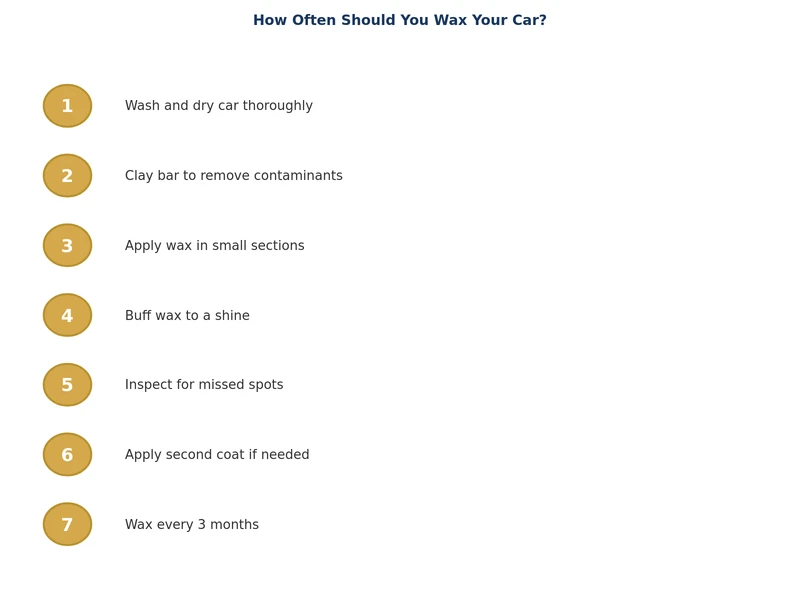
For most drivers, waxing every three to four months — roughly four times a year — gives solid year-round protection. That schedule works well for daily drivers kept outside and exposed to normal weather. If you drive less frequently, park in a garage, or live in a mild climate, twice a year may be sufficient. If you park outside in harsh sun or near the coast, you'll want to wax more often, perhaps every six to eight weeks.
The key question isn't just "how often" — it's "how well is my current wax holding up?" The water bead test is your best indicator. Pour a small amount of water on your hood. If it beads up and rolls off cleanly, your wax is doing its job. If the water sheets flat or soaks in, it's time to reapply.
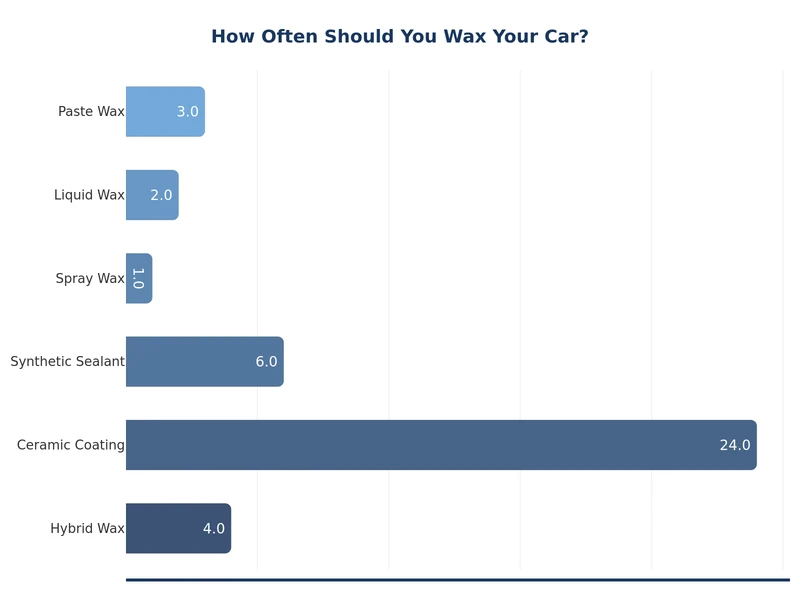
Not all waxes last the same amount of time. Carnauba-based waxes — the traditional choice — tend to last four to eight weeks before needing reapplication. Synthetic polymer waxes and paint sealants last considerably longer, often three to six months. Spray waxes are the most convenient but the least durable, typically lasting only a few weeks.
| Wax Type | Avg. Durability | Recommended Frequency | Best For |
|---|---|---|---|
| Carnauba Paste Wax | 4–8 weeks | Every 1–2 months | Show cars, deep gloss lovers |
| Carnauba Liquid Wax | 6–10 weeks | Every 6–10 weeks | Regular maintenance detail |
| Synthetic Polymer Wax | 3–5 months | 3–4 times per year | Daily drivers, convenience |
| Paint Sealant | 4–6 months | Twice a year | Long-lasting protection |
| Spray Wax | 2–4 weeks | Monthly top-up | Quick maintenance between full waxes |
| Ceramic Coating | 1–5 years | Once (professional reapply as needed) | Long-term paint protection |
Where you live has a significant impact on your waxing schedule. UV radiation from the sun is one of the primary causes of paint oxidation and fading. If you live in a hot, sunny region, your wax layer breaks down much faster than in a cooler climate. The same applies to coastal environments where salt air can corrode paint protection quickly. For more on fighting sun damage year-round, read our article on how to protect your car paint from sun damage.
Cold climates present their own challenges. Road salt used in winter accelerates paint wear and rust. Waxing before winter sets in — and potentially again mid-winter — gives your paint an important shield. According to the U.S. Environmental Protection Agency, maintaining your vehicle's exterior coating also reduces the frequency of harsher chemical cleaning needed over time.
Cars parked in a garage are protected from the sun, rain, bird droppings, and tree sap — all of which degrade wax faster. If you garage your car, you can extend your waxing interval to every four to six months without much concern. Outdoor parkers in exposed lots or under trees should aim for every six to eight weeks, especially in summer.
Bird droppings and tree sap are particularly damaging because they are chemically acidic and can etch through wax and into clear coat quickly. If you park under trees regularly, waxing more frequently and washing your car often helps prevent long-term paint damage.
Beyond following a set schedule, your car will tell you when it needs wax. Watch for these indicators:
Choosing the right product directly affects how often you need to wax. Paste wax delivers a deep, warm shine and is preferred by enthusiasts, but it requires more effort to apply and buff. Liquid wax is easier to spread and still offers solid protection. Spray wax is fast and convenient for quick top-ups between full details, but it won't carry you through a whole season on its own.
If you want less frequent waxing with maximum protection, a synthetic paint sealant or ceramic coating is worth considering. Ceramic coatings last years and offer superior hardness against scratches and chemical damage, though they require thorough paint prep before application and come at a higher cost.
For those who detail by hand, paste wax applied with a dual action polisher can improve results dramatically. If you haven't tried machine application, our guide on how to use a dual action polisher for beginners walks you through the process step by step.
Getting more life out of each wax application saves time and money. These practices help your wax hold up longer between sessions:
Consistency matters more than perfection. A car waxed four times a year with proper washing in between will maintain its paint far better than one waxed twice with no maintenance in between.
If your car is parked outside year-round and exposed to sun, rain, and environmental fallout, waxing every six to eight weeks with a carnauba wax — or every three to four months with a synthetic sealant — will keep the paint protected. Use the water bead test after each wash to check if protection is still active.
No, waxing too often does not damage your paint. Each new coat simply bonds on top of or replaces the previous one. However, waxing more than once a month with a heavy paste wax when protection is still active is unnecessary. Focus on timing based on the water bead test rather than a rigid calendar.
Both protect your paint, but they serve different priorities. Carnauba wax delivers a warmer, deeper gloss and is preferred by detailing enthusiasts. Synthetic paint sealants last longer — often four to six months — and are better for low-maintenance protection. Many detailers apply a sealant as a base coat and top it with carnauba wax for the best of both.
Yes. New cars benefit from waxing, but you should wait until any dealership-applied coatings or paint protection film have fully cured — typically 30 to 60 days for new paint. After that, waxing helps maintain the factory finish and slows the onset of oxidation. Avoid waxing paint that has been freshly repainted for the same reason.
Wax provides a limited buffer against very light surface scratches and swirl marks. It fills in minor imperfections and reduces their visibility. However, it won't prevent deeper scratches caused by keys, gravel, or hard impacts. For those, paint touch-up or polishing is needed before waxing.
Without wax, your car's clear coat is directly exposed to UV rays, acid rain, road salts, bird droppings, and oxidation. Over time, the clear coat degrades, paint becomes dull and chalky, and the underlying color coat can be permanently damaged. Repainting is expensive — regular waxing is one of the most cost-effective ways to preserve long-term paint condition.
 |
 |
 |
 |

About Joshua Thomas
Joshua Thomas just simply loves cars and willing to work on them whenever there's chance... sometimes for free.
He started CarCareTotal back in 2017 from the advices of total strangers who witnessed his amazing skills in car repairs here and there.
His goal with this creation is to help car owners better learn how to maintain and repair their cars; as such, the site would cover alot of areas: troubleshooting, product recommendations, tips & tricks.
Joshua received Bachelor of Science in Mechanical Engineering at San Diego State University.


Get some FREE car parts & gear.. Or check out the latest free automotive manuals and build guides here.
Disable your ad blocker to unlock all the hidden deals. Hit the button below 🚗
| | | |
