by Joshua Thomas
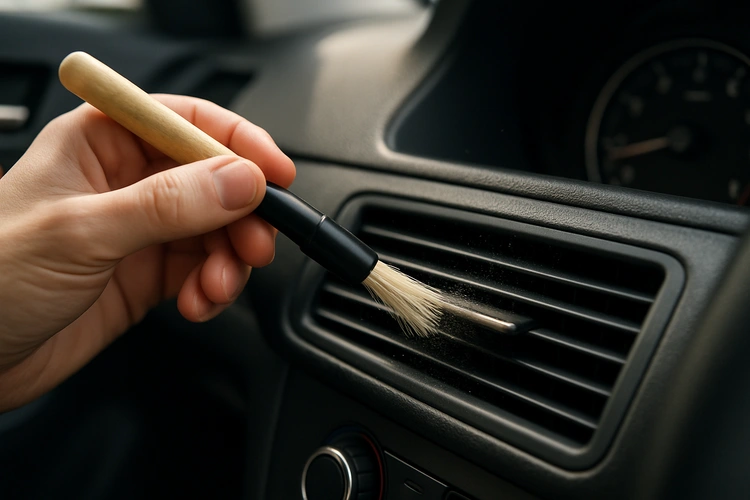
If you've noticed a stale or musty odor every time you switch on the air conditioning, it's time to clean car AC vents and tackle the source of that smell. Dirty vents trap dust, pollen, and moisture — creating the perfect conditions for mold and bacteria to thrive. The good news is that this is a straightforward DIY job that costs almost nothing and makes a dramatic difference in cabin air quality. Whether your vents are visibly grimy or just blowing foul-smelling air, this guide walks you through every step. For a related fix, see our guide on how to make AC colder in your car.
Contents
Understanding the root cause helps you clean more effectively and prevent recurrence.
The evaporator coil inside your dashboard constantly cycles between cold and warm surfaces, which creates condensation. That moisture, combined with organic particles pulled in from outside, feeds mold and bacteria colonies on the evaporator fins and inside the ducts. When the fan runs, it blows those spores and bacterial byproducts directly into the cabin — that's the musty, locker-room smell. If you see visible black spots on interior surfaces nearby, read our guide on how to remove mold from car interior for a full treatment plan.
Even with a cabin air filter installed, fine particles slip through over time and coat the inside of every vent slat. That layer of grime restricts airflow and holds onto odors from cigarette smoke, food, or pets. Visible grey fuzz on the vent fins is a reliable sign that a cleaning is overdue.
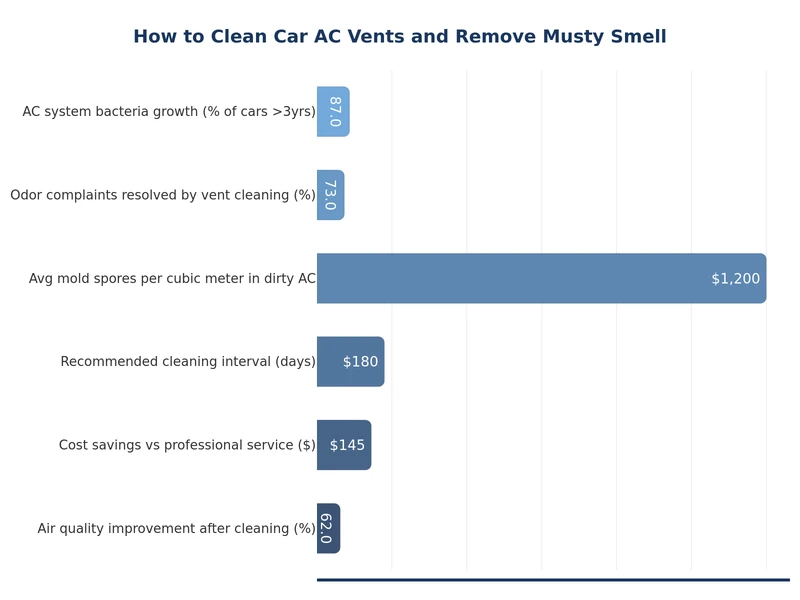
Gather everything before you start so you're not running back and forth mid-job.
| Item | Purpose | Estimated Cost |
|---|---|---|
| Foam paintbrush (1–2 inch) | Reaches between narrow vent slats | $1–$3 |
| Compressed air can | Blasts loose dust from deep inside ducts | $5–$10 |
| Microfiber cloths | Wipes slats clean without scratching | $5–$12 |
| Interior cleaner or diluted all-purpose cleaner | Dissolves grime on plastic fins | $6–$15 |
| AC vent/evaporator cleaner spray | Kills mold and bacteria inside ducts | $10–$20 |
| Replacement cabin air filter | Stops particles and odors at the source | $12–$30 |
| Cotton swabs | Detail tight corners of vent housing | $2–$4 |
No amount of vent cleaning fixes a saturated cabin filter. On most vehicles the filter sits behind the glove box or under the dashboard on the passenger side — check your owner's manual for exact location. Pull out the old filter (note the airflow direction arrow), slot in a new one, and reinstall. A clogged filter is one of the top reasons airflow stays weak even after cleaning. For a deeper interior overhaul, see our full walkthrough on how to detail a car interior.
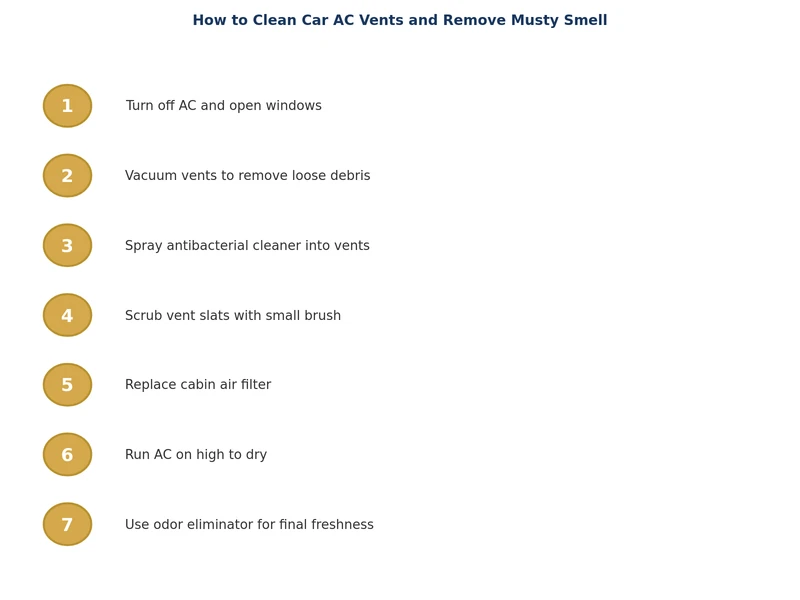
Cleaning the visible vents handles surface grime, but the odor source is usually deeper — inside the evaporator housing.
For persistent odors, a dedicated evaporator coil cleaner (sold as a foaming spray) reaches the fins directly. The most effective access point is usually through the cabin filter housing or a dedicated service port — check your vehicle's service manual. Spray the foam generously, let it dwell for the time specified on the can, then flush with compressed air. This kills the mold colonies at the source rather than simply masking the smell. Stubborn mold elsewhere in the cabin requires similar treatment — our guide on how to clean car door panels covers mold-safe approaches for adjacent trim pieces.
Most musty AC smells respond to the steps above. Seek a shop if:
Clean the visible vent slats every 3–6 months as part of a routine interior detail. Apply an antibacterial AC cleaner spray twice a year to keep the ducts and evaporator coil free of mold and bacteria.
The most common cause is mold or bacteria growing on the evaporator coil inside the dashboard. Moisture from condensation combines with dust and organic particles to create ideal conditions for microbial growth, which produces the characteristic musty odor when the fan runs.
Yes. A foam paintbrush, compressed air, and a dampened microfiber cloth let you clean vent slats and reach partially into the ducts without any disassembly. An AC spray cleaner handles the deeper duct and evaporator surfaces through the vent openings.
It helps significantly if a clogged, moldy filter is contributing to the odor, but it won't fix mold already established on the evaporator coil. Replace the filter and use an AC evaporator cleaner spray for a complete solution.
No. Bleach can damage plastic vent components and leave a harsh chemical odor that's difficult to clear. Use a purpose-made AC vent cleaner or a diluted all-purpose interior cleaner rated safe for automotive plastics.
This is classic evaporator mold. The coil dries out when the car sits, and the smell hits immediately when the fan pushes air across it again. Running the blower on fresh air (AC off) for 5 minutes at the end of each drive prevents this by drying the coil before you park.
 |
 |
 |
 |

About Joshua Thomas
Joshua Thomas just simply loves cars and willing to work on them whenever there's chance... sometimes for free.
He started CarCareTotal back in 2017 from the advices of total strangers who witnessed his amazing skills in car repairs here and there.
His goal with this creation is to help car owners better learn how to maintain and repair their cars; as such, the site would cover alot of areas: troubleshooting, product recommendations, tips & tricks.
Joshua received Bachelor of Science in Mechanical Engineering at San Diego State University.


Get some FREE car parts & gear.. Or check out the latest free automotive manuals and build guides here.
Disable your ad blocker to unlock all the hidden deals. Hit the button below 🚗
| | | |
