by Joshua Thomas
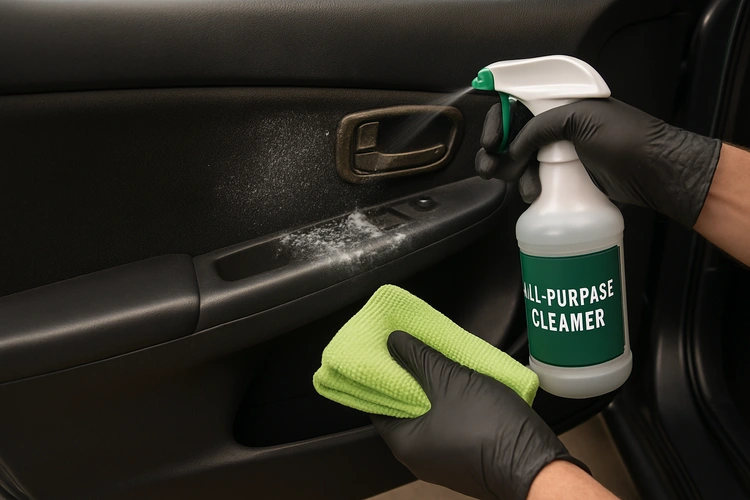
Dirty door panels are one of the most overlooked parts of a car's interior. Knowing how to clean car door panels properly protects your investment and keeps the cabin looking sharp. Door panels take a beating — fingerprints, drink spills, sunscreen, and general grime build up fast. The challenge is that panels come in several materials: fabric, vinyl, leather, hard plastic, and rubber trim, often all on the same door. Each requires a slightly different approach. This guide walks you through every material, the right products, and the steps to get your panels clean without causing damage. If you're also tackling the seats, check out our guide on how to clean car seats for a complete interior refresh.
Contents
You don't need a professional detailing kit, but having the right tools makes the job faster and safer for your panels. Avoid harsh household cleaners — ammonia and bleach can dry out vinyl, fade fabric, and crack leather.
Most door panels combine multiple materials. A typical panel might have hard plastic at the bottom, a vinyl armrest, a fabric or leather upper insert, and rubber window seals. Using the wrong cleaner on any zone can cause discoloration or cracking. Always identify what you're working with before applying anything.
| Material | How to Identify | Recommended Cleaner | What to Avoid |
|---|---|---|---|
| Hard Plastic | Rigid, matte or textured surface | All-purpose interior cleaner | Abrasive scrubbers, solvent-based sprays |
| Vinyl | Slightly flexible, smooth or grain texture | Mild soap + water or vinyl cleaner | Bleach, ammonia, petroleum products |
| Fabric/Cloth | Soft, woven texture, absorbs moisture | Upholstery foam cleaner | Soaking with water, hot steam on delicate weaves |
| Leather | Soft, supple, often stitched seams | Dedicated leather cleaner | Dish soap, alcohol wipes, harsh detergents |
| Rubber Seals/Trim | Flexible, black border around windows | Rubber protectant spray | Silicone sprays that attract dust |
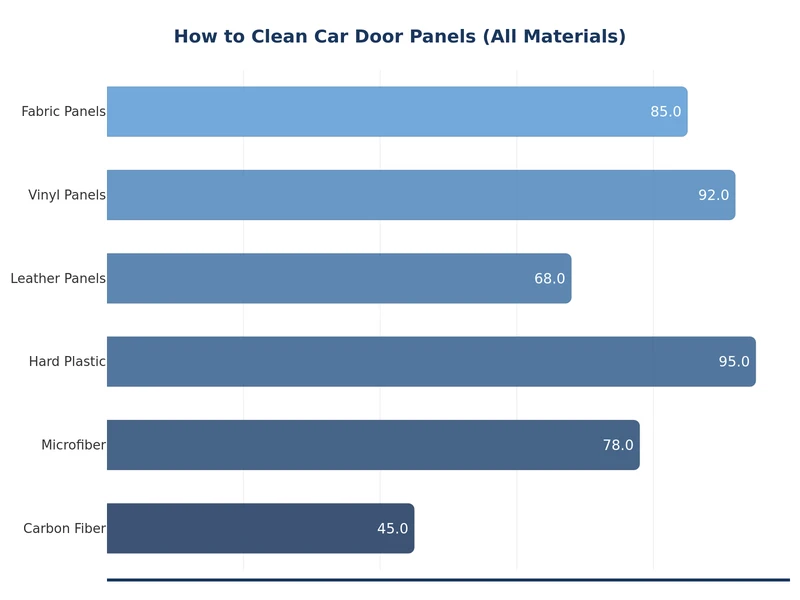
Before applying any product, prep the panel properly. Skipping this step pushes loose dirt deeper into the material.
A full interior detail covers more ground than just the panels. Our complete interior detailing guide covers every surface from the headliner to the carpet.
Hard plastic is the most forgiving material on door panels. It's durable and handles most interior cleaners without issue. That said, textured plastic can trap grime in the grain pattern, so a brush makes a big difference.
For glossy black plastic trim that shows fingerprints easily, apply a light coat of interior detailer spray after cleaning to reduce smearing.
Vinyl is the most common door panel material in modern vehicles. It's easy to clean but dries out over time if not conditioned. Cracked or faded vinyl is a sign of neglect — regular cleaning and conditioning prevent this.
Fabric inserts on door panels absorb spills and odors readily. The key is to avoid over-wetting, which can cause mold beneath the surface. According to the U.S. Environmental Protection Agency, mold growth indoors — including inside vehicles — can cause respiratory issues, so keeping fabric dry is important.
If odors persist after cleaning, a light spray of baking soda solution (one teaspoon per cup of water) can neutralize smells without harsh chemicals.
Leather is the most high-maintenance door panel material. It's sensitive to pH levels and dries out without regular conditioning. Never use alcohol-based wipes or dish soap — they strip the natural oils that keep leather supple.
Clean leather panels every 2–3 months and condition at least twice a year — more often in hot, dry climates where leather cracks faster.
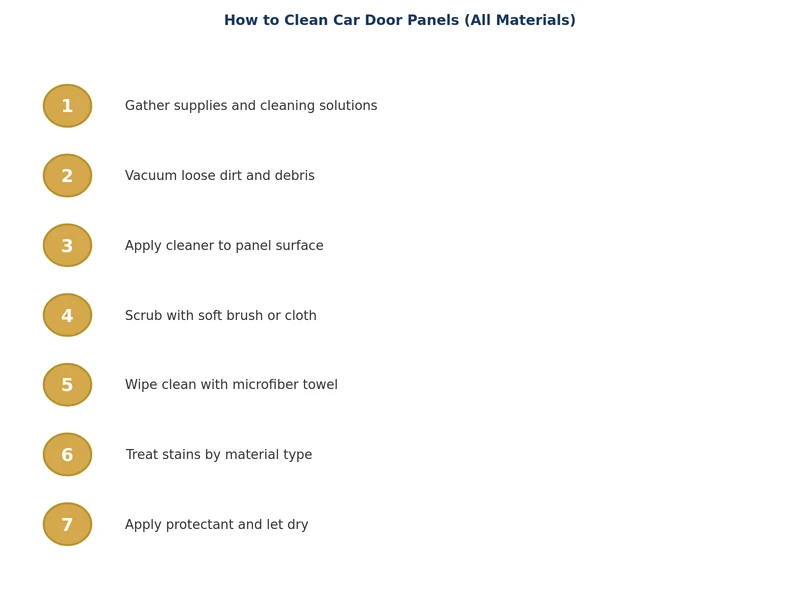
Some stains resist standard cleaning. Here's how to handle the most common problem spots:
Sunscreen is one of the worst offenders on door panels — it leaves oily, yellowish stains that penetrate fabric and vinyl quickly. Apply a degreasing interior cleaner and let it dwell for 30 seconds before wiping. For fabric, follow with upholstery foam after degreasing.
Pen marks and dye transfer from dark clothing require a dedicated stain remover. Apply a small amount of isopropyl alcohol (90%+) on a cotton swab for hard plastic and vinyl only — never on leather or fabric. Blot, don't rub, to prevent spreading the stain.
Act fast on fresh spills — blot immediately with a dry cloth to absorb as much liquid as possible before it sets. Avoid rubbing, which pushes the stain deeper. Once blotted, treat with the appropriate cleaner for the material type. The same careful approach applies when you're cleaning other interior surfaces; our guide on how to clean a car headliner covers similar blotting techniques for delicate surfaces.
Cleaning is only half the job. Protection extends the time between deep cleans and keeps materials from deteriorating.
After cleaning, apply a UV-protective interior dressing to plastic and vinyl panels. UV rays fade and crack these materials over time, especially on the driver's side door. Choose a matte or satin finish — high-gloss dressings look artificial and attract more dust.
Leather conditioner doubles as a protectant. For extra protection in harsh climates, a dedicated leather protector spray creates a barrier against UV damage and spills.
A fabric protector spray — applied after cleaning and drying — repels future spills. Reapply every 6 months. This is the same product used on carpet and upholstery and is widely available at auto parts stores.
Keep door panels in top condition with a regular schedule: wipe down hard plastic and vinyl every two weeks as part of your regular car wash routine, deep clean fabric and leather quarterly, and condition leather every 2–3 months. Pair this with a full interior detail twice a year. Keeping up with regular proper car washing habits makes interior maintenance easier over time since less exterior grime transfers inside.
Dish soap is too harsh for most door panel materials. It strips protective coatings from vinyl and leather, causing them to dry out and crack. Use a pH-neutral all-purpose interior cleaner or a product specifically formulated for your panel material.
Use an upholstery foam cleaner rather than liquid spray. Apply the foam directly to the fabric, work it in with a soft brush, then blot with a microfiber cloth. The foam lifts dirt without saturating the material, which prevents mold and mildew underneath.
Wipe down hard plastic and vinyl every two weeks as part of your regular car cleaning routine. Deep clean fabric and leather panels every 3 months. Condition leather at least twice a year, or more often in hot or dry climates.
Sunscreen stains respond best to a degreasing interior cleaner. Apply to the stained area, let it sit for 30 seconds, then wipe with a microfiber cloth. For fabric panels, follow up with upholstery foam cleaner to remove any remaining residue.
Steam cleaning is effective on hard plastic, vinyl, and most fabric panels. Avoid using steam directly on leather, as high heat can dry and damage the material. Keep the steamer moving — holding it in one spot too long can warp plastic or loosen adhesive backing on panels.
Mix one part white vinegar with two parts water and apply to the affected fabric area with a brush. Scrub gently, then blot dry with a microfiber cloth. Allow the panel to air dry completely with windows and doors open. For severe mold, use a dedicated automotive mold and mildew remover.
 |
 |
 |
 |

About Joshua Thomas
Joshua Thomas just simply loves cars and willing to work on them whenever there's chance... sometimes for free.
He started CarCareTotal back in 2017 from the advices of total strangers who witnessed his amazing skills in car repairs here and there.
His goal with this creation is to help car owners better learn how to maintain and repair their cars; as such, the site would cover alot of areas: troubleshooting, product recommendations, tips & tricks.
Joshua received Bachelor of Science in Mechanical Engineering at San Diego State University.


Get some FREE car parts & gear.. Or check out the latest free automotive manuals and build guides here.
Disable your ad blocker to unlock all the hidden deals. Hit the button below 🚗
| | | |
