by Joshua Thomas
The headliner — that fabric-covered ceiling inside your car — quietly collects grease, dust, smoke residue, and sweat over years of use. Knowing how to clean car headliner fabric correctly is critical because one wrong move can separate the material from its foam backing, leaving sagging, bubbling, or permanent water stains. This guide covers safe, effective methods to restore your headliner without causing damage, whether you're dealing with light dust or stubborn nicotine stains.
For a full interior refresh, pair this process with our guide on how to clean car seats — together, they cover the two most-neglected surfaces in any cabin.
Contents
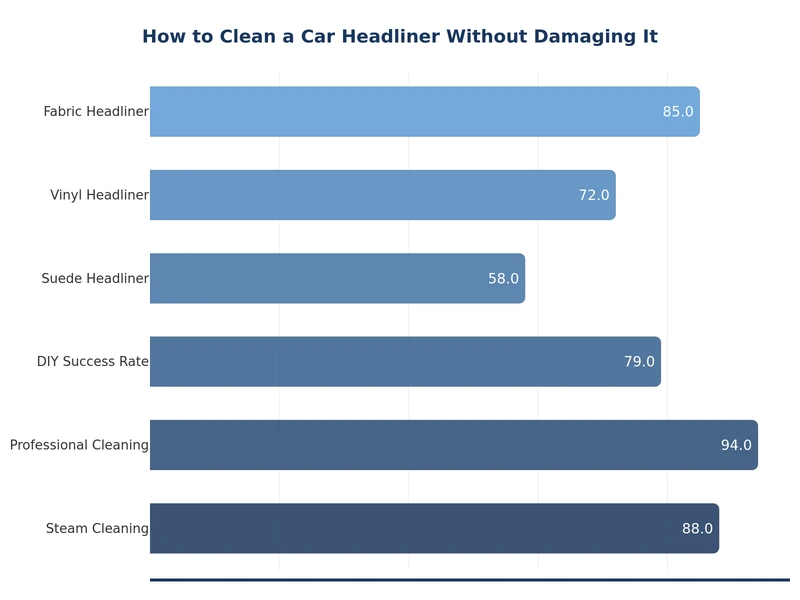
A car headliner is a multi-layer assembly. The visible surface is typically woven polyester or a suede-like material. Beneath that sits a layer of polyurethane foam bonded to a rigid fibreboard or fibreglass substrate. According to Wikipedia's overview of automotive upholstery, these foam backing layers are heat-bonded and become brittle with age.
That brittleness is the core problem. Excess liquid, aggressive heat, or hard scrubbing breaks down the adhesive bond between foam and fabric. Once that bond fails, the headliner sags — and short of replacement, there is no going back. This is why gentle technique matters far more than the strength of your cleaner.
| Product Type | Best For | Moisture Level | Safe for Aged Headliners? |
|---|---|---|---|
| Foam upholstery cleaner | General dirt and light stains | Low | Yes |
| Diluted fabric cleaner (1:4 with water) | Moderate soiling | Medium | Yes, if used sparingly |
| Enzyme cleaner | Biological stains and odours | Medium | Yes |
| Isopropyl alcohol (70%) | Grease, marker, ink | Very low | Yes — evaporates quickly |
| Steam cleaner | Smoke and deep odours | High — use with caution | Only on newer headliners |
| Household all-purpose spray | Hard surfaces only | High | No — too wet and harsh |
Avoid at all costs: bleach, ammonia-based cleaners, and any product labelled for hard surfaces. These strip fabric coatings and accelerate foam degradation rapidly.
Work in a shaded area or indoors. Direct sunlight speeds drying unevenly and causes streaks. Crack the windows to allow moisture to escape during and after cleaning.
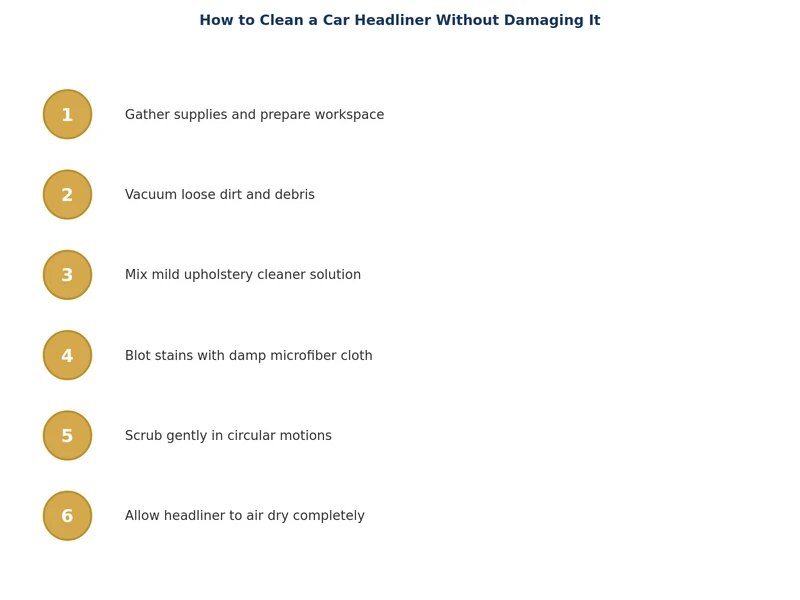
Attach a soft brush head to your vacuum and work in straight lines from front to back. Keep suction on a medium setting — high suction can pull loosely bonded fabric. This step removes loose dust and debris that would otherwise turn into muddy streaks when wet cleaner is applied.
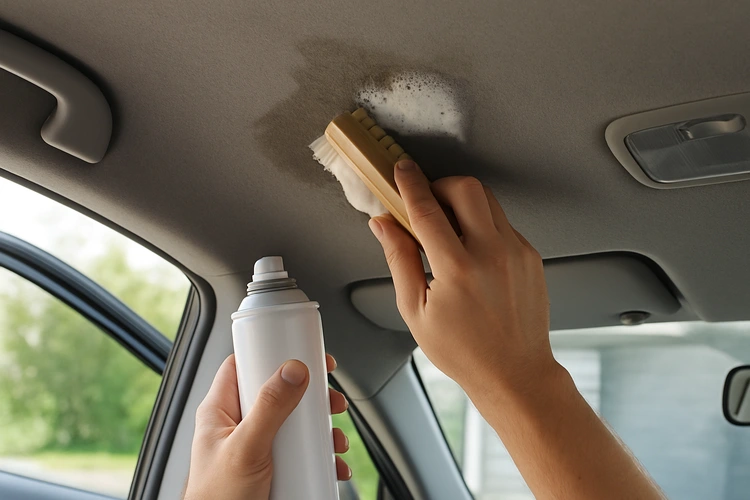
Spray your chosen cleaner onto a microfiber cloth — never directly onto the headliner. The cloth should be damp, not wet. For foam-style cleaners, work a small amount into a light lather on the cloth before touching the fabric. Work in small sections of roughly 30 cm square to maintain control over moisture levels.
Press the cloth gently against the surface and lift. Repeat with overlapping strokes in one direction. Circular or back-and-forth scrubbing distorts the fabric pile and can delaminate the foam underneath. For spot stains, use a soft-bristle brush in very light, short strokes — always in one direction, never circular.
Immediately blot excess moisture with a dry microfiber cloth. Then leave the car doors open and direct a fan toward the headliner for at least 30 to 60 minutes. Never close up the car while the headliner is still damp — trapped moisture accelerates mold growth and speeds foam delamination significantly.
Grease stains — usually from hair product contact near the pillar area — respond well to isopropyl alcohol. Dampen a folded microfiber cloth with 70% isopropyl and blot from the outer edge of the stain inward. The alcohol evaporates quickly, minimising moisture exposure. Do not rub outward or you will spread the stain further.
Nicotine residue produces yellowish-brown staining and a persistent odour that resists basic cleaners. Use an enzyme-based fabric cleaner or an upholstery-specific odour-eliminating spray. Apply to a cloth and work it across the entire headliner surface — not just stained patches — to avoid creating visible clean-versus-dirty contrast lines. A second pass 24 hours later often reduces embedded odour further.
Water marks usually appear as light rings after a roof leak. Treat the entire panel rather than just the ring — clean outward from the centre in a blotting motion to blend the edges. For mold spots, a diluted white vinegar solution (1 part vinegar to 3 parts water) works without harsh chemicals. Apply to a cloth, blot the area, and dry immediately and thoroughly.
These are the most common errors that lead to irreversible damage:
The same careful approach applies to exterior paintwork. Just as the headliner demands gentle products and proper technique, so does your car's finish — our guide on how to wash a car properly using the two-bucket method explains how to avoid introducing swirls and scratches during routine washes.
Prevention is far easier than restoration. A few consistent habits significantly extend the time between deep cleans:
Once your headliner is clean, keep the momentum going with a full interior detail. Our complete guide on how to detail a car interior covers seats, carpets, door panels, and every surface in between — a single session that makes a dramatic difference.
Only on newer headliners in good condition. Steam delivers high moisture and heat simultaneously, which can dissolve the adhesive holding older foam backing in place. If you do use steam, hold the nozzle at least 15 cm from the surface, work quickly, and dry the area immediately with a fan. When in doubt, stick to a foam upholstery cleaner instead.
A foam-style upholstery cleaner is the safest choice for most headliners because it delivers minimal moisture. For grease and oil spots, 70% isopropyl alcohol on a microfiber cloth works well without wetting the fabric. Avoid household multi-surface sprays — they are too wet and may contain harsh chemicals that damage fabric coatings.
Use an enzyme-based upholstery cleaner or an odour-eliminating fabric spray, applied to a cloth and worked across the entire headliner — not just the most discoloured patches. Treating only part of the surface leaves visible contrast lines. A second application 24 hours later and thorough ventilation afterward will reduce deeply embedded odour further. Severe cases may require a professional ozone treatment.
Sagging after cleaning almost always means too much moisture was applied. Excess liquid penetrates the foam backing and dissolves the heat-sensitive adhesive that holds it to the fibreboard substrate. Once the bond fails, the fabric has nothing to grip. At that point, re-gluing with headliner adhesive is the only fix short of full replacement.
A light vacuum pass every month during your regular interior clean prevents dust buildup. A full spot-clean of any stains should happen as soon as possible after they occur. A thorough deep clean of the entire headliner is typically needed once or twice a year, depending on how the vehicle is used — more frequently if passengers smoke inside the car.
It is not recommended. Dish soap is designed to cut grease aggressively and requires rinsing with water — both properties that are problematic for a headliner. The high water content needed to rinse out the soap can saturate the foam backing, and residual soap left in the fabric attracts dirt faster than before. Use a purpose-made upholstery cleaner instead.
 |
 |
 |
 |

About Joshua Thomas
Joshua Thomas just simply loves cars and willing to work on them whenever there's chance... sometimes for free.
He started CarCareTotal back in 2017 from the advices of total strangers who witnessed his amazing skills in car repairs here and there.
His goal with this creation is to help car owners better learn how to maintain and repair their cars; as such, the site would cover alot of areas: troubleshooting, product recommendations, tips & tricks.
Joshua received Bachelor of Science in Mechanical Engineering at San Diego State University.


Get some FREE car parts & gear.. Or check out the latest free automotive manuals and build guides here.
Disable your ad blocker to unlock all the hidden deals. Hit the button below 🚗
| | | |
