by Diego Ramirez
Blocked radiator fins reduce heat dissipation efficiency by as much as 30 percent, a figure that translates directly into elevated engine temperatures and accelerated wear on cooling system components. If you have noticed the temperature gauge climbing on warm days or during stop-and-go traffic, the exterior of your radiator may be the source of that problem. Knowing how to clean car radiator fins and the outer casing is one of the more accessible maintenance tasks available to any vehicle owner, and the results can be measurable within a single drive. This guide walks you through every level of the process, from a basic rinse to a thorough professional-grade clean. For broader context on the surrounding components, review our engine bay cleaning guide before you begin.
The radiator sits at the front of your vehicle and passes coolant (the liquid that absorbs heat from the engine) through a dense grid of thin metal fins and tubes. Road debris, insects, leaves, and oily grime accumulate on those fins over time, restricting the airflow that removes heat from the coolant. A clean radiator exterior supports proper engine temperature regulation, reduces the risk of overheating, and improves fuel efficiency in vehicles equipped with electric cooling fans.
Contents
Not every radiator cleaning task requires the same level of effort or the same set of tools. Understanding the difference between a surface clean and a deep clean helps you choose the right approach for your vehicle's current condition and the environment in which you drive.
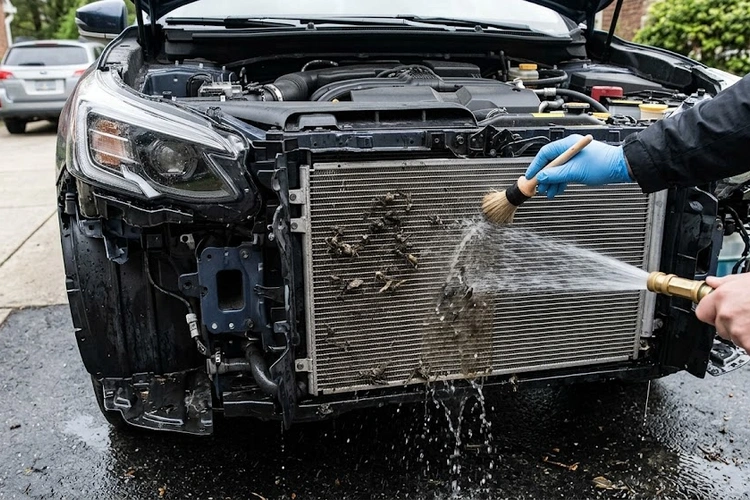
A surface clean addresses the outermost layer of debris and is appropriate for vehicles that receive routine maintenance on a regular schedule. This level of cleaning involves the following steps:
Surface cleaning is manageable in under 20 minutes and requires no specialized tools beyond a garden hose and a soft-bristle brush.
A deep clean is warranted when grime has worked its way into the fin grid or when the vehicle operates in harsh environments such as construction zones, coastal roads with salt-laden air, or areas with heavy seasonal insect activity. Signs that your situation calls for a deeper approach include:
If you have already noticed symptoms described in our guide on a car that overheats with the AC on, the radiator exterior is one of the first places you should inspect before moving on to other diagnoses.
| Tool / Supply | Surface Clean | Deep Clean | Notes |
|---|---|---|---|
| Garden hose with adjustable nozzle | Required | Required | Low to medium pressure only; avoid jet settings |
| Soft-bristle brush | Optional | Required | Natural or nylon bristles; never use wire bristles |
| Fin comb (straightening tool) | Not needed | Recommended | Restores bent fins to correct alignment |
| Compressed air canister or compressor | Optional | Required | Dislodges embedded debris from the rear side of the core |
| Radiator-safe degreaser | Not needed | Required | Diluted, pH-neutral formulas are safest on aluminum |
| Microfiber towels | Recommended | Required | Use for drying all accessible surfaces after rinsing |
| Plastic sheeting or bags | Optional | Recommended | Protects nearby alternator and fuse box from water |
Routine visual checks allow you to catch radiator problems early, before they escalate into overheating events or costly repairs to the cooling system. Developing this habit takes only a few minutes each time you check your engine oil.
The following process applies to most passenger vehicles and light trucks. You must work on a fully cool engine only — never attempt to rinse or clean a hot radiator, as thermal shock can damage aluminum components and cause serious steam burns.
Pro Tip: Always direct your water spray from the engine side outward toward the front of the vehicle — this orientation pushes embedded debris out through the fins rather than compressing it deeper into the core.
The same low-pressure, two-pass washing technique outlined in our two-bucket car wash method guide applies here — controlled pressure and clean rinse water consistently produce better results than aggressive scrubbing.
Once you are comfortable with the core cleaning process, several additional methods can improve thoroughness, extend the interval between required cleanings, and address problems that a basic rinse cannot fully resolve.
For most drivers, a surface cleaning every six months aligns well with standard seasonal maintenance intervals, while vehicles driven in dusty, coastal, or insect-heavy environments benefit from a cleaning every three months. A brief visual inspection each time you check your engine oil costs only a few seconds and helps you identify debris buildup before it has a measurable effect on cooling performance.
High-pressure washers are not recommended for radiator fins, as the concentrated stream bends or crushes the thin aluminum fins and permanently reduces the airflow through the core. A standard garden hose fitted with an adjustable nozzle set to a wide, low-pressure fan pattern provides sufficient cleaning force for most conditions and poses far less risk to the delicate fin geometry.
Bent fins narrow the air channels between them and reduce the rate at which heat transfers from the coolant to the passing airstream, which contributes to higher operating temperatures over time. Minor bends are correctable with a fin comb matched to your radiator's fins-per-inch specification, but widespread or severe fin damage may require professional service or radiator replacement if the airflow restriction is significant enough to cause persistent overheating.
Cleaning your radiator fins and exterior is one of the highest-return maintenance tasks available to any vehicle owner, and it requires only basic tools along with a modest commitment of time and attention. Start with a thorough visual inspection today, gather the supplies outlined in the table above, and work through the step-by-step process on your next free maintenance morning. A clean radiator supports every other component in your cooling system, and the effort you invest now meaningfully reduces the probability of an overheating event down the road.
 |
 |
 |
 |

About Diego Ramirez
Diego Ramirez is a maintenance and care specialist who has been wrenching on cars since he was sixteen. He focuses on fluid changes, preventive care routines, paint protection, and the small habits that turn a five-year-old car into a fifteen-year-old car.
Get some FREE car parts & gear.. Or check out the latest free automotive manuals and build guides here.
Disable your ad blocker to unlock all the hidden deals. Hit the button below 🚗
| | | |
