by Joshua Thomas
Knowing how to clean car seat belts is one of those overlooked tasks that makes a real difference to your car's interior. Seat belts accumulate sweat, skin oils, food residue, and dust over thousands of uses — yet most drivers never clean them. Dirty belts can stiffen, smell, and even degrade the webbing over time. Whether you're doing a full interior detail or just tackling a stubborn stain, this guide walks you through everything you need to restore your seat belts to like-new condition. For a broader interior refresh, see our guide on how to detail your car interior.
The good news: cleaning seat belts requires no special equipment and takes less than an hour per belt. The key is using the right cleaning solution and technique to lift grime without weakening the webbing fibers.
Contents
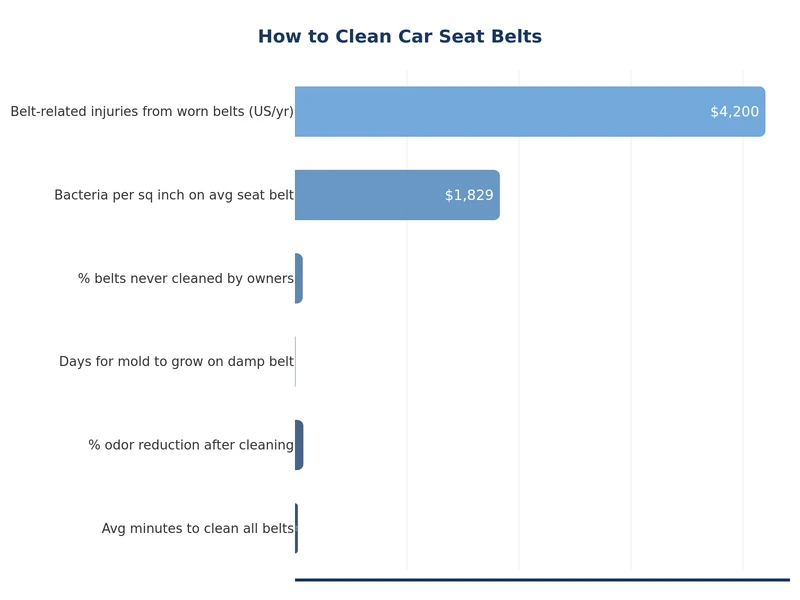
Seat belts are among the most touched surfaces in any vehicle. Every time you buckle up, you drag the webbing across clothing, hands, and skin. Over time this deposits oils, sweat, and particles deep into the polyester fibers. According to the National Highway Traffic Safety Administration (NHTSA), seat belts save tens of thousands of lives annually — making their structural integrity critical. Grime buildup and harsh cleaning agents can both degrade webbing, so proper maintenance matters beyond aesthetics.
Beyond safety, a musty belt is one of the most common sources of interior odors. If your cabin smells stale, cleaning the belts alongside the seats and carpets is essential. You'll notice the difference immediately.
Choosing the right cleaner is the most important decision in this process. Bleach and ammonia-based products will weaken polyester webbing fibers over time. Stick to these safe options:
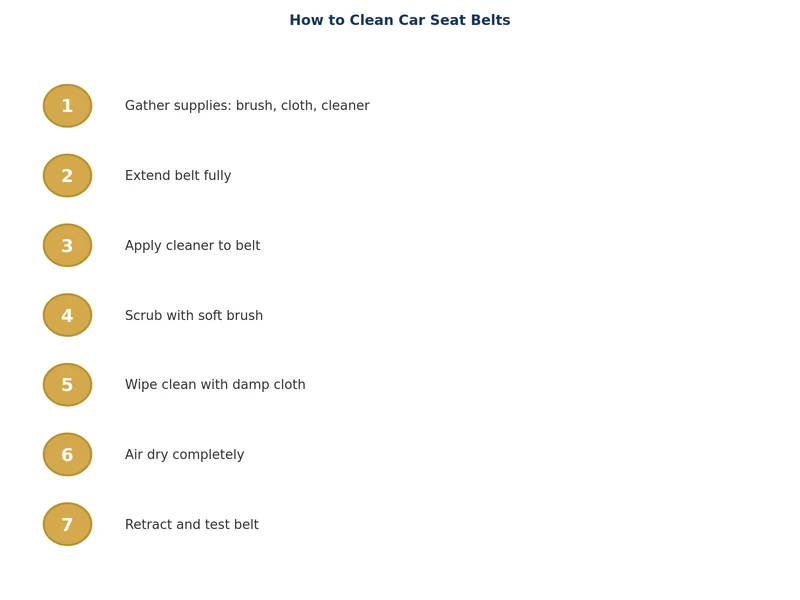
Pull the seat belt all the way out until it locks at full extension. Clip a binder clip or clothespin just above the retractor slot to prevent the belt from retracting as you work. Lay a towel across the seat to catch drips. This gives you full access to the webbing and keeps moisture away from the retractor mechanism — getting water into the retractor can cause it to malfunction.
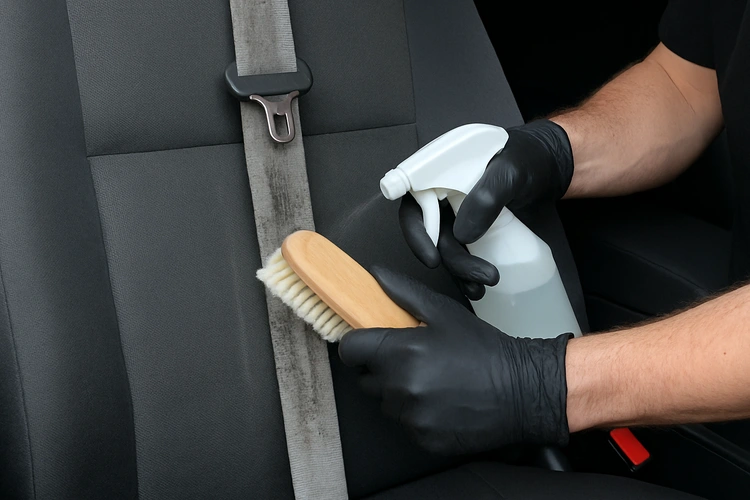
Mix a small amount of dish soap or upholstery cleaner with warm water in a spray bottle or bucket. Dampen — do not soak — a microfiber cloth with the solution, then press it against the webbing. Work from the top of the belt downward using the soft-bristle brush in short back-and-forth strokes. Apply light pressure; aggressive scrubbing can fray fibers. For stubborn stains, let the cleaner sit for 2–3 minutes before scrubbing again.
Use a clean, damp microfiber cloth to wipe away all soap residue. Soap left in the webbing attracts dirt faster and can cause skin irritation. Then use a dry cloth to blot excess moisture. Leave the belt fully extended and allow it to air dry completely — at least 2–3 hours — before releasing the clip. Never retract a damp belt; trapped moisture causes mildew and odors.
Different stains call for slightly different approaches. The table below summarizes the best methods for common seat belt stains.
| Stain Type | Recommended Cleaner | Technique | Notes |
|---|---|---|---|
| General grime / dust | Dish soap + warm water | Scrub with soft brush | Works on most belts |
| Sweat / body oils | Diluted laundry detergent | Let soak 3 min, then scrub | Rinse thoroughly |
| Food / drink spills | Upholstery foam cleaner | Apply foam, agitate, blot | Act quickly on fresh spills |
| Mold / mildew | White vinegar (diluted 1:1) | Apply, scrub, air dry fully | Repeat if needed; dry completely |
| Ink / dye transfer | Rubbing alcohol (spot treat) | Dab — do not rub | Test on small area first |
| Odor (no visible stain) | Baking soda paste | Apply, let sit 10 min, brush off | Follow with damp wipe |
If you're also tackling the seats themselves, our guide on how to clean vinyl car seats covers similar techniques for vinyl and fabric surfaces throughout the cabin.
Most drivers should clean their seat belts two to four times per year as part of a regular interior detailing routine. If you frequently eat in the car, have kids or pets, or live in a humid climate, increase this to every two to three months. A good rule: if the belt webbing looks gray instead of its original color, or if it smells musty when extended, it's overdue for a cleaning.
Clean seat belts immediately after any spill, vomiting incident, or if the belt has been soaked by rain or a drink. Prompt action prevents staining and mold growth. This also applies after bringing the car back from the beach or a camping trip — salt, sand, and dirt embed quickly into webbing fibers.
UV exposure is another factor. Prolonged sun exposure fades and weakens polyester over time. Parking in the shade or using a sunshade helps — our article on how to protect your car interior from UV damage explains the full range of preventive measures.
Seat belts are just one part of a clean, well-maintained cabin. If you're cleaning other interior surfaces, the techniques in our guide on how to clean a leather steering wheel apply a similar careful-but-thorough approach to another high-touch surface.
No. Bleach breaks down polyester webbing fibers over time, reducing the belt's tensile strength and potentially causing failure in a collision. Stick to mild dish soap, diluted laundry detergent, or an upholstery cleaner specifically formulated for fabric.
Make a paste of baking soda and a small amount of water, apply it to the extended webbing, and let it sit for 10 minutes before brushing it off and wiping with a damp cloth. Follow up with a normal soap-and-water cleaning and allow the belt to air dry completely before retracting.
No. Machine washing can stretch the webbing, damage the retractor mechanism, and reduce the belt's safety performance. Always hand-clean with a soft brush while the belt is still attached to the car, and air dry fully before retracting.
Allow at least 2–3 hours of air drying time with the belt fully extended. In humid conditions or if the belt was heavily saturated, give it up to 4–5 hours. Never retract a damp belt, as moisture trapped in the retractor can cause mildew and mechanical issues.
If the webbing is fraying, has visible mold that doesn't respond to cleaning, or has been contaminated with chemicals like battery acid, replacement is the safer option. A belt that has been in a moderate or severe collision should also be replaced regardless of its appearance.
For most drivers, two to four times per year is sufficient. If you frequently eat in your car, have young children or pets, or live in a humid climate, clean them every two to three months. Clean immediately after any liquid spill to prevent staining and odors.
 |
 |
 |
 |

About Joshua Thomas
Joshua Thomas just simply loves cars and willing to work on them whenever there's chance... sometimes for free.
He started CarCareTotal back in 2017 from the advices of total strangers who witnessed his amazing skills in car repairs here and there.
His goal with this creation is to help car owners better learn how to maintain and repair their cars; as such, the site would cover alot of areas: troubleshooting, product recommendations, tips & tricks.
Joshua received Bachelor of Science in Mechanical Engineering at San Diego State University.


Get some FREE car parts & gear.. Or check out the latest free automotive manuals and build guides here.
Disable your ad blocker to unlock all the hidden deals. Hit the button below 🚗
| | | |
