by Joshua Thomas
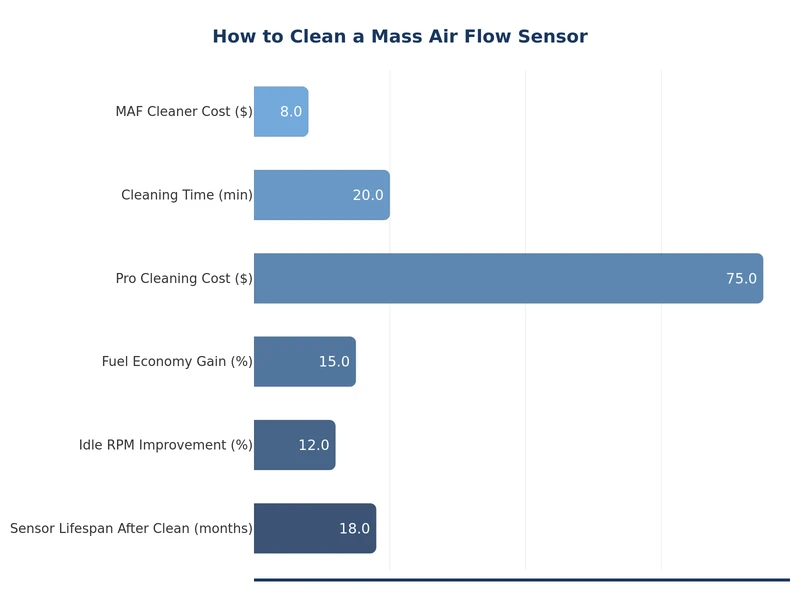
A dirty mass air flow sensor is one of the most overlooked causes of poor engine performance. If your car is running rough, getting worse fuel economy, or throwing a check engine light, learning how to clean a mass air flow sensor could save you a costly trip to the mechanic. This simple DIY job takes about 20 minutes and costs under $10. Keeping your MAF sensor clean is just as important as staying on top of your car maintenance schedule.
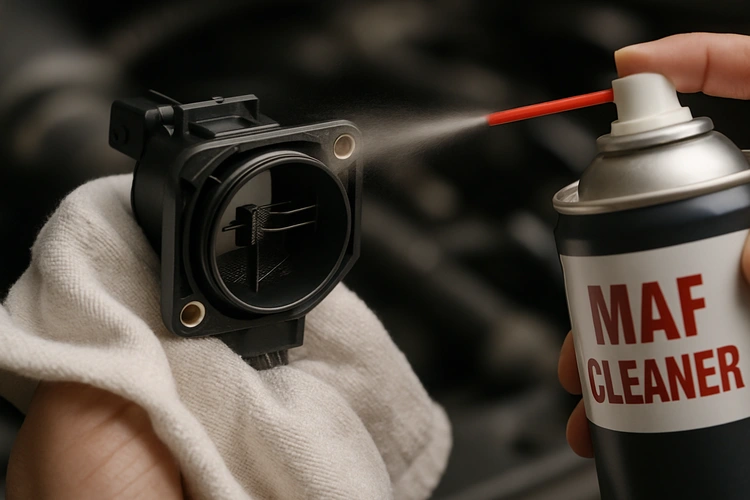
The mass air flow (MAF) sensor sits between the air filter and the throttle body. It measures the volume and density of air entering the engine so the ECU can calculate the right fuel mixture. Contamination from oil, dust, and debris causes incorrect readings, leading to a cascade of drivability problems. The good news: cleaning it is straightforward.
Contents
The mass air flow sensor is an electronic component in your engine's air intake system. Most modern vehicles use a hot-wire MAF sensor, which contains two ultra-thin platinum wire filaments heated by electrical current. As air flows past, it cools the wires. The ECU measures how much current is needed to maintain a set temperature, then translates that into an airflow reading.
The MAF sensor communicates directly with the engine control unit (ECU). When airflow data is accurate, the ECU delivers the right amount of fuel for clean combustion. When the sensor is contaminated, it sends false data — typically under-reporting airflow — causing the ECU to deliver too little or too much fuel. This disrupts the air-fuel ratio and affects every aspect of engine operation.
Recognizing the warning signs early prevents bigger problems. Common symptoms include:
Many of these symptoms overlap with other issues such as dirty spark plugs. If you haven't recently serviced your ignition system, it may be worth checking out how to replace spark plugs yourself after addressing the MAF sensor.
You don't need specialized mechanical skills or a garage full of tools. Here's what to gather before you start:
Total cost is typically $8–$12 for a can of MAF cleaner. The job is entirely DIY-friendly for any skill level.
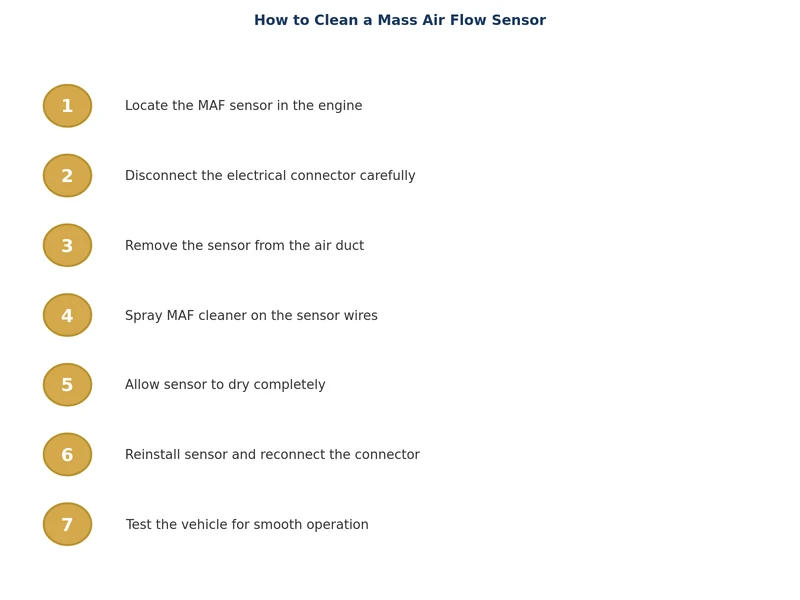
Follow these steps carefully. The MAF sensor's wire filaments are extremely delicate and can be permanently damaged by physical contact or the wrong cleaning product.
A few critical rules apply when cleaning a MAF sensor. Getting these wrong can destroy the sensor entirely.
Many DIYers wonder whether they can substitute another cleaning product. The answer is no — and the comparison below shows why it matters.
| Cleaner Type | Safe for MAF? | Leaves Residue? | Risk Level | Notes |
|---|---|---|---|---|
| Dedicated MAF Sensor Cleaner | Yes | No | None | Only recommended option |
| Electrical Contact Cleaner | Sometimes | Low | Low–Moderate | Check label; some formulas are compatible |
| Carburetor Cleaner | No | Yes | High | Damages filament coatings |
| Brake Cleaner | No | Varies | High | Too aggressive; can melt housing |
| WD-40 Multi-Use | No | Yes | High | Leaves oily film; makes contamination worse |
| Isopropyl Alcohol (90%+) | Marginal | No | Moderate | Not recommended; physical contact risk |
The cost difference between dedicated MAF cleaner and a substitute is negligible. Don't risk a $150–$400 sensor replacement to save $5.
Cleaning doesn't always fix the problem. If symptoms persist after a thorough cleaning and ECU reset, the sensor may be failing internally. Consider replacement if:
Replacement MAF sensors range from $50 for aftermarket units to $200+ for OEM parts depending on the vehicle. Installation follows the same removal steps above. If you're doing a broader maintenance refresh at the same time, pairing this job with flushing your car's cooling system makes efficient use of your time under the hood.
Regular attention to small components like the MAF sensor is what separates cars that last 200,000 miles from ones that don't. Clean your MAF sensor every 25,000–30,000 miles or whenever symptoms appear, and your engine will reward you with smoother performance and better fuel economy.
Clean the MAF sensor every 25,000 to 30,000 miles as part of routine maintenance, or sooner if you notice symptoms like rough idling, poor acceleration, or a check engine light. Vehicles with aftermarket oiled air filters (like K&N) may need more frequent cleaning since oil overspray accelerates contamination.
Yes, but you shouldn't for long. A dirty MAF sensor forces the ECU to estimate fuel delivery rather than calculate it accurately. Over time this causes incomplete combustion, which can foul spark plugs, damage the catalytic converter, and significantly reduce fuel economy. Address it as soon as symptoms appear.
Using carburetor cleaner, brake cleaner, or oily sprays on a MAF sensor can permanently damage the delicate hot-wire filaments or leave a residue that makes contamination worse. In either case, the sensor will give incorrect readings and likely need replacement. Always use a product labeled specifically for MAF sensors.
Cleaning the sensor resolves the underlying problem, but the check engine light stays on until the stored fault code is cleared. Use an OBD-II scanner to erase the code after reinstalling the sensor, or disconnect the negative battery terminal for 15 minutes to reset the ECU. The light will return if the root problem wasn't fully fixed.
Start with a cleaning. If the MAF-related symptoms disappear after cleaning and the check engine codes don't return within a week of normal driving, the sensor is fine. If problems persist or return quickly, test the sensor with an OBD-II scanner while the engine is running — out-of-range live data readings (grams per second too low or erratic) typically indicate a failing sensor that needs replacement.
Yes, cleaning a MAF sensor is one of the safest and easiest DIY maintenance jobs you can do. The main risks are physical damage from touching the filaments and electrical damage from reinstalling a wet sensor. Follow the steps carefully — don't touch the wires, use only dedicated MAF cleaner, and allow at least 30–60 minutes of drying time before reinstallation.
 |
 |
 |
 |

About Joshua Thomas
Joshua Thomas just simply loves cars and willing to work on them whenever there's chance... sometimes for free.
He started CarCareTotal back in 2017 from the advices of total strangers who witnessed his amazing skills in car repairs here and there.
His goal with this creation is to help car owners better learn how to maintain and repair their cars; as such, the site would cover alot of areas: troubleshooting, product recommendations, tips & tricks.
Joshua received Bachelor of Science in Mechanical Engineering at San Diego State University.


Get some FREE car parts & gear.. Or check out the latest free automotive manuals and build guides here.
Disable your ad blocker to unlock all the hidden deals. Hit the button below 🚗
| | | |
