by Joshua Thomas
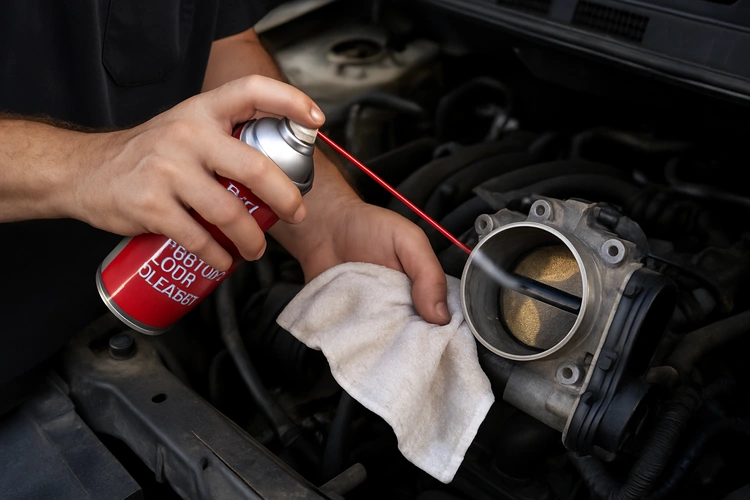
If your car has been idling rough, surging at low speeds, or hesitating on acceleration, a dirty throttle body is often to blame. Learning how to clean a throttle body without removing it is one of the most effective DIY maintenance tasks you can do in under 30 minutes. Carbon buildup and oil vapors coat the throttle plate over time, restricting airflow and throwing off the air-fuel mixture your engine needs. The good news: you do not need to pull the throttle body off the intake manifold to get it clean. With the right spray cleaner and a few simple tools, you can restore smooth throttle response from your driveway. For a broader look at underhood maintenance, see our guide on how to clean an engine bay.
Contents
The throttle body is a valve in your intake system that controls how much air enters the engine. When you press the accelerator, a butterfly plate inside the throttle body opens wider, letting more air in and allowing the engine to produce more power. On modern drive-by-wire vehicles, an electric motor controls that plate based on signals from the accelerator pedal sensor.
Over thousands of miles, crankcase vapors recirculated through the PCV system deposit oil residue inside the throttle bore. Combined with fine dust particles that pass through the air filter, this creates a sticky carbon layer on the throttle plate and bore walls. Even a 1–2 mm buildup is enough to disrupt the precise airflow calibration your engine management system expects.
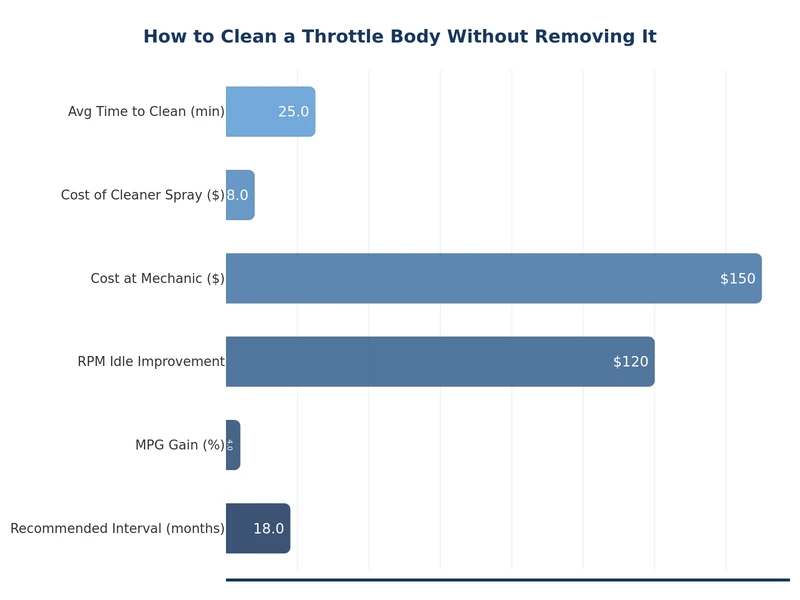
A contaminated throttle body shows up in several ways before it becomes a serious problem. Recognizing these symptoms early saves you from costly repairs down the road.
A heavily fouled throttle body can trigger a check engine light. Common OBD-II codes include P0506 (idle control system RPM low), P0507 (idle control system RPM high), and P2119 (throttle body range/performance). If you see these codes alongside drivability symptoms, clean the throttle body before replacing any sensors. Also check whether your mass air flow sensor needs attention at the same time, since both components share the same air path and are affected by the same contamination sources.
You do not need many tools for this job. The most important item is a cleaner specifically formulated for throttle bodies — do not substitute carburetor cleaner on vehicles with plastic or rubber components inside the bore, and never use brake cleaner.
| Item | Purpose | Notes |
|---|---|---|
| Throttle body cleaner spray | Dissolves carbon and oil deposits | CRC Throttle Body Cleaner or equivalent; safe for sensors |
| Clean lint-free shop rags | Wipe loosened deposits | Avoid paper towels — they leave fibers |
| Soft-bristle toothbrush or detailing brush | Agitate stubborn buildup | Do not use metal brushes — they scratch the bore |
| Flathead or Phillips screwdriver | Loosen intake hose clamp | Some clamps require a T20 or T25 Torx bit |
| Nitrile gloves | Protect hands from solvent | Cleaner is a strong degreaser |
| Safety glasses | Eye protection from spray | Required — cleaner can splash back |
| Small flashlight or phone torch | Illuminate the bore | Helps you see buildup depth |
Start with a cold or fully cooled engine. Hot intake components can flash-evaporate the cleaner before it dissolves deposits, and working near a hot exhaust manifold with solvent spray is a fire risk. Disconnect the negative battery terminal if your vehicle's service manual recommends it for intake work — on drive-by-wire systems, this also resets the throttle position adaptation and forces an idle relearn after you finish.
Locate the throttle body between the air filter box and the intake manifold. Loosen the hose clamp on the intake air duct where it connects to the throttle body inlet, then slide the duct off and set it aside. You now have clear access to the throttle bore without unbolting anything from the engine.
Put on your gloves and glasses. With the throttle plate in the closed (rest) position, spray a generous amount of throttle body cleaner around the inner edge of the bore where carbon accumulates most. Let it soak for 30–60 seconds to soften the deposits.
Use your soft brush to scrub around the bore walls and the face of the closed throttle plate. You will see dark brown or black residue lift off onto the brush. Wipe the loosened material away with a clean rag. Repeat this spray-scrub-wipe cycle two or three times until the rag comes away with minimal discoloration.
To clean the back face of the throttle plate, you need to open it manually. On drive-by-wire vehicles, gently push the plate open with a clean finger or the handle of your brush — never use a screwdriver, which can damage the plate edge or the bore coating. Hold the plate open, spray cleaner onto the back side, scrub, and wipe. Release the plate slowly so it does not snap shut on your fingers.
Finish with a light final spray to rinse out any remaining solvent and dissolved carbon. Allow two minutes for the cleaner to fully evaporate before reassembly.
Slide the intake air duct back onto the throttle body inlet and tighten the hose clamp firmly — a loose clamp creates an unmetered air leak that will cause erratic idle and may set the same codes you just cleared. Reconnect the battery if you disconnected it.
Start the engine and do not touch the accelerator for the first 60–90 seconds. On many vehicles, the ECU runs an idle relearn sequence automatically, cycling the throttle plate through its range to establish a new baseline. You may notice slightly rough idle or RPM fluctuations for a minute or two — this is normal. After the engine warms to operating temperature and the idle stabilizes, the job is complete. Take the car for a short drive with a few moderate accelerations to let the system fully adapt.
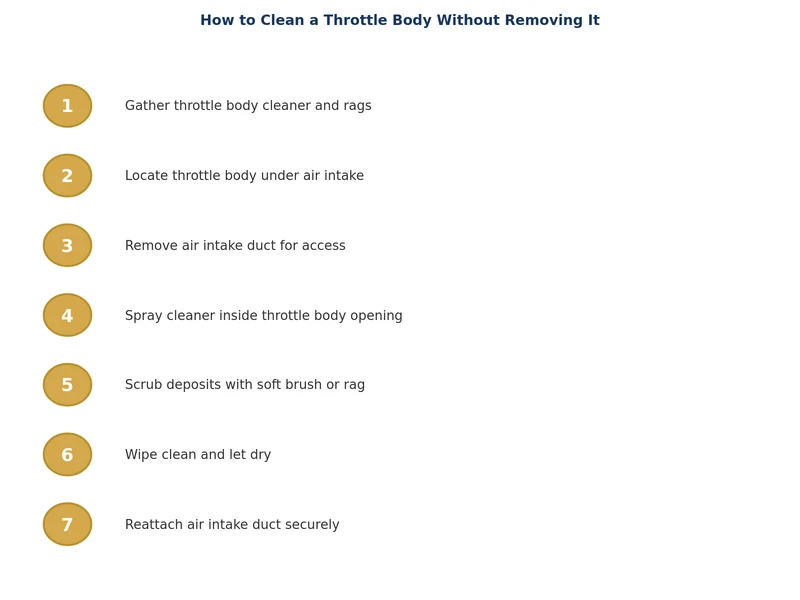
Most vehicles benefit from throttle body cleaning every 30,000 to 50,000 miles under normal driving conditions. City driving, short trips, and older PCV systems that vent more oil vapor into the intake will cause faster buildup and may require cleaning every 20,000 miles. If you have recently replaced your serpentine belt or performed other intake-area work, it is a good opportunity to inspect and clean the throttle body at the same time.
Vehicles that develop symptoms before the mileage interval should be cleaned promptly — driving with a heavily fouled throttle body stresses the idle control system and can prematurely wear the throttle position sensor. A 20-minute cleaning task is far cheaper than a sensor replacement or a diagnostic session at a shop.
Yes, on most vehicles you can clean the throttle body without disconnecting the battery. However, some drive-by-wire systems benefit from a battery reset because it clears old throttle adaptation data and forces a fresh idle relearn. Check your owner's manual — some manufacturers specifically recommend it.
Carburetor cleaner is more aggressive and can damage plastic housings, rubber O-rings, and oxygen sensor coatings on fuel-injected engines. Always use a product labeled for throttle body cleaning. It is formulated to dissolve carbon deposits without harming the sensitive components in modern intake systems.
Rough idle, hesitation on acceleration, surging RPMs, or stalling at stops are the most common signs. You can also remove the intake duct and shine a flashlight inside the bore — if you see a visible dark brown or black coating on the plate or bore walls, it is time to clean.
It can, if the light is caused by idle control codes like P0506 or P0507 that result from airflow restriction. Clear the code after cleaning and see if it returns. If the same code comes back, the throttle position sensor or idle air control system may need further diagnosis.
Yes, you can gently push it open by hand with a clean finger to access the back face. Never use tools to pry it open, as even minor scratches to the plate edge or bore can disrupt airflow. Release it slowly and let the return spring close it on its own.
Most vehicles complete the idle relearn within 5–15 minutes of running at operating temperature. Some Honda and Toyota models have a specific relearn procedure involving holding idle for a set time with accessories off. If the idle remains rough after 20 minutes of driving, consult your vehicle-specific forum or owner's manual for the correct relearn procedure.
 |
 |
 |
 |

About Joshua Thomas
Joshua Thomas just simply loves cars and willing to work on them whenever there's chance... sometimes for free.
He started CarCareTotal back in 2017 from the advices of total strangers who witnessed his amazing skills in car repairs here and there.
His goal with this creation is to help car owners better learn how to maintain and repair their cars; as such, the site would cover alot of areas: troubleshooting, product recommendations, tips & tricks.
Joshua received Bachelor of Science in Mechanical Engineering at San Diego State University.


Get some FREE car parts & gear.. Or check out the latest free automotive manuals and build guides here.
Disable your ad blocker to unlock all the hidden deals. Hit the button below 🚗
| | | |
