by Joshua Thomas
A neighbor once dropped off a 1966 Pontiac GTO with a simple request: "Just make it shine." Three minutes into a rotary buffer pass on the original factory lacquer, the swirl damage was permanent. That car needed a full respray. Knowing how to detail a classic car correctly is not optional — it is the difference between preserving automotive history and destroying it. If you are starting from scratch, bookmark our car detailing for beginners guide before selecting a single product.
Classic cars — generally defined as vehicles 20 or more years old — carry paint systems that react differently to modern compounds, polishes, and even wash soaps. Single-stage lacquers, original factory enamels, and period-correct resprays demand a completely different protocol than today's base-coat/clear-coat finishes. This guide covers every phase, from pre-wash assessment to final protection.
Contents
Modern vehicles use a two-stage system: a pigmented base coat covered by a UV-resistant clear coat. Classic cars — especially pre-1980s models — use single-stage systems where color and gloss live in the same layer. That one structural difference changes everything about how you approach the work.
The paint type on your classic dictates exactly which products are safe. According to Wikipedia's overview of automotive paint chemistry, pre-1980 vehicles were predominantly finished with nitrocellulose lacquer or alkyd enamel — both chemically distinct from modern refinish urethanes.
Decades of UV exposure leave classic paint oxidized — chalky, faded, and porous. That oxidation layer needs light correction before any protection product will bond properly. Skipping it and going straight to wax seals the oxidation in place. Three months later the finish looks worse than before you started.
If you suspect existing paint bubbling or delamination beneath the oxidation, stop and assess before proceeding. Detailing over compromised paint accelerates the damage rather than reversing it.
Not every classic is a detailing candidate. Some vehicles need bodywork, not product. Others are so well-preserved that aggressive correction would do more harm than a maintenance wash. Assess the condition honestly before committing to a full process.
Run through this checklist before touching the paint:
| Paint Condition | Recommended Action | Risk Level |
|---|---|---|
| Light oxidation, paint intact | Hand polish + carnauba wax | Low |
| Heavy oxidation, no structural damage | DA machine polish (low speed) + sealant | Medium |
| Cracks, chips, or paint lifting | Bodywork first — do not detail | High |
| Original lacquer, well-preserved | Maintenance wash + light wax only | Low |
| Unknown paint type | Test panel in hidden area for 48 hours first | Medium |
| Recent quality urethane respray | Full detail — treat as single-stage | Low |
Classic car detailing is not the place to learn machine polishing. If you are new to the process, start with hand methods only. Machine polishing on vintage paint requires a developed feel — understanding how a DA behaves on thin, aged single-stage paint comes from prior experience on modern cars, not from reading a guide.
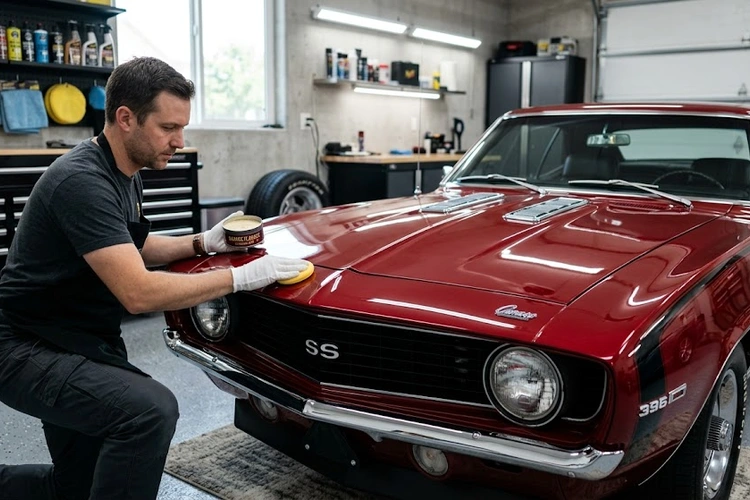
The safest starting point for a beginner is a proper two-bucket hand wash followed by carnauba wax applied by hand with a foam pad. Study the two-bucket car wash method before you start — contamination control is where most classic car paint damage actually begins, not during polishing.
Before applying any fresh protection, remove all old wax buildup from the paint surface. Layering new product over old degraded wax blocks adhesion and produces a finish that fails in weeks.
This is the complete workflow for a classic in sound paint condition. Follow it in sequence. Skipping decontamination steps traps abrasive material under your protection layer — the opposite of what you are trying to accomplish.
If your classic runs whitewall tires, treat them separately after the main wash with a dedicated rubber cleaner. Never apply a solvent-based tire dressing to whitewalls — it yellows them permanently.
Never skip the clay bar step on a classic — decades of bonded fallout embedded in that paint turn into a cutting medium the moment you start polishing, grinding defects deeper rather than correcting them.
Between full detail sessions, use a spray detailer after every drive to maintain paint gloss and prevent light contamination from bonding. The five minutes it takes after each outing replaces hours of correction work later.
Classic car detailing products are a separate purchasing category from modern car products. The overlap is smaller than most detailing guides acknowledge, and the wrong choice causes immediate, visible damage. Use only products from the categories below.
Before polishing any chrome trim or brightwork, address any grease contamination first. The technique for removing grease from car paint transfers directly to chrome — solvent-free degreasers and microfiber lifts apply in both cases.
Carnauba wax is the traditional choice and still the correct default for most original lacquer and enamel. It bonds without chemical reaction, adds depth, and buffs off cleanly. Some polymer sealants contain synthetic carrier solvents that soften lacquer over repeated applications — the damage accumulates over months and looks like random hazing rather than a detailing error.
Even experienced detailers make errors on vintage paint. The key is identifying the damage type accurately before attempting a correction — applying the wrong fix compounds the original mistake.
Swirl marks on single-stage paint appear holographic in direct sunlight — concentric arcs of micro-scratches left by circular pad motion. Common causes:
Fix: re-polish the affected area with a finishing compound and a soft foam pad, this time using straight back-and-forth passes by hand. On lacquer, hand correction is safer than returning with a machine. If the haze does not clear after two hand passes, the paint is too thin for additional correction. Apply wax and stop.
Old wax accumulates in trim lines, around emblems, along panel seams, and in door jamb recesses. It turns white and chalky and is often mistaken for primer showing through. Removal protocol:
If the buildup extends across full panel surfaces, follow the complete procedure from our wax buildup removal guide before applying any new protection product. Also address any grease contamination in the same pass — wax and grease often coexist in the same neglected areas on a classic that has not been properly detailed in years.
Yes, but only a dual-action (DA) polisher — never a rotary. Rotary polishers generate localized heat that burns through thin, aged single-stage paint in seconds. Set the DA to 3,500–4,500 OPM, start with a finishing pad, and increase aggression only if needed after evaluating the result on a test section.
Pure carnauba wax is the safest choice. Products like Collinite 845 or Pinnacle Souveran contain no synthetic solvent carriers that react with lacquer chemistry. Avoid polymer sealants unless you have confirmed the specific formula is lacquer-safe on a hidden test panel over 48 hours.
Once or twice per season covers a regularly driven classic. For garage queens or show cars, a maintenance wash plus quick-detailer wipe-down after each outing prevents contamination from bonding between full detail cycles and dramatically reduces the correction work needed each season.
No. Brush-contact washes introduce swirl marks in single-stage paint immediately. Even brushless tunnel washes use recycled water with suspended particulates that scratch vintage finishes. Hand wash only, every time, without exception.
Stop the machine immediately. Assess whether the damage is surface haze — correctable with a hand-applied finishing polish — or a cut-through to primer, which requires touch-up paint or a partial respray. Do not attempt to buff out a cut-through; additional polishing thins the surrounding paint and widens the damaged area.
 |
 |
 |
 |

About Joshua Thomas
Joshua Thomas just simply loves cars and willing to work on them whenever there's chance... sometimes for free.
He started CarCareTotal back in 2017 from the advices of total strangers who witnessed his amazing skills in car repairs here and there.
His goal with this creation is to help car owners better learn how to maintain and repair their cars; as such, the site would cover alot of areas: troubleshooting, product recommendations, tips & tricks.
Joshua received Bachelor of Science in Mechanical Engineering at San Diego State University.
Get some FREE car parts & gear.. Or check out the latest free automotive manuals and build guides here.
Disable your ad blocker to unlock all the hidden deals. Hit the button below 🚗
| | | |
