by Joshua Thomas
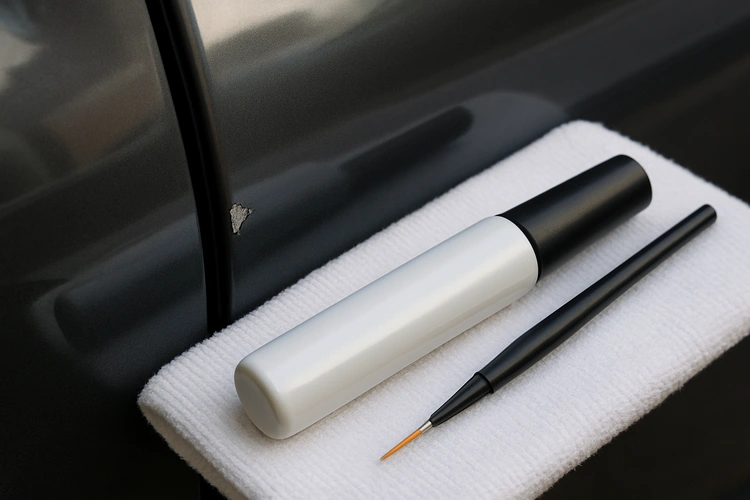
Paint chips are one of the most frustrating things a car owner deals with. A stray piece of gravel, a careless door in a parking lot, or road debris at highway speeds — and suddenly there's bare metal exposed on your hood or door. Knowing how to fix paint chips on your car before rust sets in can save you hundreds of dollars and preserve your vehicle's resale value. This guide walks you through every method, from quick touch-up repairs to more involved multi-step fixes, so you can choose the right approach for the damage you're dealing with. Before you start any paint work, make sure the surface is clean — read our guide on how to wash a car properly to prep the area correctly.
Contents
A paint chip might look like a cosmetic issue, but it exposes bare metal to moisture and oxygen — the two ingredients for rust. Once rust starts, it spreads beneath the surrounding paint, creating a much larger repair job. Even a chip the size of a pencil eraser can turn into a rust bubble several inches wide within a single wet season.
Beyond rust, paint chips lower resale value. Buyers and dealers notice chipped paint immediately, and it signals poor maintenance even if the car runs perfectly. Fixing chips when they're small keeps repair costs low and protects your investment. According to the National Highway Traffic Safety Administration, maintaining your vehicle's structural and surface integrity is part of responsible vehicle ownership.
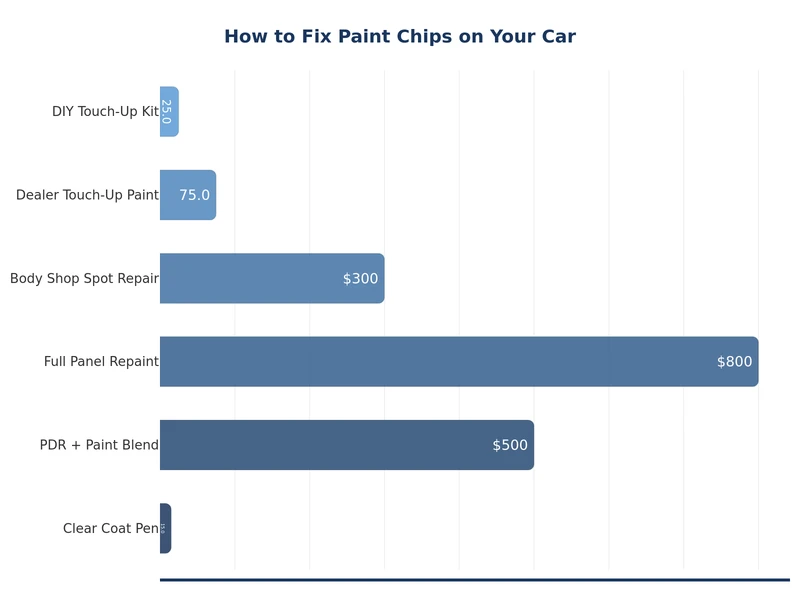
Before reaching for any product, take a close look at the chip in good lighting. The repair method depends entirely on the size and depth of the damage.
Paint is made up of several layers: primer, base coat (color), and clear coat. A chip can stop at any layer:
Look for orange or brown discoloration inside or around the chip. Press the area gently — if the metal feels soft or flaky, rust has already started. Surface rust (just discoloration) can be treated at home. Deep or spreading rust may need professional attention or panel replacement.
| Item | Purpose | Approx. Cost |
|---|---|---|
| Touch-up paint pen (color-matched) | Fill chip with correct color | $10–$20 |
| Clear coat pen or bottle | Seal and protect the repair | $8–$15 |
| Automotive primer | Needed for chips down to bare metal | $8–$12 |
| Rust converter / rust remover | Neutralize rust before painting | $10–$18 |
| Isopropyl alcohol (70%+) | Clean and degrease the area | $3–$6 |
| 2000–3000 grit wet/dry sandpaper | Level the repair after paint dries | $5–$10 |
| Polishing compound | Blend the repair into surrounding paint | $10–$20 |
| Microfiber cloths | Cleaning and buffing | $5–$10 |
| Painter's tape | Protect surrounding paint | $4–$8 |
Color-matched touch-up paint is the most critical item. Find your car's paint code on the driver's door jamb sticker or in your owner's manual, then order from the manufacturer or an automotive paint supplier.
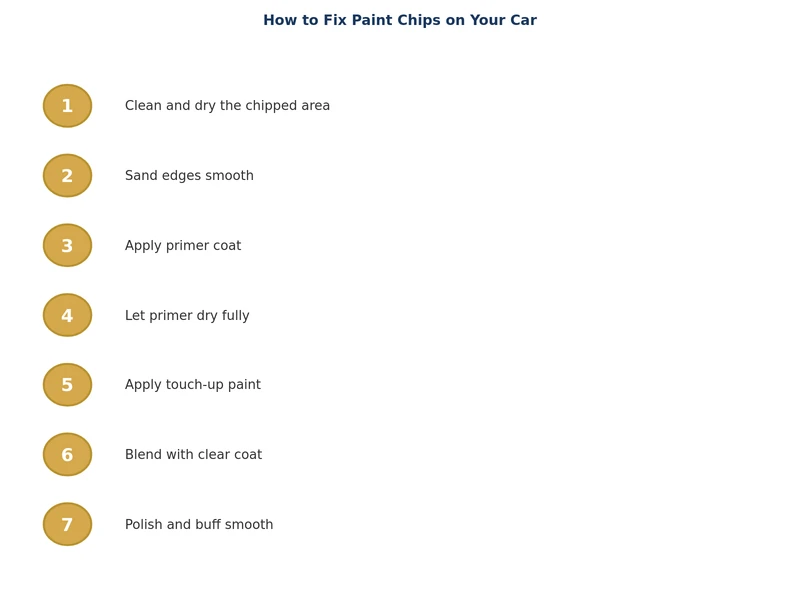
This process covers chips that go down to bare metal — the most thorough repair. Skip steps that don't apply to shallower chips (for example, if there's no rust and primer is still visible, skip the rust treatment step).
Wash the entire panel with car shampoo to remove dirt and road grime. Then wipe the specific chip area with isopropyl alcohol on a microfiber cloth. This removes wax, grease, and any residue that would prevent paint adhesion. Let it dry fully — at least five minutes. Apply painter's tape around the chip to protect surrounding paint if you're working on a larger damaged area.
If rust is present, apply a rust converter product directly to the chip with a fine brush or cotton swab. Rust converters chemically neutralize iron oxide and create a stable base for primer. Follow the product's dwell time (usually 10–20 minutes), then wipe away any excess. For surface rust only, a light scrub with a toothpick or fine-grit sandpaper to remove loose rust flakes is sufficient before treating.
For chips down to bare metal, apply a thin coat of primer first using a fine brush or the applicator in the bottle. Let it dry completely (20–30 minutes minimum, or per product instructions). Sand lightly with 2000-grit sandpaper if the primer layer is raised, then wipe clean.
Next, apply the color-matched base coat in thin layers. Multiple thin coats — typically two to three — produce a better result than one thick coat, which can run or crack. Allow each coat to dry before adding the next. Fill the chip slightly above flush to allow for sanding later.
For a detailed walkthrough of the full touch-up process including tips on brush technique and avoiding common mistakes, see our complete guide on how to apply touch-up paint to your car.
Once the color coat is dry, apply clear coat in the same thin-layer method. Clear coat seals the color, adds gloss, and provides UV protection. Let the clear coat cure for at least 24 hours before the next step.
Once the repair is fully cured, wet-sand the area with 2000-grit sandpaper using light circular motions to level any high spots. Move to 3000-grit for a finer finish. Keep the sandpaper and surface wet throughout. Wipe clean with a microfiber cloth.
Apply a polishing compound to blend the repaired area into the surrounding paint. Work in small circular motions with a clean microfiber cloth. This removes the haze from sanding and brings the repaired section close to the original gloss level. Finish with a coat of car wax to protect the repair. For guidance on achieving a smooth finish, our guide on how to polish a car by hand covers the technique in detail.
Not all chips require the same approach. Here's how the main repair options stack up:
| Method | Best For | Skill Level | Result Quality | Typical Cost |
|---|---|---|---|---|
| Touch-up paint pen | Small chips, quick fixes | Beginner | Good (visible up close) | $10–$30 DIY |
| Brush-in-bottle touch-up | Small to medium chips | Beginner–Intermediate | Better control than pen | $15–$40 DIY |
| Full DIY repair (primer + color + clear) | Deep chips to bare metal | Intermediate | Very good with care | $30–$80 DIY |
| Mobile detailer / paint repair service | Multiple chips, larger areas | Professional | Excellent | $100–$300 |
| Body shop respray | Extensive damage, rust panels | Professional | Factory finish | $400–$1,500+ |
For most car owners, the full DIY repair with primer, color coat, and clear coat delivers the best balance of cost and quality for chips that reach bare metal. Touch-up pens are fine for tiny chips in low-visibility areas where perfection isn't required.
The best repair is the one you never have to do. Several protection strategies significantly reduce chip risk:
Clear urethane film applied to high-impact areas (hood, front bumper, mirrors, rocker panels) absorbs stone impacts without damaging the paint underneath. It's self-healing against minor scratches with heat. This is the most effective physical protection available. For a full comparison of protection options, see our article on ceramic coating vs paint protection film.
A ceramic coating adds a hard, hydrophobic layer over your paint that resists minor abrasion and makes surfaces easier to clean. It won't stop a direct stone impact the way PPF does, but it provides excellent day-to-day protection against light scratches and environmental damage.
Most road debris and stone chips come from gravel kicked up by vehicles ahead of you. Increasing your following distance on highways and gravel roads drastically reduces chip frequency. Avoid following large trucks on loose-surface roads.
A good coat of wax won't stop a stone, but it protects the clear coat from UV degradation and minor abrasion. A degraded clear coat makes chips more likely and harder to repair. Wax every three to four months as a minimum maintenance step.
Clean the area with isopropyl alcohol, treat any rust with a rust converter, then apply primer (if bare metal is exposed), followed by color-matched touch-up paint in thin layers, and finish with clear coat. Once cured, sand lightly and polish to blend the repair into surrounding paint.
Yes, for small chips it works well. Touch-up paint won't be invisible under close inspection, but it stops rust from forming and greatly improves the appearance. The key is using a correctly color-matched paint and applying it in thin coats rather than one thick layer.
Most touch-up paints need 20–30 minutes between coats in normal conditions (65–75°F, low humidity). Check your specific product's instructions. Rushing coats causes runs and poor adhesion. Allow at least 24 hours before wet-sanding and polishing.
Yes, if the rust is surface-level. Apply a rust converter product to neutralize the rust chemically, let it dry, then proceed with primer and touch-up paint. If the rust has spread under the surrounding paint or the metal has become soft or pitted, professional repair or panel replacement may be needed.
Yes, always apply clear coat over touch-up color. Clear coat seals the repair, protects the color from UV fading, and provides the gloss that makes the repaired area match the surrounding paint. Skipping clear coat leaves the color coat vulnerable and the repair will look flat and dull.
A mobile paint repair specialist typically charges $100–$300 for multiple chips depending on severity and location. A body shop respray of a single panel runs $400–$1,500 or more. DIY repair with a touch-up kit costs $30–$80 and produces good results for small to medium chips.
 |
 |
 |
 |

About Joshua Thomas
Joshua Thomas just simply loves cars and willing to work on them whenever there's chance... sometimes for free.
He started CarCareTotal back in 2017 from the advices of total strangers who witnessed his amazing skills in car repairs here and there.
His goal with this creation is to help car owners better learn how to maintain and repair their cars; as such, the site would cover alot of areas: troubleshooting, product recommendations, tips & tricks.
Joshua received Bachelor of Science in Mechanical Engineering at San Diego State University.


Get some FREE car parts & gear.. Or check out the latest free automotive manuals and build guides here.
Disable your ad blocker to unlock all the hidden deals. Hit the button below 🚗
| | | |
