by Diego Ramirez
Roughly 65 percent of drivers who first notice a squeaky car door hinge wait until the noise becomes embarrassing before doing anything about it — and by then, the hinge pin (the steel rod that holds the two hinge halves together) may already be scored from metal-on-metal contact. Learning how to fix a squeaky car door hinge yourself takes less than an hour, costs next to nothing in parts, and can spare you that cringe-worthy creak every single time you get in or out. For a broader look at keeping your vehicle in shape, browse our tips for maintaining your vehicle.
Squeaky hinges look minor on the surface. They aren't. Left alone, the friction that causes the noise gradually eats into the hinge pin and knuckles (the interlocking loops that wrap around the pin), eventually turning a squeak into a grind. The fix is usually simple: clean the hinge, apply the right lubricant, and work the door back and forth. But using the wrong product — or skipping the cleaning step — can make things worse, not better.
Contents
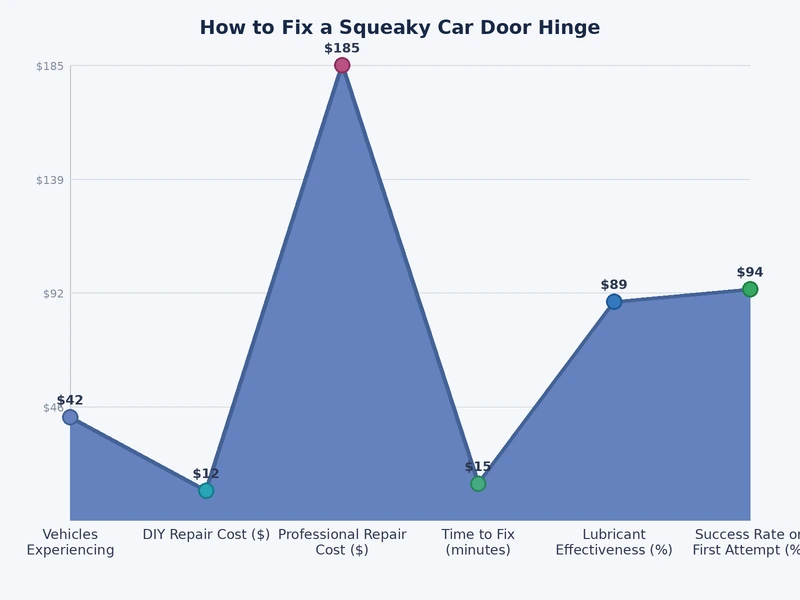
Car door hinges are simple in design but take a surprising amount of punishment. Every time you open or close the door, the hinge pin rotates inside the knuckles under the full weight of the door — anywhere from 40 to 80 pounds on a typical sedan or SUV. Over months and years, the factory lubricant dries out, moisture works its way in, and bare metal begins rubbing against bare metal. That friction is your squeak.
Pay attention to when the squeak happens. A noise that only appears on the first open after the car sits overnight often points to moisture condensing on the pin. A noise that happens every single time, no matter the temperature, usually means the lubrication is completely gone.
A squeak is annoying. A grind is different. If the noise has shifted from a high-pitched squeal to a rough, grating sound — similar to what some drivers notice with a grinding noise when reversing — the hinge pin may be scoring the inner surface of the knuckle. At that point, lubrication alone likely won't be enough. You should also check door alignment: if the door doesn't close flush with the body gap on all sides, a worn or bent hinge is the probable cause.
Pro tip: Run your fingertip along the inside of the hinge gap while a helper slowly opens the door. If you feel roughness or catch your nail on pitting, the hinge pin has started to wear and replacement is coming sooner than you think.
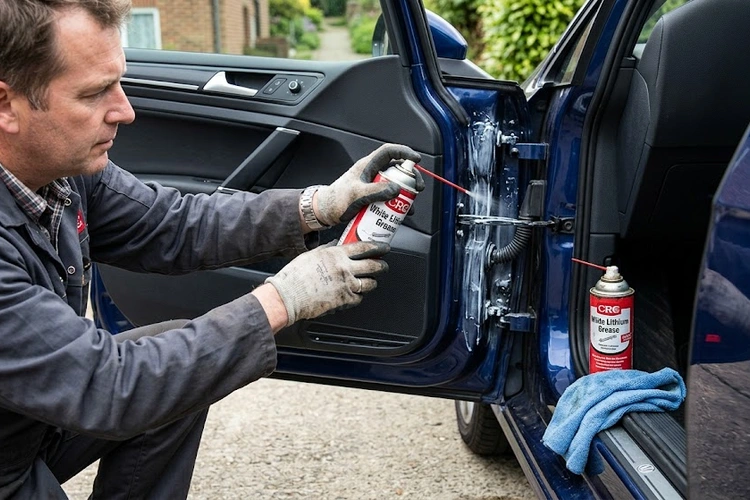
Choosing the wrong lubricant is one of the most common mistakes in this repair. Some products are slippery in the short term but disappear in weeks. Others work beautifully but drip onto paintwork if over-applied. Here's an honest breakdown of your main options.
| Lubricant | Best For | Longevity | Messiness | Approx. Cost |
|---|---|---|---|---|
| White lithium grease | Metal-on-metal, heavy-duty hinges | High (12–24 months) | Medium | $6–$10 |
| Silicone spray | Light squeak, hinges near rubber seals | Medium (6–12 months) | Low | $7–$12 |
| 3-in-1 oil | Quick fix, lighter-duty hinges | Low (3–6 months) | Low | $4–$7 |
| WD-40 (original formula) | Loosening rust before lubrication | Very low (a few weeks) | Low | $5–$9 |
| Petroleum jelly (Vaseline) | Emergency fix only | Very low | High | $3–$5 |
White lithium grease is the go-to for most experienced mechanics. It clings to metal surfaces, handles temperature extremes well, and doesn't fling off when the hinge moves. Silicone spray is a clean runner-up — especially if the hinge is close to rubber weather stripping, since petroleum-based products can degrade rubber over time. The right product for the specific joint matters more than price, the same way fluid choice matters when diagnosing power steering pump noise: cutting corners on the product usually means redoing the job sooner.
WD-40 is a water displacer and penetrating oil — not a long-term lubricant. Use it as a prep step to loosen rust and flush out grit, but always follow it with a proper grease or silicone spray. If you use WD-40 alone, expect the squeak to return within a month. Also avoid heavy moly or chassis greases — they're too thick for a small hinge, attract dirt aggressively, and create a grimy buildup fast. If any product drips onto nearby exhaust components or hot metal, you may catch an odor not unlike a car smelling like burning plastic — a clear signal you've applied too much.
Warning: More grease is not better here — a thin, even coat applied inside the joint is all you need. Excess drips onto paint, mixes with road dust, and actually accelerates the next round of wear.
This is how experienced DIYers approach the repair. The process works on most passenger cars and light trucks. Some older trucks and body-on-frame SUVs have zerk fittings (small grease nipples) on the hinge that require a grease gun instead of a spray can, but the diagnostic steps are identical.
This clean-diagnose-lubricate-test sequence is the same disciplined approach that applies to many automotive noise problems. Owners who've worked through driveshaft vibration symptoms or front differential noise already know that skipping the diagnosis step almost always sends you chasing the wrong fix.
Fixing a squeaky door hinge is satisfying. Keeping it silent long-term takes less effort than the initial repair — but it does take consistency. Think of hinge maintenance the same way you think about checking your tire pressure: a small, regular habit that prevents a larger, more expensive problem.
If you're already on a regular maintenance schedule, adding hinge lubrication takes three minutes per car. Pairing it with a close look at the paint around the hinge mounting area — touching up any chips before bare metal is exposed — protects against rust before it starts. Small prevention habits compound over a vehicle's lifetime.
Most squeaky hinges respond to cleaning and lubrication within minutes. But a few situations call for replacement rather than repair:
Replacement hinges for most common vehicles cost $15 to $60 per hinge and bolt directly onto existing holes. A shop can swap both hinges on one door in about an hour. If you're comfortable with basic hand tools, it's a manageable DIY job — though removing the pin on older vehicles sometimes requires a pin punch and light hammer work, more finesse than force.
No — WD-40 is a penetrating oil and water displacer, not a long-term lubricant. It's excellent for loosening rust and flushing grit out of the hinge joint as a prep step, but the thin film it leaves evaporates in weeks. Always follow up with white lithium grease or silicone spray once the hinge is clean for a fix that actually lasts.
Once a year works well for most drivers in moderate climates. If you live somewhere with heavy road salt, high humidity, or park outdoors year-round, every six months is smarter. The easiest approach is to add it to your annual detailing routine so it doesn't get forgotten.
Cold temperatures cause metal to contract slightly, which tightens the clearance between the hinge pin and knuckle. When the lubricant is nearly gone, that tighter metal-to-metal contact creates more friction in low temperatures. White lithium grease handles cold better than thin oils and usually eliminates cold-weather squeaks after a single application.
A quick return usually points to one of three things: the wrong lubricant was used (such as WD-40 alone), the hinge wasn't cleaned before lubricating so grit mixed into the grease and broke down the film quickly, or the hinge pin itself is worn past the point where lubrication helps. Re-clean the hinge thoroughly, apply the correct product, and if the noise returns again within a month, inspect the pin closely and consider replacement.
Knowing how to fix a squeaky car door hinge is a small skill with an outsized payoff — you use your doors dozens of times a day, and silencing that creak takes less than an hour and under ten dollars in supplies. Grab a can of white lithium grease, clean the hinge properly before you apply it, and schedule a reapplication once a year to keep the noise from coming back. For more practical, hands-on guidance like this, explore our full vehicle maintenance guide — it covers the kind of straightforward upkeep that keeps repair bills low and your car running reliably for years.
 |
 |
 |
 |

About Diego Ramirez
Diego Ramirez is a maintenance and care specialist who has been wrenching on cars since he was sixteen. He focuses on fluid changes, preventive care routines, paint protection, and the small habits that turn a five-year-old car into a fifteen-year-old car.
Get some FREE car parts & gear.. Or check out the latest free automotive manuals and build guides here.
Disable your ad blocker to unlock all the hidden deals. Hit the button below 🚗
| | | |
