by Joshua Thomas
A parked car on a hot day can reach interior temperatures of 130°F or higher in under 30 minutes. Knowing how to keep your car cool in summer protects your passengers, preserves your interior, and reduces wear on critical components. Heat accelerates dashboard cracking, fades upholstery, strains batteries, and increases tire blowout risk. The good news: a handful of consistent habits and inexpensive accessories make a real difference.
Whether you park outdoors all day or occasionally leave your car in direct sun, these strategies apply to any vehicle. Start by pairing this guide with our overview of how to protect your car's interior from UV damage for a complete summer defense plan.
Contents
Summer sun doesn't just make your car uncomfortable — it actively degrades it. According to the National Highway Traffic Safety Administration (NHTSA), heat-related tire failures spike during summer months, and interior temperatures in parked vehicles can exceed safe limits for children, pets, and heat-sensitive electronics within minutes.
Dashboard plastics become brittle and crack under sustained UV and heat exposure. Leather and vinyl seats dry out and split. Electronics — including phone mounts, GPS units, and infotainment screens — suffer accelerated degradation. If your dashboard is already showing stress, see our guide on how to fix a cracked car dashboard before summer heat makes it worse.
Heat reduces cooling system efficiency, stresses hose connections, and accelerates battery discharge. A car already low on coolant or running a clogged cabin air filter will strain noticeably more during peak summer temperatures. Addressing these issues before the hottest weeks is far cheaper than mid-season repairs.
Before you start the engine, a few quick habits can drop cabin temperature by 20–30°F and reduce the load on your AC system.
Open all four doors for 30–60 seconds before getting in. This flushes trapped hot air far faster than running the AC with doors closed. If your vehicle supports remote start, activate the AC 5–10 minutes before departure for the best results. Even rolling down one window and fanning the door on the opposite side forces hot air out rapidly.
Choosing your parking spot wisely is one of the cheapest and most effective ways to keep your car cool in summer without purchasing a single accessory.
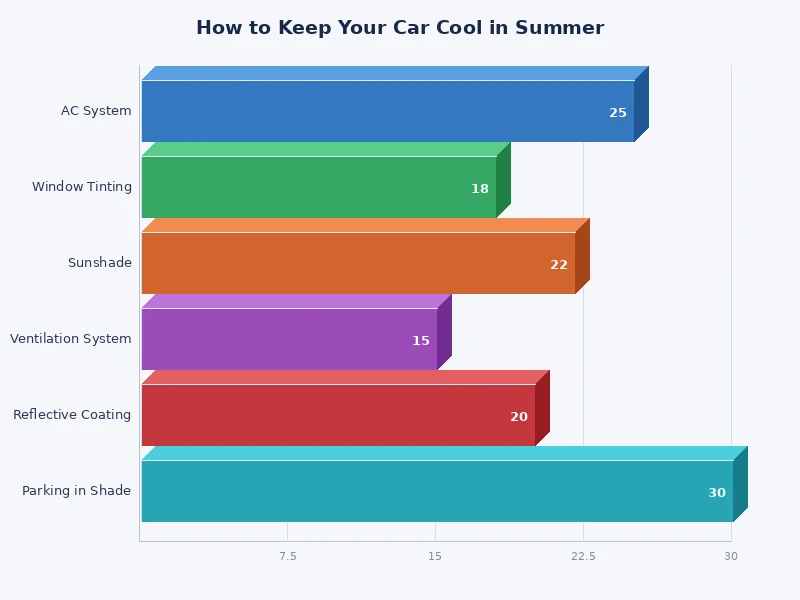
Glass surfaces are the primary entry point for solar heat. Blocking or filtering sunlight before it enters the cabin is more effective than trying to cool air that has already been superheated.
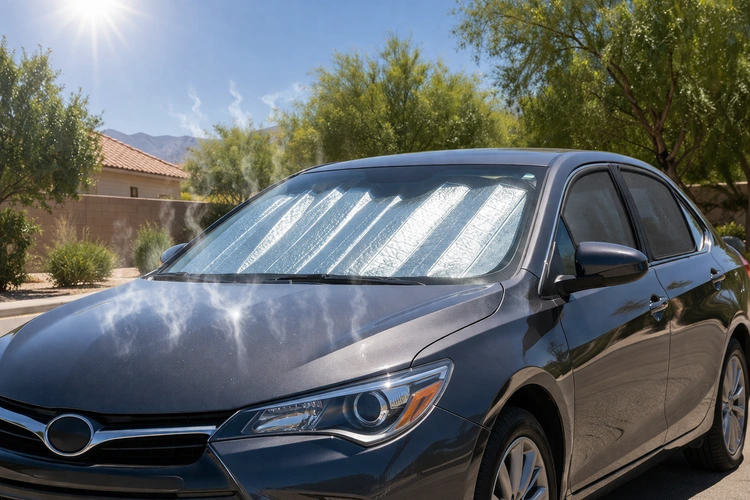
A reflective sunshade placed in the windshield can reduce dashboard temperature by up to 40°F. Accordion-style shades are convenient for daily use; custom-fit shades offer better coverage for your specific vehicle. Rear window shades are a worthwhile addition for back-seat passengers and child seats.
Professional window tint blocks 35–65% of solar heat entering through side and rear glass. Ceramic tints are the most effective option, rejecting infrared heat without significantly darkening the glass. Check your state's legal tint limits before installation — most states permit up to 35% VLT on rear side windows, with stricter rules for front windows.
Steering wheels left in direct sun can reach 160°F — too hot to grip comfortably. A steering wheel cover or a sunshade that folds to cover the wheel solves this instantly. Light-colored or reflective seat covers reduce heat absorption, especially on leather seats that retain temperature long after parking.
Your car's ability to keep the engine — and cabin — cool depends entirely on a well-maintained cooling system. Neglecting it in summer leads to overheating, reduced AC efficiency, and costly repairs. Use the table below as a quick reference for summer service intervals.
| Component | Check Frequency | Replace / Service Interval | Summer Priority |
|---|---|---|---|
| Engine Coolant | Monthly | Every 30,000–50,000 miles or per manual | High |
| Cabin Air Filter | Every 6 months | Annually or every 15,000 miles | High |
| AC Refrigerant | If cooling feels weak | Recharge as needed (typically every 2–3 years) | High |
| Radiator Hoses | Every oil change | Replace if cracked, soft, or swollen | Medium |
| Battery | Every 6 months | Every 3–5 years | Medium |
| Tire Pressure | Monthly | Adjust for temperature changes (+1 PSI per 10°F) | High |
Check coolant level monthly during summer. Use the correct coolant-to-distilled-water ratio — typically 50/50 — for optimal heat transfer. Flush and replace coolant per your owner's manual. Inspect radiator hoses for cracks and excessive softness; heat accelerates rubber degradation and a burst hose will strand you quickly.
Have your AC system inspected if airflow feels weak or the output isn't cold enough. A cabin air filter clogged with dust and pollen significantly reduces airflow across the evaporator — replace it annually. Low refrigerant is the most common cause of poor AC performance. Recharging is inexpensive and dramatically improves comfort on hot days.
Heat makes your interior more vulnerable to stains and damage. Spills that sit in a hot car set faster and penetrate deeper into fabric. Clean them promptly — our guide on how to remove food stains from car upholstery covers the most effective methods for common summer messes.
Apply a UV protectant to leather seats every 4–6 weeks during summer. For fabric seats, a fabric guard spray repels moisture and makes spill cleanup easier. Light-colored interiors reflect more heat; dark interiors absorb it. Seat covers in breathable fabric help regardless of original seat color.
Wipe down hard plastics monthly with a UV-protectant interior detailer. Avoid silicone-heavy dressings that leave a greasy film — they attract dust and can make surfaces tacky. A clean, protected dashboard is far less likely to crack under summer heat stress.
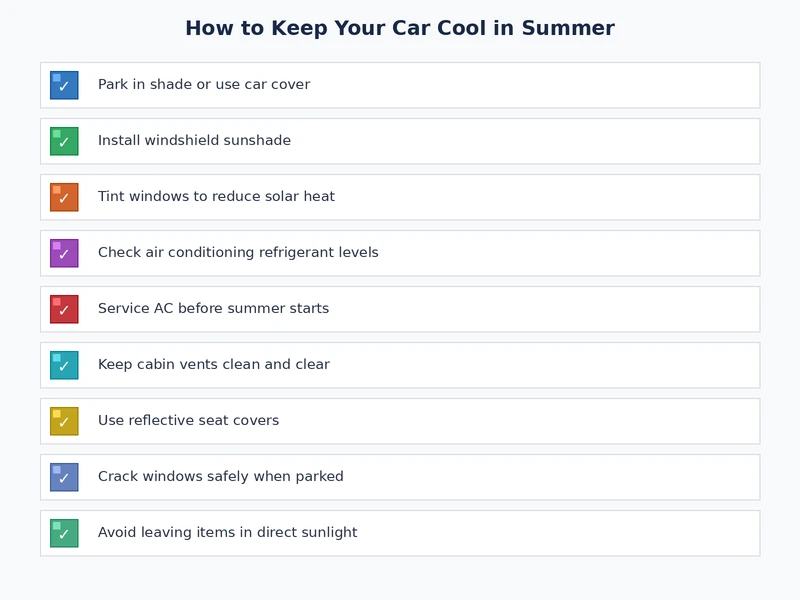
Staying ahead of summer heat doesn't require expensive equipment — consistency is what works. Use a sunshade every time you park, crack windows when safe, maintain your coolant level, replace the cabin air filter annually, and park in shade whenever possible. These small habits compound into a dramatically cooler cabin, longer-lasting interior, and a more reliable cooling system when temperatures peak.
For additional weather protection strategies, our guide on how to protect your car from hail damage covers another serious seasonal hazard many drivers face alongside heat.
On a day with an outside temperature of 90°F, a closed car interior can reach 130–140°F within 30 minutes. Darker interiors and vehicles parked in direct sunlight heat up faster. Even mild days in the 70s can push interior temps above 100°F when windows are fully closed.
Yes — cracking windows 1–2 inches allows hot air to escape through convection, reducing interior temperature buildup significantly compared to a fully sealed car. It's not as effective as shade or a sunshade, but it's a meaningful difference when no other options are available.
Check coolant level at least once a month during summer. If you notice the level dropping consistently between checks, inspect for leaks in hoses, the radiator cap, or the reservoir. Running low on coolant in high heat is one of the most common causes of engine overheating.
Custom-fit sunshades made from reflective foil-backed material provide the best coverage and temperature reduction — up to 40°F on the dashboard. Accordion-style universal shades are a practical, affordable alternative for everyday use. Look for shades that cover the full windshield width for maximum protection.
Yes. Sustained cabin temperatures above 113°F can damage lithium-ion batteries in phones and key fobs, degrade GPS units, and shorten the lifespan of factory infotainment screens. Avoid leaving electronics in a parked car during summer. If you must, store them in the glove box away from direct sunlight.
Open all four doors for 60 seconds to flush hot air, then start the car with the AC on maximum fan and lowest temperature. Roll down rear windows while pulling away to exhaust residual hot air. Within 3–5 minutes of driving, the cabin temperature will drop significantly.
 |
 |
 |
 |

About Joshua Thomas
Joshua Thomas just simply loves cars and willing to work on them whenever there's chance... sometimes for free.
He started CarCareTotal back in 2017 from the advices of total strangers who witnessed his amazing skills in car repairs here and there.
His goal with this creation is to help car owners better learn how to maintain and repair their cars; as such, the site would cover alot of areas: troubleshooting, product recommendations, tips & tricks.
Joshua received Bachelor of Science in Mechanical Engineering at San Diego State University.


Get some FREE car parts & gear.. Or check out the latest free automotive manuals and build guides here.
Disable your ad blocker to unlock all the hidden deals. Hit the button below 🚗
| | | |
