by Joshua Thomas
Hailstorms can appear with almost no warning and leave your vehicle covered in dents, cracked glass, and ruined paint. Knowing how to protect your car from hail damage before a storm arrives is far less costly than paying for repairs afterward. A single severe hailstorm can cause thousands of dollars in body damage, and comprehensive insurance doesn't always cover the full bill. Whether you park outdoors regularly or simply want a plan for severe weather, the strategies in this guide will help you keep your car safe. We cover everything from emergency covers to permanent shelter solutions and walk you through what to do if damage does occur.
Hail damage often compounds other paint issues. If your car already has surface imperfections, reviewing how to paint correct a car after storm season can restore the finish before oxidation sets in.
Contents
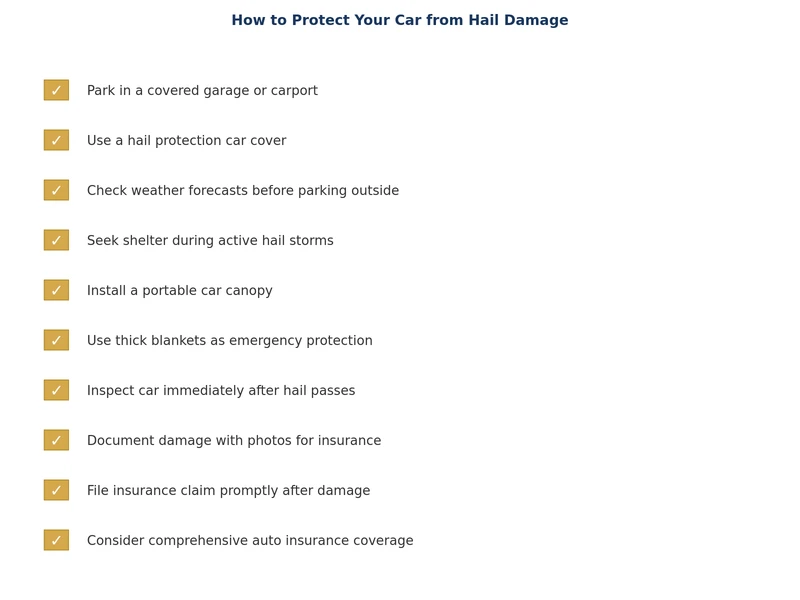
The most effective hail protection is the kind you put in place before a storm forms. Reactive protection — scrambling for a cover while hail is already falling — is far less effective than proactive preparation.
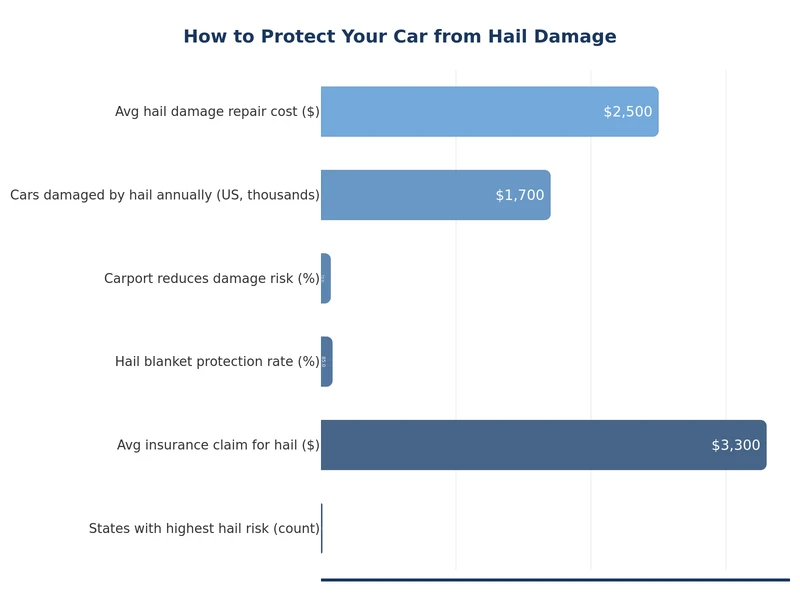
According to NOAA, the United States experiences roughly 3,000 to 5,000 hailstorms annually, with the highest concentration in "Hail Alley" — Colorado, Nebraska, and Wyoming. Nationwide, hail causes over $1 billion in vehicle damage every year.
Sign up for your local National Weather Service alerts and enable push notifications on a dedicated radar app. Many apps now offer "hyperlocal" alerts that ping you when a severe thunderstorm watch — the precursor to hail — is issued within a customizable radius of your location. Set the radius to at least 30 miles to give yourself enough lead time to act.
When a warning is issued, your fastest option is always a structure. Identify covered parking near your home and workplace in advance — parking garages, covered lots, even a neighbor's carport. If you commute, note which areas along your route have overhead shelter. A few minutes of planning now can save you thousands later.
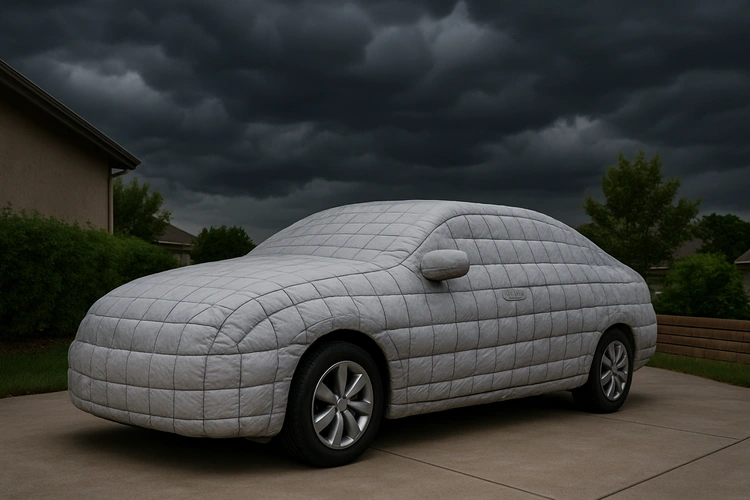
When a garage isn't an option, a quality car cover is the next best line of defense. Not every cover is created equal — fabric type, thickness, and fastening system all determine how well a cover performs under a real hailstorm.
Purpose-built hail covers use multi-layer construction — typically an outer polyester shell, a thick EVA foam middle layer (5–25mm depending on grade), and a soft inner lining. The foam absorbs impact energy and prevents stones from transferring their force directly to the body panels. Look for covers rated for at least 1-inch hailstones, which is the threshold at which paint damage typically begins. Features to prioritize:
Top-rated covers run $80–$250 depending on vehicle size and foam thickness. That's a small investment against a repair bill that routinely exceeds $2,500.
In a pinch, thick moving blankets secured with bungee cords offer genuine impact absorption. They're bulky and awkward, but if hail is 20 minutes away and you have no other option, layering two or three blankets over the roof, hood, and trunk will reduce denting. Avoid thin beach towels or standard car covers — they provide no meaningful cushion and may trap debris against the paint.
If you live in a hail-prone region, a one-time investment in permanent shelter pays for itself quickly. Even a modest structure eliminates hail risk entirely for vehicles stored inside.
An attached or detached garage is the gold standard. If a full garage isn't feasible, a steel carport — starting around $1,500 installed — provides complete overhead coverage. Many homeowners' associations permit freestanding carports; check local codes before purchasing. A carport also reduces UV exposure, which matters for preserving interior and exterior finish year-round. If you're preparing your vehicle for extended off-season storage, pairing shelter with the steps in our guide on how to store a car for winter gives you comprehensive protection.
Paint Protection Film (PPF), also called clear bra, is a urethane film applied directly to body panels. A full-body PPF installation won't stop severe hail from denting metal, but it does protect against paint chips, surface abrasions, and light impacts from smaller stones. It's most valuable as a year-round shield against road debris combined with hail protection, rather than as a standalone hail solution. Full-vehicle PPF installation typically costs $3,000–$7,000 at a professional shop.
Use this table to evaluate which protection layer makes sense for your situation and budget.
| Method | Typical Cost | Protection Level | Best For | Limitations |
|---|---|---|---|---|
| Covered parking (garage) | $0–$50/mo rental | Complete | Daily drivers, high-hail regions | Availability, cost in urban areas |
| Steel carport | $1,500–$4,000 installed | Complete | Homeowners without garage | HOA restrictions, permit requirements |
| Hail-rated car cover (foam) | $80–$250 | High | Vehicles parked outdoors regularly | Must be applied before storm; wind can shift it |
| Moving blankets (DIY) | $20–$40 | Moderate | Emergency backup | Awkward, requires bungee cords, limited wind resistance |
| Paint Protection Film | $3,000–$7,000 | Low–moderate (paint only) | New cars, paint preservation | Does not prevent dents from large hail |
| Comprehensive insurance | Varies (deductible $250–$1,000) | Financial recovery only | All owners as a safety net | Does not prevent damage; premiums may rise after claim |
Even with precautions in place, storms can catch you off guard. Knowing how to evaluate damage quickly lets you make smart decisions about repairs versus insurance claims.
For hail dents where the paint is still intact, Paintless Dent Repair (PDR) is the preferred method. Technicians use specialized rods and picks to massage dents out from behind the panel without cutting, filling, or repainting. PDR is significantly cheaper than traditional bodywork — typical hail jobs run $300–$1,500 depending on dent count and severity — and it preserves the factory paint finish, which protects resale value. Most PDR shops offer free assessments; get at least two quotes before committing.
If hail has cracked or pitted your windshield, address it before it spreads. Small chips are often repairable at low cost — see our guide on how to repair a windshield chip yourself to determine whether it's a DIY fix or needs professional replacement.
Comprehensive auto insurance covers hail damage, but filing a claim has trade-offs. If the repair cost is close to your deductible, paying out of pocket is often smarter — claims can raise your premium at renewal. For extensive damage, however, a claim is the right call. Document everything before touching the car: photograph each dent, crack, and impact point in good lighting. Note the date, time, and location of the storm. Your insurer may send an adjuster or direct you to an approved repair network. Keep all receipts if you arrange repairs independently.
A purpose-built hail-rated car cover with EVA foam padding is your best option. These covers absorb impact energy and can prevent denting from stones up to 1–1.5 inches in diameter. Keep one in your trunk so you can deploy it quickly when a storm warning is issued.
Standard car covers offer minimal hail protection. Most are designed to block dust, UV rays, and light rain — not impact energy. Only covers with thick foam padding layers are rated for hail. Using a thin cover during a hailstorm can actually trap debris against the paint and cause additional scratches.
Yes, in most cases. When hail dents the metal but doesn't crack or chip the paint, Paintless Dent Repair (PDR) can restore the panel to factory condition without any repainting. PDR is faster, cheaper, and preserves the original finish better than traditional bodywork.
Costs vary widely based on the number of dents, their size, and which panels are affected. Minor hail damage repaired via PDR can run $300–$800. Moderate to severe damage with multiple panels and windshield replacement can reach $2,500–$5,000 or more before insurance.
Yes. Comprehensive auto insurance covers weather-related damage including hail, as long as you carry that coverage. You'll need to pay your deductible first. If the repair cost is only slightly above your deductible, consider paying out of pocket to avoid a potential premium increase at renewal.
PPF protects against paint chips, scratches, and very small hailstones, but it will not prevent denting from larger stones. It's most valuable as a year-round paint preservation layer rather than a primary hail defense. For hail-prone areas, PPF works best combined with a hail cover or covered parking.
 |
 |
 |
 |

About Joshua Thomas
Joshua Thomas just simply loves cars and willing to work on them whenever there's chance... sometimes for free.
He started CarCareTotal back in 2017 from the advices of total strangers who witnessed his amazing skills in car repairs here and there.
His goal with this creation is to help car owners better learn how to maintain and repair their cars; as such, the site would cover alot of areas: troubleshooting, product recommendations, tips & tricks.
Joshua received Bachelor of Science in Mechanical Engineering at San Diego State University.


Get some FREE car parts & gear.. Or check out the latest free automotive manuals and build guides here.
Disable your ad blocker to unlock all the hidden deals. Hit the button below 🚗
| | | |
