by Joshua Thomas
Your car's finish takes a beating every single day — UV rays, road grit, bird droppings, tree sap, and harsh weather all attack the clear coat from the moment you drive out of the lot. Knowing how to protect car paint is the most cost-effective thing you can do to preserve your vehicle's appearance and resale value. The good news is that you don't need a professional detailer on speed dial. These 10 methods range from simple habits to professional-grade solutions, and most of them are completely DIY-friendly.
Contents
Car paint is made up of three layers: primer, color base coat, and clear coat. The clear coat — typically 40–60 microns thick — is the only barrier between your color and everything the road throws at it. Once that layer breaks down, oxidation and fading follow fast.
According to Wikipedia's overview of automotive paint, modern clear coats are designed for durability, but they're still vulnerable to UV radiation, chemical contaminants, and physical abrasion without regular maintenance.
Protecting your paint isn't just cosmetic. Bare metal exposed by chips and scratches rusts, structural integrity suffers, and resale value drops. A clean, well-maintained finish can add thousands to trade-in value.
Dirt and grit sitting on your paint act like sandpaper every time something brushes against them. Washing every one to two weeks removes contaminants before they etch or scratch the clear coat. Use a pH-neutral car shampoo — dish soap strips wax and dries out trim. The two-bucket wash method keeps abrasive particles out of your wash mitt and dramatically reduces swirl marks.
Even a clean-looking car can have industrial fallout, rail dust, and overspray bonded to the clear coat. A clay bar physically lifts these particles out, leaving a smooth surface that holds wax or coatings far better. Clay barring once or twice a year is ideal prep before applying any protective product.
Wax creates a sacrificial barrier between your paint and the environment. Carnauba wax gives a deep, warm gloss and lasts 4–8 weeks. Synthetic wax lasts up to three months and is easier to buff off. Waxing by hand takes about an hour for a full car and is one of the most affordable protection methods available.
Paint sealants are synthetic polymers that bond more firmly to the clear coat than natural wax. They last 6–12 months and resist UV and chemical contaminants better than carnauba. A sealant is an excellent everyday-driver option — longer lasting than wax, less complex than ceramic coating.
Ceramic coatings chemically bond to the clear coat and create a hard, hydrophobic surface that repels water, dirt, and UV damage. Quality coatings last two to five years with proper upkeep. The trade-off: they require thorough surface prep and more careful application. For a full breakdown, read our guide on ceramic coating vs paint protection film before deciding.
PPF is a thick, clear thermoplastic urethane film applied to high-impact zones — hood, front bumper, fenders, door edges. It absorbs stone chips and road debris that would crack or chip paint. Premium PPF is self-healing: minor surface scratches disappear with heat. It's the most expensive option but offers unmatched physical protection in one solution.
Small chips expose bare metal to moisture and oxygen — the recipe for rust. Don't wait. Touch-up paint is an affordable DIY fix for minor chips, while a professional handles larger damaged areas. The longer a chip sits unaddressed, the more expensive the repair becomes.
UV exposure is one of the primary causes of paint oxidation and fading. Parking in a garage or shaded spot dramatically reduces UV damage over time. Avoid parking under trees when possible — sap and bird droppings accumulate quickly and can etch paint within hours if left untreated.
A breathable, UV-resistant car cover protects against sun, bird droppings, tree sap, pollen, and light impacts when parked. Make sure it fits correctly — a loose cover flapping in the wind can scratch paint. Look for soft inner linings and UV-blocking outer fabric.
No product lasts forever. The most effective way to protect car paint long-term is a consistent cycle of washing, claying, waxing, and inspecting. Skipping maintenance for months and then attempting a full restoration is harder, more expensive, and less effective than regular upkeep.
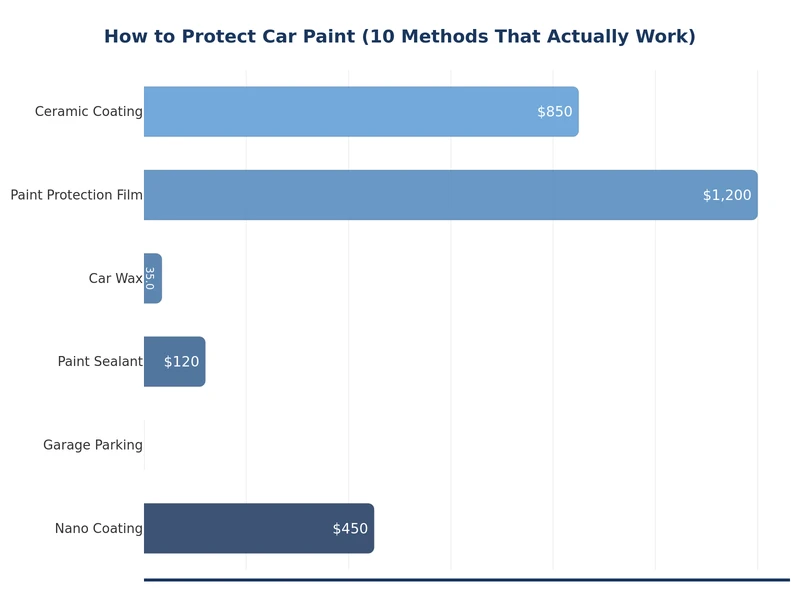
| Method | Durability | DIY Friendly | Avg. Cost | Best For |
|---|---|---|---|---|
| Car Wash (regular) | Ongoing | Yes | $0–$20 | All vehicles |
| Clay Bar | N/A (prep step) | Yes | $10–$30 | Pre-wax/coating prep |
| Carnauba Wax | 4–8 weeks | Yes | $10–$40 | Show cars, weekend drivers |
| Synthetic Sealant | 6–12 months | Yes | $20–$60 | Daily drivers |
| Ceramic Coating | 2–5 years | Moderate | $50–$150 DIY / $500–$2,000 pro | Long-term protection |
| Paint Protection Film | 5–10 years | No (pro install) | $500–$5,000+ | High-impact zones, new cars |
| Car Cover | Per use | Yes | $30–$150 | Outdoor/long-term storage |
Some hazards cause permanent damage if left too long:
Consistency is the difference between paint that looks great for a decade and paint that fades and chips within a few years. Here's a straightforward schedule that works for most drivers:
Small investments of time made regularly always beat expensive corrections after the fact. Start with proper washing, add wax, and scale up to ceramic or PPF if you want long-term peace of mind.
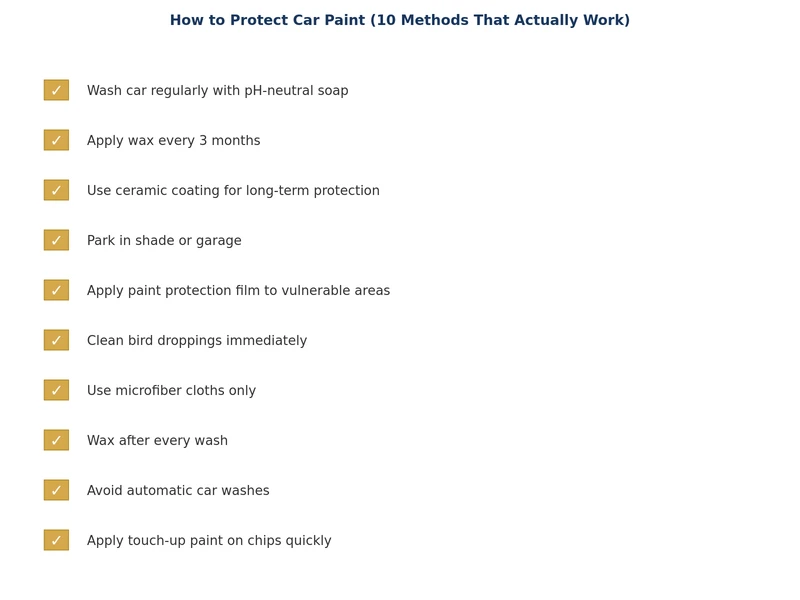
For carnauba wax, reapply every 4–8 weeks. Synthetic wax and paint sealants last 3–6 months. Ceramic coatings need only an annual maintenance wash. The best schedule depends on how much time your car spends outdoors and in harsh conditions.
Yes, for most drivers a ceramic coating pays for itself over two to five years by reducing the need for frequent waxing and protecting against UV fade, water spots, and minor contaminants. DIY kits make it accessible even on a budget.
Regular hand washing combined with a basic synthetic wax applied every three months is the most affordable approach. This alone provides meaningful UV and contamination protection for a few dollars per month.
Full-car PPF installation is very difficult without professional tools and experience. Pre-cut kits for specific areas like door cups and door edges are DIY-friendly, but for hoods, bumpers, and full panels, professional installation gives far better results and longevity.
Brush-style automatic washes can introduce fine scratches and swirl marks over time. Touchless washes are safer, but hand washing with a microfiber mitt and proper technique remains the best option for preserving paint quality long-term.
Signs include dull, hazy patches that won't polish out, a chalky or peeling surface, and areas where color looks faded even after washing. Early-stage clear coat issues can sometimes be addressed with polishing, but severe peeling typically requires professional respray.
 |
 |
 |
 |

About Joshua Thomas
Joshua Thomas just simply loves cars and willing to work on them whenever there's chance... sometimes for free.
He started CarCareTotal back in 2017 from the advices of total strangers who witnessed his amazing skills in car repairs here and there.
His goal with this creation is to help car owners better learn how to maintain and repair their cars; as such, the site would cover alot of areas: troubleshooting, product recommendations, tips & tricks.
Joshua received Bachelor of Science in Mechanical Engineering at San Diego State University.


Get some FREE car parts & gear.. Or check out the latest free automotive manuals and build guides here.
Disable your ad blocker to unlock all the hidden deals. Hit the button below 🚗
| | | |
