by Joshua Thomas
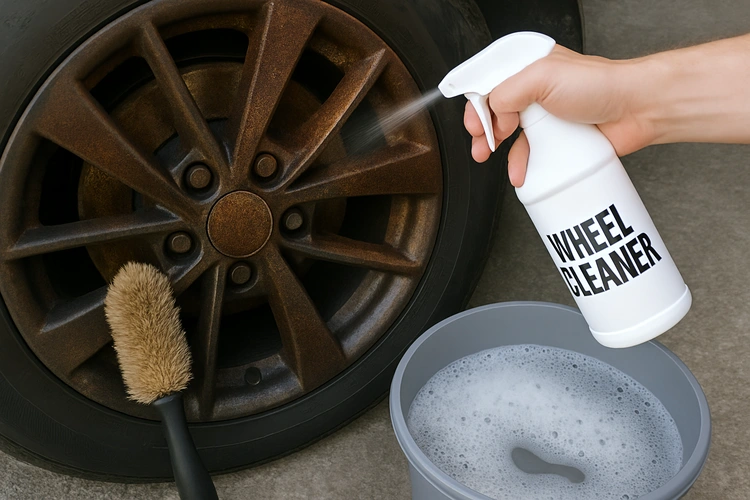
Knowing how to remove brake dust from wheels is one of the most practical car care skills you can have. That dark, gritty film coating your wheels is not just an eyesore — it is a mixture of carbon fibers, metal particles, and adhesive residue shed by your brake pads and rotors every time you stop. Left untreated, it bonds to wheel surfaces and becomes progressively harder to remove. This guide walks you through the safest, most effective methods to clean brake dust and keep your wheels looking sharp. For a full wheel detailing walkthrough, see our guide on how to clean alloy wheels.
Contents
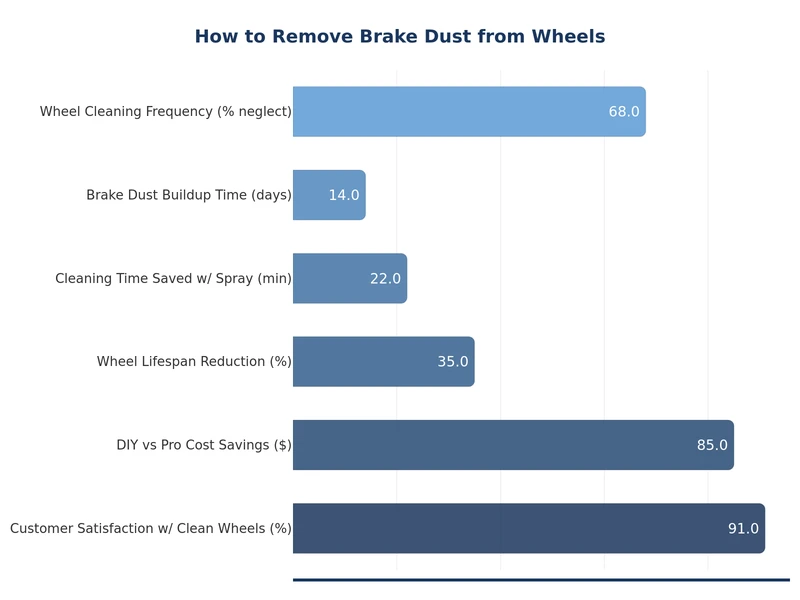
Every time you apply the brakes, friction between the pad and rotor generates heat and sheds microscopic particles. These particles — a mix of iron, carbon, and adhesive compounds — fly outward and land on your wheel surface. Heat from the rotor causes them to embed into the finish, which is why brake dust feels almost welded on after a few weeks.
According to Wikipedia's entry on brake dust, the composition varies by pad material, but iron particles are common to nearly all formulations. Those iron particles oxidize on contact with moisture, creating a rust-like bond with painted or coated wheel surfaces.
Not all brake pads produce the same amount of dust. Organic pads produce the least debris but wear faster. Semi-metallic pads are the most common and produce moderate to heavy dust. Ceramic pads generate lighter, finer dust that is easier to clean but more visible on bright wheels.
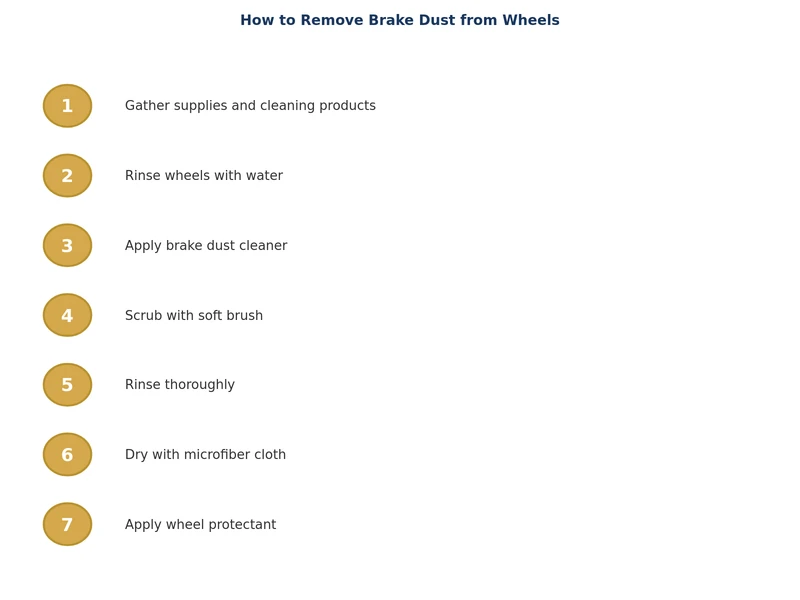
Before you start, gather everything. Stopping mid-clean to hunt for a brush lets the cleaner dry on the wheel and can cause spotting.
There are three main categories: pH-neutral all-purpose cleaners (safe for all finishes), iron-dissolving fallout removers (turn purple on contact with iron particles — highly effective), and acid-based cleaners (aggressive, avoid on coated or chrome wheels). For most drivers, an iron-dissolving cleaner is the best balance of effectiveness and safety.
Always clean wheels when they are cool to the touch. Hot wheels cause cleaner to evaporate before it can work, and rapid temperature changes can warp rotors or crack ceramic coatings. Park the car in shade and wait at least 30 minutes after driving before you begin.
This process pairs well with a full exterior wash. For tips on washing the rest of the car without causing swirl marks, see how to wash a car properly using the two-bucket method.
| Product Type | Cleaning Power | Safe for Coated Wheels | Dwell Time | Best For |
|---|---|---|---|---|
| Iron Dissolving Spray | High | Yes | 2–3 min | Regular maintenance, heavy dust |
| pH-Neutral Wheel Wash | Medium | Yes | 1–2 min | Light dust, weekly washes |
| All-Purpose Cleaner (diluted) | Medium | Yes (diluted) | 1–2 min | Budget-conscious cleaning |
| Acid-Based Cleaner | Very High | No | 30–60 sec | Bare aluminum, severe buildup only |
| Waterless Wheel Spray | Low | Yes | Immediate | Light dust between washes |
The easiest way to keep wheels clean is to slow down how fast dust accumulates in the first place.
After cleaning, applying a dedicated wheel sealant dramatically reduces how aggressively brake dust sticks. Spray sealants are the easiest option — apply to a dry wheel, buff lightly, done. For longer-lasting protection, a ceramic coating applied to your wheels after a deep clean can repel dust for a year or more. If you already coat your paint, it makes sense to coat your wheels at the same time. Our DIY ceramic coating guide covers the full application process for both paint and wheels.
If dust has been left for months, standard cleaners may not be enough. Baked-on brake dust requires a more aggressive approach.
Iron remover soak: Apply a quality iron dissolving product and extend the dwell time to 5 minutes. Keep the surface wet by misting with water. The purple bleeding reaction should intensify as product reaches deeper deposits.
Clay bar treatment: After the chemical step, use an automotive clay bar on the wheel face with clay lubricant. Clay physically lifts bonded contamination that chemicals cannot fully dissolve. Work in small sections.
Plastic razor or detailing brush: For textured spokes with visible caked buildup, a soft detailing brush and repeated cleaner applications are safer than any metal tool. Never use steel wool — it leaves behind particles that rust and stain the wheel permanently.
Polish for scuffs: If baked-on dust has caused discoloration or micro-etching in the clear coat, a light machine or hand polish can restore clarity. Pair this with a wheel sealant immediately after. For full guidance on hand polishing technique, see how to polish a car by hand.
Once you have removed stubborn buildup, commit to a regular cleaning schedule. Baked-on dust is entirely preventable — it is simply the result of skipping maintenance too many times.
Clean your wheels every one to two weeks during normal driving. If you commute daily or drive aggressively, weekly cleaning prevents dust from bonding to the surface and makes each session much easier.
Yes, if left long enough. Iron particles in brake dust oxidize and etch into wheel clear coats and painted finishes. This creates pitting and discoloration that may require polishing or professional refinishing to fix.
Most household cleaners are either too acidic or too alkaline for wheel finishes. Dish soap strips protective sealants. Bleach can corrode aluminum. Use products formulated specifically for automotive wheels to avoid damage.
Front wheels typically collect more dust because front brakes handle 60–70% of stopping force. If one rear wheel shows heavy dust, it could indicate a sticking brake caliper — worth having a mechanic inspect it.
Most iron removers are safe on chrome and polished finishes, but always check the product label. Test on a small area first, keep dwell times short, and rinse thoroughly. Acid-based cleaners should never be used on chrome.
No, but it significantly reduces it. Ceramic pads produce lighter, finer dust that is less iron-heavy and less prone to baking onto wheel surfaces. You will still need to clean your wheels regularly, but the effort required is noticeably less.
 |
 |
 |
 |

About Joshua Thomas
Joshua Thomas just simply loves cars and willing to work on them whenever there's chance... sometimes for free.
He started CarCareTotal back in 2017 from the advices of total strangers who witnessed his amazing skills in car repairs here and there.
His goal with this creation is to help car owners better learn how to maintain and repair their cars; as such, the site would cover alot of areas: troubleshooting, product recommendations, tips & tricks.
Joshua received Bachelor of Science in Mechanical Engineering at San Diego State University.


Get some FREE car parts & gear.. Or check out the latest free automotive manuals and build guides here.
Disable your ad blocker to unlock all the hidden deals. Hit the button below 🚗
| | | |
