by Joshua Thomas
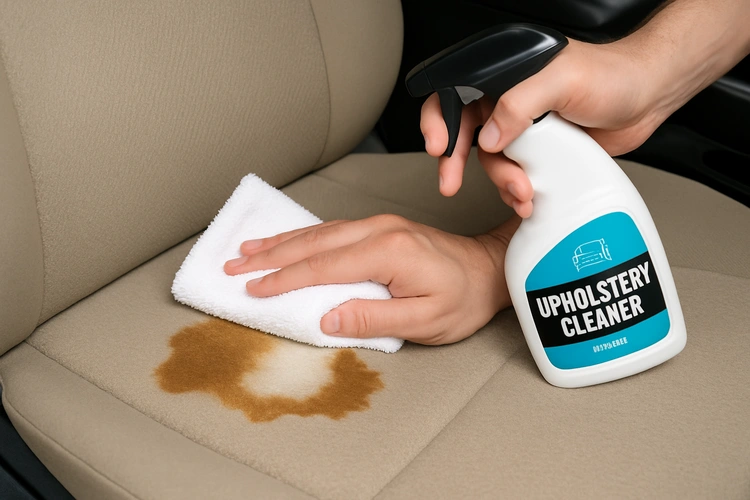
A coffee spill on your morning commute is one of the most common interior mishaps drivers face. The good news: knowing how to remove coffee stains from car seats quickly — even dried ones — can save your upholstery from permanent damage. Whether your seats are fabric, leather, or vinyl, the right technique makes all the difference. For a broader look at interior care, start with our complete guide to how to clean car seats.
Coffee contains tannins — plant-based compounds that bind to fibers and oxidize over time, turning light stains into dark, set-in marks. Acting within the first few minutes dramatically improves your results, but even week-old stains can be lifted with the right approach.
Contents
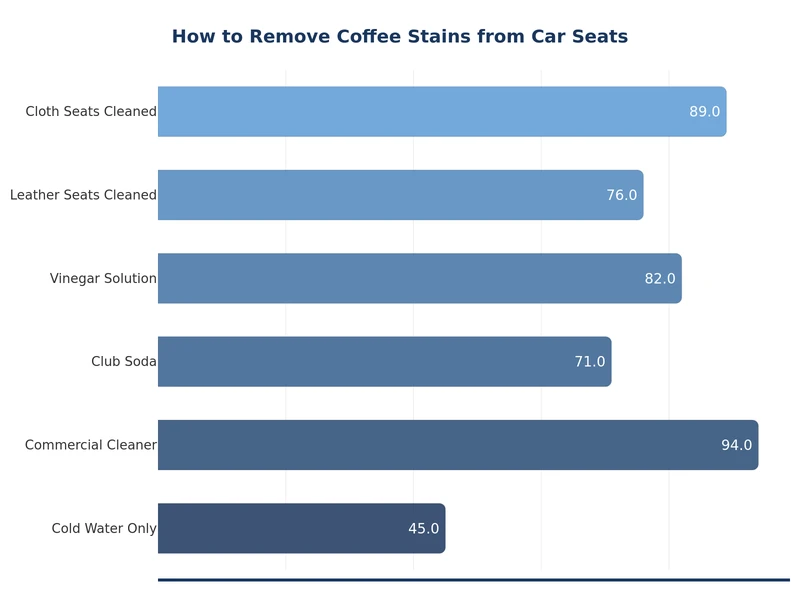
Coffee is acidic and packed with tannins that bond aggressively to fabric fibers. When hot coffee soaks into upholstery, the heat opens fiber pores and drives the stain deeper. As it cools and dries, those pores close — locking the tannins in. This is why a stain that looks mild when wet can appear much darker once dry.
Milk or cream in your coffee adds protein to the equation. Protein stains require a slightly different treatment — avoid hot water, which can cook the protein into the fiber and make the stain permanent.
Fresh stains respond to cold water and a mild cleaning solution. Dried stains need a pre-treatment soak to rehydrate the tannins before cleaning. Neither type requires harsh chemicals — patience and the right method are your best tools.
Most of these items are already in your home. Gather everything before you start so you're not running back and forth mid-treatment.
| Item | Purpose | Notes |
|---|---|---|
| Microfiber cloths (3–4) | Blotting and wiping | Never rub — always blot |
| Cold water | Diluting and rinsing | Cold only — hot sets protein stains |
| Dish soap (clear, mild) | Fabric stain treatment | 1–2 drops per cup of water |
| White vinegar | Tannin neutralization | Dilute 1:1 with water |
| Baking soda | Odor absorption, dried stains | Apply as paste or dry powder |
| Hydrogen peroxide (3%) | Deep stain lifting on light fabric | Test in hidden area first |
| Leather cleaner | Leather seat treatment | pH-balanced formula |
| Leather conditioner | Restoring moisture after cleaning | Apply after every cleaning |
| Soft-bristle brush | Working solution into fabric | Gentle circular motion only |
| Spray bottle | Applying cleaning solution evenly | Avoids over-saturating upholstery |
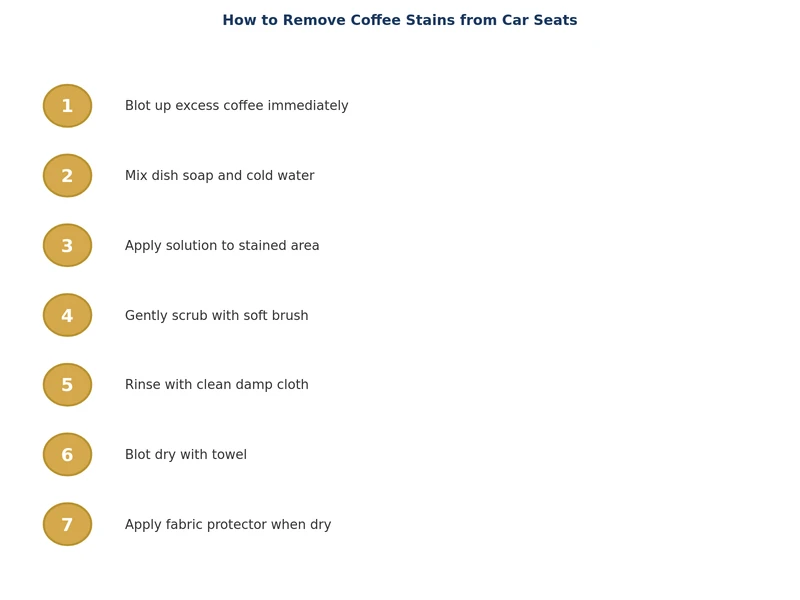
Fabric is the most common car seat material and fortunately responds well to basic household cleaners. The method differs slightly depending on whether the stain is fresh or dried.
Dried coffee stains need rehydration before the cleaning solution can penetrate effectively.
If you're dealing with multiple types of stains, our guide on how to get ink out of car upholstery covers similar fabric treatment techniques that pair well with this method.
Leather requires more care than fabric. Harsh chemicals, too much water, or abrasive scrubbing can crack or discolor the surface. The goal is to lift the stain without stripping the leather's natural oils.
Every time you clean leather, you remove some of its natural moisture. Apply a quality leather conditioner after cleaning to restore suppleness and protect against future stains. This also makes the surface less porous, so spills bead up instead of soaking in. If you're also maintaining other leather surfaces, check out our tips on how to clean a leather steering wheel for additional leather care guidance.
Vinyl is the most forgiving seat material for stain removal. Its non-porous surface means coffee rarely penetrates deeply, especially if addressed promptly.
For deeper discoloration on textured vinyl, a soft brush and baking soda paste work well. Our dedicated guide on how to clean vinyl car seats covers this in full detail, including texture-specific tips.
The best coffee stain is one that never happens. A few simple habits keep your seats cleaner between deep cleans.
Spills and stains are just one part of interior maintenance. If you're ever dealing with burns or other damage, see how similar techniques apply in our guide on how to remove cigarette burns from car seats.
Yes. Baking soda works well on fabric seats, especially for dried stains. Apply it as a paste, let it sit for 10–15 minutes to absorb residue and odor, then brush and vacuum it away before applying a cleaning solution.
Yes, but dilute it first — 1 teaspoon per cup of cold water. Applying concentrated dish soap can leave a soapy residue that attracts more dirt over time. Always rinse thoroughly after using any soap-based solution.
There is no exact cutoff, but the longer a stain sits, the more tannins bond to the fibers. Stains older than 24–48 hours are significantly harder to remove. Act within the first few minutes for the best results, and treat dried stains before they go through multiple heat cycles.
Standard 3% hydrogen peroxide is safe for most light-colored fabric seats but can bleach or lighten darker upholstery. Always test in an inconspicuous area first. Never use it on leather or vinyl seats.
Folex Instant Carpet Spot Remover and Chemical Guys Fabric Clean are well-regarded options for fabric upholstery. For leather, use a dedicated pH-balanced leather cleaner such as Leather Honey or Meguiar's Gold Class Leather Cleaner.
Sprinkle dry baking soda over the cleaned area, leave it overnight, then vacuum thoroughly. You can also place an open container of activated charcoal in the car to absorb lingering odors. Make sure the seat is fully dry before closing the car, as trapped moisture will worsen the smell.
 |
 |
 |
 |

About Joshua Thomas
Joshua Thomas just simply loves cars and willing to work on them whenever there's chance... sometimes for free.
He started CarCareTotal back in 2017 from the advices of total strangers who witnessed his amazing skills in car repairs here and there.
His goal with this creation is to help car owners better learn how to maintain and repair their cars; as such, the site would cover alot of areas: troubleshooting, product recommendations, tips & tricks.
Joshua received Bachelor of Science in Mechanical Engineering at San Diego State University.


Get some FREE car parts & gear.. Or check out the latest free automotive manuals and build guides here.
Disable your ad blocker to unlock all the hidden deals. Hit the button below 🚗
| | | |
