by Joshua Thomas
Knowing how to remove dried paint from car surfaces can save you hundreds of dollars in detailing fees. Whether you've parked near a freshly painted curb, driven through a road construction zone, or had overspray drift from a neighbor's project, those tiny hardened paint particles bond stubbornly to your car's clear coat. The good news: with the right products and technique, most dried paint overspray is removable at home without damaging your finish. If your car shows scuff marks from contact with another vehicle, our guide on how to remove paint transfer from a car covers that separate issue in detail.
Acting quickly is always best, but even weeks-old, hardened overspray responds to the methods below. This guide covers every proven technique — from clay bar treatment to targeted solvents — so you can restore your paint safely and effectively.
Contents
Not all paint overspray behaves the same way. Water-based latex paint — common in home renovation — dries brittle and is the easiest to remove. Oil-based enamel and automotive lacquer bond more aggressively to the clear coat. Industrial coatings like asphalt sealant, epoxy primer, or undercoating spray are the hardest to shift. Identifying what landed on your car helps you choose the right approach and avoid wasting time on techniques that won't work.
When paint particles land on a warm panel, the solvents in the coating begin to evaporate and chemically interact with the clear coat surface. According to the U.S. Environmental Protection Agency, solvent-borne coatings contain volatile organic compounds that cure rapidly once airborne — which is why overspray hardens so fast. The longer it sits, the deeper the bond. Even so, most overspray remains treatable with the right products applied patiently.
Gather everything before you start. Improvising mid-process often leads to rushing and scratching.
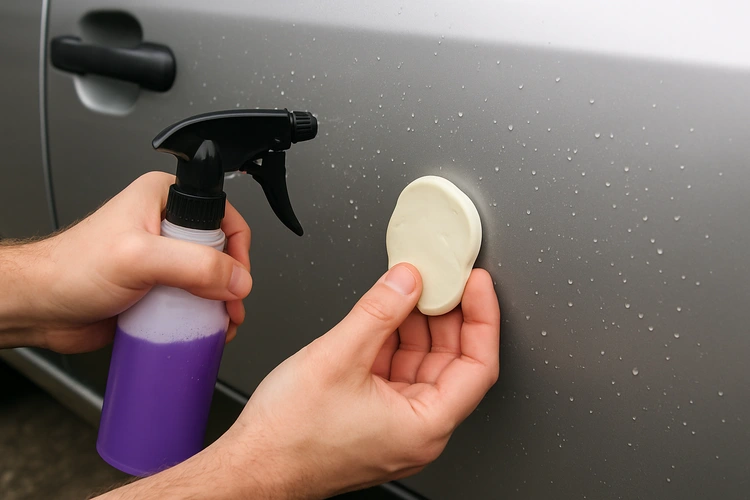
The clay bar is the safest and most effective starting point for removing dried paint overspray. Begin by washing the entire car thoroughly — any grit left on the surface will cause the clay to drag and create scratches. Once clean and dry, mist a small section (about two square feet) with clay lubricant spray, then glide the clay bar back and forth with light, even pressure. You'll feel it grabbing and releasing as it picks up the embedded particles. Fold the clay frequently to expose a clean face, and re-lubricate every 30 seconds or so.
Work panel by panel until the surface feels glass-smooth under your fingertips. After claying, inspect each panel under direct light. For most light overspray, this step alone produces a clean result. If spots remain, move to a solvent approach.
For stubborn spots that survive the clay bar, start with the mildest solvent available: isopropyl alcohol. Fold a clean microfiber cloth, dampen it with IPA, and hold it against the overspray spot for 30–60 seconds. This softens the paint without attacking the underlying clear coat. Then wipe gently. Repeat two or three times if needed.
If IPA doesn't work, escalate to an automotive adhesive remover such as 3M Adhesive Remover or Meguiar's Tar and Adhesive Remover. Apply a small amount to a cloth, hold on the spot, then wipe. Always test on an inconspicuous area first. Never use acetone, gasoline, or nail polish remover — these strip clear coat rapidly and cause irreversible damage.
After any solvent treatment, the paint surface benefits from a proper decontamination cycle before polishing. Our guide on how to decontaminate car paint before polishing walks through every step to ensure the surface is truly clean before you apply a corrective polish.
If overspray has fully cured and neither clay nor solvents shift it, wet sanding is the final DIY option before calling a professional. This technique physically removes a thin layer of clear coat along with the embedded paint. Use 2000-grit wet/dry sandpaper, soaked in water, and sand in straight overlapping passes with very light pressure. Keep the surface wet at all times — dry sanding creates deep scratches that are difficult to reverse.
Our complete tutorial on how to wet sand a car covers the full process, including how to check clear coat depth before you begin. After sanding, you must polish and then wax to restore gloss. If you're new to this technique, practice on a less visible panel first.
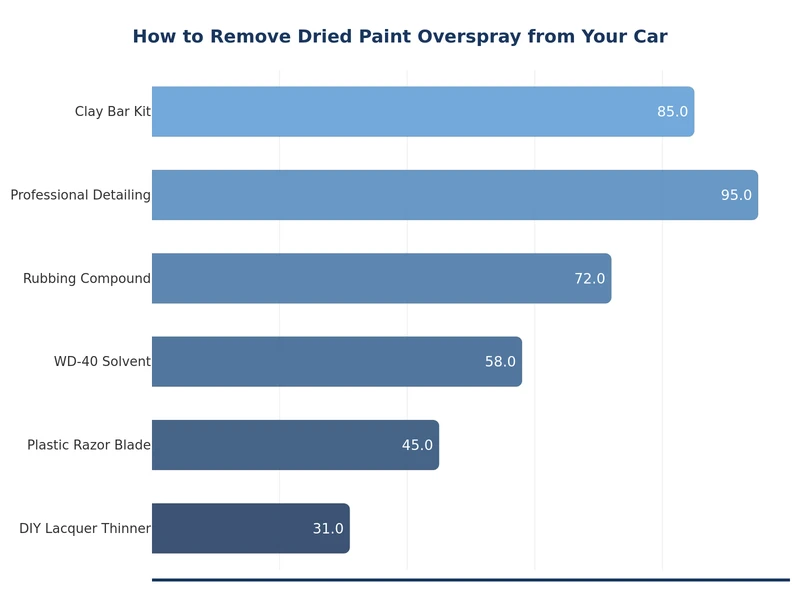
Use this table to match the right method to your specific situation before you start.
| Method | Best For | Skill Level | Risk to Paint | Approximate Cost |
|---|---|---|---|---|
| Clay Bar | Light to moderate overspray | Beginner | Very Low | $10–$25 |
| Isopropyl Alcohol | Fresh water-based overspray | Beginner | Low | $3–$8 |
| Adhesive / Tar Remover | Oil-based or cured overspray | Intermediate | Low–Medium | $10–$20 |
| Lacquer Thinner | Stubborn industrial coatings | Advanced | High (test first) | $8–$15 |
| Wet Sanding | Fully bonded, thick overspray | Advanced | High if done incorrectly | $5–$30 |
| Professional Detailing | Extensive or high-risk overspray | N/A | Minimal (controlled process) | $150–$500+ |
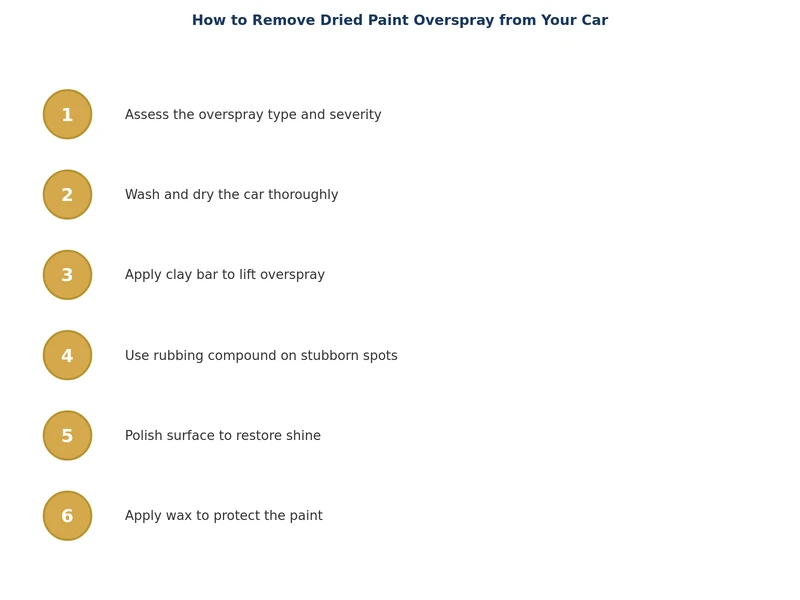
Removing overspray — especially with solvents or wet sanding — often leaves the clear coat slightly dull or microscopically marred. Always finish with a polish and wax. Apply a hand polish using a foam applicator pad in overlapping circular motions to restore clarity and eliminate light hazing. Our step-by-step guide to how to buff a car by hand covers the exact technique, including which pads and compounds work best for different paint conditions.
Once polished, apply a layer of carnauba wax or a synthetic paint sealant. This protects the newly exposed clear coat and — importantly — creates a slicker surface that resists future overspray adhesion. Wax applied before exposure to a paint-hazard area makes subsequent cleanup far easier.
If you park regularly near construction zones or paint work, consider applying a paint protection film to high-exposure panels. Even a fresh coat of spray wax before a known paint-hazard situation can dramatically reduce how deeply overspray bonds.
Most car owners can handle light to moderate overspray with a clay bar kit and isopropyl alcohol. There are situations, however, where professional intervention is the smarter and safer choice:
A professional detailer with a rotary buffer and paint depth gauge can remove overspray precisely, working within safe clear coat thickness tolerances. If a third party caused the overspray — a contractor, neighbor, or nearby body shop — document the damage with timestamped photos and request that they cover remediation costs. Most reputable contractors carry liability insurance that applies to exactly this type of incidental damage.
The safest method is using a clay bar with plenty of lubricant spray. Clay bars lift overspray particles from the clear coat mechanically — no harsh chemicals, no abrasion. For most light to moderate overspray, a thorough clay bar treatment is all you need to restore a smooth finish.
WD-40 can soften fresh, light water-based overspray and is generally safe on automotive clear coat. Apply it, allow it to dwell for a few minutes, then wipe with a clean microfiber cloth. It is not reliable for thick or fully cured overspray, and you should wash and wax the treated area afterward.
Avoid acetone. While it dissolves paint effectively, it also attacks and strips automotive clear coat, leaving a dull, irreversibly damaged patch. Use isopropyl alcohol or an automotive-grade adhesive remover instead — both are strong enough to break down overspray without harming the finish beneath.
Latex paint is water-based and softer than oil-based coatings once dried. Soak a microfiber cloth in warm water with a small amount of car wash soap and press it against the affected area for several minutes to rehydrate the paint. Follow up with isopropyl alcohol if residue remains, then run a clay bar over the panel to capture any remaining particles.
Overspray itself does not permanently damage paint if it is removed correctly. The real risk is improper removal — using the wrong solvents, scrubbing without lubrication, or wet sanding too aggressively. When removed using the right technique, the clear coat can be fully restored to its original appearance after polishing and waxing.
Professional overspray removal typically ranges from $150 to $500 or more, depending on the size of the affected area, the type of paint involved, and your geographic location. Detailing shops that specialize in paint correction often price the job by the panel. If a contractor or third party caused the overspray, request that they cover the cost through their liability insurance.
 |
 |
 |
 |

About Joshua Thomas
Joshua Thomas just simply loves cars and willing to work on them whenever there's chance... sometimes for free.
He started CarCareTotal back in 2017 from the advices of total strangers who witnessed his amazing skills in car repairs here and there.
His goal with this creation is to help car owners better learn how to maintain and repair their cars; as such, the site would cover alot of areas: troubleshooting, product recommendations, tips & tricks.
Joshua received Bachelor of Science in Mechanical Engineering at San Diego State University.


Get some FREE car parts & gear.. Or check out the latest free automotive manuals and build guides here.
Disable your ad blocker to unlock all the hidden deals. Hit the button below 🚗
| | | |
