by Joshua Thomas
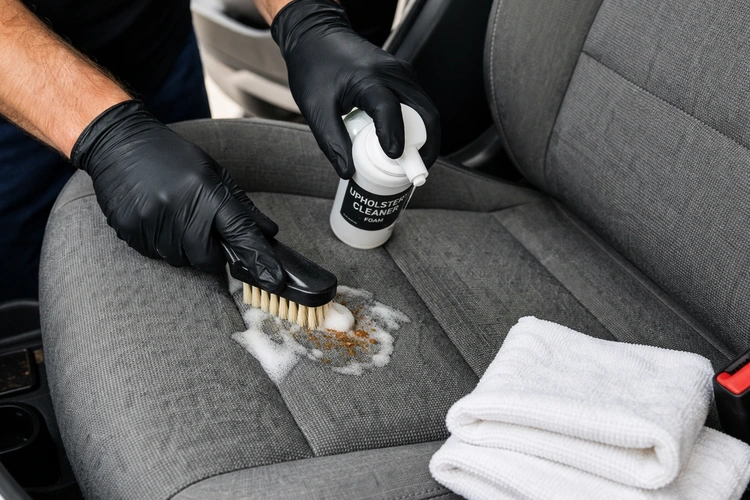
Spills happen. Whether it's a fast-food bag tipped over on a road trip or a morning coffee-and-toast routine gone wrong, food stains are among the most common interior messes drivers face. The good news is that you can remove food stains from car upholstery at home with the right technique and a few household supplies. The key is acting quickly and using the correct method for your upholstery type. If you want a broader look at interior care, our guide on how to clean car seats covers the full process from top to bottom.
Contents
Food stains are made up of proteins, fats, sugars, and pigments — all of which bond more stubbornly to fibers the longer they sit. A fresh ketchup drip wipes off in minutes. Left overnight, that same stain may require multiple treatments to lift completely.
Heat makes things worse. Parking in the sun with a stain on your seat can essentially bake it in, causing proteins to denature and dyes to set permanently. If you can't treat a stain immediately, at minimum blot up as much of the solid or liquid as possible before it dries. Never rub — that drives the stain deeper into the fibers.
The EPA's Safer Choice program provides a useful reference for identifying cleaning products that are effective without damaging interior materials — worth bookmarking for any car care routine.
You don't need specialty products for most food stains. Here's what works:
Avoid hot water — it can set protein-based stains like egg or dairy. Always use cold or lukewarm water.
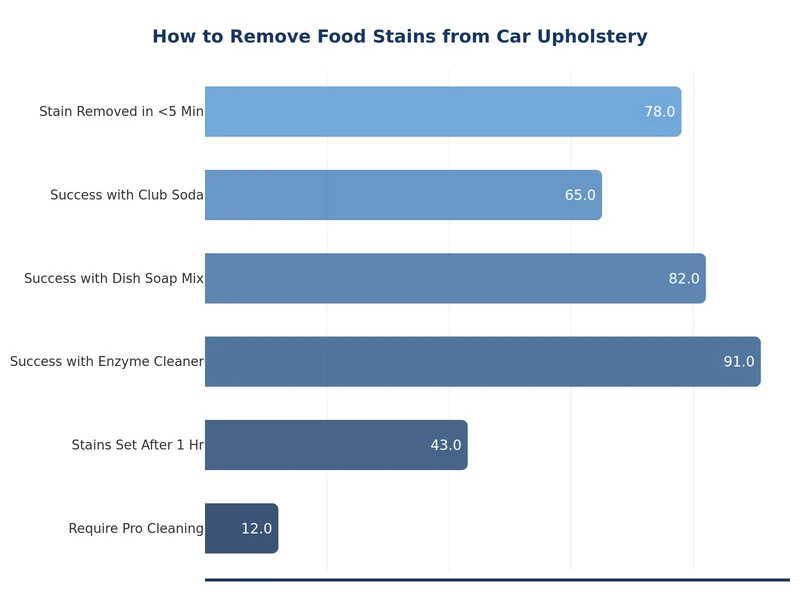
Follow this process for most food stains on fabric seats. Material-specific adjustments are covered below.
Use a spoon or dull knife to gently lift any solid residue from the surface — don't press it in. Then blot (don't rub) the liquid portion with a clean white cloth. Work from the outside edge of the stain inward to avoid spreading it. Repeat until no more transfer appears on the cloth.
Mix one teaspoon of dish soap with two cups of cold water. Apply a small amount to the stain using a cloth or soft brush. Work the solution in gently with circular strokes. Let it sit for two to three minutes to break down the stain. For stubborn or dried stains, an enzyme-based cleaner is more effective — spray it on, wait five minutes, then agitate lightly.
Spray lightly with clean cold water to rinse the soap residue. Blot up the moisture thoroughly — leftover soap can attract more dirt. Press a dry cloth firmly onto the damp area and let it air-dry completely. You can speed up drying by leaving car doors open or using a fan. Avoid closing the car until the seat is fully dry to prevent mildew odor.
Different foods require slightly different approaches. Use this reference table before you start:
| Food Type | Best Cleaner | Avoid | Notes |
|---|---|---|---|
| Ketchup / Tomato sauce | Cold water + dish soap | Hot water | Scrape solids first; enzyme cleaner for dried stains |
| Grease / Fried food | Baking soda, then dish soap | Water alone | Absorb with baking soda 10 min before cleaning |
| Soda / Juice | Cold water + white vinegar | Scrubbing hard | Rinse thoroughly to remove sugar residue |
| Dairy (milk, ice cream) | Enzyme cleaner | Hot water | Heat sets proteins; treat cold |
| Chocolate | Cold water + dish soap | Rubbing dry | Chill with ice pack to harden before scraping |
| Coffee / Tea | Vinegar solution or enzyme cleaner | Letting it dry | See our coffee stain removal guide for full detail |
French fries, pizza, and fast food wrappers leave behind oil-based stains that water alone won't touch. Start by sprinkling baking soda or cornstarch directly on the stain and let it sit for 10–15 minutes to absorb the oil. Brush away the powder, then apply a dish soap solution and work it in gently. Dish soap is a degreaser by design and will emulsify the oil so it can be blotted away.
Soda, juice, and condiments like ketchup or BBQ sauce are sticky once dry and can attract bacteria if not fully removed. A mixture of equal parts white vinegar and cold water works well here. Apply, let it dwell for two minutes, then blot. Follow up with a clean water rinse to remove any vinegar smell. For dried sugary stains, re-wet them first with cold water before applying any cleaner.
The method above works for standard woven fabric, but leather and vinyl need a gentler approach. If you're also dealing with stains on other interior surfaces, the same principles apply — check our guide on how to get ink out of car upholstery for handling tougher material-specific stains.
Most cloth seats can handle mild soap solutions, vinegar, and enzyme cleaners without issue. The risk with fabric is over-wetting — saturating the foam backing can cause it to stay damp for days, leading to mildew. Always use the minimum amount of liquid needed, and blot rather than pour. Work in sections and dry each area before moving on.
Leather requires more care. Skip vinegar and enzyme cleaners — they can strip protective coatings or dry out the leather over time. Instead, use a leather-safe upholstery cleaner or a very diluted mild soap solution. Apply with a soft cloth, never a brush. After cleaning, apply a leather conditioner to restore moisture. Vinyl is more forgiving but similarly sensitive to harsh chemicals. Avoid alcohol-based cleaners on either surface unless specifically labeled safe.
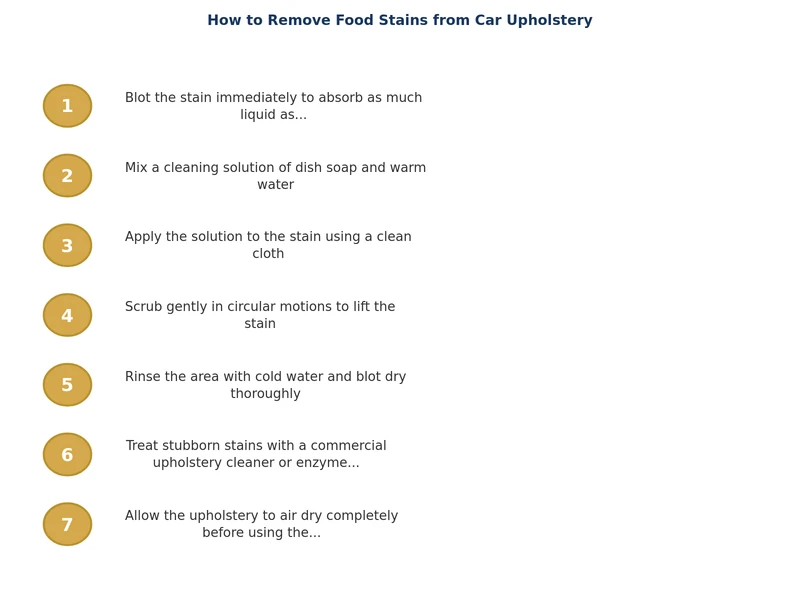
The easiest stain to deal with is one that never happens. A few habits make a real difference:
It's also worth keeping your seat belts clean as part of your regular interior maintenance — food residue commonly transfers to belt webbing and is easy to overlook.
Yes. Baking soda is especially effective on greasy food stains. Sprinkle it on the stain and let it sit for 10–15 minutes to absorb the oil, then brush it away before applying a soap-and-water solution. It also helps neutralize odors left behind by dairy or sugary spills.
A mix of one teaspoon of dish soap and two cups of cold water handles most food stains on fabric seats. For sugary or acidic stains like juice or ketchup, equal parts white vinegar and cold water works well. Always blot, never rub, and rinse thoroughly afterward.
Re-wet the dried stain with a small amount of cold water first to loosen it. Then apply an enzyme-based upholstery cleaner, let it dwell for five minutes, and agitate gently with a soft brush. Blot with a clean cloth and repeat if necessary. Dried stains may take two or three treatments.
Yes. Dairy, meat, and sugary foods left in upholstery can develop bacterial odors within a day or two, especially in warm weather. Even if the visible stain is gone, residue trapped in the foam can continue to smell. Enzyme cleaners are the best option here because they break down the organic matter causing the odor at a molecular level.
No. White vinegar is acidic and can degrade leather's protective finish or dry it out over time. For leather seats, use a pH-balanced leather cleaner specifically designed for automotive interiors. Follow up with a leather conditioner to keep the material supple.
Water rings form when you wet only part of the seat and let it dry unevenly. To avoid this, feather your cleaning outward past the edges of the stain so the entire panel dries uniformly. Blot up as much moisture as possible with a dry cloth and allow the seat to air-dry fully with the doors open before closing the car.
 |
 |
 |
 |

About Joshua Thomas
Joshua Thomas just simply loves cars and willing to work on them whenever there's chance... sometimes for free.
He started CarCareTotal back in 2017 from the advices of total strangers who witnessed his amazing skills in car repairs here and there.
His goal with this creation is to help car owners better learn how to maintain and repair their cars; as such, the site would cover alot of areas: troubleshooting, product recommendations, tips & tricks.
Joshua received Bachelor of Science in Mechanical Engineering at San Diego State University.


Get some FREE car parts & gear.. Or check out the latest free automotive manuals and build guides here.
Disable your ad blocker to unlock all the hidden deals. Hit the button below 🚗
| | | |
