How to Remove Grease from Car Paint

by Diego Ramirez

Studies show that road grime, oil, and grease account for more than 40% of all paint contamination cases reported by professional detailers — making it one of the most common and damaging threats to a vehicle's finish. Knowing how to remove grease from car paint correctly is the difference between a simple fix and a costly repaint. Left untreated, grease breaks down clear coat (the transparent protective layer sitting over the color paint) and creates an entry point for oxidation. This guide covers every proven method — from common household products to professional-grade degreasers — so car owners can handle the problem fast without causing new damage. For a broader approach to keeping the exterior in top shape, the car exterior detailing guide covers the full workflow from wash to protection.
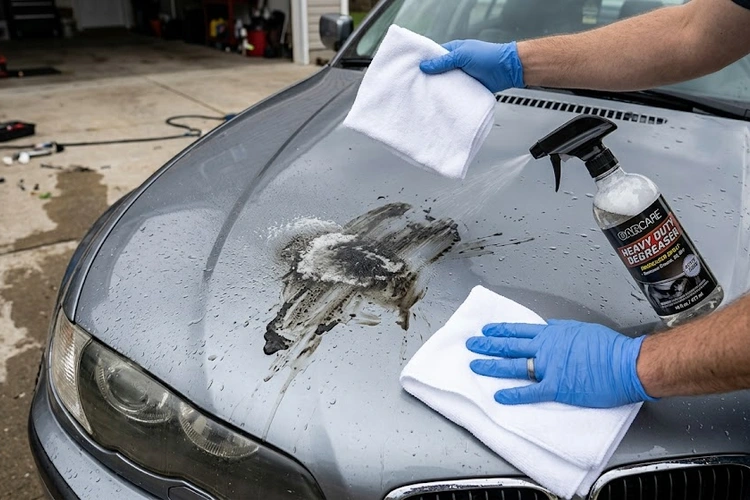
applying degreaser to car paint panel to remove grease contamination
Figure 1 — Applying a paint-safe degreaser to a contaminated panel before the wash stage removes grease without scratching.
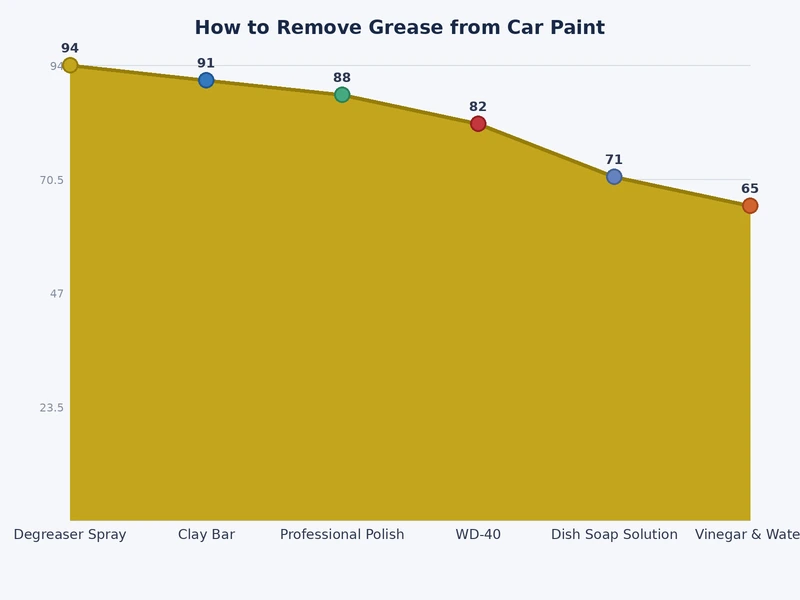
bar chart comparing effectiveness ratings of grease removal methods on car paint
Figure 2 — Effectiveness ratings for common grease removal methods based on detailing professional surveys.

Fast Fixes That Work Right Now

When grease hits the paint, speed is the most important variable. Fresh grease — under 24 hours old — wipes away with minimal effort. The same spot left in direct sun for a week bonds chemically with the clear coat and needs far more work. Here are the fastest approaches that produce real results:

  • Isopropyl alcohol (IPA): Dilute 70% IPA with water in a 1:1 ratio. Apply to a microfiber cloth — never spray directly on the paint — and wipe in straight lines. Fast, cheap, and effective on most grease types.
  • Dish soap: A single drop on a damp microfiber cloth cuts through fresh cooking or light mechanical grease quickly. Rinse thoroughly afterward — dish soap strips wax and sealant, so paint protection needs to be reapplied.
  • WD-40: Counterintuitive but effective. A light spray loosens petroleum-based grease before a soapy wash removes both the grease and the WD-40 residue together.
  • Dedicated spray degreaser: Products labeled "paint-safe degreaser" or "pre-wash degreaser" are the safest fast option. They are formulated specifically for automotive finishes and won't strip sealants as aggressively as dish soap.

Always follow any of these methods with a full wash using the two-bucket car wash method to remove all solvent residue without grinding remaining particles back into the paint.

Why Timing Changes Everything

Heat accelerates grease bonding. A spot that takes one wipe to remove in the morning may require three passes after sitting in afternoon sun. Acting within the first few hours keeps removal simple and eliminates any risk of clear coat degradation.

Tools and Products You Need

Having the right supplies prevents improvised choices that damage paint. A basic kit handles the vast majority of grease situations — no professional detailing van required.

Essential Supplies

  • High-quality microfiber cloths — minimum 300 GSM (grams per square meter) for paint contact work
  • Isopropyl alcohol (70% or 99%) in a spray bottle diluted with equal parts water
  • Paint-safe automotive degreaser spray
  • Two buckets plus grit guards for the wash stage
  • pH-neutral car shampoo — acidic or alkaline shampoos accelerate clear coat wear
  • Microfiber drying towel (waffle-weave style dries quickly and is gentle on paint)

Optional Upgrades

  • Clay bar kit: Removes bonded contamination that solvents leave behind. Use only with dedicated clay lubricant — never dry. This is essential after heavy industrial or mechanical grease exposure.
  • Foam cannon: Pre-soaks the panel in shampoo before contact washing, which reduces the chance of swirl marks by lifting loose particles before the mitt touches the paint.
  • Tar and adhesive remover: A step up from standard degreaser for road tar or axle grease — dissolves bitumen-based contamination that IPA cannot shift.
  • Wax or paint sealant: Reapplying protection after every degreasing session is non-negotiable. Understanding when to strip and start fresh versus top up is covered in detail in this guide on removing old wax buildup from car paint.

Types of Grease and Where They Come From

Not all grease responds to the same treatment. Identifying the source before reaching for a product saves time and avoids using something too harsh or too weak for the situation.

Road and Mechanical Grease

  • Chassis or axle grease: Thick, dark, and petroleum-based. Requires solvent-based degreasers or a WD-40 pre-treatment before washing. Standard car shampoo alone will not cut through it.
  • Road tar: Technically bitumen — a tar-like petroleum byproduct — but behaves like grease on paint surfaces. Dedicated tar remover or mineral spirits work best. IPA alone is usually insufficient.
  • Brake dust mixed with lubricant: A fine metallic paste that bonds directly to paint. A solvent loosens the oils; a clay bar removes the metallic particles the solvent leaves behind.
  • Engine bay splatter: Oil, coolant, and grease that migrate onto fenders and hood panels during driving. Caught early, IPA or dish soap handles it. Baked-on engine oil needs a stronger automotive degreaser.

Environmental and Cooking Grease

  • Cooking oil splatter: Common near BBQ areas, food truck courts, or kitchen exhaust vents. Lighter in consistency than mechanical grease — IPA or dish soap clears it easily when fresh.
  • Industrial fallout: Airborne grease particles from factories, rail lines, or heavy diesel traffic. Often invisible until the paint surface feels rough or gritty to the touch. Clay bar treatment after washing is the reliable fix.
  • Silicone-based products: Spray-on tire dressings and vinyl protectants that overspray onto paint panels. These require IPA specifically — water-based degreasers do not dissolve silicone effectively.

Pro tip: Run a clean plastic bag over the paint surface after washing — if it drags or feels gritty, bonded contamination is still present and a clay bar treatment is needed before applying any wax or sealant.

Step-by-Step Removal Process

This is the complete, correct method for how to remove grease from car paint — not just the surface layer but any residue or bonded contamination underneath.

Preparation

  1. Park in shade. Direct sun heats the panel, evaporates solvents before they work, and causes water spots during the wash stage.
  2. Rinse the panel with water first to remove loose dirt. Dragging grit across dry paint during the degreasing step causes scratches.
  3. Identify the grease type. This determines whether to start with IPA, a dedicated degreaser, WD-40, or tar remover.
  4. Gather clean microfiber cloths — more than it seems necessary. Using a contaminated cloth spreads grease rather than removing it.

Active Removal

  1. Apply the chosen solvent to a clean microfiber cloth, not directly to the paint surface. Direct application concentrates the chemical in one spot and increases the risk of clear coat damage.
  2. Wipe in straight lines from front to back. Circular wiping motions create swirl marks that show up clearly under direct light.
  3. Flip the cloth to a clean section after each pass. A cloth loaded with dissolved grease just redistributes contamination.
  4. For stubborn spots, let the solvent dwell for 30–60 seconds before wiping — do not scrub harder. Dwell time does more work than pressure.
  5. Repeat with a fresh cloth if residue remains. Most spots clear in two to three passes.

Protection and Finish

  1. Wash the full panel — not just the spot — using pH-neutral shampoo and the two-bucket method.
  2. Rinse thoroughly and dry with a clean microfiber drying towel immediately to prevent water spots.
  3. Inspect under good lighting. Tilt the panel toward a light source to check for remaining haze or streaks.
  4. Apply a coat of wax, sealant, or ceramic spray to restore the protective layer that the degreaser removed.

Pro Tips for Stubborn Grease

Some grease spots resist standard methods. The following approaches handle the cases that IPA and dish soap cannot resolve on their own.

Advanced Removal Methods

  • Use a clay bar last, not first: Solvents lift the oils; clay bar removes the bonded residue the solvent loosens but cannot fully extract. Reversing this order wastes the clay bar and leaves grease under the surface.
  • Warm the panel in cold weather: Cold grease hardens and resists solvents. A heat gun on the lowest setting held 2–3 inches from the panel for a few seconds softens the grease enough for the solvent to penetrate.
  • Naphtha for professional prep: Naphtha (a light paint thinner) is used by body shop painters as a final surface wipe before spraying. Safe on clear coat in small amounts and highly effective on bonded grease — always follow with a full wash.
  • Do not layer products: Applying multiple solvents without washing between applications creates a chemical mixture that can dull clear coat. One product at a time, full wash, then reassess.

Preventing Future Contamination

  • Apply a ceramic coating or spray sealant regularly — grease bonds far less aggressively to a protected surface than to bare clear coat.
  • Park away from kitchen exhaust vents, industrial areas, and heavy machinery when possible.
  • Keep a small spray bottle of diluted IPA and two microfiber cloths in the trunk for immediate spot treatment before grease has a chance to set.
  • Check wheel arches and lower panels after every off-road or gravel road trip — axle grease splatter is easiest to remove within the first hour.

Grease Removers Compared: Pros and Cons

Choosing the right product depends on the grease type, paint age, and what is already available. This comparison covers the most commonly used options across DIY and professional detailing contexts.

Product Comparison Table

Product Best For Key Advantage Key Drawback Paint Safe?
Isopropyl Alcohol (IPA) Fresh grease, silicone splatter, pre-polish prep Cheap, fast, available everywhere Strips wax and sealants completely Yes (diluted 1:1)
Dish Soap Light cooking oil, fresh splatter Zero cost, very safe on clear coat Strips all paint protection layers Yes
WD-40 Petroleum grease, road tar pre-treatment Loosens stubborn grease within seconds Leaves oily residue — full wash required Yes (wash off fully)
Paint-Safe Degreaser General grease, pre-wash contamination removal Formulated to minimize paint protection loss Higher cost than household options Yes
Tar and Adhesive Remover Road tar, bitumen, heavy axle grease Dissolves bitumen-based contaminants completely Overkill for light cooking grease Yes
Naphtha Bonded grease, pre-respray panel prep Professional-grade surface clean Strong fumes; test on older single-stage paint first Use with caution

DIY vs. Store-Bought

For fresh, light grease — cooking oil, light splatter, recent mechanical contact — household IPA or dish soap is entirely adequate and costs almost nothing. For older, baked-on grease, road tar, or any contamination that has survived a standard wash, a dedicated automotive product is worth the investment. The formulation difference matters: automotive degreasers are pH-balanced to minimize protection loss and clear coat stress in a way that dish soap and hardware-store solvents are not designed for.
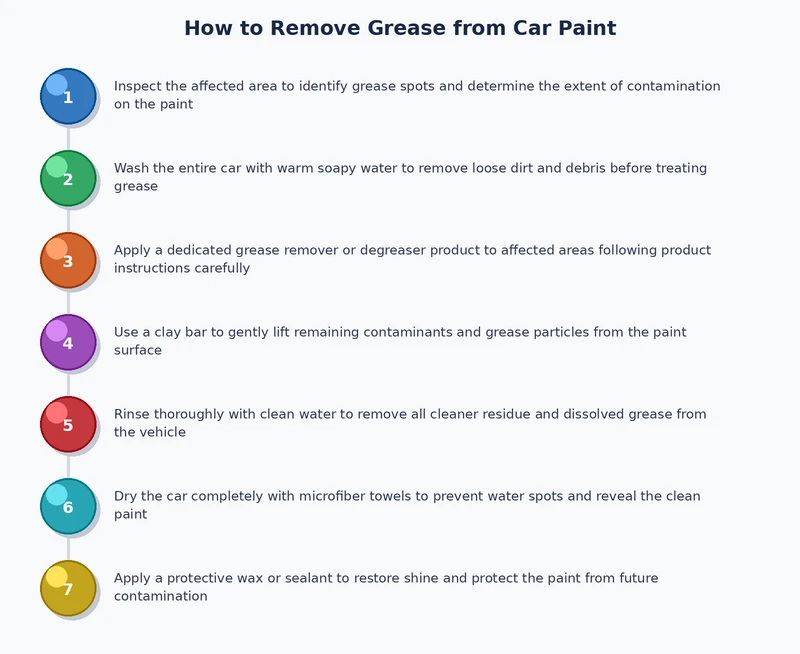
three-stage process diagram for removing grease from car paint showing prep removal and protection steps
Figure 3 — The three-stage process: preparation, active grease removal, and paint protection restoration.

Frequently Asked Questions

Does grease permanently damage car paint?

Grease does not permanently damage paint if removed promptly. Left for several weeks in direct sun, it accelerates clear coat breakdown and allows oxidation to begin — but that process takes time. Most grease stains, including older ones, are fully reversible with the right solvent and technique. Permanent damage typically only results from grease being left completely untreated through multiple heat cycles.

Can WD-40 be used safely on car paint?

WD-40 is safe on automotive clear coat in small amounts. It is particularly effective as a pre-treatment for petroleum-based grease and road tar, loosening the contamination before a soapy wash removes everything together. The critical step is washing WD-40 off completely afterward — the oily residue it leaves attracts new dirt rapidly and prevents wax and sealant from bonding to the surface.

How do you remove grease from car paint without removing the wax?

Using a dedicated automotive panel wipe solution or paint-safe degreaser applied only to the affected area minimizes wax loss. IPA and dish soap both strip wax broadly across the panel. A targeted application of panel wipe or automotive surface cleaner to just the grease spot, followed by a light detailing spray wipe-down, removes the contamination with the least impact on surrounding protection.

Is a clay bar always necessary after removing grease?

A clay bar is only needed when the paint still feels rough or gritty after washing — a sign that bonded contamination remains beneath the surface level. For fresh grease removed quickly with a solvent followed by a proper two-bucket wash, the surface typically comes clean without clay bar treatment. Reserve the clay bar for situations where the plastic-bag smoothness test reveals texture remaining after the wash.

Final Thoughts

Removing grease from car paint is a straightforward process when the right product meets the right technique — act fast, use a paint-safe solvent, wipe straight not circular, and always finish with a proper wash and fresh protection. The difference between a 15-minute fix and a full-day polishing job almost always comes down to how quickly the problem was addressed. Pick up a bottle of dedicated automotive degreaser and keep a few clean microfiber cloths within reach so the next grease spot gets handled on the spot, before the sun does the rest of the work for it.

About Diego Ramirez

Diego Ramirez is a maintenance and care specialist who has been wrenching on cars since he was sixteen. He focuses on fluid changes, preventive care routines, paint protection, and the small habits that turn a five-year-old car into a fifteen-year-old car.

Get some FREE car parts & gear.. Or check out the latest free automotive manuals and build guides here.

Disable your ad blocker to unlock all the hidden deals. Hit the button below 🚗