by Joshua Thomas
A musty, damp odor lingering in your car is more than just unpleasant — it signals a real problem. Learning how to remove mildew smell from car interiors is essential for your comfort, your passengers' health, and your vehicle's long-term condition. Mildew thrives in dark, moist environments, and car interiors — with their carpets, foam padding, and fabric seats — are prime territory. Whether the smell crept in from a wet umbrella, a forgotten spill, or a flooded floorboard, this guide walks you through every effective method to eliminate it for good. If smoke odors are also a concern, check out our guide on how to remove smoke smell from car for additional odor elimination strategies.
Contents
Mildew is a surface-level form of mold caused by fungal growth on damp organic material. Car interiors provide everything mildew needs: warmth, darkness, and moisture. The smell — often described as musty, earthy, or like wet cardboard — is produced by microbial volatile organic compounds (MVOCs) released as the fungi metabolize.
Identifying where the moisture comes from is the first step toward a permanent fix. Common culprits include:
Beyond the smell, mildew exposure can trigger allergic reactions, respiratory irritation, and headaches — especially in an enclosed vehicle cabin. Anyone with asthma or mold sensitivity is particularly vulnerable. Addressing the smell promptly is not just about comfort; it is a health matter.
Gather all your supplies before diving in. Having everything on hand prevents interruptions and ensures you work efficiently through each area of the car.
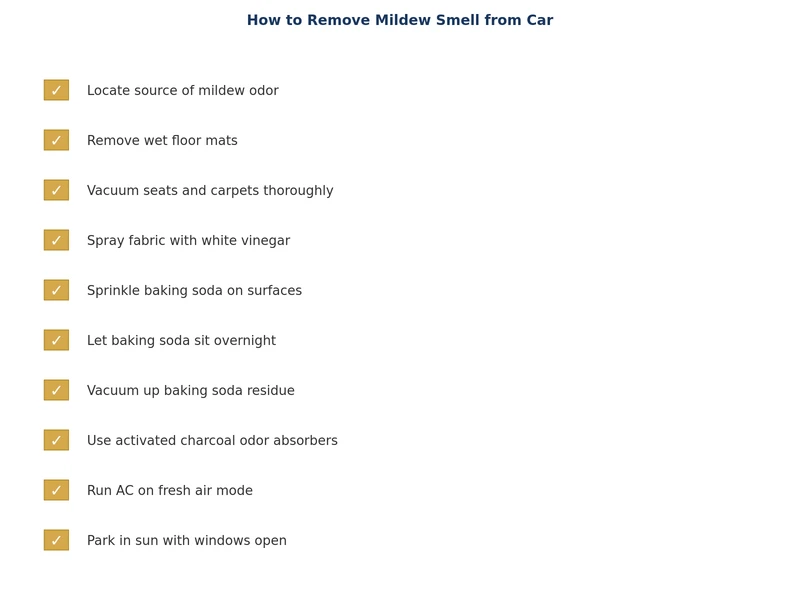
This process works for most vehicles. For severe mold growth (visible black or green patches), read our detailed guide on how to remove mold from car interior before proceeding — that situation requires more aggressive treatment.
Mildew cannot survive without moisture. Before applying any product, eliminate the source of dampness completely.
Use a shop vacuum to remove all loose debris, dirt, and any visible mildew residue. Focus on:
Do not scrub dry mildew — vacuuming first prevents spreading spores.
Mix equal parts white vinegar and water in a spray bottle. Vinegar is naturally antifungal and breaks down mildew at the root. Lightly mist affected areas and scrub with a brush, then blot dry with a microfiber cloth. Work in sections:
Allow surfaces to dry completely before moving to the next step. A fan accelerates this significantly.
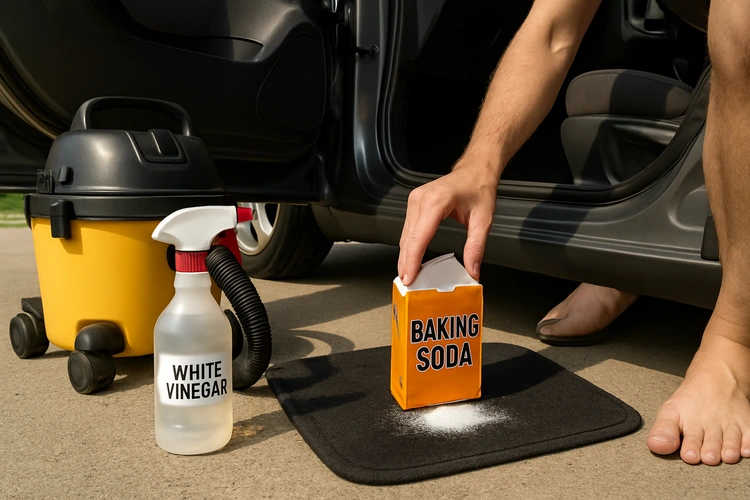
Baking soda (sodium bicarbonate) is one of the most effective natural odor neutralizers. After surfaces are dry:
For persistent smells, repeat the process. Baking soda is safe for all interior surfaces and leaves no residue.
After cleaning and deodorizing, finish with an enzyme-based odor eliminator spray. Enzyme products break down the organic compounds that cause the smell rather than masking them. Spray all interior fabric surfaces, close the windows, and let it work for 30–60 minutes. Then air out the cabin fully.
Activated charcoal bags are excellent for follow-up — place them under the seats for 24–48 hours to absorb any lingering odor molecules.
One of the most overlooked sources of mildew smell in cars is the HVAC system. The evaporator coil inside the dashboard accumulates condensation and debris, creating a breeding ground for mildew. When the fan blows, it pushes that musty smell directly into the cabin.
To address it:
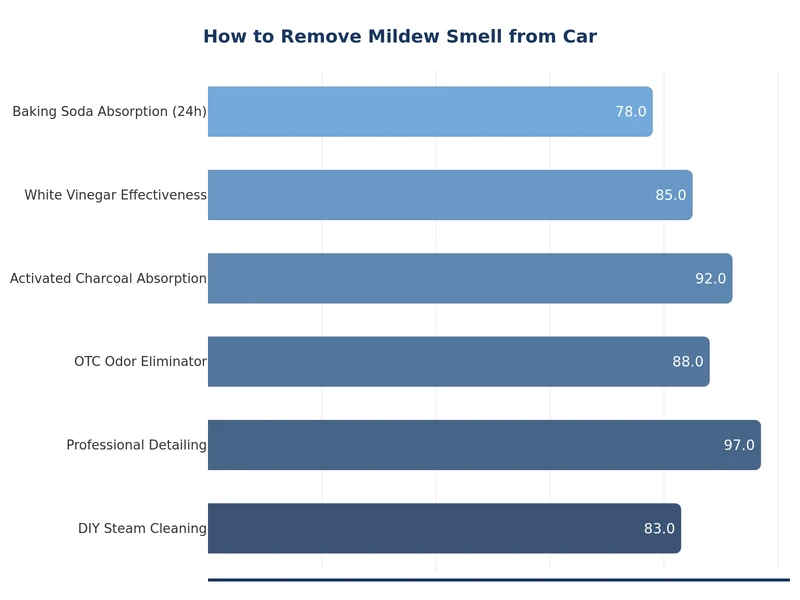
Not all odor products work the same way. This comparison table outlines the main types so you can choose the right tool for the job.
| Product Type | How It Works | Best For | Limitations | Effectiveness |
|---|---|---|---|---|
| White Vinegar Solution | Antifungal acids kill mildew at the surface | Carpets, fabric seats, hard surfaces | Temporary vinegar smell; may discolor some materials | High (surface mildew) |
| Baking Soda | Neutralizes odor-causing acids and bases | Dry carpets and mats | Requires long dwell time; must be vacuumed | High (residual odor) |
| Enzyme Cleaner | Breaks down organic compounds biologically | Deep fabric odors, pet accidents, spills | Slower acting; needs to stay wet to work | Very High (root cause) |
| Activated Charcoal Bags | Adsorbs odor molecules from the air | Follow-up and prevention | Slow; does not clean surfaces | Medium (ambient odor) |
| Ozone Generator | Oxidizes and destroys odor molecules | Severe or persistent odors | Requires vacating vehicle; can damage rubber/plastic | Very High (severe cases) |
| AC Vent Spray | Antifungal and deodorizing agents in the HVAC | Musty AC smells | Temporary if root cause not fixed | Medium-High |
Removing the smell is only half the battle. Preventing moisture from building up again is what keeps the interior fresh long-term.
A consistent cleaning schedule removes the organic material that mildew feeds on. Vacuum weekly, wipe down hard surfaces monthly, and shampoo carpets and seats twice a year. Pairing this with a full interior detail routine ensures no area is missed.
The fastest combination is drying the interior completely, scrubbing affected areas with a white vinegar solution, applying baking soda overnight, and using an enzyme odor eliminator spray. Running an ozone generator for 2–4 hours is the most powerful single-step option for severe cases, but it requires leaving the vehicle during treatment.
Mildew grows inside foam padding, under carpets, and inside the HVAC system — areas that aren't visible. A clean-looking interior can still harbor mildew deep in seat cushions or carpet backing. The AC evaporator coil is especially common — it stays damp and grows mildew that gets blown into the cabin every time you run the fan.
Bleach is not recommended for car interiors. It can discolor carpet fibers, damage upholstery, weaken seat foam, and leave a harsh chemical smell. White vinegar and enzyme-based cleaners are safer and equally effective at killing mildew without causing collateral damage.
For fabric seats, lightly mist with a 50/50 vinegar-water solution, scrub gently with a soft brush, blot dry, then apply baking soda and leave overnight before vacuuming. Avoid soaking the foam underneath. For leather seats, use a leather-safe cleaner and conditioner — vinegar can dry out and crack leather over time.
No. Without removing the moisture source and cleaning the mildew itself, the smell will persist and worsen over time. Mildew continues to grow as long as conditions are favorable. Simply airing out the car may reduce the odor temporarily, but the fungi remain active until treated with an antifungal cleaner.
Professional interior deodorization typically costs between $100 and $300 depending on the severity and method used. Ozone treatment or full steam cleaning with enzyme products sits at the higher end. Most mild-to-moderate mildew odor cases can be resolved with DIY methods for under $30 in supplies.
 |
 |
 |
 |

About Joshua Thomas
Joshua Thomas just simply loves cars and willing to work on them whenever there's chance... sometimes for free.
He started CarCareTotal back in 2017 from the advices of total strangers who witnessed his amazing skills in car repairs here and there.
His goal with this creation is to help car owners better learn how to maintain and repair their cars; as such, the site would cover alot of areas: troubleshooting, product recommendations, tips & tricks.
Joshua received Bachelor of Science in Mechanical Engineering at San Diego State University.


Get some FREE car parts & gear.. Or check out the latest free automotive manuals and build guides here.
Disable your ad blocker to unlock all the hidden deals. Hit the button below 🚗
| | | |
