by Joshua Thomas
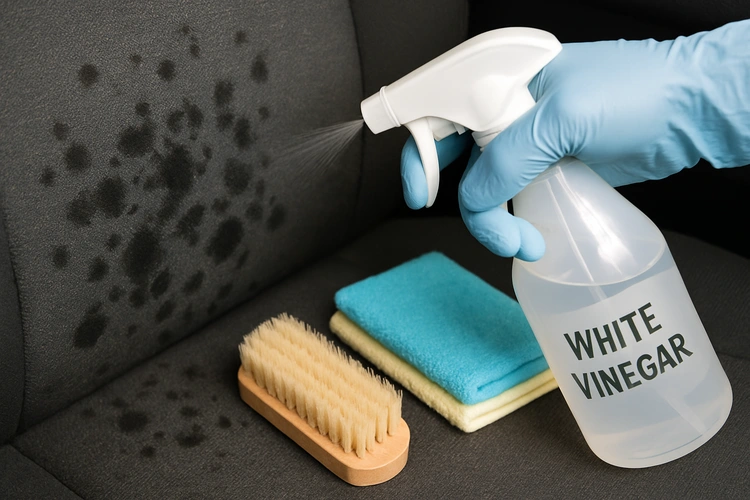
Finding mold growing inside your car is more than just an eyesore — it's a health hazard that demands immediate attention. If you need to remove mold from car interior surfaces, acting fast prevents spores from spreading and causing respiratory issues. Mold thrives in dark, damp environments, making car interiors a perfect breeding ground after a flood, a forgotten wet umbrella, or a spilled drink. This guide walks you through every step to safely eliminate mold and keep it from coming back. For related odor problems, see our guide on how to remove smoke smell from car interiors.
Contents
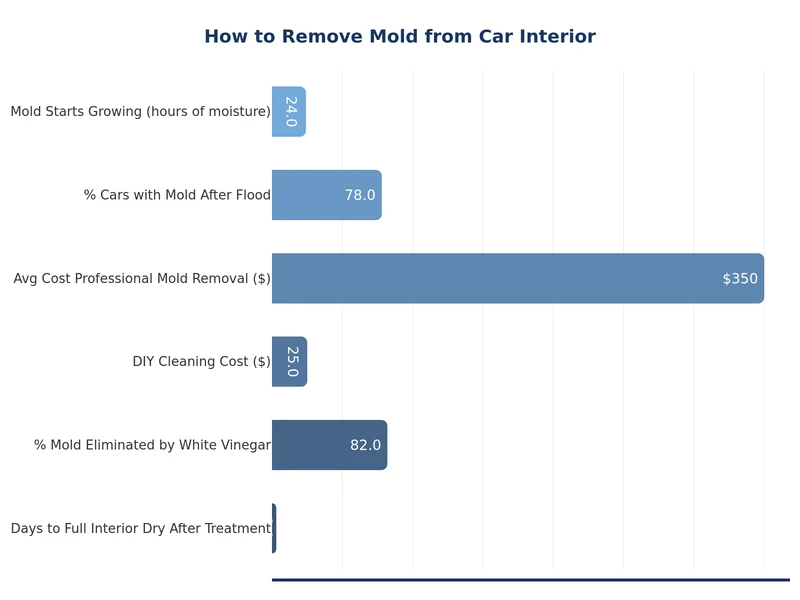
Mold is a fungus that reproduces through airborne spores. Those spores are everywhere — including inside your vehicle. Under the right conditions, they germinate and form visible colonies within 24 to 48 hours. According to the U.S. Environmental Protection Agency, mold only needs moisture, a food source (dust, fabric fibers, skin cells), and moderate temperatures to grow rapidly.
Breathing mold spores in a confined cabin can trigger allergies, asthma flare-ups, eye irritation, and in sensitive individuals, more serious respiratory infections. Do not ignore visible mold or a musty odor — address it immediately.
Gather everything before you start. Working efficiently matters because you want to avoid spreading spores around the cabin.
| Solution | Best For | Dilution Ratio | Safe on Leather? | Effectiveness |
|---|---|---|---|---|
| White Vinegar | Fabric, carpet, hard plastic | Undiluted or 50/50 with water | No — dries leather out | High (kills ~82% of species) |
| Isopropyl Alcohol (70%) | Hard surfaces, vinyl, plastic trim | Undiluted | Yes, sparingly | High |
| Baking Soda Paste | Deodorizing after treatment | Mix with water to paste | No | Low (deodorizer, not killer) |
| Commercial Mold Remover | Heavy infestations | Per product label | Check label | Very High |
| Hydrogen Peroxide (3%) | Fabric, carpet | Undiluted | No — may discolor | High |
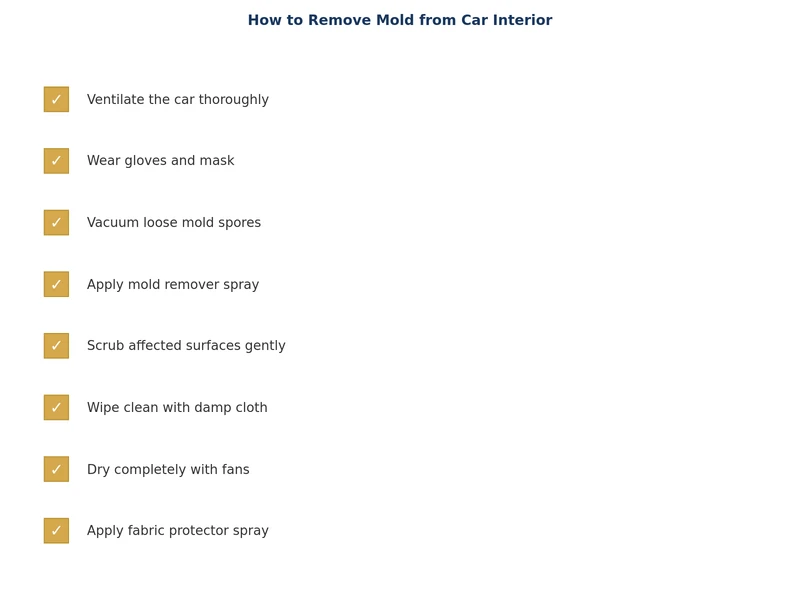
Follow these steps in order. Skipping ahead — especially the vacuuming step — risks pushing spores deeper into upholstery fibers.
Put on your N95 mask, gloves, and glasses before opening the car door. Do the work outdoors or in a well-ventilated garage. Open all doors and windows to maximize airflow. Sunlight is your ally — UV rays help kill surface mold naturally.
Using a HEPA vacuum with an upholstery attachment, vacuum all affected surfaces without pressing hard. Work from top to bottom — headliner first, then seats, then floor carpet. A HEPA filter is critical; standard vacuums can exhaust spores back into the air. Empty and seal the canister or bag immediately after.
Spray your chosen solution generously onto affected areas. For fabric seats and carpet, undiluted white vinegar or 3% hydrogen peroxide works well. Let it dwell for at least 10 minutes so the active ingredient penetrates the fibers and disrupts the mold colony. Do not wipe immediately.
Scrub the treated areas in a circular motion using a stiff brush. Then blot and extract with a clean microfiber cloth or a wet/dry shop vac. Avoid oversaturating — excess moisture prolongs drying time and can restart a mold cycle. Repeat the spray-dwell-scrub process for stubborn colonies. Finish by wiping down all hard surfaces with an isopropyl alcohol solution.
Fabric is the most porous surface in the cabin and holds mold most stubbornly. After the main treatment steps, sprinkle baking soda liberally over damp areas and let it sit for several hours (or overnight) to absorb residual moisture and odor. Vacuum it up thoroughly. For a deeper clean of your full interior, our guide on how to detail a car interior covers every surface in detail.
Leather is less porous but mold can still colonize the surface and work into seams and stitching. Use isopropyl alcohol on a microfiber cloth — never spray directly on leather. Wipe gently in one direction, then condition the leather immediately after cleaning to replace oils stripped during treatment. Avoid vinegar and hydrogen peroxide on leather as both cause drying and cracking over time.
The headliner is delicate. Excessive moisture or aggressive scrubbing will cause it to sag or delaminate. Lightly dampen a microfiber cloth with diluted isopropyl alcohol (50/50 with water) and blot — never rub — the affected area. Work in small sections. For a full walkthrough of headliner care, see our guide on how to clean a car headliner without damaging it. Door panels require similar care — check our article on how to clean car door panels for material-specific techniques.
Removing mold is only half the battle. Without addressing the underlying moisture problem, mold returns within days.
DIY mold removal works well for surface colonies covering a small area. However, some situations require professional detailing or remediation:
Professional detailers use ozone generators and enzyme-based treatments that penetrate deep into materials. The cost typically ranges from $100 to $400 depending on severity — far less than replacing seats or carpet.
Yes, in most cases. Surface mold on seats, carpet, and door panels can be effectively removed with white vinegar, hydrogen peroxide, or isopropyl alcohol and a stiff brush. Always wear an N95 mask and gloves, and work in a ventilated space. If mold has penetrated deeply into foam padding or entered the HVAC system, professional treatment is recommended.
Yes. White vinegar is mildly acidic and disrupts mold cell membranes on contact. It kills approximately 82% of mold species when applied undiluted and left to dwell for at least 10 minutes before scrubbing. It also neutralizes odors. Avoid using it on leather, as the acid dries and damages the material over time.
A mild case affecting one or two areas typically takes 2 to 4 hours including drying time. A severe infestation covering multiple surfaces — carpet, seats, headliner — may require a full day of treatment plus 24 hours of drying with fans running. Rushing the drying phase is the most common reason mold returns.
Yes. Mold spores in an enclosed cabin are inhaled in concentrated doses with every breath. This can trigger allergic reactions, worsen asthma, cause eye and throat irritation, and in rare cases lead to more serious respiratory infections. People with compromised immune systems, children, and the elderly are especially vulnerable.
Recurring mold almost always indicates an unresolved moisture source — a leaking door seal, a clogged sunroof drain, a damp floor mat, or a habit of leaving wet items inside. Treat the moisture cause, not just the visible mold. Using a desiccant moisture absorber inside the cabin helps maintain low humidity between uses.
Yes. The evaporator core and AC ducts are a common mold breeding ground because condensation forms there every time you run the system. Signs include a musty smell when you first turn on the AC. Treat this by running the fan on high with AC off for a few minutes before shutting down the car, or use an HVAC-specific antimicrobial spray applied through the intake vents.
 |
 |
 |
 |

About Joshua Thomas
Joshua Thomas just simply loves cars and willing to work on them whenever there's chance... sometimes for free.
He started CarCareTotal back in 2017 from the advices of total strangers who witnessed his amazing skills in car repairs here and there.
His goal with this creation is to help car owners better learn how to maintain and repair their cars; as such, the site would cover alot of areas: troubleshooting, product recommendations, tips & tricks.
Joshua received Bachelor of Science in Mechanical Engineering at San Diego State University.


Get some FREE car parts & gear.. Or check out the latest free automotive manuals and build guides here.
Disable your ad blocker to unlock all the hidden deals. Hit the button below 🚗
| | | |
