by Joshua Thomas
Knowing how to replace windshield wiper blades is one of the simplest car maintenance tasks you can tackle yourself. It takes under 10 minutes, costs nothing in labor, and ensures you have clear visibility in rain, sleet, or snow. Yet most drivers wait too long — streaking, skipping, or squeaking blades are a clear sign the job is overdue. This step-by-step guide covers everything: choosing the right blade, swapping it out safely, and keeping your wipers working longer. While you're at it, make sure you're also using a quality fluid — check our guide to the best windshield washer fluids for recommendations.
Contents
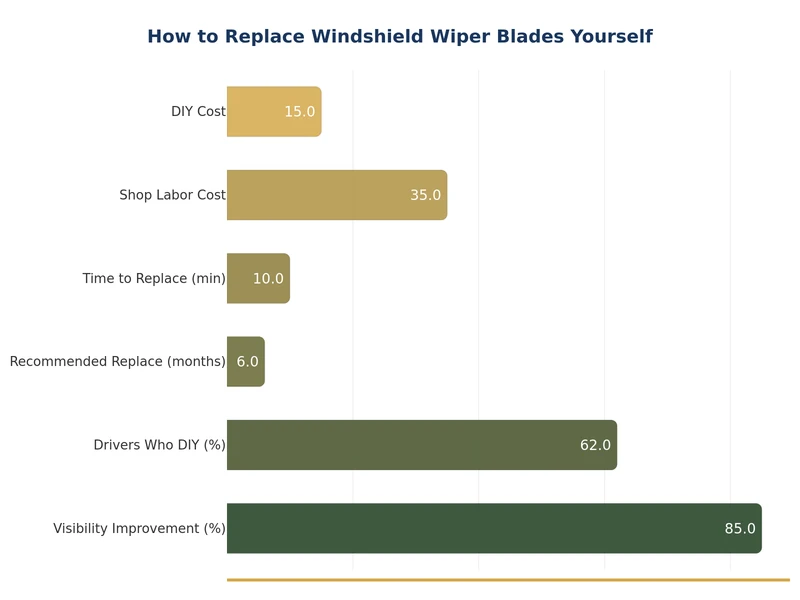
Windshield wipers are a safety component. According to the National Highway Traffic Safety Administration (NHTSA), impaired visibility is a contributing factor in hundreds of thousands of crashes each year. Worn blades reduce your ability to see clearly in rain, making every wet-weather drive riskier than it needs to be.
Beyond safety, neglected wiper blades can scratch your windshield. The rubber compound degrades over time, and the exposed metal frame can drag across the glass — creating permanent scratches that impair vision even in dry conditions. Replacing blades on schedule is far cheaper than a windshield repair or replacement.
One of the best things about this job is how little you need to complete it.
No wrenches, no sockets, no jack stands. The blades clip on and off by hand. Before you buy, look up your vehicle in the store's fit guide or use an online wiper blade finder — front driver and passenger blades are often different lengths, so don't assume a matched pair.
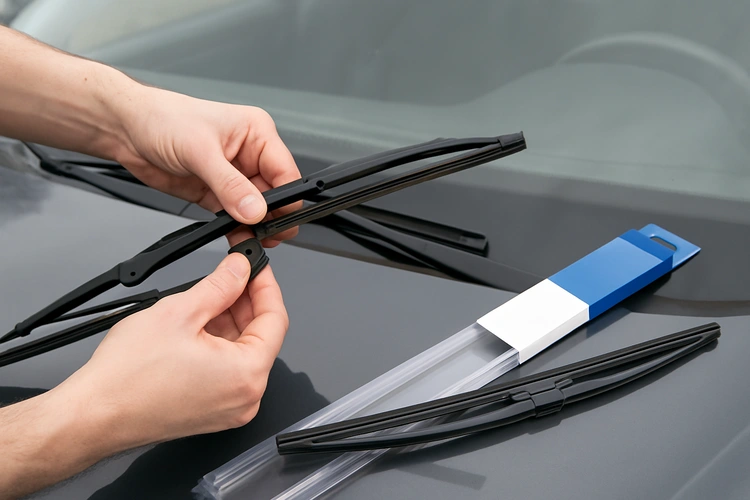
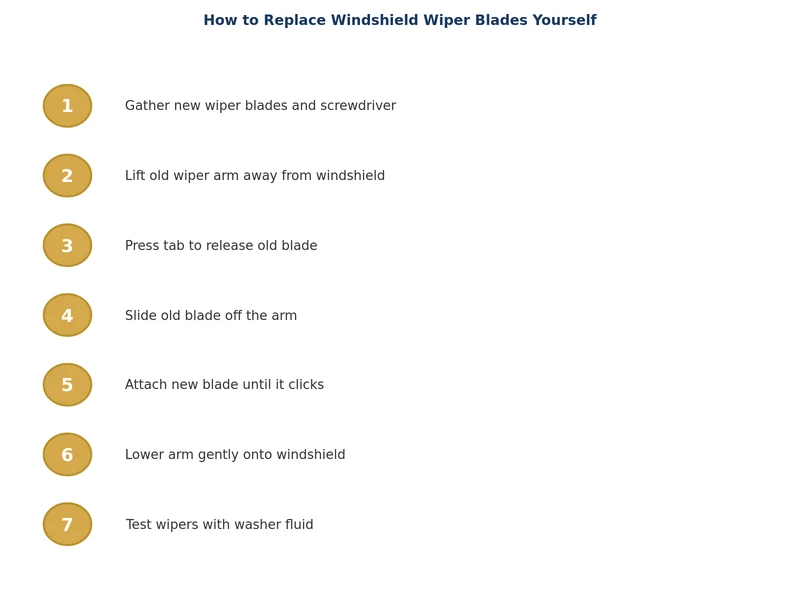
The exact attachment method varies slightly by vehicle, but most modern cars use one of three connector types: hook (most common), pinch tab, or side pin. Your new blades will typically include adapters for multiple connector types. The process below covers the standard hook connection.
Not all vehicles have a rear wiper, but if yours does, replacing it follows the same basic logic. Lift the arm, press the release, and slide the blade free. Rear wipers often use a pin-style or side-pin connector rather than a hook, so check which adapter you need before purchasing. The rear wiper arm also tends to sit closer to the glass and may not lock in the raised position — hold it steady while you work.
Three main types of wiper blades are sold today. Each has trade-offs in cost, performance, and longevity.
| Type | Construction | Avg. Lifespan | Avg. Cost (pair) | Best For |
|---|---|---|---|---|
| Traditional (Conventional) | Metal frame with rubber blade | 6–12 months | $15–$30 | Budget-conscious drivers, mild climates |
| Beam (Bracketless) | Single curved piece of rubber/silicone | 12–24 months | $25–$60 | Year-round performance, snow and ice |
| Hybrid | Aerodynamic shell over a traditional frame | 12–18 months | $25–$50 | Balance of durability and cost |
Beam blades apply even pressure across the full sweep, which means fewer streaks and better performance in winter. They're worth the extra cost if you deal with heavy snowfall or freezing rain. If you're preparing your vehicle for extended storage, replacing wipers is one of the checks covered in our guide to storing a car for winter.
Most manufacturers recommend replacing wiper blades every six to twelve months, though beam and hybrid styles can last up to two years. Climate plays a major role — UV exposure, extreme heat, and freezing temperatures all degrade rubber faster than moderate conditions.
Don't wait for all five signs. If you notice one consistently, replace the blades. Clear visibility is non-negotiable, especially on a fast highway in a downpour. If you're also dealing with a hazy or spotty windshield, our article on how to remove water spots from car paint covers cleaning techniques that apply to glass as well.
A few habits can significantly extend how long your blades last between replacements.
Road grime, tree sap, and dried washer fluid build up on the rubber edge. Once a month, wipe the blade edge with a damp cloth or paper towel soaked in isopropyl alcohol. You'll be surprised how much debris comes off — and how much better the blades perform afterward.
Running wipers without water accelerates wear and can scratch the glass. Always use washer fluid or wait for rain before activating them. If the windshield is just dusty, spray fluid first.
If overnight frost or ice is expected, lift your wiper arms away from the windshield before parking. This prevents the rubber from freezing to the glass and tearing when you try to operate them the next morning.
Ice scrapers nick and tear rubber if dragged across a blade. Clear the windshield first, then move the blades out of the way before scraping any remaining ice on the glass edges.
Plain water leaves mineral deposits that degrade rubber. A proper washer fluid formula cleans without residue and, in winter formulas, lowers the freezing point to prevent the nozzles and reservoir from icing up.
Check your owner's manual, use the fit guide at any auto parts store, or enter your vehicle's year, make, and model into an online wiper blade finder. Driver and passenger blades are often different lengths — always buy the correct size for each side separately.
Technically yes, but it's better to replace both front blades at the same time. Blades wear at similar rates, and mismatched blades can cause uneven wiping and streaks. If one has failed, the other is likely close behind.
For most vehicles, replacing both front wiper blades takes 5 to 10 minutes. Adding the rear wiper brings the total to about 15 minutes. No tools are required for the majority of vehicles on the road today.
No. Replacing wiper blades is one of the few car maintenance tasks that requires no mechanical skill, no tools, and no lifting the vehicle. Any driver can do it in a driveway or parking lot following the steps in this guide.
New blades can streak for the first few uses until the rubber seats properly against the glass. Clean the windshield thoroughly and run the wipers with washer fluid a few times. If streaking continues, the windshield may have a film of road grime or silicone residue that needs to be cleaned off.
For most drivers, yes — especially in regions with snow, ice, or heavy rain. Beam blades apply uniform pressure across the entire sweep, produce fewer streaks, and last longer than traditional framed blades. The price difference is typically $10–$20 per blade, which is offset by the longer replacement interval.
 |
 |
 |
 |

About Joshua Thomas
Joshua Thomas just simply loves cars and willing to work on them whenever there's chance... sometimes for free.
He started CarCareTotal back in 2017 from the advices of total strangers who witnessed his amazing skills in car repairs here and there.
His goal with this creation is to help car owners better learn how to maintain and repair their cars; as such, the site would cover alot of areas: troubleshooting, product recommendations, tips & tricks.
Joshua received Bachelor of Science in Mechanical Engineering at San Diego State University.


Get some FREE car parts & gear.. Or check out the latest free automotive manuals and build guides here.
Disable your ad blocker to unlock all the hidden deals. Hit the button below 🚗
| | | |
