by Joshua Thomas
Knowing how to store tires correctly can extend their life by years and save you hundreds of dollars. Whether you're swapping to winter tires every fall or putting summer sets away for the season, improper storage leads to cracking, flat-spotting, and premature dry rot. This guide covers everything — from cleaning and inspecting to choosing the right storage environment — so your tires come out next season in the same condition they went in.
Before you store a set, it's worth doing a quick inspection. Check tread depth and make sure pressure is within range — our guide on how to check and inflate tire pressure properly walks through the full process. If you're also storing the vehicle itself over winter, see our companion resource on how to store your car for winter.
Contents
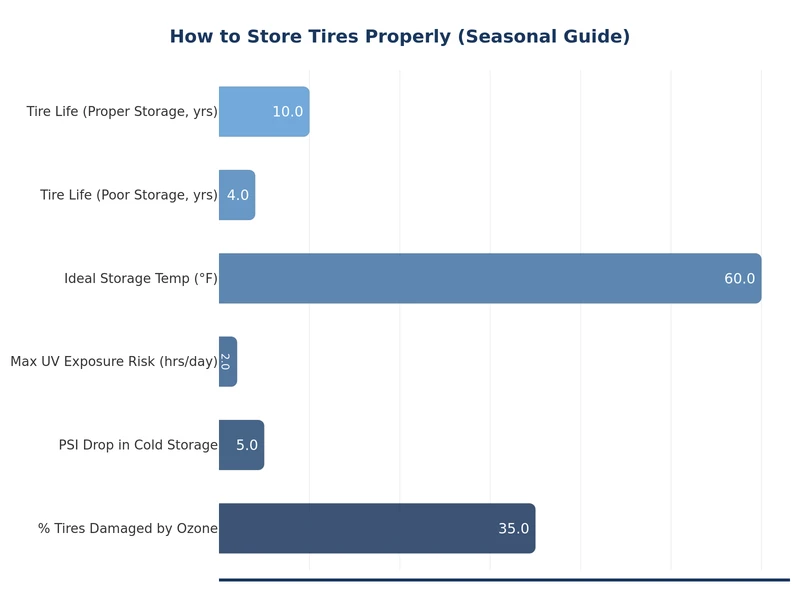
Rubber is a degradable material. Ozone, UV light, heat, and moisture all break down the compounds that keep tires flexible and grippy. According to the National Highway Traffic Safety Administration (NHTSA), tire age and condition are critical safety factors — degraded tires are a leading cause of blowouts.
When tires sit improperly — stacked on a hot concrete floor, leaning against a painted wall, or exposed to sunlight — their sidewalls can crack, the tread can flat-spot, and the internal steel belts can shift. Even tires with good tread depth can become unsafe if stored incorrectly for a season or two.
Good storage habits also protect your investment. A quality set of all-season or winter tires is a significant expense. Store them right and they'll last the full manufacturer-recommended service life — typically six to ten years.
Start by washing each tire with soap and water. Remove brake dust, road grime, and any tire dressing or protectant — these products contain petroleum distillates that accelerate rubber degradation over long storage periods. Use a stiff brush on the tread and a softer one on the sidewalls. Rinse completely and let the tires air-dry for several hours before bagging or stacking. Any trapped moisture will cause mildew and can weaken the rubber compound from the inside out.
Before storing, check each tire carefully. Look for:
Use the penny or quarter test to verify remaining tread depth. Our guide on how to check tire tread depth covers exactly how to do this. If a tire is near the wear indicators, it's better to replace it now than store it for another season.
For tires stored off the vehicle, reduce pressure to around 15–25 PSI. This relieves internal stress without fully deflating the tire. For tires still mounted on the car during storage, maintain standard recommended pressure. Note which tire came from which position so you can reinstall them correctly and maintain your rotation schedule — review how to rotate tires at home for the proper patterns.
The ideal storage location is cool, dark, dry, and away from ozone-producing equipment. A climate-controlled garage or basement is best. Avoid:
Tires store best at temperatures between 32°F and 77°F (0°C–25°C). High heat accelerates oxidation; freezing temperatures alone don't damage tires, but freeze-thaw cycling combined with moisture can. Relative humidity should stay below 70%. A dehumidifier in a damp basement storage area is a worthwhile addition.
| Storage Condition | Ideal Range | Risk if Exceeded |
|---|---|---|
| Temperature | 32°F – 77°F (0°C – 25°C) | Heat accelerates rubber oxidation; cracking, dry rot |
| Humidity | Below 70% RH | Mold, mildew, weakened rubber compound |
| UV / Light Exposure | None (dark storage) | UV degrades antioxidants, causes surface cracking |
| Ozone Proximity | Away from motors/generators | Ozone attacks rubber bonds, causes sidewall cracking |
| Air Pressure (unmounted) | 15 – 25 PSI | Over-inflation stresses carcass; flat-spotting if too low |
The correct storage orientation depends on whether tires are mounted on rims or bare.
Tires with rims: Store upright (standing), rotating them a quarter turn monthly to prevent flat-spotting. You can also hang them on wall-mounted hooks by the rim — never by the tire itself, as this creates stress points in the sidewall.
Bare tires (no rims): Stack them flat, horizontally, up to four high. This distributes weight evenly without stressing any single part of the tire. Don't stand bare tires upright for extended periods — gravity causes the unsupported sidewall to distort over months.
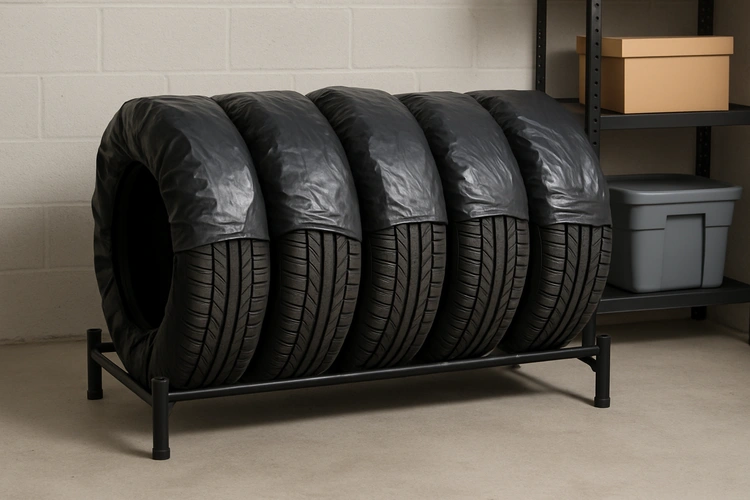
Regardless of orientation, keep tires off bare concrete. Concrete is porous and cold; moisture wicks up and accelerates degradation. Use a wooden pallet, rubber mat, or tire rack to keep them elevated.
Tire storage bags are inexpensive and genuinely useful. They limit airflow — which reduces ozone exposure — and keep tires clean during storage. Use heavy-duty black plastic bags (the black color blocks UV) and seal them tightly with tape. Avoid storing multiple tires in the same bag; each should be sealed individually.
Wall-mounted tire racks are the cleanest solution for a garage. They save floor space, keep tires off the ground, and make rotation easy. For a temporary or budget solution, a wooden pallet with tires stacked flat works well. Avoid metal shelving that can corrode and stain the rubber.
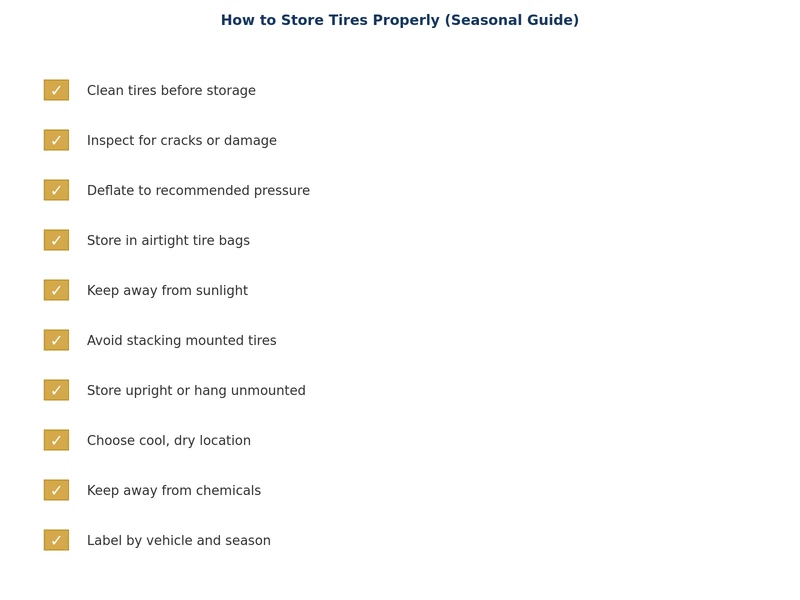
Reinstall winter tires when average daily temperatures consistently drop below 45°F (7°C). Switch back to summer or all-season tires when temperatures reliably stay above that threshold. Before mounting stored tires, inspect them again — check for new cracking, check the pressure, and look for any deformation. Inflate to the vehicle manufacturer's recommended PSI (found in the door jamb sticker) and get a wheel balance if the tires were off for more than three months.
If you notice your stored tires smell musty when you open the bags, that usually means moisture got in. Wipe them down and inspect closely before mounting. Persistent odors from your vehicle's interior after seasonal changes are a separate issue — the process for dealing with that is covered in our guide on how to remove mildew smell from car.
Most manufacturers recommend replacing tires after six to ten years regardless of tread depth, including storage time. If stored properly in a cool, dark, dry environment, tires can remain in good condition for up to five years between uses. Always inspect them before reinstalling.
No. Outdoor storage exposes tires to UV light, ozone, moisture, and temperature extremes — all of which degrade rubber rapidly. Even covered outdoor storage is not recommended for more than a few days. Always use an indoor, climate-controlled space.
Tires should not be fully deflated. For unmounted tires, reduce pressure to 15–25 PSI to relieve internal stress while maintaining the tire's shape. Fully deflated tires can deform and develop flat spots during storage.
A hot garage (above 100°F / 38°C in summer) is not ideal but is acceptable if tires are bagged, kept off the floor, and away from direct sunlight. The greater concern is consistent extreme heat over several months, which accelerates oxidation and cracking.
Yes. Sealed tire bags reduce ozone and oxygen exposure, which are the primary causes of rubber degradation. They also keep tires clean and protected from UV light. Use individual black plastic bags for each tire and seal them completely.
Inspect for sidewall cracking, bulges, or any visible deformation before mounting. Check tread depth and inflate to the correct pressure. If the tire shows crazing (a network of fine surface cracks) deeper than surface level, or has a stiff, brittle feel, replace it rather than risk a blowout.
 |
 |
 |
 |

About Joshua Thomas
Joshua Thomas just simply loves cars and willing to work on them whenever there's chance... sometimes for free.
He started CarCareTotal back in 2017 from the advices of total strangers who witnessed his amazing skills in car repairs here and there.
His goal with this creation is to help car owners better learn how to maintain and repair their cars; as such, the site would cover alot of areas: troubleshooting, product recommendations, tips & tricks.
Joshua received Bachelor of Science in Mechanical Engineering at San Diego State University.


Get some FREE car parts & gear.. Or check out the latest free automotive manuals and build guides here.
Disable your ad blocker to unlock all the hidden deals. Hit the button below 🚗
| | | |
