by Sarah Whitfield
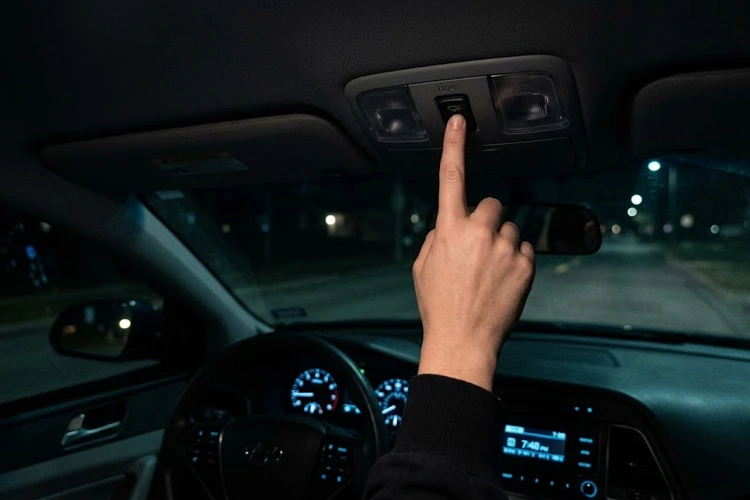
Interior car lights not working almost always traces back to a blown fuse, a dead bulb, a failed door jamb switch, or a BCM communication fault — four components our team checks in that exact order every time. The repair is under $20 in the vast majority of cases. What separates a quick fix from a frustrating rabbit hole is knowing the diagnostic sequence before touching anything.
Interior lighting failures are also a useful early warning for broader electrical health. A dome light that cuts out unexpectedly can precede the same alternator-driven voltage instability that eventually kills a battery or strands a vehicle. Catching it early matters.
Contents
Our team breaks interior lighting failures into four categories, ordered by frequency and ease of diagnosis. Working through them in sequence prevents wasted parts and unnecessary shop visits.
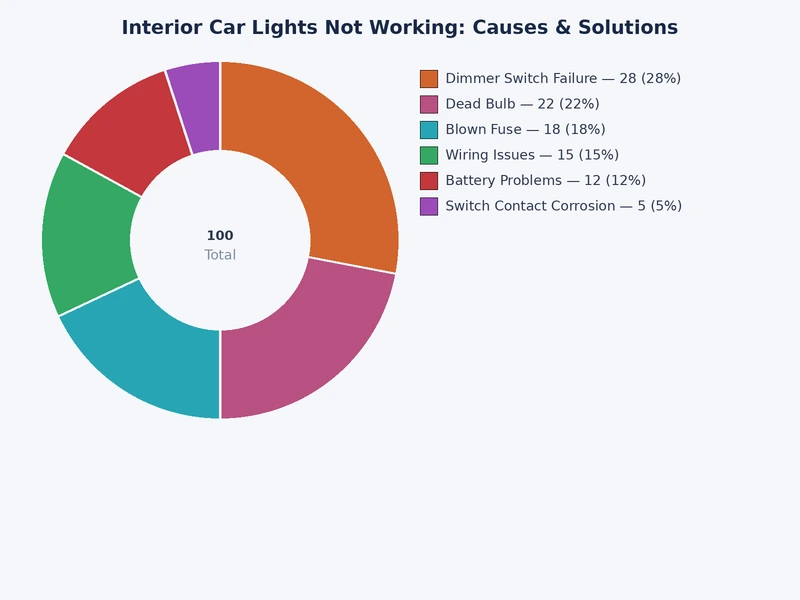
The interior lighting circuit is protected by a dedicated fuse — usually labeled DOME, INT LAMP, or COURTESY in the fuse diagram. When this fuse blows, every light on that circuit goes dark simultaneously. That's the first diagnostic tell.
On older platforms, T10, festoon, and BA9s bulbs fail predictably after 1,500–3,000 hours of use. On modern vehicles with factory LED modules, individual emitters rarely fail — but the entire module or its driver circuit can. The failure pattern differs: a failed incandescent bulb typically darkens one fixture, while a failed LED driver can take an entire zone offline.
The door jamb switch is a spring-loaded plunger that completes the courtesy light circuit when the door opens. It's also the most mechanically abused component in the interior lighting system. Corrosion, physical damage, and sticking are all common — especially on high-mileage vehicles in salt-belt climates.
Body Control Module faults and wiring harness damage are the least common cause of interior lights not working — but they produce the most confusing symptom patterns. Intermittent operation, zone-specific failures, and lights that respond to unrelated inputs (unlocking, headlight activation) all point here.
The default assumption from most people is that a dark dome light means a dead bulb. Our team sees this diagnostic error constantly. When multiple interior lights fail simultaneously — map lights, dome, cargo, trunk — a single bulb cannot be responsible. That pattern points exclusively to a shared fuse or a BCM output failure. Replacing bulbs one by one in that scenario wastes time and confirms nothing.
The same pattern mismatch applies to taillight failures on the exterior circuit — a systematic approach beats trial and error every time.
This is flat wrong. Interior lights dim and fail when charging voltage drops below approximately 11.5V. A weak battery or failing alternator produces exactly this symptom — lights that flicker at idle, dim when accessories load the circuit, or fail entirely after the vehicle sits overnight. Our team always checks battery terminal voltage and charging voltage before diving into the interior lighting circuit on any complaint that involves gradual dimming rather than sudden failure.
For context: high beam failures also frequently trace back to charging system voltage rather than the headlight circuit itself — same root cause, different symptom location.
The following repairs are well within reach for anyone with basic tools and 30–60 minutes:
Escalate to a professional when:
Owners dealing with a power seat not working alongside interior light failures should treat both as symptoms of a shared electrical fault rather than two separate problems — that pattern strongly suggests a BCM or ground distribution issue.
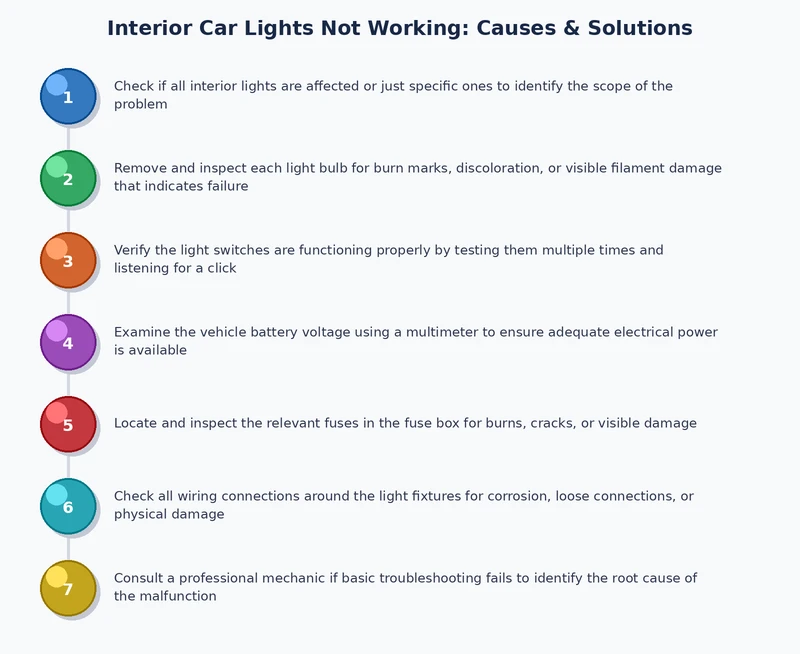
Our team cannot overstate how often a vehicle comes in after an owner has already spent $40 on bulbs, cleaned every door switch, and checked all the grounds — only for us to find a $2 fuse sitting blown in the panel. The fuse box is a 90-second check. It should always be step one, before any other diagnosis. Pull the relevant fuse, test it, replace it if blown. Then see if the failure recurs.
Interior lights that work sometimes and fail others are not "just quirky." Intermittent failures indicate a developing fault — typically a door switch at the end of its service life, a hairline crack in a wiring harness, or a BCM that's starting to lose a driver transistor. Most people wait until the light stops working entirely before investigating. By then, corrosion has progressed further and the repair is more involved.
The same principle applies across electrical complaints: intermittent windshield washer failures, for instance, follow an identical escalation pattern if the pump or wiring fault is left unaddressed.
Document intermittent failures — note conditions (cold start, rain, after a long drive) because that context narrows the fault considerably before any hands-on diagnosis begins.
Some components are cheap enough and likely enough to be the fault that replacing them outright is more efficient than elaborate testing:
Per NHTSA vehicle lighting guidelines, interior lighting faults that affect the driver's ability to read controls are considered safety-relevant and should be resolved promptly — not deferred indefinitely.
| Component | DIY Parts Cost | Difficulty | Notes |
|---|---|---|---|
| Fuse (single) | $1–3 | Easy | Always keep a spare fuse kit in the glovebox |
| Incandescent dome/map bulb | $2–6 | Easy | T10 wedge or festoon; platform-specific |
| LED replacement bulb | $6–20 | Easy | CANBUS-compatible units needed on post-2012 platforms |
| Door jamb switch | $8–25 | Easy | OEM preferred; aftermarket fit quality varies widely |
| Dimmer/headlight switch | $30–90 | Moderate | Replacement often includes the entire switch assembly |
| LED interior module (OEM) | $40–150 | Moderate | Luxury vehicles can run $200+ per zone |
| BCM replacement + programming | N/A (dealer only) | Advanced | Module must be VIN-flashed; $250–900 total at a shop |
Most interior lighting repairs are zero-labor at home. At a shop, labor adds:
For reference, electrical diagnostic costs for interior lighting fall well below the repair scope of something like a no-start condition in hot weather, which often involves overlapping electrical, fuel, and thermal systems — but the diagnostic discipline is identical: start cheap, work up.
Our team's standing position: any interior lighting repair that exceeds $150 in parts and labor warrants a second opinion and a clear written diagnosis before authorizing work. BCM replacements in particular have a poor track record of resolving faults that were actually wiring-related.
When every interior light fails simultaneously, the common fuse or BCM output for the courtesy lighting circuit is the cause. A single fuse protects the entire interior lighting zone on most platforms. Pull the fuse labeled DOME, INT LAMP, or COURTESY and inspect it first — this resolves the majority of whole-system failures in under five minutes.
Yes. When battery voltage drops below approximately 11.5V — from a deeply discharged or failing battery — interior lights dim and eventually stop functioning entirely. Our team tests battery terminal voltage on any interior lighting complaint that involves gradual dimming or intermittent failure rather than a sudden complete outage.
The door jamb switch completes the courtesy light circuit when a door opens. A switch stuck in the closed position prevents the light from triggering at all. Corrosion and physical wear are the primary failure modes — contact cleaner and repeated cycling of the switch body restore function in roughly 60% of cases without full replacement.
It depends on which lights are affected. Loss of dome and map lights is an inconvenience. Loss of instrument cluster backlighting or warning light illumination is a direct safety concern. Our team treats any interior lighting fault that affects control legibility as a priority repair rather than a deferred maintenance item.
Interior lighting faults frequently share root causes with other electrical complaints — a failing alternator can produce interior light dimming alongside the whining noise described in our alternator diagnosis guide, while a stuck-open door switch that drains the battery overnight connects directly to battery health. Treating each symptom in isolation misses the pattern.
Flickering without complete failure typically indicates a loose or corroded ground connection, a door jamb switch at the end of its service life, or a BCM driver transistor beginning to degrade. The same pattern appears in high beam circuits when a headlight switch contact is failing. Document when flickering occurs — consistent conditions point directly to the fault source.
 |
 |
 |
 |

About Sarah Whitfield
Sarah Whitfield is a diagnostics and troubleshooting specialist who spent ten years as an ASE-certified technician before joining the editorial team. She specializes in OBD-II analysis, electrical gremlins, and the kind of intermittent problems that make most owners give up.
Get some FREE car parts & gear.. Or check out the latest free automotive manuals and build guides here.
Disable your ad blocker to unlock all the hidden deals. Hit the button below 🚗
| | | |
