by Sarah Whitfield
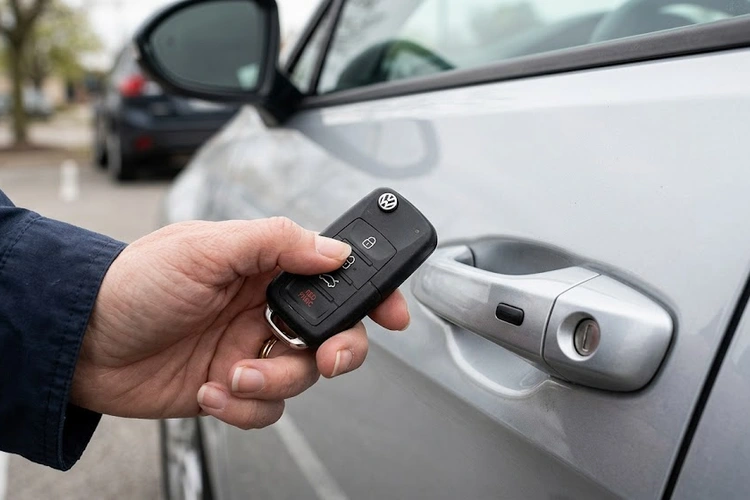
Picture a parking lot on a cold evening, arms loaded with grocery bags, pressing the unlock button over and over while the car just sits there completely unresponsive. A key fob not working is one of the most aggravating small failures in modern vehicle ownership, arriving without warning at the worst possible moment. Roughly 80 percent of cases resolve in under ten minutes with a fresh CR2032 battery or a quick reprogramming sequence. A handful of causes do require dealer-level equipment, but those are the exception rather than the rule — and working through all seven causes systematically costs nothing but a few minutes of time.
For anyone whose physical key is also causing problems alongside the fob, the guide on key stuck in ignition causes and how to remove it covers the mechanical side of the lock cylinder — a useful companion read when both systems fail at once.
Contents
Most key fob diagnostics require nothing more exotic than what is already in a basic home tool kit, and the full process from first suspicion to confirmed cause takes under fifteen minutes on a driveway. Having the right items ready prevents multiple trips to the parts store mid-diagnosis.
A quick test using a smartphone's front-facing camera saves considerable diagnostic time before touching anything else. Pointing the fob's emitter at the front camera and pressing any button while watching the screen reveals a faint purple flash on a functional transmitter, confirming the fob is transmitting a signal even when the human eye cannot detect it. No flash at all — even with a fresh battery installed — points squarely at a damaged PCB or antenna trace, which bypasses the synchronization diagnostic branch entirely.
Pro tip: Front-facing smartphone cameras lack the IR filter that rear cameras include, making them significantly more sensitive for this test — the flash will appear noticeably brighter and easier to confirm through the viewfinder.
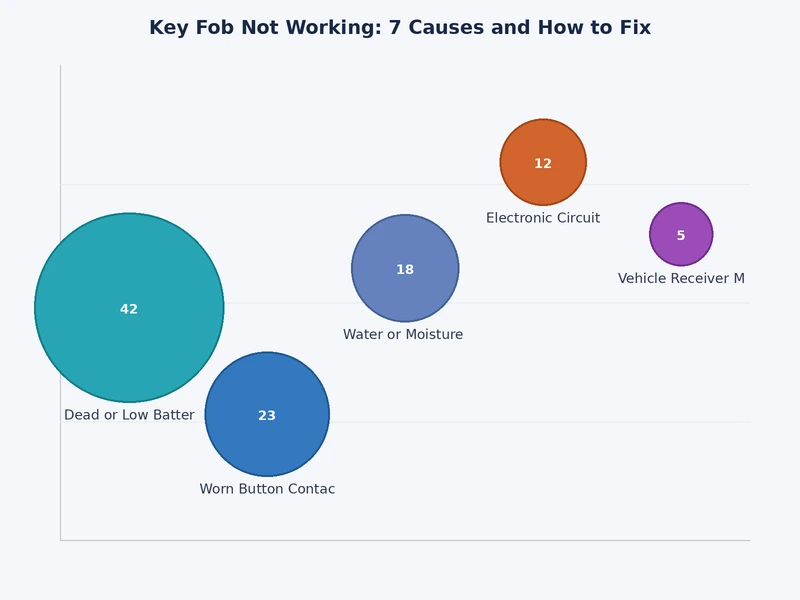
These causes are ranked from most to least common based on automotive locksmith and dealer service data. Starting at cause one and working down the list is the most efficient approach — the vast majority of key fob not working issues resolve at step one or two without any further investigation required.
A depleted CR2032 coin cell accounts for the overwhelming majority of key fob not working reports, and it is the first thing any competent technician checks before touching anything else on the vehicle. Coin cells lose voltage gradually rather than all at once, which means fobs typically develop progressively shorter range before failing completely — a warning sign most owners miss until the fob stops responding entirely.
Modern RKE systems operate on a rolling code protocol where each button press consumes one sequential code from a synchronized counter shared between the fob and the BCM, as detailed in the Wikipedia overview of remote keyless entry systems. Pressing the fob button repeatedly while out of vehicle range — common when keys bounce around in a bag or pocket — advances the fob counter far enough ahead that the BCM begins rejecting all incoming signals as invalid.
Rubber button pads degrade over years of repeated pressing, eventually losing the carbon contact disc that completes the circuit when compressed, and dropping the fob onto hard surfaces can crack PCB solder joints that remain completely invisible from the outside. Both failure modes produce identical symptoms: some buttons work intermittently while others require multiple hard presses or respond only at random.
Key fobs in North America transmit on 315 MHz or 433.92 MHz, and a surprising range of everyday infrastructure — LED lighting ballasts, aftermarket alarm systems, cellular repeaters, and certain shopping center equipment — can block or corrupt the signal on a temporary and location-specific basis. This cause is the easiest to rule out because testing the fob in multiple locations away from buildings takes under two minutes.
The RKE receiver module — mounted near the BCM or integrated directly into it on many late-model vehicles — can fail from moisture intrusion, vibration fatigue, or simple component age, producing a situation where multiple fobs including a freshly programmed dealer spare all fail to operate. This cause is less common but significantly more expensive than the four preceding causes, and it points at the vehicle rather than the fob hardware.
Warning: Replacing the BCM on many vehicles triggers an immobilizer lockout that requires a full PATS or IMMO relearn procedure — always confirm receiver replaceability with a dealer parts desk before ordering any components.
Key fobs are splash-resistant at best and not waterproof by any standard definition, making a trip through the washing machine or an extended immersion effectively fatal to the PCB without immediate and correct intervention. The primary damage mechanism is not the water itself but the mineral deposits left behind after evaporation, which cause rapid oxidation across copper traces and battery contacts once the fob dries out.
A blown fuse in the vehicle's RKE or body electronics circuit kills all remote entry functions simultaneously while leaving the physical key blade fully operational, which is precisely why this cause gets overlooked — the car starts fine, so owners assume the fob hardware is at fault rather than the vehicle's fuse box. Most automotive troubleshooting workflows begin at the fuse panel for exactly this reason, since a $0.50 blade fuse is always worth eliminating before spending money on replacement hardware.
Before committing to deeper diagnosis, these quick interventions resolve a meaningful percentage of key fob not working reports in under five minutes with no tools and no parts required. They are worth running through in sequence before opening a multimeter case.
Keeping the vehicle battery in good condition also reduces phantom key fob communication failures, since a weak car battery causes BCM voltage fluctuations that can corrupt RKE signal processing; the guide on how to extend car battery life covers the maintenance steps that prevent premature failure and the voltage drop issues that follow.
Not every key fob fix requires professional equipment, but the line between DIY-accessible and dealer-required repairs is sharp and consequential — buying an unprogrammable aftermarket fob online is a common and expensive mistake that a clear decision framework prevents entirely.
Aftermarket fobs from major online retailers cost $15–$40 and function correctly for basic RKE lock and unlock operations after professional programming on most standard systems. They will not include transponder chip cloning capability for push-button start vehicles, and certain OEM-specific features such as memory seat recall or personalized climate settings may not transfer from fobs programmed to specific VINs through factory channels.
The cost range for resolving a key fob not working spans from essentially free to over $500 depending entirely on vehicle make, required fob type, and whether dealer-level programming is unavoidable. Understanding the full cost landscape prevents both overpaying for simple fixes and underestimating genuinely complex repairs.
| Repair Type | DIY Cost | Professional Cost | Notes |
|---|---|---|---|
| CR2032 battery replacement | $2–$4 | $5–$20 | Dealer battery markups are extreme — always DIY this one |
| Button pad or shell replacement | $3–$15 | $25–$60 | OEM replacement shells available for $15–$30 on most platforms |
| Fuse replacement | $0.50–$3 | $20–$75 (labor) | Pay labor only if a harness short requires professional diagnosis |
| Aftermarket fob + locksmith programming | N/A | $50–$120 | Independent locksmiths typically run 40–60% less than dealer rates |
| OEM fob + dealer programming | N/A | $150–$400+ | European and luxury platforms consistently hit the upper range |
| Smart key / proximity fob (push-button start) | N/A | $200–$500+ | Tesla, BMW, and Mercedes OEM replacements frequently exceed $400 |
| BCM or RKE receiver module replacement | N/A | $300–$900 | Labor-intensive; confirm module failure conclusively before ordering parts |
Severely reduced operating range is almost always caused by a weak or dying battery — a CR2032 cell below 2.8 V still fires the fob transmitter but at greatly reduced power, shrinking effective range from the normal 30–60 feet down to just a few inches before stopping completely. Replacing the battery is the correct first response before any further diagnosis.
Yes, and the occurrence is more common than most owners expect. Disconnecting the vehicle battery resets BCM volatile memory on certain platforms, which wipes stored fob rolling codes and requires a resynchronization procedure before the fob communicates normally again. Running through the brand-specific self-programming sequence from the owner's manual resolves this in under two minutes at no cost.
Every key fob — including proximity and smart key designs — contains a mechanical key blade that releases from the housing via a small button or slide. The blade unlocks the driver's door directly regardless of fob battery status, providing full vehicle access. Some door handles also conceal a hidden keyhole behind a removable cap; the owner's manual shows the exact location for any specific model.
For most domestic vehicles and older Japanese models, self-programming sequences involving ignition cycling and door lock actuation allow new fobs to be added at home without any tools or software. However, European vehicles, most luxury brands, and virtually all push-button start platforms require a J2534-compatible scan tool or factory-level diagnostic software, making a dealer or specialist locksmith appointment unavoidable for those systems.
Low ambient temperatures reduce the electrochemical reaction rate inside lithium coin cells, temporarily dropping output voltage below the fob's minimum operating threshold — even on cells that test perfectly at room temperature. A fob that fails consistently below freezing but recovers after being warmed in a pocket or hand is signaling that the battery is near end of life and should be replaced before the problem becomes permanent regardless of temperature.
Permanent magnet exposure poses no meaningful threat to key fobs since the hardware contains no magnetic storage media of any kind. Strong RF-emitting devices are a different matter — poorly shielded aftermarket car stereos, alarm system control modules, and certain GPS tracking units can interfere with fob transmission on the 315 MHz or 433 MHz bands on an ongoing basis. If RKE issues began after a new aftermarket device was installed, that installation is the first place to investigate.
A key fob not working is almost never the expensive disaster it feels like in the parking lot — start with a two-dollar battery, work through the list systematically, and save the dealer visit for the rare case that actually earns it.
 |
 |
 |
 |

About Sarah Whitfield
Sarah Whitfield is a diagnostics and troubleshooting specialist who spent ten years as an ASE-certified technician before joining the editorial team. She specializes in OBD-II analysis, electrical gremlins, and the kind of intermittent problems that make most owners give up.
Get some FREE car parts & gear.. Or check out the latest free automotive manuals and build guides here.
Disable your ad blocker to unlock all the hidden deals. Hit the button below 🚗
| | | |
